I’m often afflicted by earworms while underwater. It doesn’t matter whether I’m swimming laps or scuba diving; little snippets of music come unbidden to my mind and repeat incessantly.
I was in Little Cayman this past May, and a lyric hit me on the first dive: “Slow down, you move too fast. You got to make the morning last.” I had been invaded by Simon and Garfunkel’s 1966 hit “The 59th Street Bridge Song (Feelin’ Groovy).”
That made sense because I hadn’t visited Little Cayman in nearly a decade, and the Florida Keys and the Caribbean had suffered environmental challenges since then. Stony coral tissue loss disease (SCTLD) had made its way from island to island throughout the Caribbean Basin, affecting primarily stony and hard corals. To add insult to injury, 2023 and 2024 brought exceedingly warm waters and coral bleaching, and then Hurricane Beryl hit the Sister Islands of Cayman Brac and Little Cayman last July.
I didn’t know what to expect from the shallow reef and walls of Bloody Bay due to the disease, global warming, and storm-driven waves. This trip would include dives of rediscovery.
I didn’t expect it to be like the best of the Coral Triangle, where you take one photo and look up to find the next set-up is waiting a few yards down the reef. That’s typical of the Caribbean historically and in general. The pleasures are more sublime and paced differently. It was indeed slower, and the photo ops lived on a different time continuum.
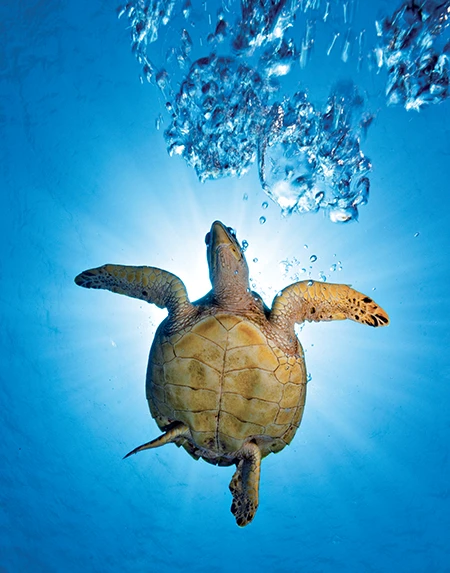
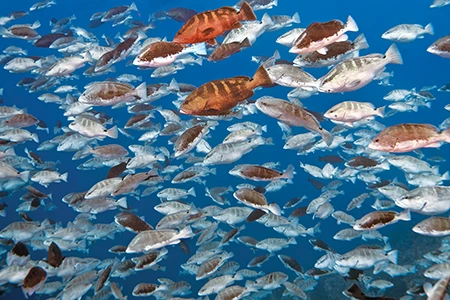
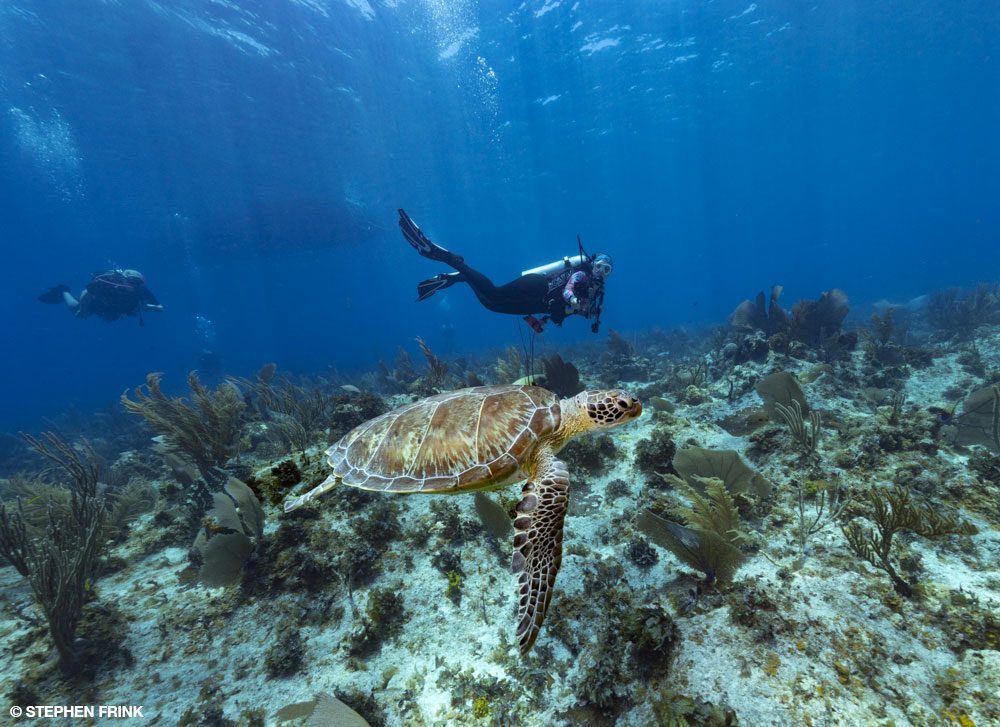
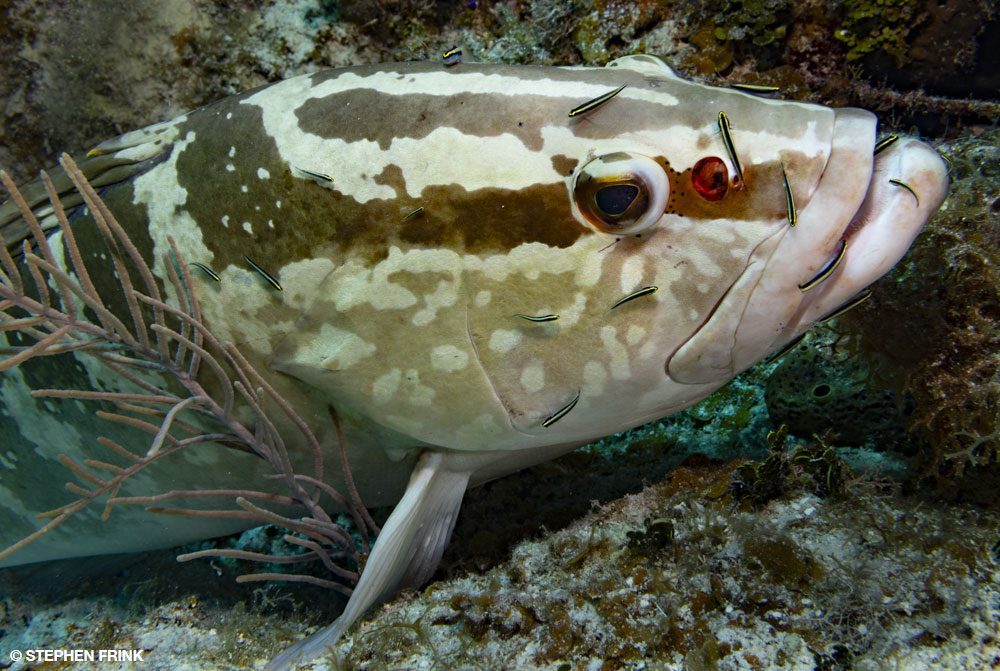
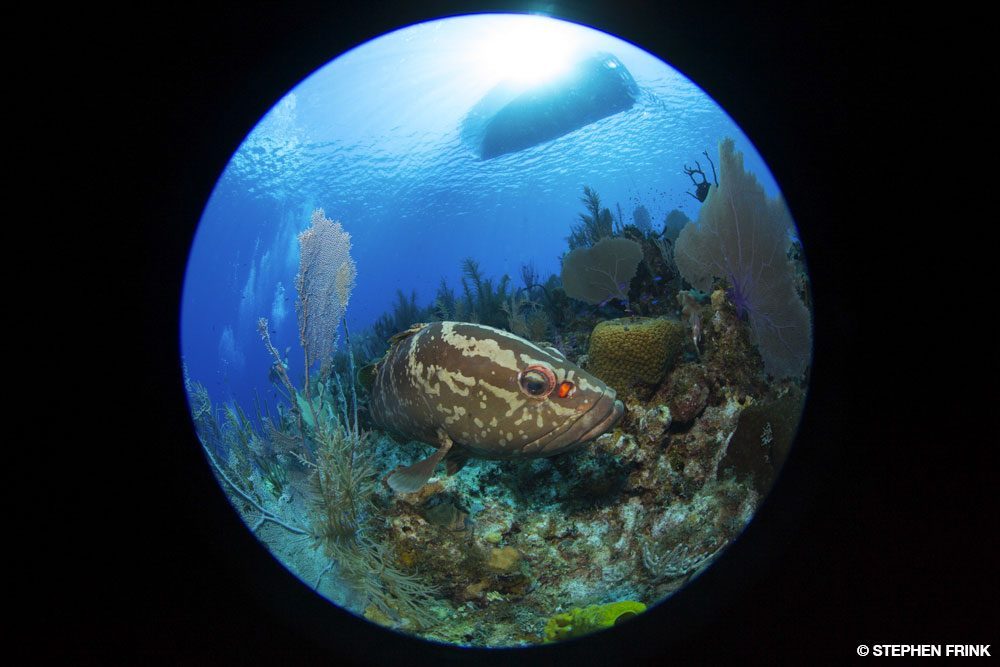
I was pleased to find the usual suspects were there in profusion. The Nassau groupers were abundant, and we saw turtles on almost every dive. As I edited my images down to the top 20 for this article, too many turtle and grouper shots made the cut, even after trying to discipline myself. They are such a major part of the Little Cayman dive experience, however, I allowed for a bit of redundancy.
Nassau groupers are hard to find anywhere these days. Even though they are ridiculously abundant and approachable here, it speaks to an accident of nature (a grouper spawning aggregation site) and decades of marine conservation that they so dominate the reef.
The water clarity of 60 to 120 feet (18 to 37 meters) added to my reassurance. Warm, clear water, zero current, and easy, mellow diving define the Little Cayman vibe. That is not to say the winds can’t rage, but they didn’t during our week there, and all our diving was exceedingly relaxing.
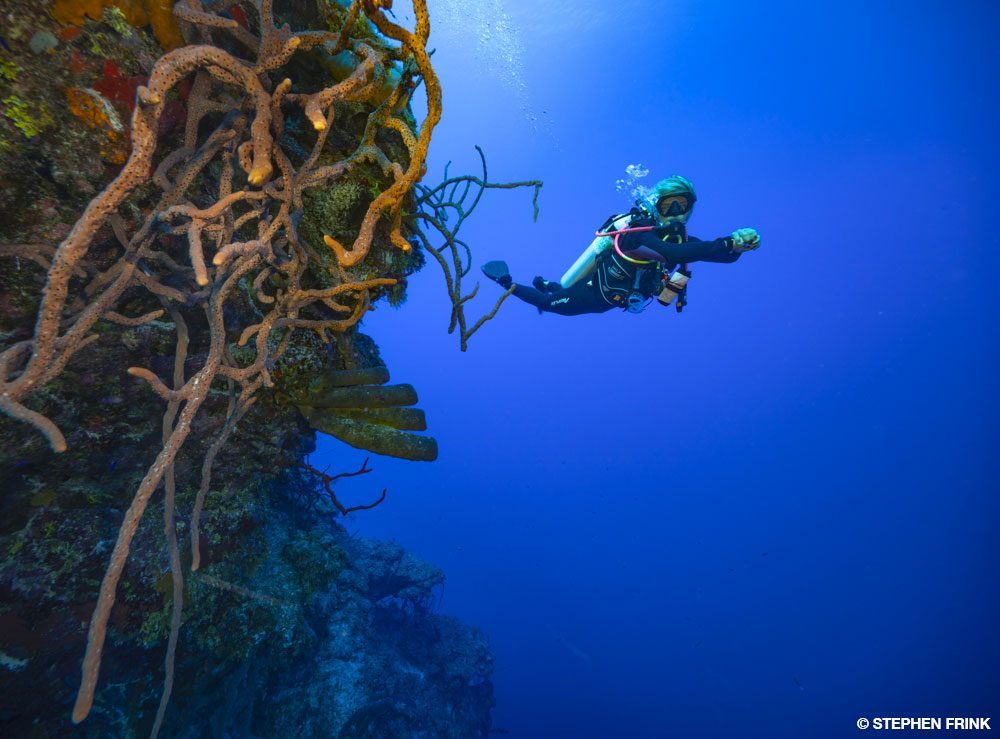
The sponges were still there, although the biggest and best formations were mostly deeper, around 70 feet (21 m) and below, suggesting that the recent hurricane had scrubbed some of the shallow decorations. My takeaway was that Little Cayman was still sweet, maybe not the same, but quite nice. And unlike that Coral Triangle reef, it wasn’t at the end of a 36-hour flight ordeal, and it didn’t cost thousands of dollars — even tens of thousands for a business class ticket — to get there. Seeing that one of my longtime Caribbean favorites remained viable was a great relief.
Geography and Conservation
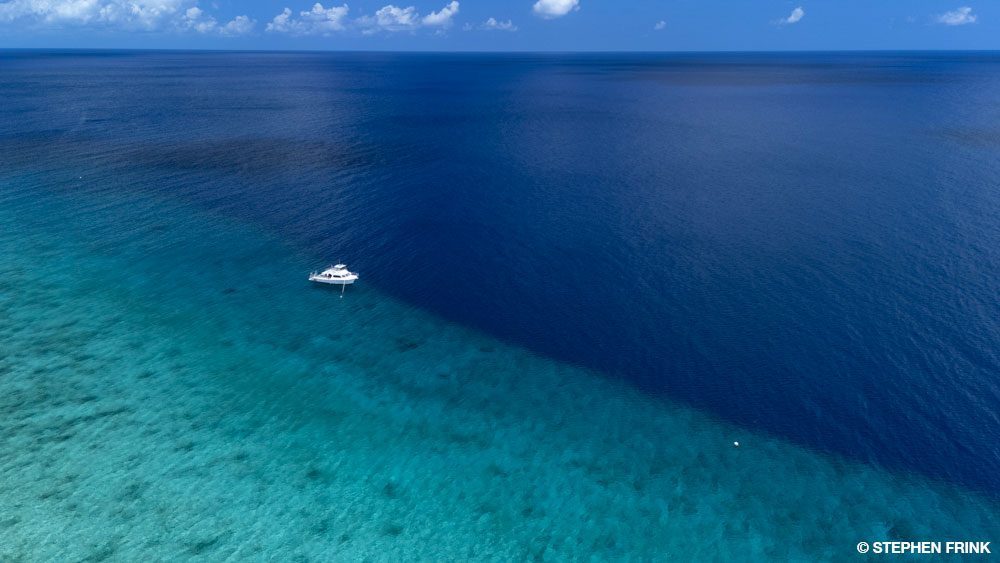
Little Cayman, one of the three Cayman Islands, is located about 5 miles (8 kilometers) from the tip of Cayman Brac. With Grand Cayman, these three are collectively known as the Sister Islands. All three islands are relatively small specks of land, the upper elevations of a submarine ridge that runs from Belize to Cuba, but Little Cayman is the smallest of the three.
The Sister Islands are near enough that dive boats from the Brac tend to make a weekly pilgrimage to dive the drop-offs at Bloody Bay Wall. Conversely, boats based on Little Cayman tend to run to the Brac to dive the wreck of the MV Captain Keith Tibbetts, weather permitting.
Grand Cayman is much farther away, about 90 miles (145 km), so the only way to dive select sites on all three Cayman Islands during a one-week holiday is on Cayman’s only dive liveaboard, the Cayman Aggressor IV.
Little Cayman is only about 10 miles (16 km) long and barely a mile (1.6 km) wide, with an elevation of about 40 feet (12 m). Despite its size, it is a place so special it is presently under consideration as a UNESCO World Heritage Site. While the selection process is rigorous and ongoing, Little Cayman has advanced through several preliminary rounds and is favorably considered for several reasons.
It is a marine and bird sanctuary with nesting beaches for hawksbill, green, and loggerhead turtles. The island is home to the only breeding area for the red-footed booby in the Cayman Islands as well as a population of magnificent frigatebirds.
A long-established marine protected area (MPA) encompasses nearly 75% of the island’s shoreline. This area includes mangrove forests, seagrass flats, patch and fringing coral reefs, and a wall that plunges vertically from less than 20 feet (6 m) to the depths of the Cayman Trench at more than 25,000 feet (7,686 m). The MPA protects to a depth of 148 feet (45 m), but the maximum depth suggested by the Cayman Islands Watersports Operators Association (CIWOA) is 110 feet (34 m).
The Grouper Moon Project is a significant conservation success story, having protected a spawning site for Nassau groupers — listed as critically endangered by the International Union for Conservation of Nature (IUCN) — since 2002.
The protection of the Nassau grouper spawning site is particularly interesting. Ned DeLoach told me about the early years before protection existed. The local fishers on Little Cayman knew of aggregations, where groupers would travel great distances during winter full moons to group together and spawn. About 80 of these spawning sites once existed throughout the Caribbean, but because of the density of the congregation, ease of fishing, and greed overtaking logical conservation, anglers decimated most of them.
It almost went that way on Little Cayman. It was one thing when few local fishers took only enough to feed their families on Little Cayman, but quite another when fishers from other islands caught on and extracted so many fish there wasn’t enough ice on Grand Cayman to keep them from rotting, and they wasted at the fish market.
The Reef Environmental Education Foundation (REEF) initiated the Grouper Moon Project in collaboration with the Cayman Islands Department of Environment. Fishing a spawning aggregation was not sustainable for the species, and they had already been harvested to the point of collapse.
On Aug. 15, 2016, the Cayman Islands enacted regulations to protect and recover Nassau groupers, including a prohibition on possession or sale from December through April, thereby removing any commercial value for fresh fish taken during the spawning months.
Nassau groupers can’t be taken by speargun — another reason they are so friendly and trusting on Little Cayman. There are other regulations relating to Nassau groupers, but for divers on Little Cayman, having a protected spawn, fish that are not acclimated to death by spear, and decades of MPA status protecting them from hook-and-line extraction creates a sweet spot that exists nowhere else in the Caribbean, except perhaps Cuba’s Jardines de la Reina.
The South Side
I hosted a photo event on Little Cayman in 2017, when we had unseasonably breezy conditions. We couldn’t do the normal daily run to the north-side reefs, which involved passing through a cut in the reef and circumnavigating the island’s western tip before accessing the dozens of sites moored along the famed Bloody Bay Wall and Jackson Bight.
It was nice along the south side, where hardpan shallows build to spur-and-groove channels. At 45 to 50 feet (14 to 15 m), large coral bommies rise some 20 feet (6 m) high. A small shipwreck — the Soto Trader, a 120-foot (37-m) island freighter — rests in only 50 feet (15 m) of water.
The last time I had dived that one was when I shot the catalog for the Nikonos RS, which was introduced in 1992. I would have liked to see how the corals had fared and dive the Soto Trader again, for old times’ sake, but with the nice weather during this trip, we did what most everyone else does and dived exclusively on the north side.
The North Side
Bill Harrigan and I cowrote The Cayman Islands Dive Guide in 1999. I hadn’t looked at it for a few years but pulled it out to compare the photos on specific sites back then to the reefs I was seeing now. Some sites, such as Bus Stop — the Jackson Bight site chosen for our checkout dive — suffered in the comparison, mostly because SCTLD had inevitably affected the giant hard coral buttresses that initially defined the site. It was fine for the checkout, but one dive was enough. Other sites I had never dived before called out for repeats, and many iconic sites had held up beautifully over the years.
I sat out one of the afternoon dives, so of course that’s the one my buddies came back from raving about the Caribbean reef shark encounter along Bloody Bay Wall and the profusion of schooling grunts and Bermuda chubs. That was disappointing for me, but we added Ringer’s Wall to the itinerary later in the week, and it delivered again.
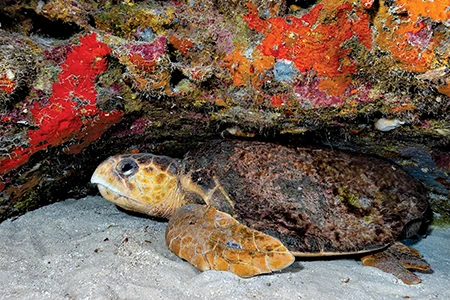
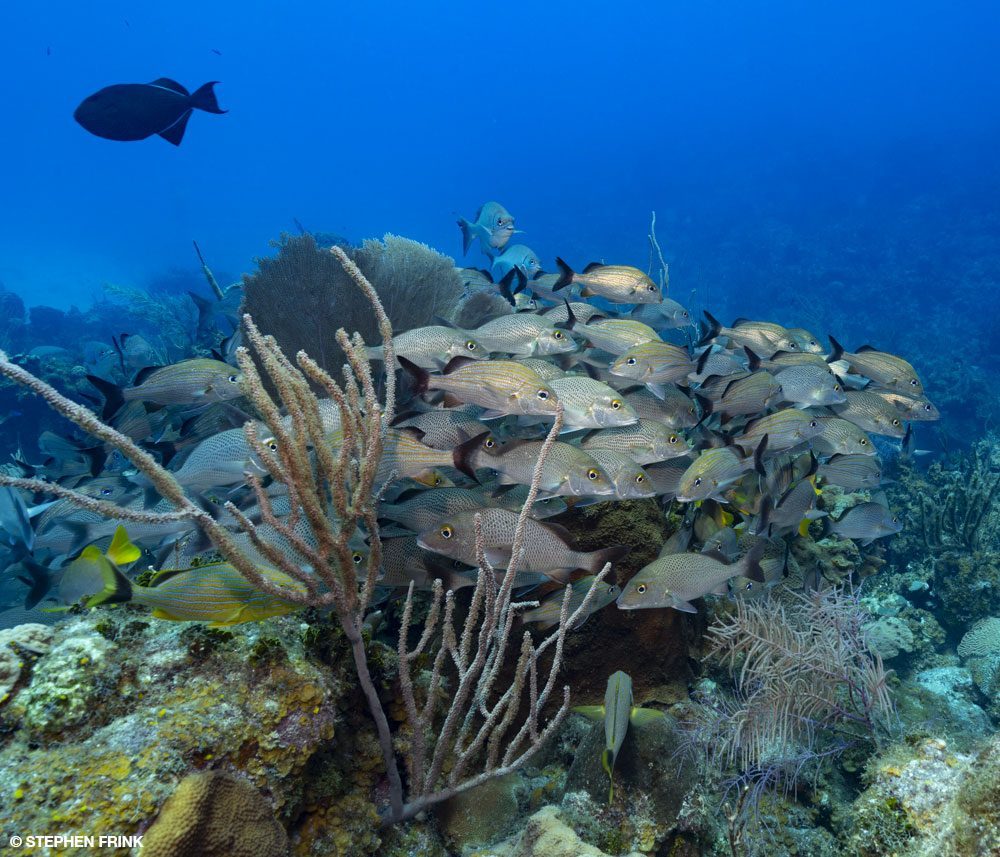
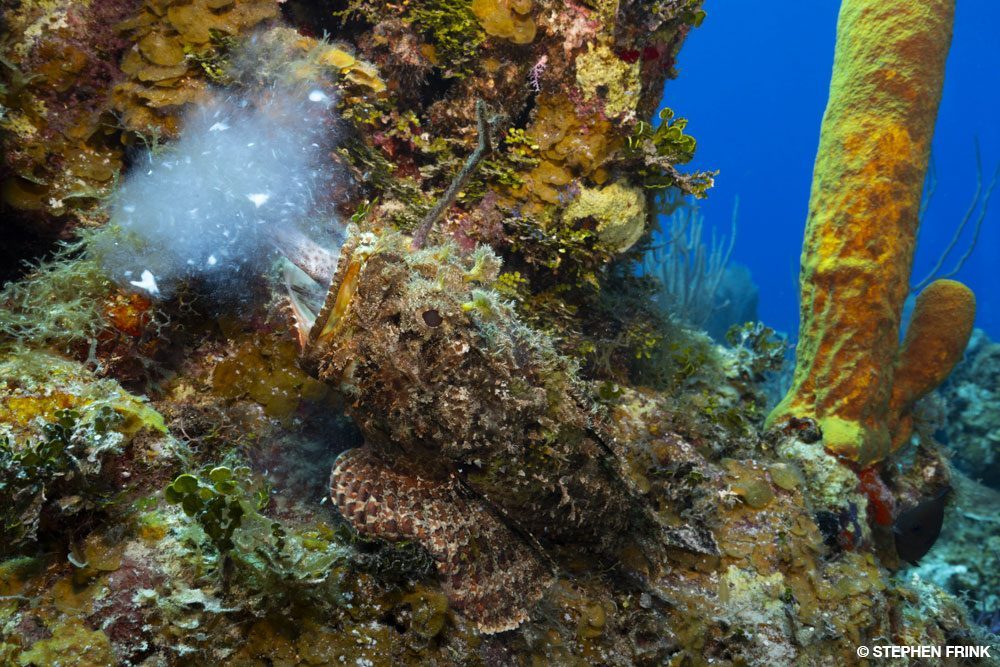
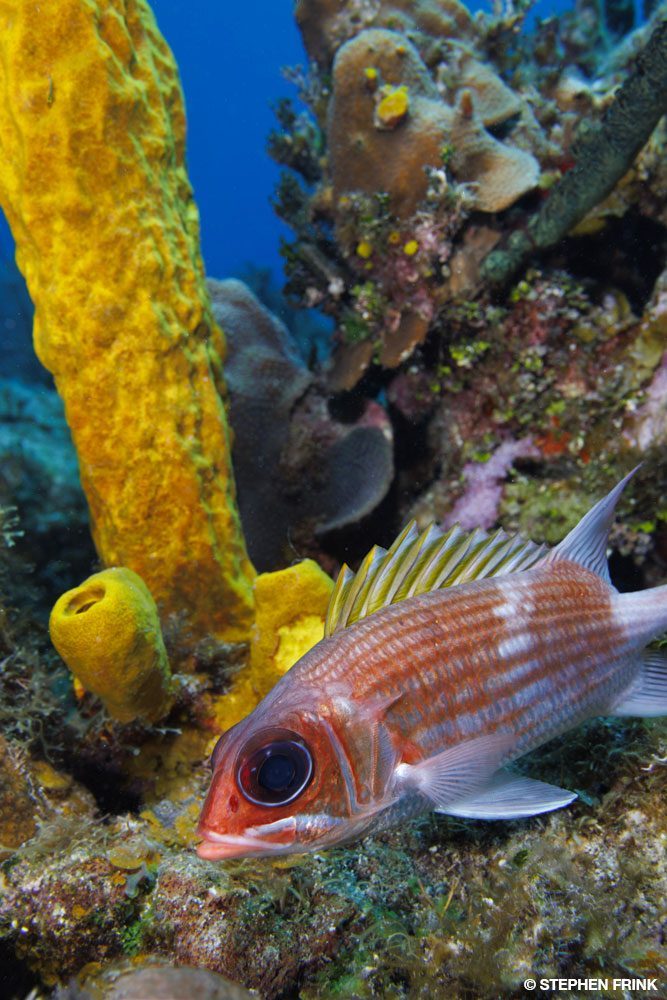
There wasn’t another shark flyby, but the consistent green sea turtle encounters were enhanced by a friendly loggerhead that went to an underwater ledge for an afternoon nap, occasionally rising for a breath and returning to the same spot. The schooling grunts and chubs were still there, and many squirrelfish lined up along the bases of yellow tube sponges.
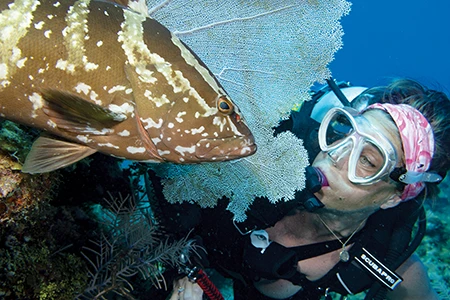
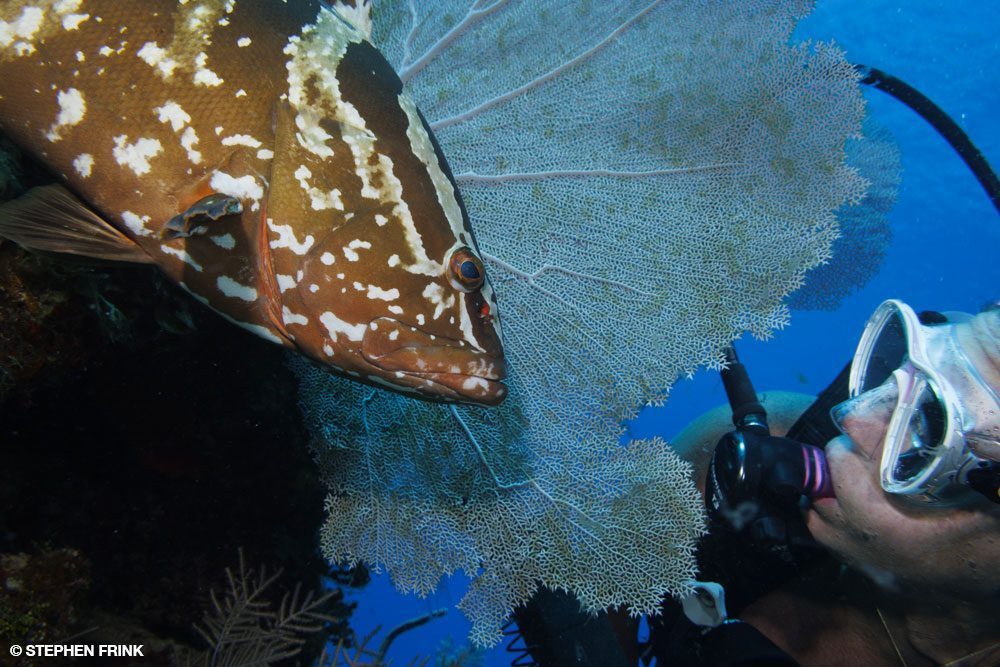
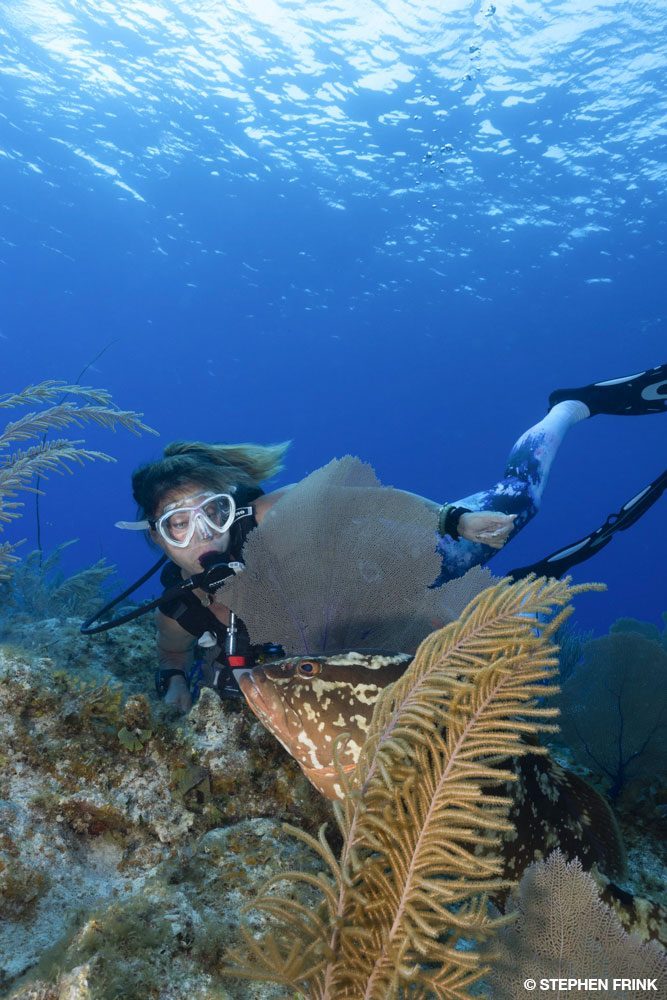
Jigsaw Puzzle along the west end of Bloody Bay was another new to me. It was a slow dive as we meandered along the wall, but we encountered a nurse shark at rest beneath a coral ledge and a foraging stingray as we came back along the sand flat. My highlight was a Nassau grouper tucked up against a sea fan, oblivious to our proximity.
My buddy took a series of wide-angle shots with his 16-35mm zoom, which I obliged as the background model, and then we swapped places. I had only a 35mm macro mounted, so I had to shoot quite tight. The grouper was so indifferent I could be in position 3 feet (1 m) away on one side, and my model could carefully approach within 6 inches (15 centimeters) of the grouper on the other, all without any sign of stress from the fish. We carefully lifted off, and the grouper never moved the entire time.
While on the deco line on this dive, I watched a father and son team returning to the boat from the same dive. A barracuda closely approached them, and they remained motionless, just watching without any cameras. I saw the encounter from above of the fish curiously swimming within a foot (30 cm) of them and then slowly swimming away. The son turned to his dad, put his fists to his head, and swept them outward — the universal symbol for “my head is exploding.”
They were still talking about the encounter back on the boat, saying it was the best dive they had ever had. I don’t know what was the most heartwarming, that the dad and his son got to share that moment together or that the shifting baseline perspective was valid. While I was seeing Little Cayman from the comparison of decades, this was the son’s first experience, and he was blown away.
I’ve learned over the years that I remember only the broad strokes of a dive holiday, but specific details about which dive delivered what highlight get foggy. I now add the dive site name to the metadata of the digital files, which led me to wonder, of the 20 images that survived the edit, what site was the most productive and why? The metadata would reveal all.
Mixing Bowl (Three Fathom Wall)
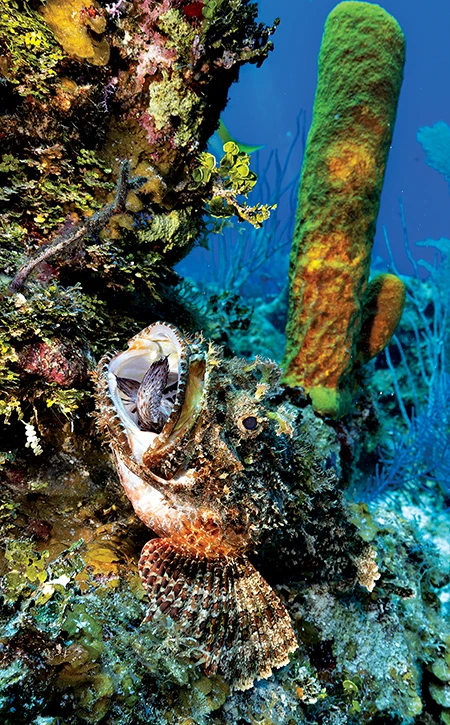
This site has always been one of my favorites, so it’s no surprise it made the list. The wall starts at 18 feet (5 m), hence the alternate appellation, and there is a chasm in the wall face. Jackson Bight is to the left, and Bloody Bay Wall is to the right. I took a turtle silhouette against the sun ball and traditional turtle foreground with diver background shots here, although the turtles are so abundant that I could have done that on almost any dive along Bloody Bay. The schools of grunts amid the gorgonians and sea fans are iconic of Mixing Bowl, and the wall retains nice decoration.
Great Wall West
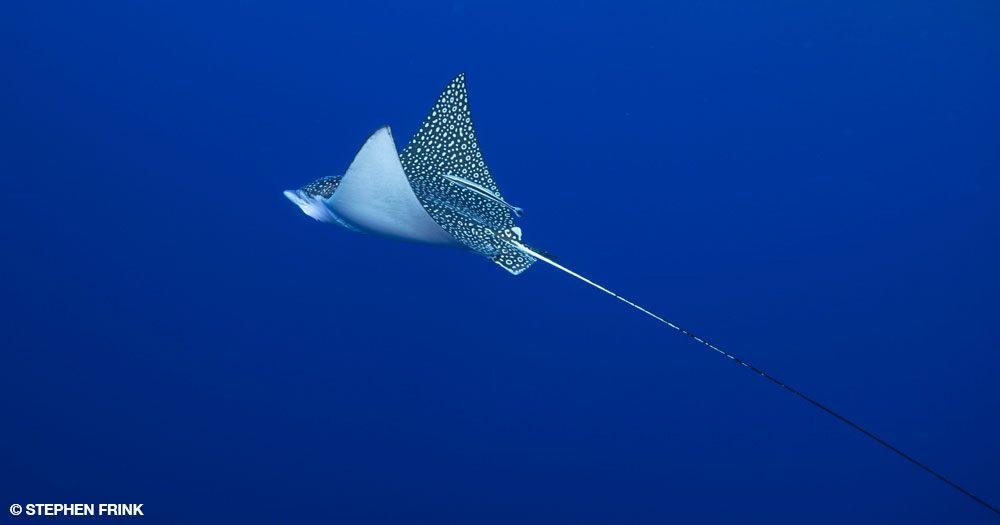
No sooner had I entered the water than I saw a spotted eagle ray cruising along the edge of the wall. It took me a little way out into the blue in pursuit, and then I dropped along the wall to about 80 feet (24 m), waiting for the rest of the group to swim by the various sponge formations along the vertical wall.
Ringer’s Wall
This site was good for so many of the reasons already mentioned, but curiously the only shots that made the top 20 were a grouper at a cleaning station and a loggerhead turtle sleeping beneath a coral ledge.
Marilyn’s Cut
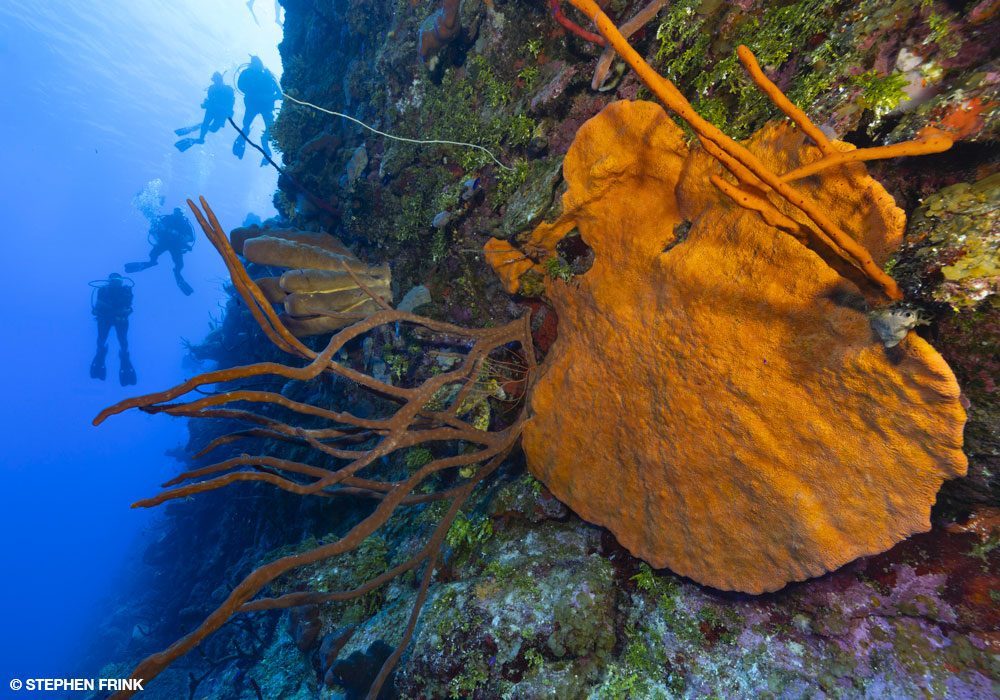
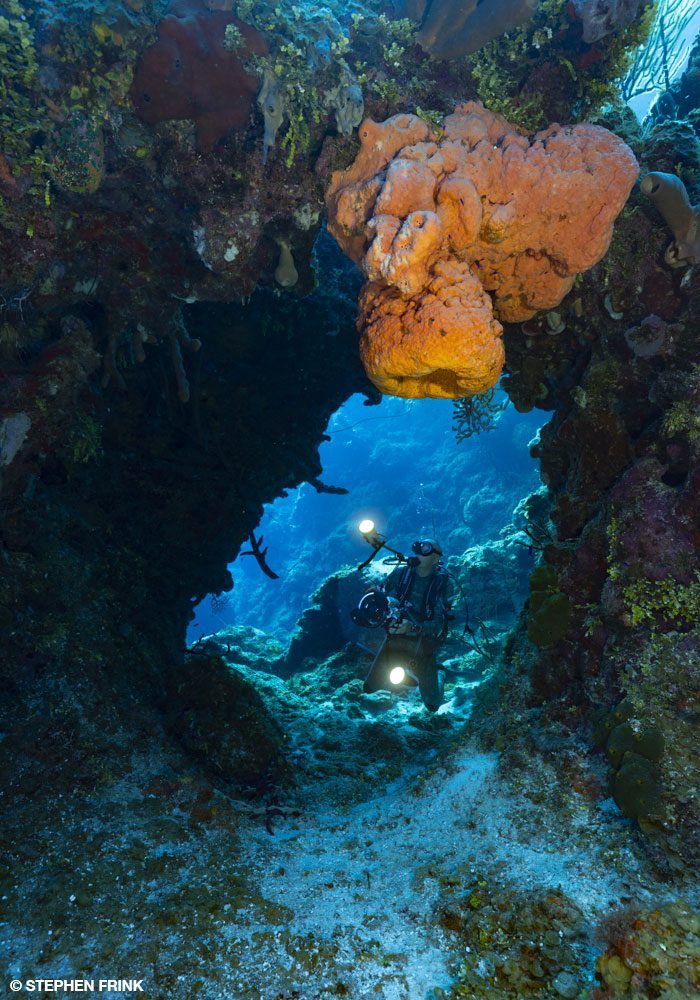
This wall provides the classic Little Cayman wide-angle opportunities. Giant orange elephant ear sponges are flanked by rope and tube sponges, all bathed in indigo water.
Wreck of the MV Captain Keith Tibbetts
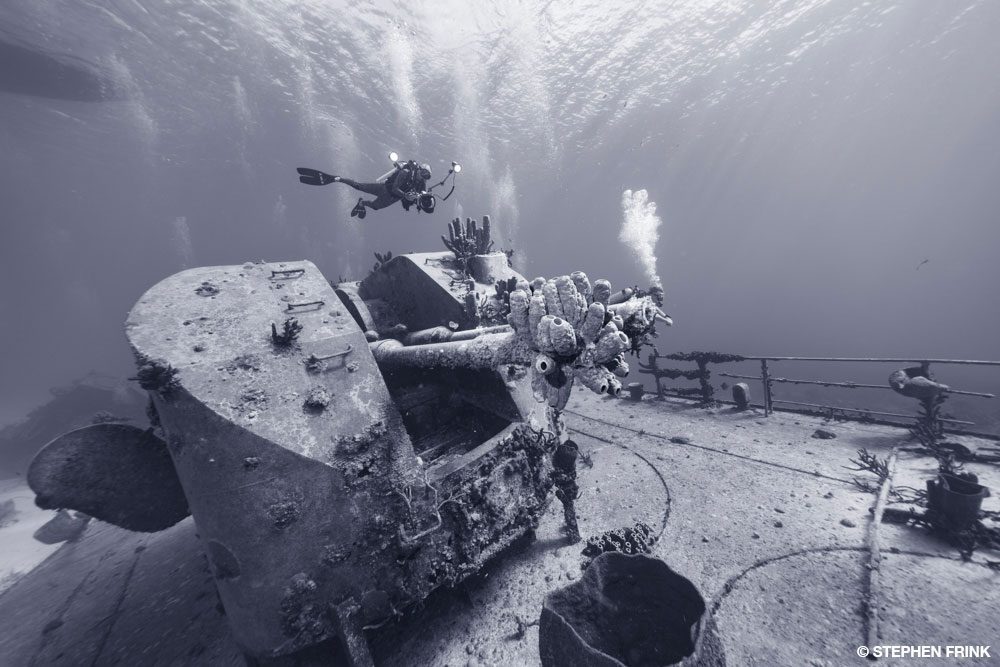
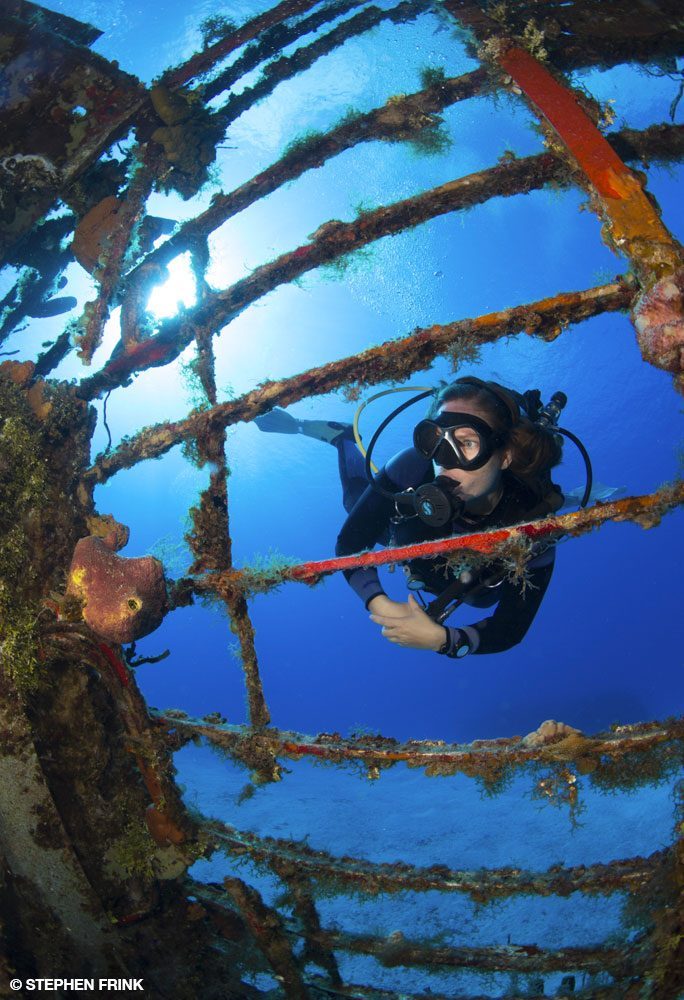
This ship was sunk as a dive site on Sept. 17, 1996, and now rests on its port side in about 85 feet (26 m) of water and is scattered into several large modules along the slope up to about 25 feet (8 m). The 330-foot (101-m) ship was a Russian frigate built for speed, not longevity. As a result, dissimilar metals (steel hull, aluminum superstructure) have fallen victim to electrolysis and storm-driven waves.
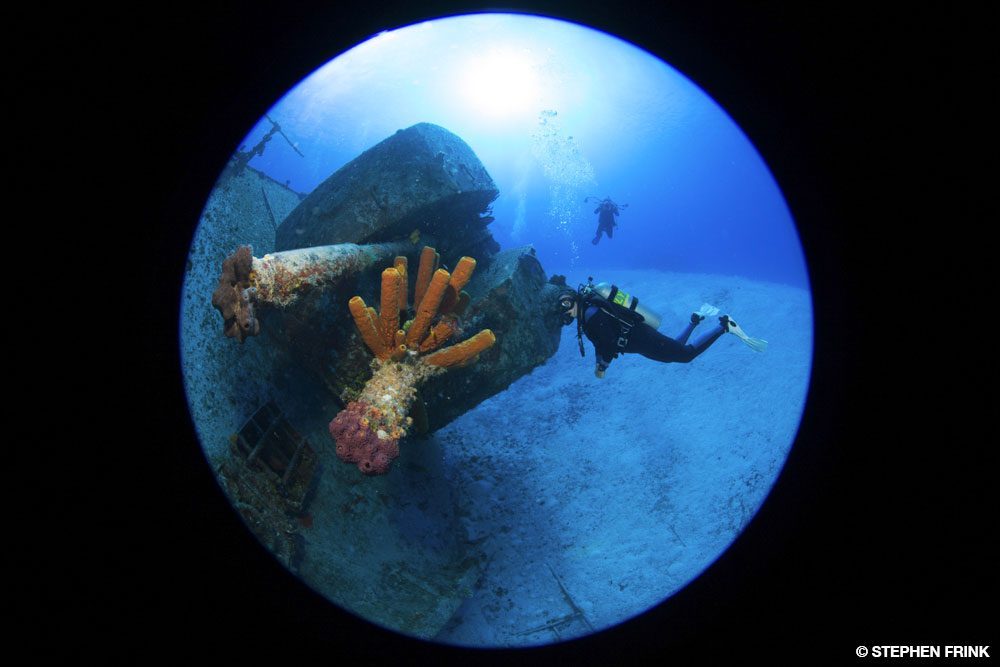
Hurricane Beryl stripped some of the sponges and scattered the ship a bit — enough that it looks different from when I last visited the Brac in 2022. It is still a great dive and one of the few recreational shipwrecks with its gun emplacements intact, both amidship and at the especially photogenic stern.
Randy’s Gazebo
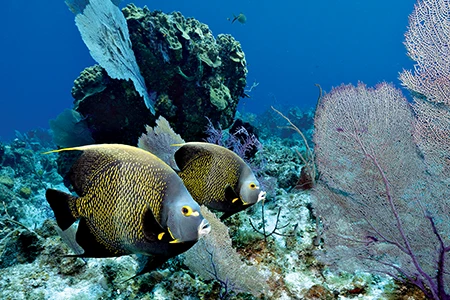
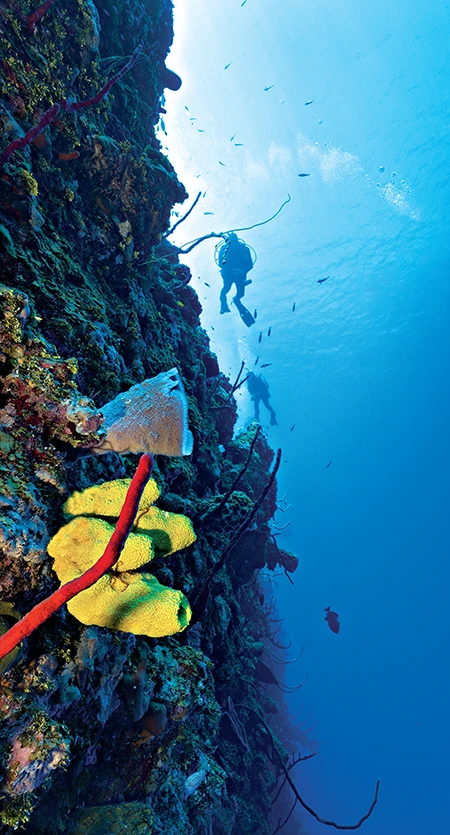
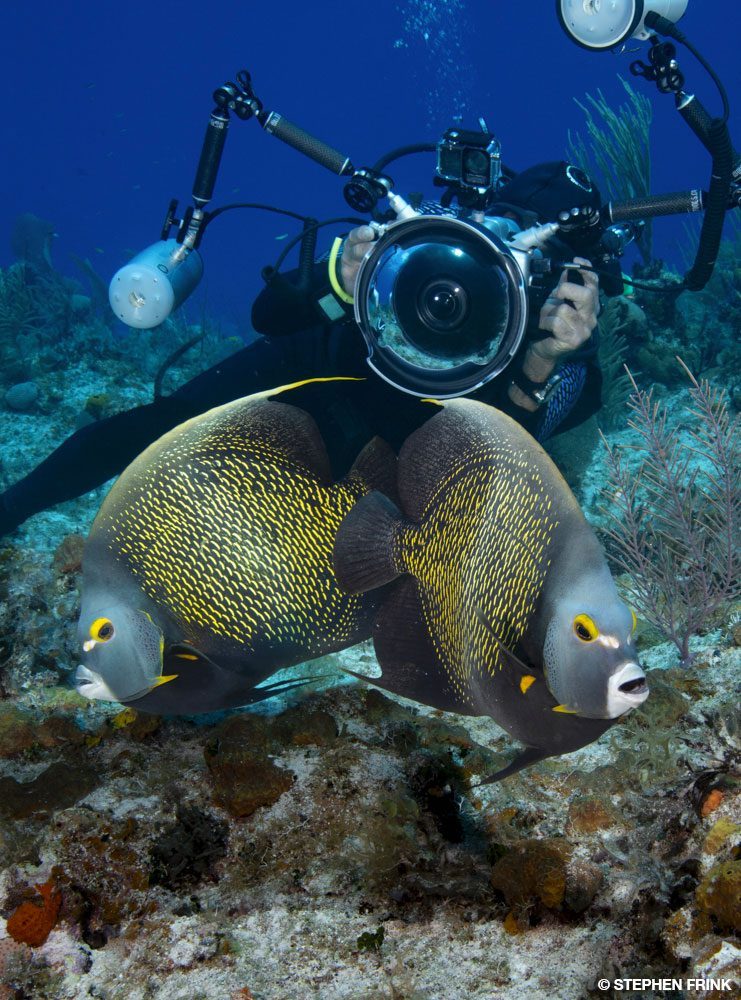
This site is another of the classic Bloody Bay wall dives, several of which have swim-through chimneys with openings along the reef shallows and exiting the wall at about 80 feet (24 m). This one is especially good in the shallows too, with cooperative French angelfish swimming among the sea fans.
From Nassau groupers to a variety of turtles, corals, sponges, and a plethora of marine life within its warm, clear, protected waters, the Little Cayman dive experience provides a mellow vibe. Feeling groovy indeed.

HOW TO DIVE IT
Getting there: Grand Cayman is among the Caribbean’s most easily accessed destinations, with direct flights from numerous carriers, including the nation’s flag carrier, Cayman Airways, arriving daily at Owen Roberts International Airport in George Town. Little Cayman requires a connecting flight on Cayman Airways’ de Havilland DHC-6 Twin Otter, landing at the Edward Bodden Airfield (LYB) on the island’s southwest tip. The airfield has a 3,275-foot (998-m) runway.
This quaint little airport may soon be replaced with a larger facility to accommodate larger airplanes and more passengers. The Cayman Compass reports that the proposed airfield will include a new terminal and a 4,000-foot-long (1,219-m) runway, with 767-foot-long (234-m) runway-end safety areas and an access road to the coastal road. Construction could begin next year if approved, with the airport operational by 2028. This development is controversial, as it could increase the island’s tourism capacity and invite new development.
When traveling to Cayman Brac or Little Cayman via the Twin Otter service, the baggage allowance is two checked bags with a combined weight of 55 pounds (25 kilograms) and one 15-pound (7-kg) carry-on per person. Excess weight charges are reasonable, only US$0.50 per pound.
The Twin Otter service has a hard limit on checked baggage, combining the weight of passengers plus cargo to ensure safe aviation. There can be as many as 10 flights a day from Grand Cayman to Little Cayman, so if your bags don’t make it on your flight, they will likely arrive on a subsequent flight, and then the resort will transport them to your room. The flight from Little Cayman to Grand Cayman is a bit more challenging because of the international connecting flights, but Cayman Airways is good about transporting bags to the various carriers. It is a hassle and angst-inducing, however, to arrive without your bags when a connecting flight deadline is approaching.
Conditions: The water temperature is usually 79°F–86°F (26°C–30°C) year-round, so a 3 mm wetsuit is perfect. Air temperatures are balmy, with the occasional cold snap dropping below 60°F (15.6°C). Visibility ranges from good to outstanding — 60 feet to 120 feet (18 to 37 m) — unless there is a strong, consistent wind. When the north wind picks up, the waves can batter the shore and stir up sediment on the shallow, hardpan seafloor, creating turbidity. The good news is that this leaves the southern dive sites with good visibility.
Dive operations prefer that recreational scuba diving be kept to 100 feet (30 m) and shallower, and currents aren’t often an issue. Most diving is in reasonably placid conditions. Dive operations are professional and safe, and most operate large and seaworthy boats. A hyperbaric chamber is in George Town, Grand Cayman.
Currency: Prices are typically quoted in Cayman dollars, abbreviated as CI$ (which in June was valued at about US$1.20). It is good to check if prices are quoted in U.S. or Cayman dollars.
Explore More
Find more about Little Cayman in this bonus photo gallery and video.

© Alert Diver – Q3 2025