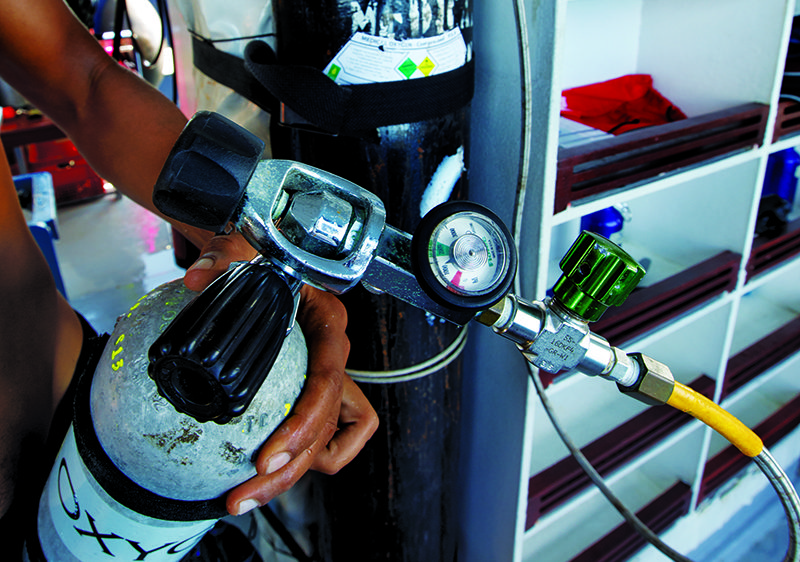
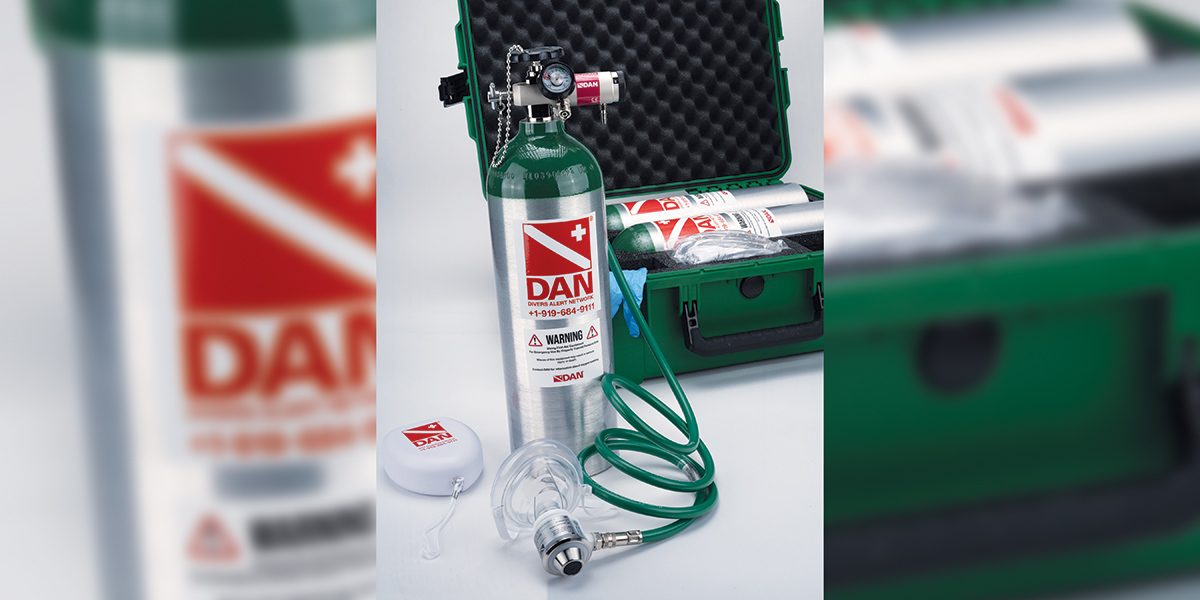
DAN INTRODUCED THE FIRST standardized emergency oxygen course for divers as lay providers in 1991. More people trained in oxygen delivery means that providers in dive locations worldwide need to have emergency oxygen units available. Obtaining oxygen refills, however, is an ongoing problem …
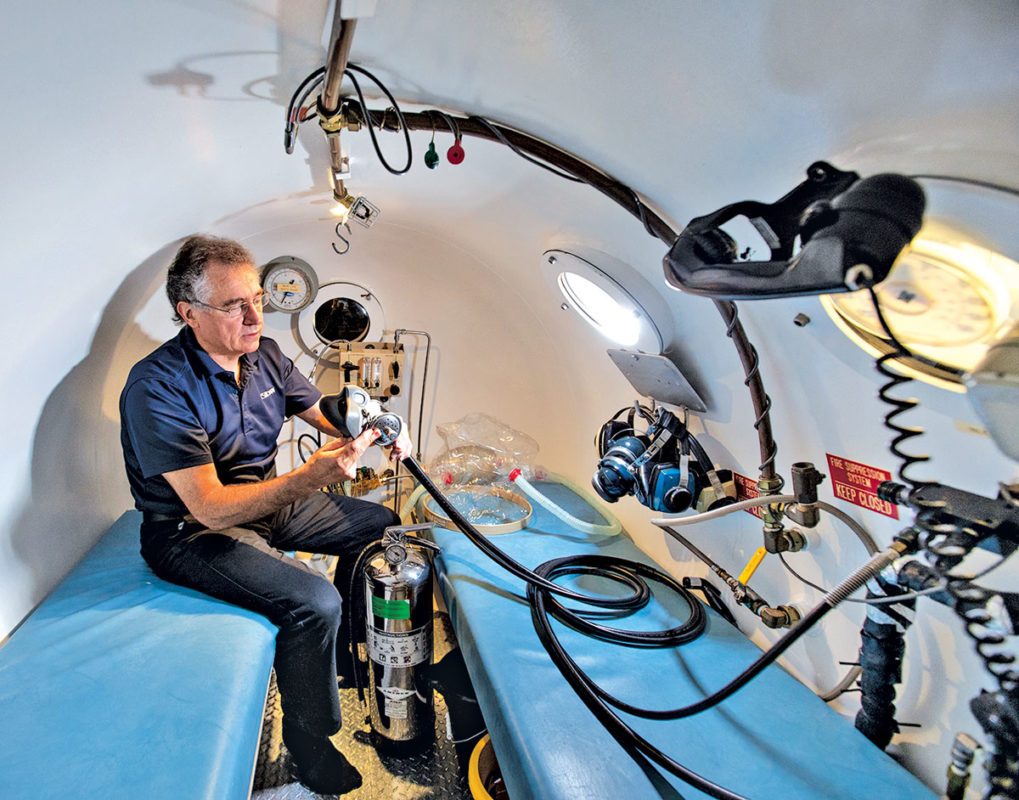
Divers Alert Network (DAN) maintains a global recompression chamber network, which consists of a database of all hyperbaric chambers with the capability and willingness to treat injured divers.
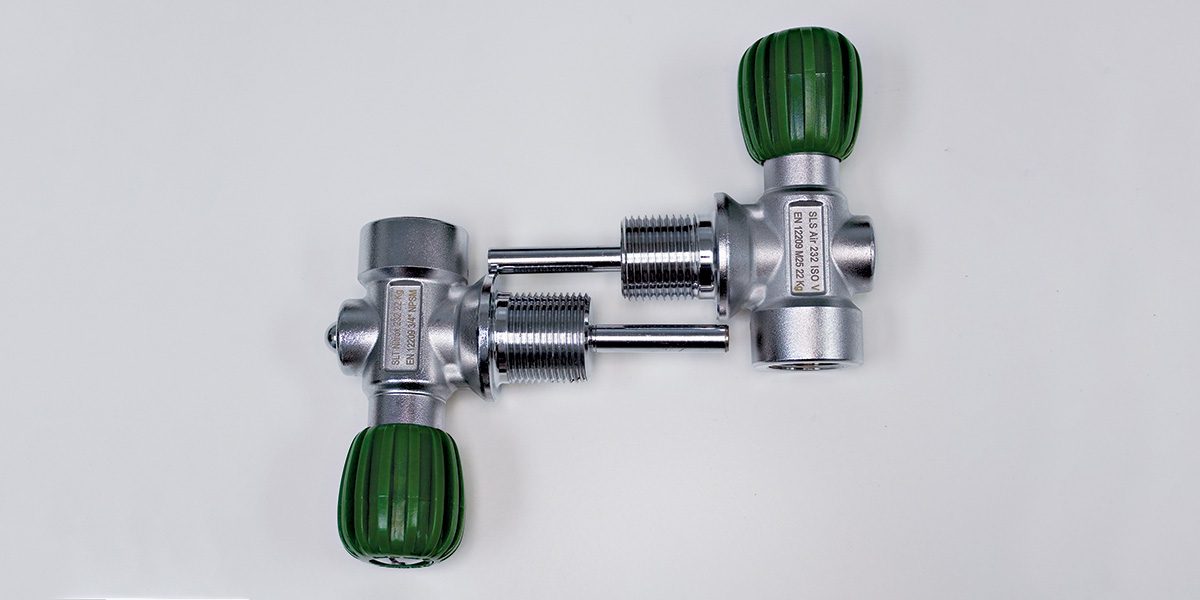
A VALVE-TO-CYLINDER MISMATCH mismatch recently resulted in a deadly outcome in Europe. This issue is preventable with formal, function-specific training and a basic understanding of scuba tank valves and cylinder threads.
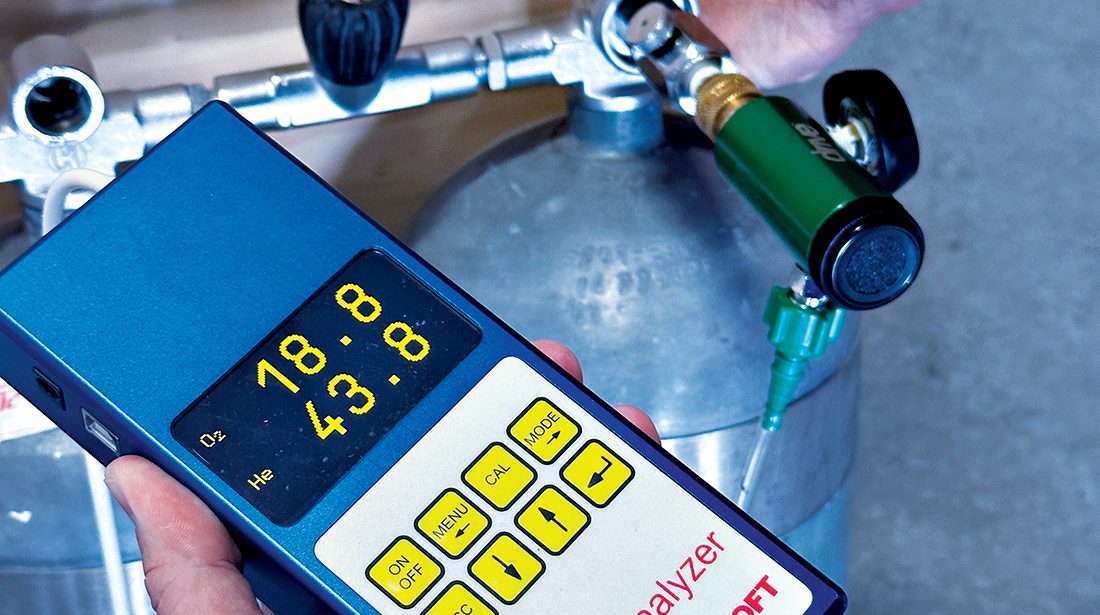
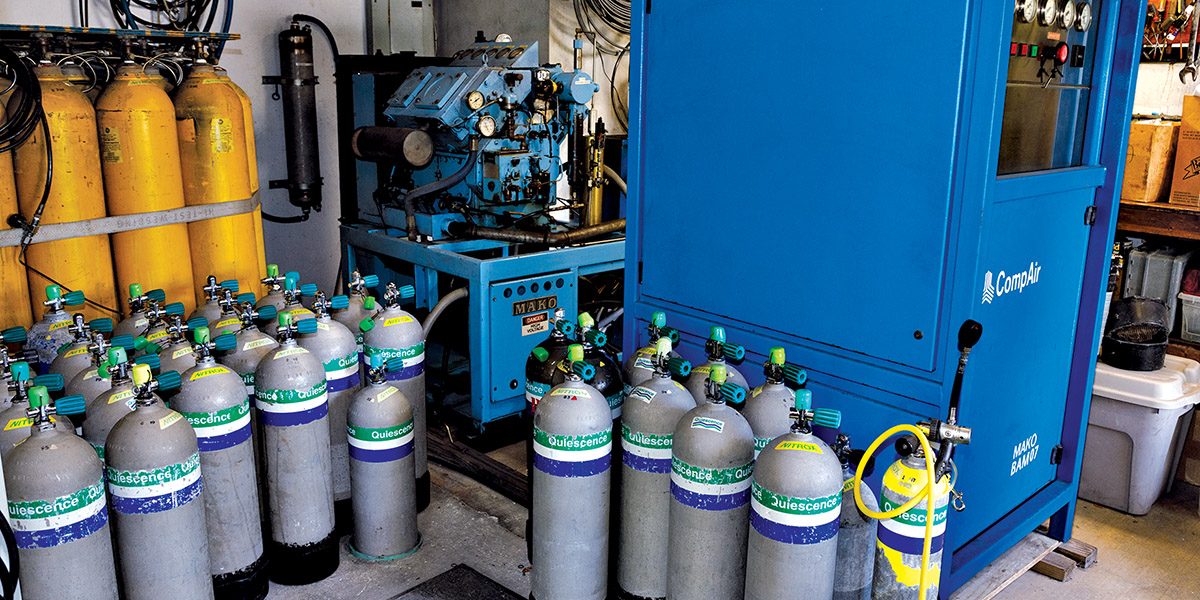
THE THREE GASES GENERALLY used in recreational and technical diving are oxygen, nitrogen, and helium. Nitrogen is the most abundant and is usually the default gas, but no one seems concerned about its purity, although the U.S. Compressed Gas Association (CGA) provides purity levels, or grades, for various applications.
AFTER THE INITAL SCARE AND LOCKDOWNS FROM COVID-19, divers soon started to explore ways to safely get back into the water. Disinfection has always been a consideration in diving, but we needed new standards to allay fears of uncontrolled transmission of infectious diseases.
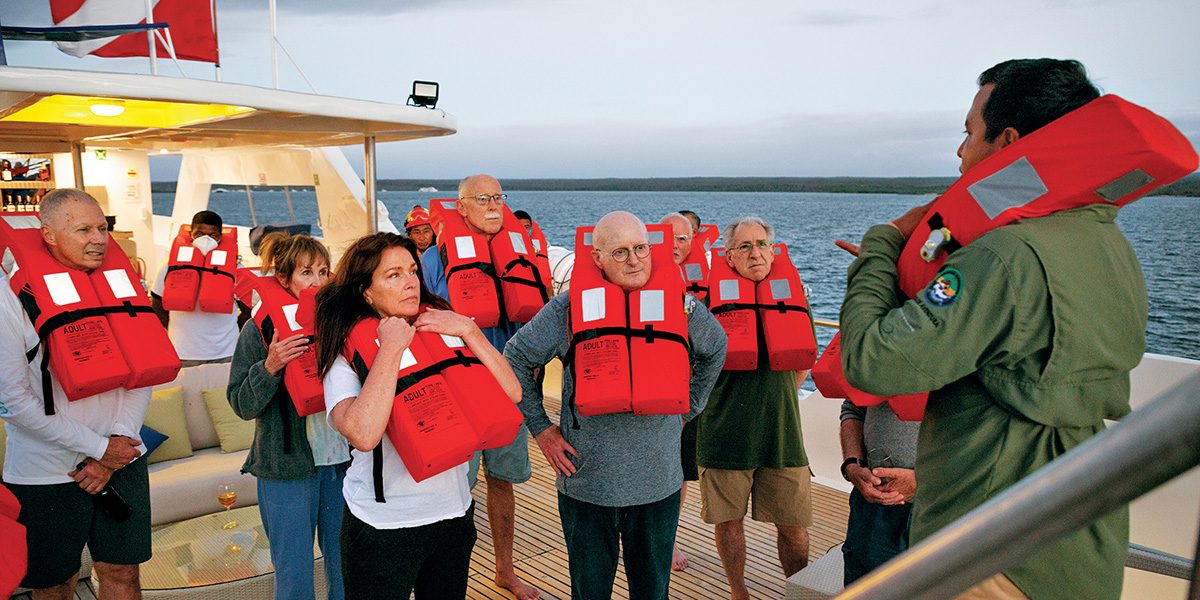
On Sept. 2, 2019, the small passenger vessel Conception burned to the waterline off Santa Cruz Island, California, killing 34 people. This wasn’t the first liveaboard fire, but the fearful reactions to this deadly tragedy echoed throughout the scuba industry. Liveaboard fires that have occurred since this incident have further fueled industry concerns.
Most divers know their scuba cylinders need a visual inspection every year and a hydrostatic test every five years (referred to as a requalification or a hydro). The actual regulations for cylinders and other dive equipment, however, are less clear.
The U.S. Food and Drug Administration (FDA) classifies oxygen as a drug when provided to an injured or ill person. It requires specific labeling and product controls and must be individually prescribed to someone suffering from an ailment. When used incorrectly, oxygen can cause damage to someone’s health.
DAN’s vision is to make every dive incident- and accident-free. Improvements in training, equipment, operations, dive boats, and dive computers have made diving significantly safer. The safety of a dive, however, relies heavily on the diver’s practices.
Diving has inherent risks. The human body was not designed to be underwater, and drowning, decompression illness, barotrauma, hazardous marine life injuries, and preexisting health issues all require an emergency response. Diving in remote areas introduces additional risks, especially access to medical care.