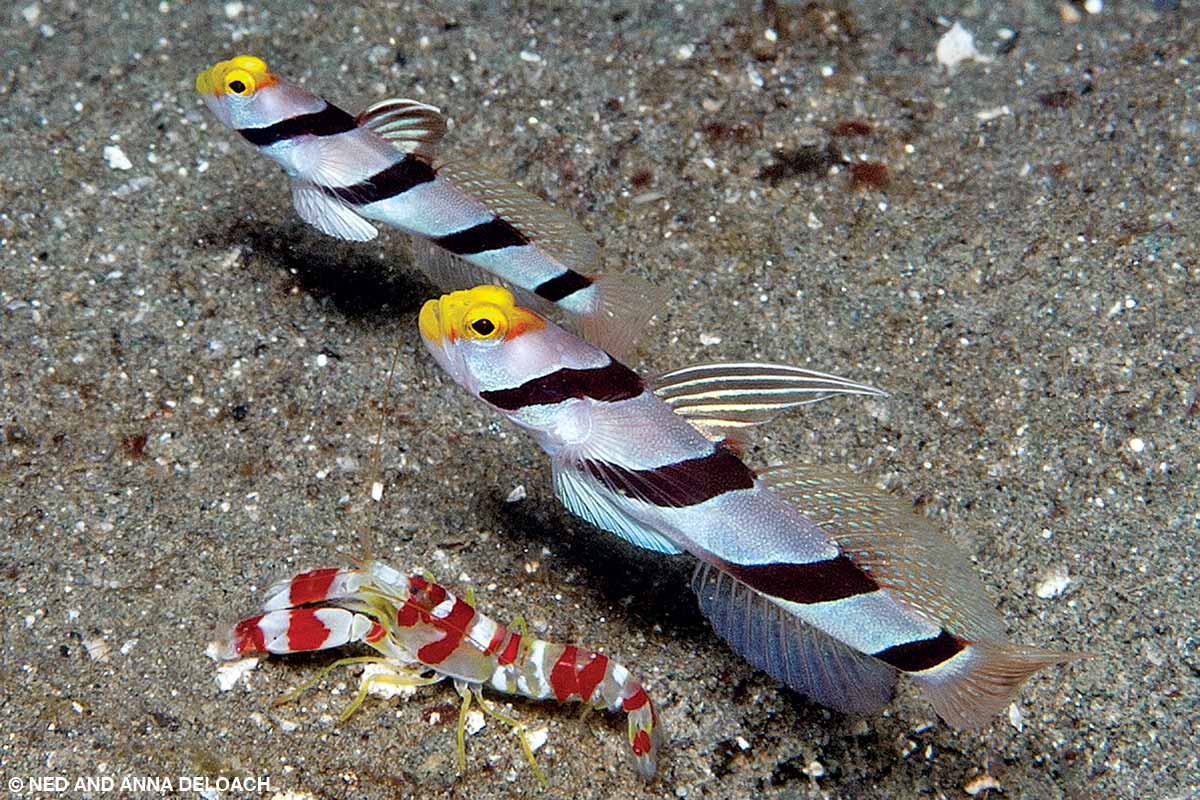
Interactions between different species, whether above or below water, typically revolve around confrontations between predators and prey. At the opposite and more harmonious end of the spectrum, a scattering of unrelated species coevolved to form lifelong alliances for their mutual security. These relatively rare go-along-to-get-along partnerships provide a net benefit for both parties, improving each species’ reproductive success. The close living arrangement between weak-eyed alpheid snapping shrimp and sharp-eyed partner gobies is a classic example of symbiosis in the sea.
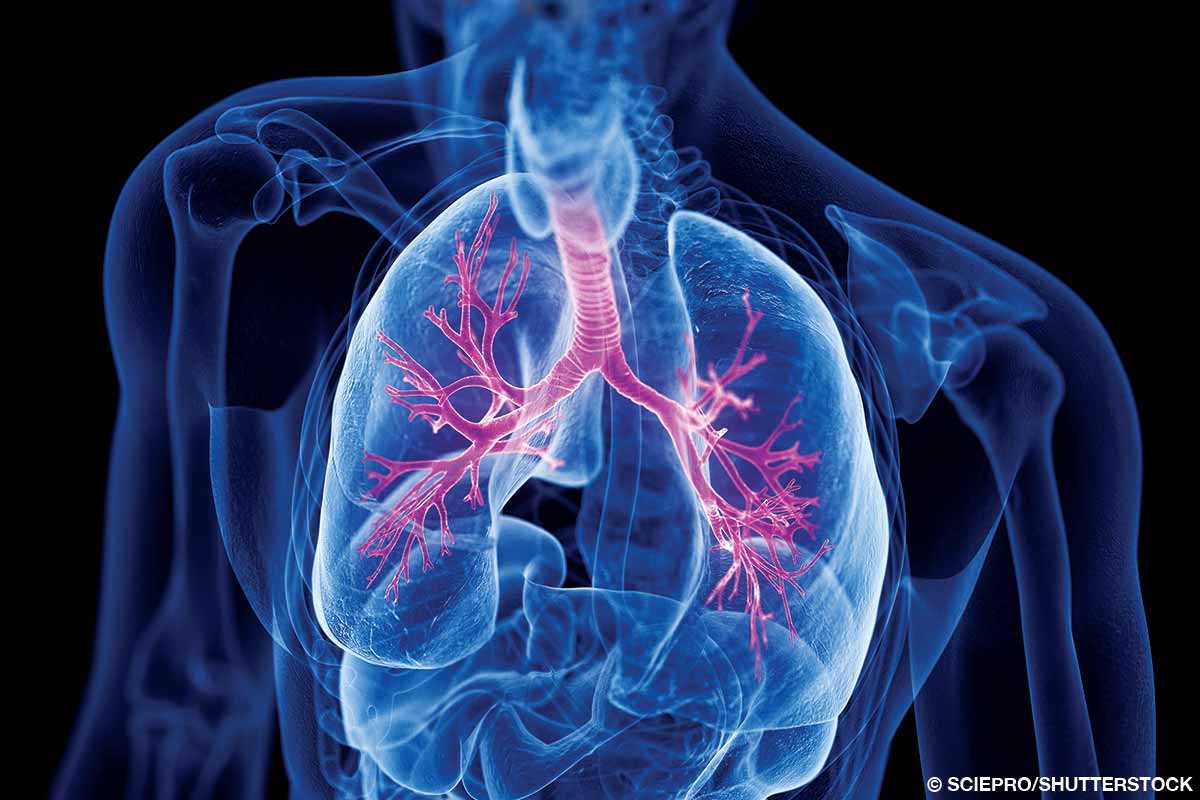
Reduced exercise tolerance is common for those with chronic obstructive pulmonary disease and poses risks for diving. There can be strenuous activity involved with managing currents, swimming on the surface in choppy seas or pulling yourself and your heavy gear up a ladder and onto an unsteady boat. With COPD, shortness of breath during exertion doesn’t mean you are out of shape; it means you cannot rid your body of carbon dioxide and replace it with the oxygen needed to meet the demand of your exertion.
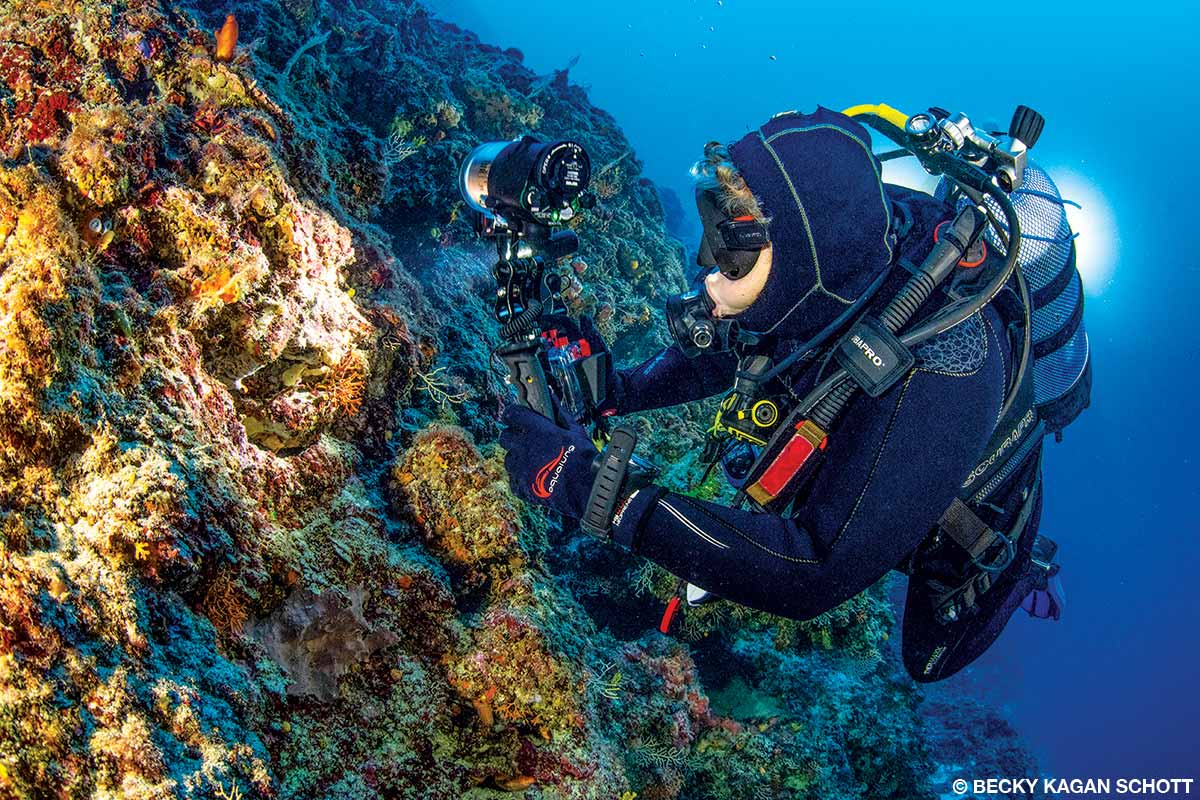
Gloves are one of the most overlooked and individualized pieces of dive equipment. When choosing gloves, consider the kind of diving you plan to do and what you expect from your hand protection. When selecting gloves, consider the following factors: thermal protection, fit, dexterity, hazard protection, impact resistance and materials.
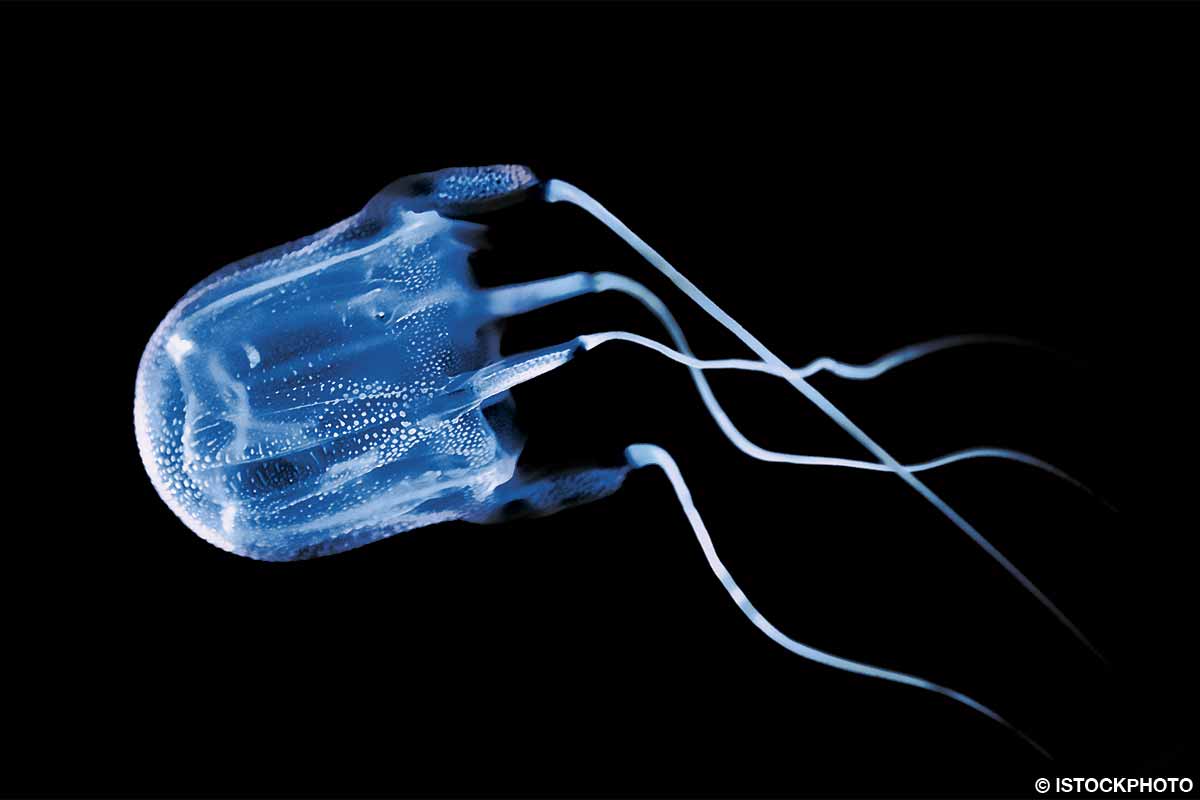
Nitrogen narcosis can lead to deadly consequences. Understanding the risk factors and ensuring that you and your dive buddies have discussed how to mitigate risk can potentially save lives. If you are stung by a jellyfish, watch for symptoms associated with Irukandji syndrome. If symptoms develop, know that it is a potentially deadly condition that doctors can help treat. Pay attention to local marine life bulletins and announcements. The best ways to mitigate jellyfish envenomation risk are to wear full exposure suits and avoid jellyfish when they are prevalent in the water.
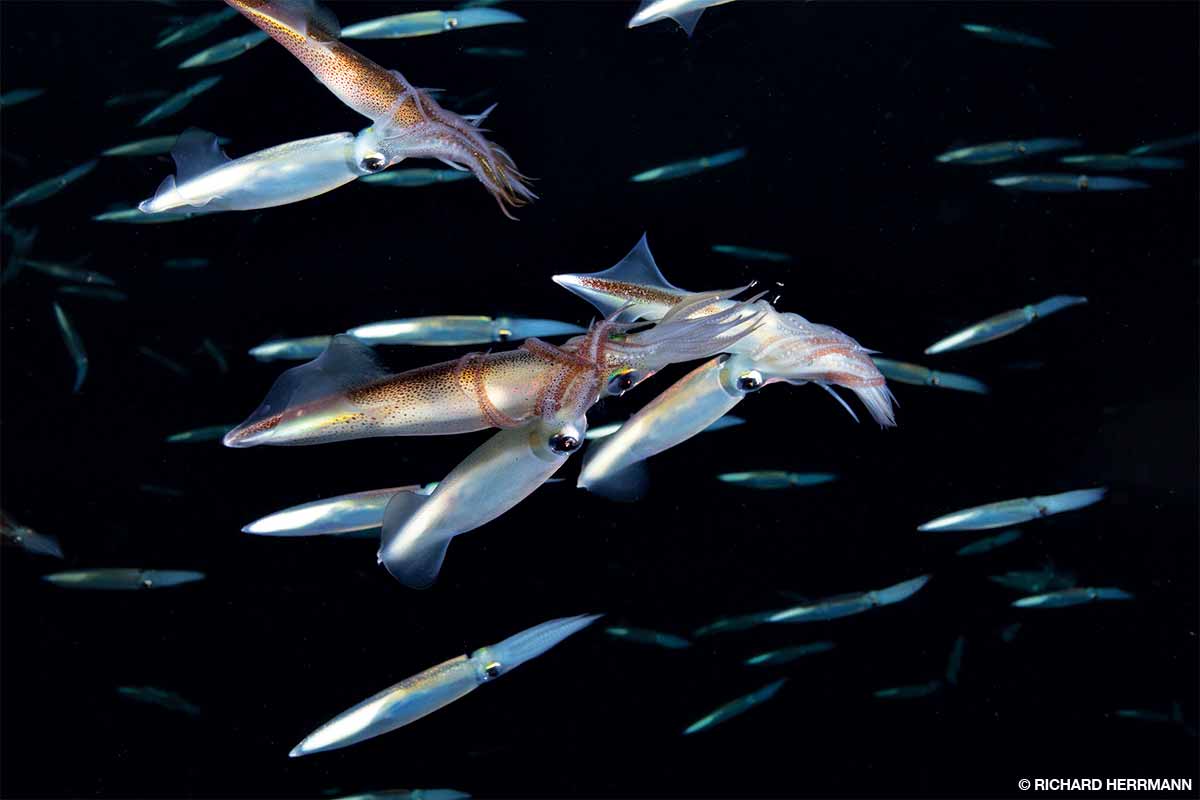
As you drop into water as black as night, thousands of pulsating squid in search of mates suddenly surround you. Mating activity is everywhere as multiple males attack single females. The excited squids’ chromatophores (pigment cells) flash colors reminiscent of a Las Vegas neon sign and put you in the middle of a living, moving light show. The action is so frenetic that animals are in your gear and bounce off every inch of your body.