El buceo en pecios se convirtió en la moda del turismo de buceo tras el éxito de la película The Deepen 1977. Como empresario de buceo en ciernes en aquella época —había abierto el Mediterranean Diving Center en Herzliya, Israel, en 1970 y ampliado sus operaciones al mar Rojo en 1972—, quería entrar en el negocio del turismo, pero me enfrentaba a un reto importante: nuestra comunidad de buceo del mar Rojo aún no había descubierto ningún pecio sumergido.
Una noche, reuní a un grupo de amigos para pensar en cómo atraer a los turistas buceadores. Mi compañero de buceo inventó una historia fantástica sobre un barco hundido cargado de monedas de oro, enviado por los británicos para pagar a los combatientes beduinos de Lawrence de Arabia, que estaban ayudando a Gran Bretaña en su guerra contra los turcos otomanos en la Primera Guerra Mundial. En su fantasía, el barco nunca llegó a su destino, chocó contra un arrecife y se hundió convenientemente en nuestra región.
Empecé a enviar avances a agencias de viajes y publicaciones especializadas en buceo, insinuando que en nuestras aguas había un naufragio con un posible alijo de monedas de oro. Incluso aparecieron artículos sobre este misterioso naufragio en algunas de las principales revistas de buceo, lo que generó expectación y atrajo a buceadores a Sharm El Sheikh.
El GPS de tres cigarrillos
Aunque la historia de Lawrence de Arabia era pura ficción, estábamos decididos a encontrar un pecio que pudiera sustituir a nuestra invención. El conocimiento local era nuestro mejor recurso, así que me puse en contacto con mi amigo Suleiman, un pescador beduino, rastreador e historiador nativo.
Cuando le pregunté sobre posibles naufragios hundidos, se quitó el gorro de lana, se rascó la cabeza y dijo que podría haber algo cerca de Ras Muhammad, en el golfo de Suez. Cuando le presioné para que me dijera cómo encontrarlo, me respondió: «Da la vuelta a Ras Muhammad con tu barco, navega en dirección a la puesta de sol, fúmate tres cigarrillos y, cuando hayas terminado el tercero, deberías ver algunas olas rompiendo en un arrecife costero. En el punto suroeste de los arrecifes hay un excelente lugar para pescar, y según la tradición local, allí se hundió un barco».
Poco después, estaba guiando a un grupo de buceadores estadounidenses liderados por Carl Roessler, de See and Sea Travel, y les sugerí un día de buceo exploratorio con la posibilidad de encontrar un pecio. Estuvieron de acuerdo y, siguiendo las indicaciones de navegación de Suleiman, localizamos el arrecife costero de Sha‘ab Mahmoud.
Recuerdo lo que sucedió ese día de 1977 como si fuera ayer, en lugar de hace medio siglo. Me preparé para una inmersión de reconocimiento y, tan pronto como me sumergí, allí estaba. Extendido debajo de mí, boca abajo, justo debajo de nuestro barco de buceo, estaba el primer naufragio del Sinaí. En aquel momento no sabíamos que Jacques Cousteau había buceado en el Thistlegorm , en el cercano arrecife de Sha‘ab Ali, a principios de la década de 1950. Más tarde supimos que había escrito sobre él, pero nunca reveló su ubicación; otros buceadores comenzaron a visitarlo a principios de la década de 1990.
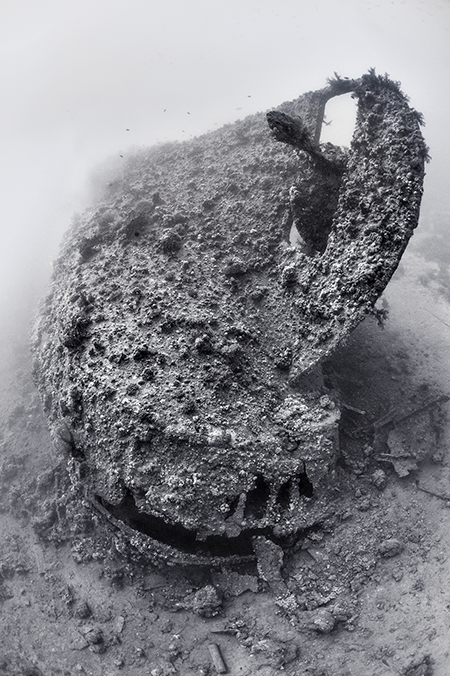
Debo señalar que otros afirmaron haber encontrado previamente el pecio, pero nadie puede saber con certeza quién fue el primero, ya que el secreto era la norma. Lo que es seguro es que nuestro equipo fue el primero en investigarlo y en dar a conocer el Dunraven a la comunidad internacional de buceadores.
Revelando la identidad del Dunraven
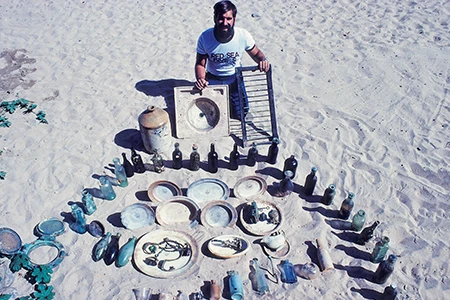
Confirmar la identidad del pecio llevó tiempo. Durante al menos un año, no supimos su nombre ni su historia. El gran avance se produjo cuando un grupo de buceadores exploró la cocina del barco y encontró platos de porcelana con el nombre del barco.
La confirmación definitiva llegó tras una tarea más ardua: en una inmersión posterior, nuestro equipo utilizó una amoladora neumática para limpiar el coral que cubría la popa del barco, revelando el nombre Dunraven. Con eso, la confirmación fue definitiva.
Otros artefactos encontrados en los restos, como botellas de vidrio con forma de torpedo de la antigua bebida carbonatada Webb's Double Soda, proporcionaron pistas históricas cruciales. Sus fechas de fabricación retrasaron la cronología de los restos hasta la década de 1870, desmintiendo aún más nuestra narrativa de Lawrence de Arabia.
Llevando el Dunraven al mundo
Tras el descubrimiento inicial, convencí al productor de cine israelí Dan Arazi, de Kastel Films, para que produjera un documental, que despertó el interés de la BBC y su prestigiosa serie documental The World About Us. El famoso cámara submarino Chuck Nicklin rodó una película de media hora sobre el Dunraven titulado Mystery of the Red Sea Wreck.
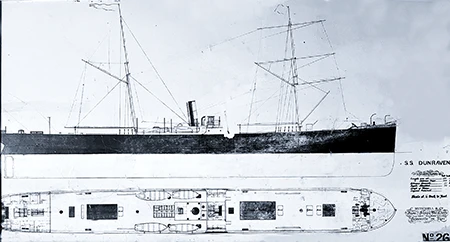
El equipo de investigación de la BBC trabajó con los registros del Almirantazgo británico para confirmar que el SS Dunravenun buque mercante británico construido en Newcastle upon Tyne y botado en 1873, se hundió el 22 de abril de 1876 tras chocar contra el arrecife de Sha‘ab Mahmoud. Afortunadamente, nadie pereció en el naufragio.
Los peligros de bucear en el pecio
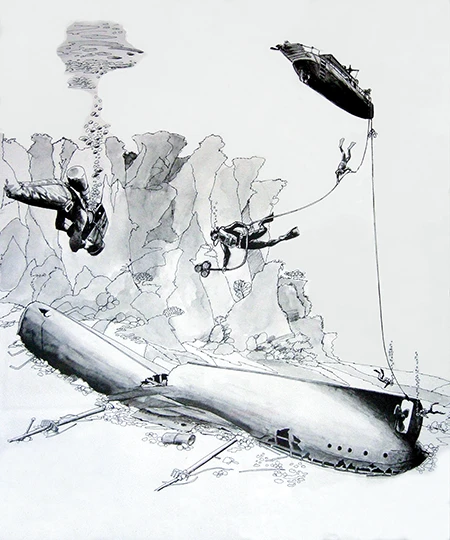
La realización del documental supuso muchas inmersiones repetitivas con descompresión. En aquella época no existían los modernos ordenadores de buceo, por lo que los buceadores se basaban en las tablas de descompresión de la Marina de los Estados Unidos y en los medidores de descompresión Scubapro SOS de tipo vejiga de . Teníamos tanques de repuesto en líneas de descenso y los colocábamos estratégicamente en la arena en los puntos de entrada y salida del pecio para garantizar la seguridad de los buceadores.
Tuve una experiencia angustiosa durante una inmersión de penetración cuando otros buceadores levantaron el fondo arenoso y me hicieron perder de vista mi tanque de reserva. Me estaba quedando sin aire a 30 metros de profundidad, pero logré localizar la botella cuando vi pequeñas burbujas que ascendían a través de la nube de sedimentos desde un regulador con fugas. Respirando cada vez con más dificultad, pude localizar y purgar la segunda etapa, insertar la boquilla y tomar la respiración más larga de mi vida. Fue una de las situaciones más aterradoras en mis 50 años de buceo profesional.
Casi al mismo tiempo que se rodó el documental, la revista Skin Diver envió a su legendario editor y cineasta Jack McKenney a escribir un reportaje sobre el buceo en el mar Rojo para la edición de febrero de 1979 y a rodar una película promocional titulada God’s Other World: The Red Sea(El otro mundo de Dios: el mar Rojo). Fue una de las primeras películas sobre el buceo en el mar Rojo para el público estadounidense, y en ella aparecía elDunraven. La película se estrenó en la feria DEMA Show en 1979, y estos esfuerzos dieron lugar a la notoriedad instantánea del pecio. También narré aquellos emocionantes primeros días del buceo en el mar Rojo en mis memorias, Treasures, Shipwrecks and the Dawn of Red Sea Diving (Tesoros, naufragios y los albores del buceo en el mar Rojo).
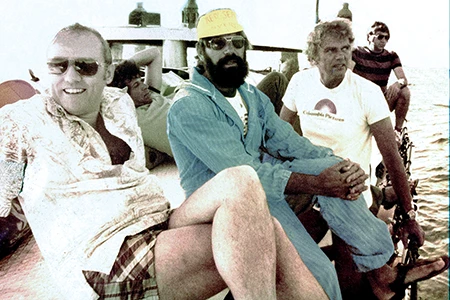
Una carrera contra el tiempo y las fronteras cambiantes
El esfuerzo por documentar y explorar el Dunraven se convirtió en una carrera contra el tiempo por múltiples razones, más allá de la típica urgencia de explorar un nuevo pecio antes de que otros lo saquearan. En aquella época, en el mar Rojo se cernía un importante factor geopolítico: el tratado de paz de noviembre de 1979 entre Israel y Egipto. Los Acuerdos de Camp David estipulaban que Israel debía retirarse del Sinaí por fases.
El 25 de enero de 1980, la primera fase de la devolución del Sinaí por parte de Israel a Egipto dividió la península a lo largo de una línea que iba desde El Arish, en el mar Mediterráneo, hasta Ras Muhammad, en el extremo sur del mar Rojo. La nueva frontera provisional volvió a situar al Dunraven en aguas egipcias, junto con el lugar de buceo más famoso del Sinaí, Ras Muhammad. Estos dos lugares de buceo privilegiados pronto estarían fuera de nuestro alcance como israelíes, al menos durante algún tiempo. Solo después de la retirada completa de Israel en abril de 1982, nuestra nueva empresa de cruceros de buceo, Fantasea Cruises, reanudó los viajes de buceo al Dunraven y otros lugares del golfo de Suez.
La tripulación del Dunraven yace invertido en dos secciones, a profundidades que oscilan entre los 15 y los 29 metros. Ofrece un buceo de primera categoría y su descubrimiento se convirtió en parte de una exploración más amplia de los pecios del mar Rojo. Los buceadores pueden ahora disfrutar de docenas de excelentes pecios repartidos por todo el mar Rojo.
Explore Más
Obtenga más información sobre el descubrimiento del Dunraven y el desarrollo del buceo en el mar Rojo en estos vídeos.
© Alert Diver – Q4 2025