Dans les coulisses du National Aquarium de Baltimore, dans le Maryland, une urgence inattendue a mis à l’épreuve les compétences et le sang-froid de deux intervenants formés. La journée avait commencé comme les autres, avec des tâches routinières et des interactions familières, avant de basculer en un instant lorsqu’une personne s’est effondrée près de l’entrée du personnel.
Les employés de l’aquarium Angel Britton et Tanner Hughes ont réagi immédiatement. Leur intervention coordonnée, fondée sur des années de formation et de préparation, met en évidence une vérité essentielle : en situation d’urgence, le travail d’équipe peut faire toute la différence. Cet incident a non seulement mis leurs capacités à l’épreuve, mais a aussi souligné l’impact déterminant du travail d’équipe, de la préparation et de la prise de décision.
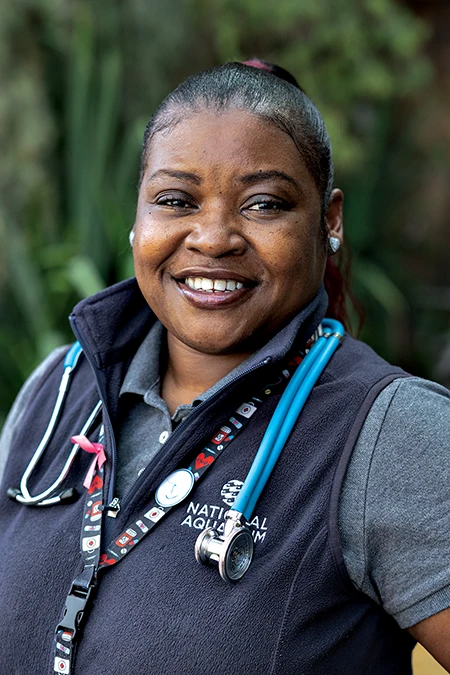
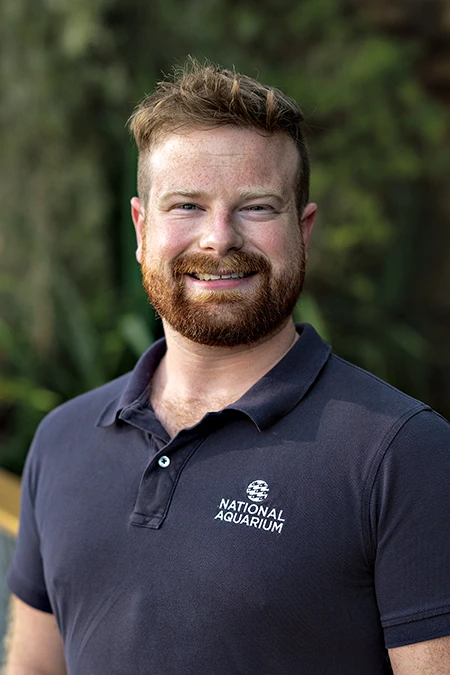
Britton et Hughes viennent d’horizons professionnels différents, mais tous deux étaient prêts à intervenir lorsque chaque seconde comptait. Britton est la première intervenante principale et agente de sécurité senior, avec plus de 25 ans d’expérience en gestion des urgences. Certifiée en premiers secours auprès de plusieurs organismes, elle est régulièrement confrontée, dans son travail quotidien, à des situations variées, allant de l’épuisement dû à la chaleur à des épisodes liés au diabète. Toujours soucieuse de maintenir ses compétences à jour, elle venait tout juste de terminer le cours DAN Diving First Aid la semaine précédant l’incident — une révision précieuse des procédures d’urgence, venue renforcer une solide expérience.
Hughes est l’un des assistants responsables de la sécurité des plongeurs de l’aquarium, coordinateur des plongeurs bénévoles, instructeur de plongée en milieu naturel certifié par la Professional Association of Diving Instructors (PADI) et instructeur DAN — des qualifications qui se sont révélées déterminantes dans cet incident. Bien que son rôle soit principalement axé sur la sécurité en plongée, ses compétences en premiers secours sont tout aussi applicables à terre. Leur expérience et leur formation combinées les ont parfaitement préparés à faire face à cette situation d’urgence.
L’après-midi de l’incident, Britton a entendu un appel radio signalant qu’une personne s’était effondrée. Se trouvant à proximité, elle s’est rapidement rendue sur place et a découvert une personne au sol, recouverte de plusieurs cartons lourds. Elle a immédiatement retiré les cartons, évalué la victime et constaté qu’elle était inconsciente et ne respirait pas. S’appuyant sur ses années de formation et son expérience en tant que première intervenante, elle a immédiatement commencé la réanimation cardio-pulmonaire (RCP) et a demandé à un témoin d’appeler le 911 et d’aller chercher un défibrillateur externe automatisé (DEA).
Au même moment, Hughes marchait dans un couloir voisin lorsqu’il a entendu quelqu’un compter un rythme qu’il a tout de suite reconnu comme celui des compressions thoraciques. Sa première pensée a été qu’il n’était pas au courant d’un exercice ce jour-là. Il a rapidement compris qu’il ne s’agissait pas d’un exercice et s’est précipité vers la source du bruit. À son arrivée, il a trouvé Britton en train de pratiquer la RCP. Il a lui aussi demandé des gants et un DEA et a commencé à l’assister. Les deux intervenants ont rapidement trouvé un rythme, alternant les rôles et travaillant ensemble pour fournir une RCP de haute qualité.
Lorsqu’un DEA a été apporté, ils ont tenté de l’utiliser, mais celui-ci ne fonctionnait pas correctement. Malgré ce contretemps, ils sont restés concentrés sur l’essentiel et ont poursuivi la RCP jusqu’à l’arrivée des services médicaux d’urgence (EMS), plus de neuf minutes après que Britton a commencé les compressions.
À l’arrivée des secours, la prise en charge s’est faite rapidement et de manière fluide. Les équipes ont relayé Britton pour les compressions, installé une voie aérienne et demandé à Hughes de poursuivre la ventilation au ballon insufflateur pendant qu’elles mettaient en place un dispositif LUCAS (Lund University Cardiopulmonary Assist System) afin d’assurer des compressions mécaniques. La personne a été évacuée avec un pouls, mais ne respirait pas encore de manière autonome. Grâce à la rapidité d’intervention et à la continuité des soins assurés par Britton et Hughes, la victime s’est par la suite rétablie à l’hôpital.
L’intensité de l’intervention ne s’est pas arrêtée avec le départ de l’ambulance. Répondre à une telle urgence a un impact profond sur les intervenants. Ce qui devait être une journée de travail ordinaire s’est transformé en une expérience marquée par une forte montée d’adrénaline, à la fois mentalement et physiquement éprouvante. Heureusement, les deux intervenants ont pu compter sur des systèmes de soutien solides — notamment leurs collègues de l’aquarium, leurs proches et l’un de l’autre — ce qui leur a permis de gérer leurs émotions et de prendre du recul sur l’ensemble de l’incident.
Avec le recul, tous deux restent modestes quant à leur rôle, tout en reconnaissant que de nombreux facteurs se sont alignés ce jour-là. Le moment, le lieu, la formation et la préparation ont créé un enchaînement rare et favorable de circonstances.
La victime s’est effondrée dans une zone où elle a été rapidement repérée, et des intervenants formés ont pu agir immédiatement. Si l’incident s’était produit seulement 30 minutes plus tôt ou plus tard, Britton aurait été à l’autre bout de l’aquarium et Hughes sous l’eau avec ses plongeurs bénévoles. Leur formation récente, leur rapidité d’intervention, leurs décisions et leur coordination ont sans aucun doute contribé à l’issue positive de cet événement.
Britton et Hughes ont été récompensés par le DAN Provider Award pour l’application exemplaire de leurs compétences en premiers secours lors de cet incident. Cette distinction met en valeur non seulement les personnes impliquées, mais aussi l’importance d’une formation à jour et d’une préparation continue. Tous deux ont souligné l’importance de la certification en premiers secours, ainsi que le rôle essentiel de la pratique et de la confiance pour rester calmes et efficaces dans des situations de forte pression.
Des incidents comme celui-ci rappellent que les urgences surviennent sans prévenir et que ce sont la formation, l’état d’esprit et le travail d’équipe de personnes comme Britton et Hughes qui peuvent transformer une situation critique en issue favorable. Les compétences acquises dans le cadre du cours Diving First Aid — premiers secours, RCP, gestion de scène, utilisation du DEA — ne sont pas abstraites, mais constituent de véritables outils de sauvetage qui, lorsqu’ils sont maîtrisés, peuvent changer le cours d’une vie.
L’histoire de Britton et Hughes va bien au-delà d’un simple dénouement heureux. Elle illustre avec force l’importance d’être préparé et de savoir garder son sang-froid — et rappelle que derrière chaque sauvetage réussi se trouve quelqu’un qui a choisi d’être prêt.
© Alert Diver – Q4 2025