Disney’s Magic Kingdom is known as “The Most Magical Place on Earth,” but I think the most magical place is inside the Earth while experiencing the allure of Florida’s freshwater springs.
These are not merely dive sites; they are hidden gems fed by a massive artesian aquifer, which pumps billions of gallons of fresh water daily. The clear water and comfortable 72°F (22°C) temperatures year-round offer something everyone can enjoy, from kayaking and snorkeling to cave diving.
Watching the light dance through the turquoise water and mix into an underwater rainbow has always captured my imagination. Springs offer exceptional visibility, year-round access, and the ability to visit the same sites as you expand your dive experience. If you’re dreaming of a destination that blends serenity, adventure, and wildlife, then the springs are like a Disney World for divers who want to experience the real Florida.
I’ve spent decades photographing springs throughout the state. My first visit was when I was 14 years old, after my family moved to Orlando. Ocean charters were out of reach, so I turned inland. The springs were inexpensive, accessible, and almost never affected by the weather. They were a controlled place for a new diver to gain more experience. These charming environments ignited in me a lifetime passion for diving into the inviting blue waters, leading to caverns and cave systems spanning miles beneath the surface.
Florida is home to the world’s largest concentration of freshwater springs — the Florida Geological Survey has identified more than 1,000 statewide. There are about 33 first-magnitude springs discharging at least 100 cubic feet (2.8 cubic meters) of water per second. Most of the springs are in North and Central Florida, where they sustain ecosystems for fish, native plants, and manatees.
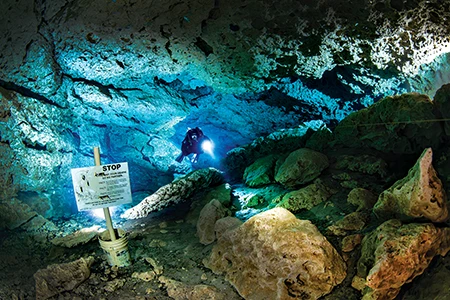
I first dived Manatee Springs, Blue Grotto, Devil’s Den, Ginnie Springs, and Blue Springs near Orange City. I was a new photographer attempting to capture the mesmerizing sunbeams in the caverns and was nervous about descending into them with my small dive light, trying to navigate the powerful currents as my exhalation bubbles rushed by my face. I only went as far as the underwater Grim Reaper signs warning, “Stop. Prevent Your Death. Go No Farther.” As my light pierced the darkness, I wondered where the passageways led.
After seeing a handful of springs, I wanted to expand where I could dive, so I signed up for a cavern course. That training opened many new sites, and I can’t stress enough the importance of proper training for overhead environments. As inviting as caverns and caves appear, you can get in over your head quickly if you don’t correctly manage your air supply, run a guideline, and use the appropriate equipment and dive techniques.
A cavern course provides specialized training for safe overhead diving when you don’t have direct access to the surface. I continued my training over the years and became a full cave diver, but I eventually wanted to see deeper caves, so I took courses in trimix, diver propulsion vehicles (DPVs), and rebreathers. While I didn’t set out to become a technical diver, my love for and curiosity about the springs led me to explore more world-class sites.
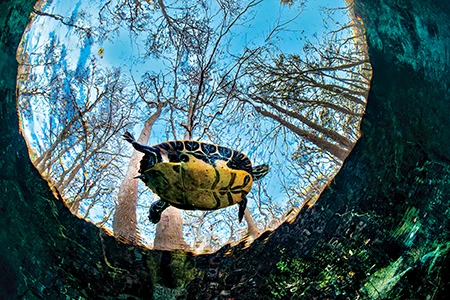
in the crystal-clear waters.
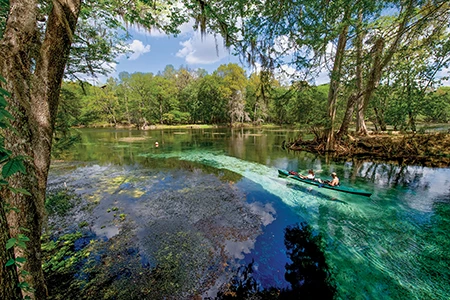
Open-Water Diving in Springs
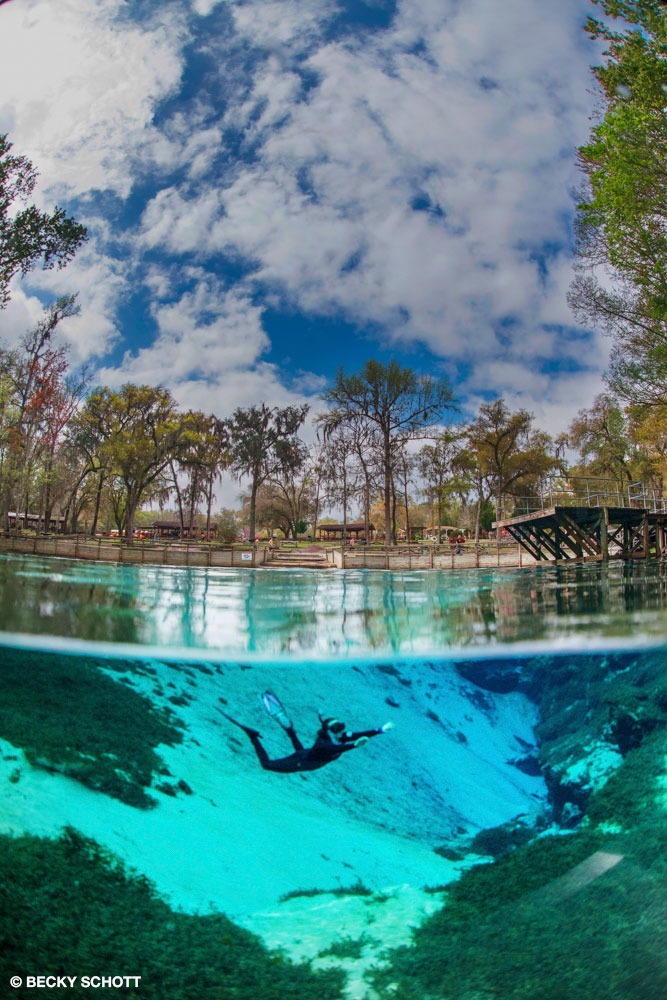
Rainbow River, Ginnie Springs, and Ichetucknee Springs are some of the state’s most popular locations, with visibility routinely exceeding 100 feet (30 meters). These sites also serve as playgrounds for swimmers, tubers, and freedivers.
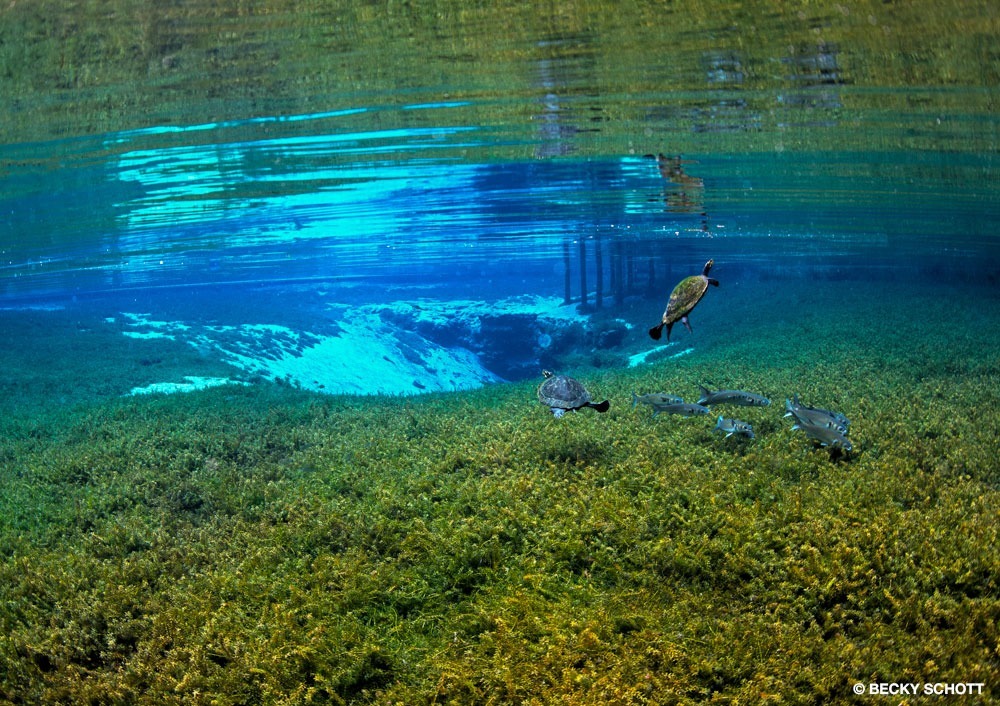
Rainbow River offers an exciting drift dive in shallow, turquoise water. Divers enter upstream, fin lightly against the current, and then glide with the current past limestone walls, fossilized coral heads, and resident longnose gar. Turtles perch on submerged logs, and schools of striped mullet part like curtains as you effortlessly drift over patches of eelgrass and bubbling spring vents. Depths range from 5 to 25 feet (1.5 to 7.6 m), making the site ideal for snorkeling and open-water diving.
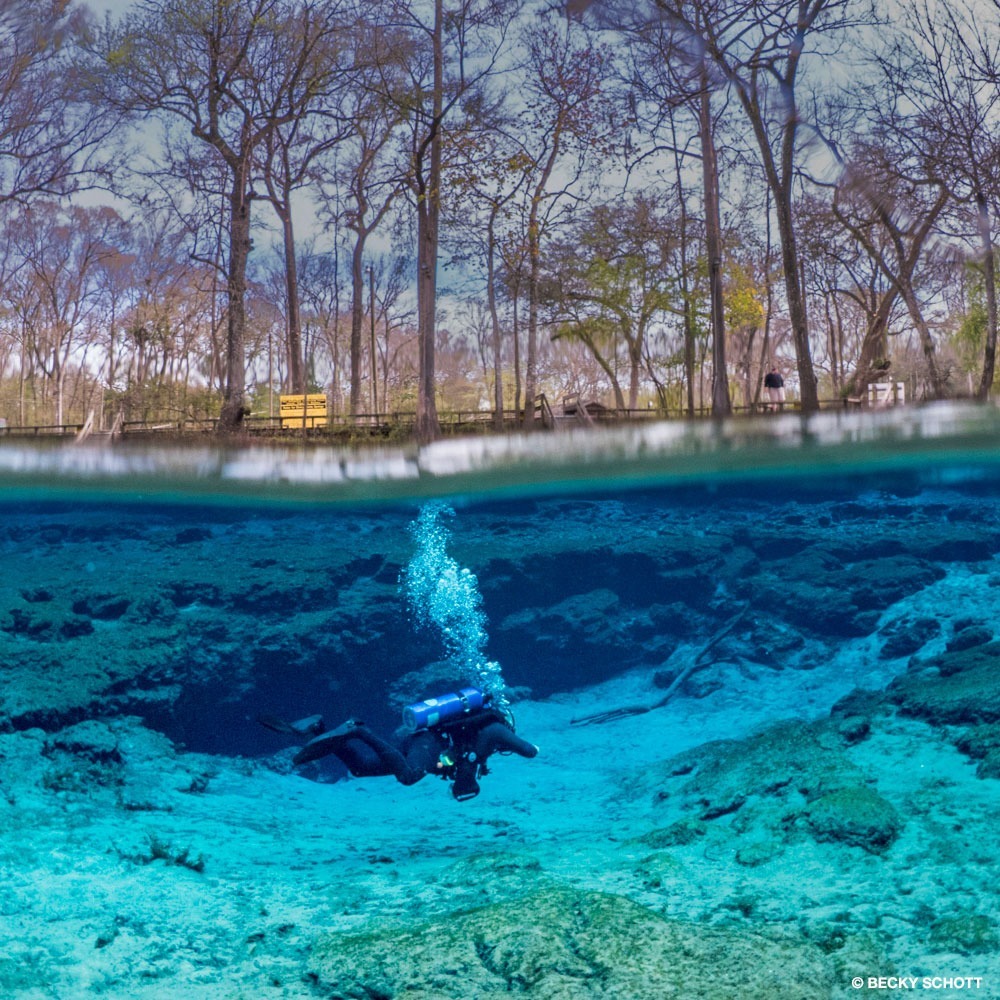
Ginnie Springs is a family-friendly diver’s paradise that you and your favorite dive buddy can also enjoy. It is crowded on weekends from Memorial Day to Labor Day, so try a weekday dive during that time. The main spring is a shallow basin, and curtains of bubbles trickle up through the limestone. Open-water divers can’t use dive lights but can poke their heads into the cavern’s daylight areas and experience the beautiful light streaming in through the rocky entrance. The cavern is 20 to 50 feet (6 to 15 m) deep with a sandy bottom. A grate blocks the cave system, but divers can swim up to it to feel the powerful water flow and get a taste of what is hidden below their feet.
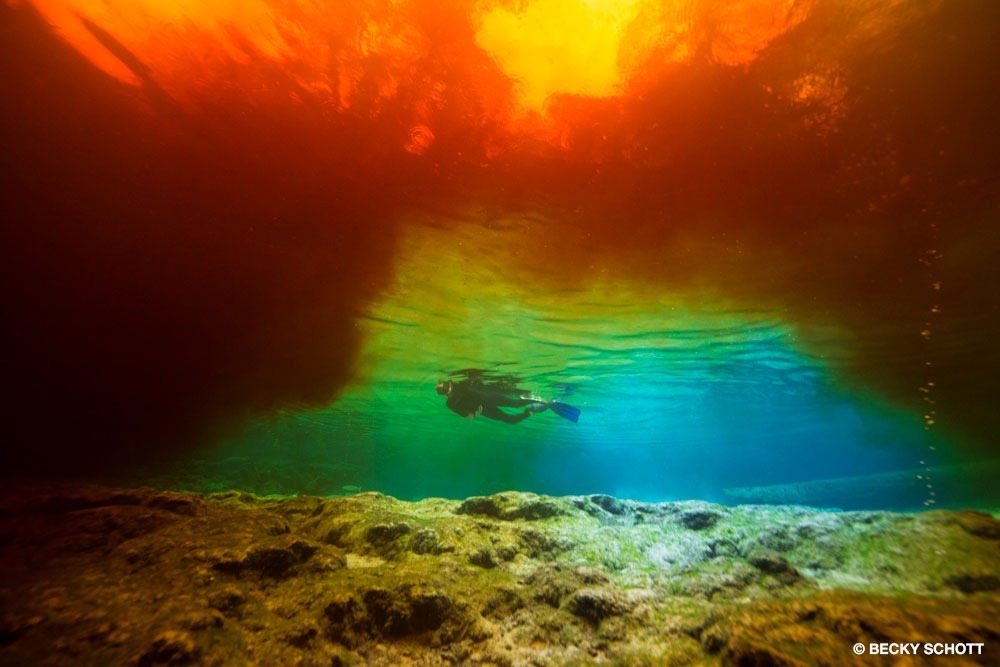
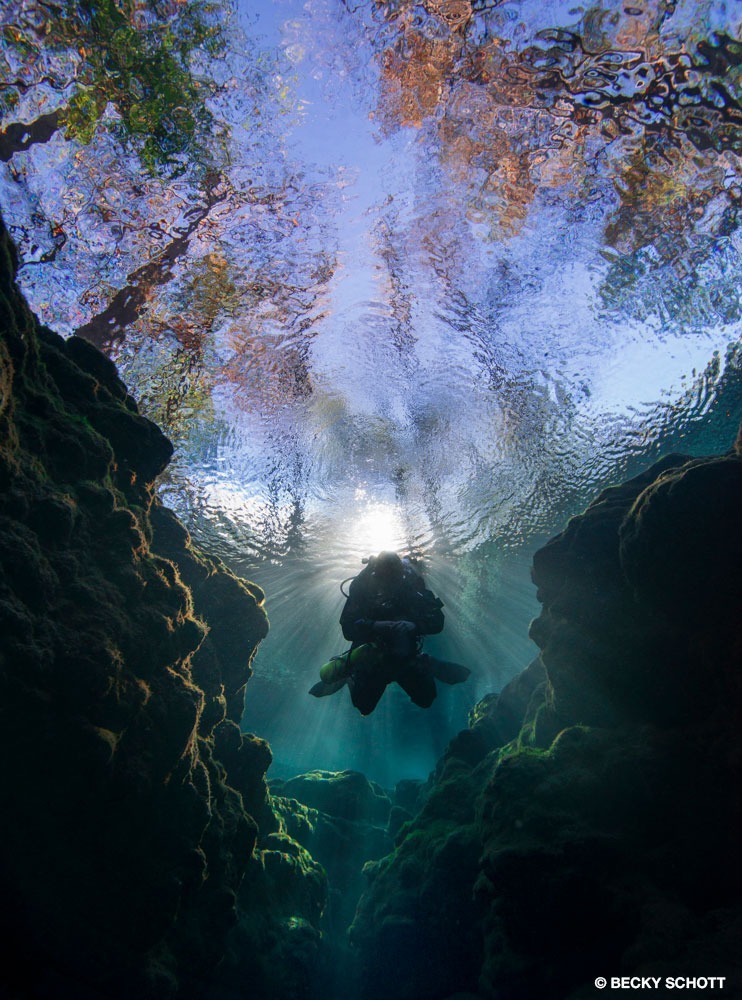
More springs are just a short drive from Ginnie. The trio of Little Devil, Devil’s Eye, et Devil’s Ear leads into an extensive underwater cave system spanning miles. You can drift down the spring with turtles leading the way and descend 25 feet (7.6 m) into Devil’s Ear to be engulfed in an underwater rainbow. Dark red, tannic river water mixes with the clear spring water, creating clouds of red, orange, yellow, green, and shades of blue that swirl around, sometimes revealing the trees overhead. It has become an iconic place for underwater photography. You can’t capture the same image twice as the water mixes into a mesmerizing array of colors.
Blue Grotto Dive Resort is a gem nestled in the heart of Florida’s freshwater spring country in Williston. Here you can enjoy an unparalleled open-water experience in a stunning spring-fed sinkhole. Blue Grotto is perfect for divers of all levels. It features a vast basin with depths of 10 to 40 feet (3 to 15 m) and is ideal for certification training. There is no overhead environment, and the sinkhole transitions into a large cavern that slopes gently to 60 feet (18 m). There is a deeper chamber descending to 100 feet (30 m) for divers trained in overhead environments.
A unique feature at about 30 feet (9 m), just below the ledge leading into the cavern, is a diving bell with surface-supplied air. A few divers can fit inside and have a 360-degree view of the cavern and entrance. Virgil, the friendly resident softshell turtle, sometimes greets divers as they enter the spring or do skills on the platforms. There are schools of sunfish and lots of fossils inside the cavern.
For more open-water diving, check out Alexander Springs, Troy Springs, Blue Springs, et Vortex Springs. Instructors like to use them for dive training because they are usually diveable except during extreme weather events. Instructors and students don’t have to deal with seasickness, and many springs have submerged platforms great for divers new to specialty training.
Overhead Training
For divers who want to take their first fin kicks into technical and overhead diving, Florida’s caverns deliver dramatic geology within the daylight zone. Most dive shops in North Florida offer courses. Proper training is not optional — it’s a matter of life and death.
When most people think about caverns and cave diving, they imagine dark, tight, scary labyrinths. When you see them in person, they can look inviting but be dangerously deceptive, which is why rules and training guidelines are in place.
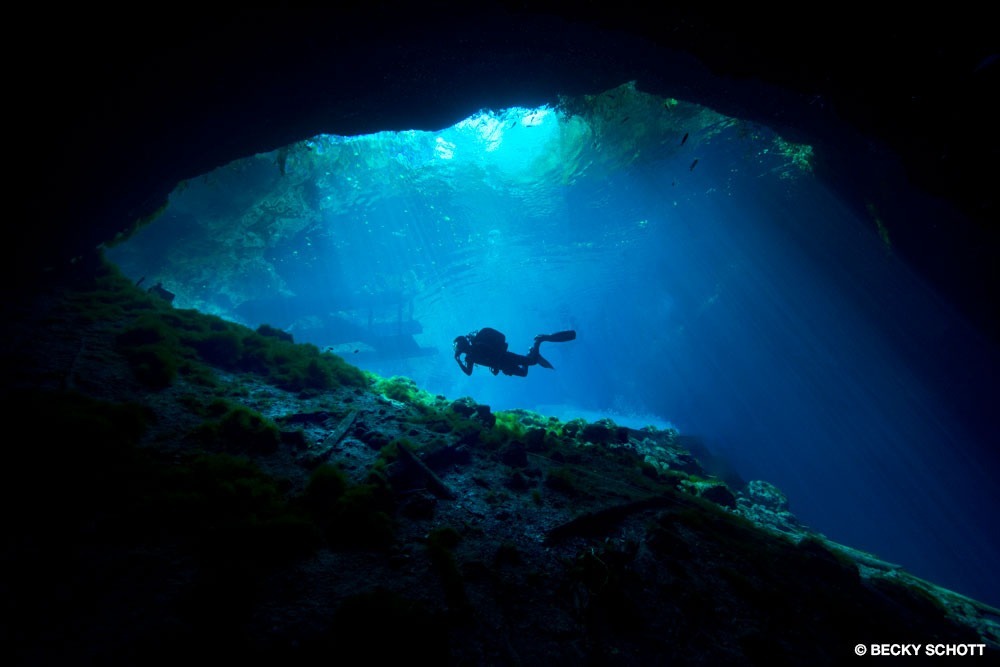
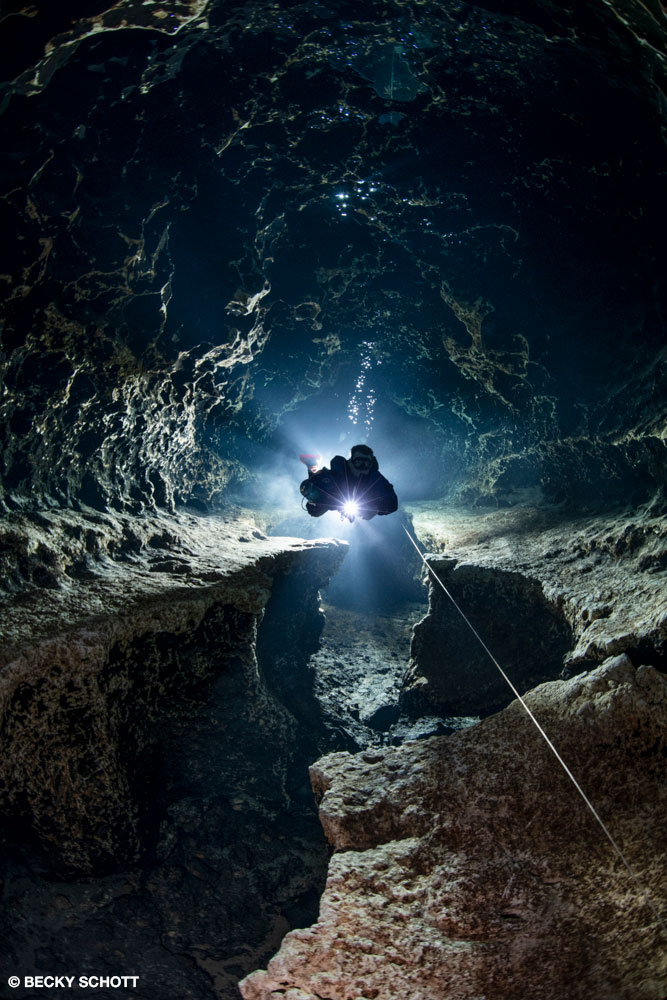
Cavern diving means staying within sight of natural sunlight, keeping an appropriate gas reserve, and never exceeding 130 feet (39.6 m) of total linear distance from the surface. Cavern training is one of the best courses for divers looking to improve their buoyancy, task loading, and awareness, and the skills they learn and practice let them safely venture into an overhead environment. The training is worth it to safely enjoy cathedral-like rooms with beams of light penetrating the darkness.
Cavern and Cave Diving
Wes Skiles Peacock Springs State Park in Live Oak, Florida, has 33,000 feet (10 kilometers) of surveyed underwater passages across two major spring systems: Peacock Springs et du Orange Grove Sink. Experienced cave divers can plan a 1,600-foot (488-m) swim from Peacock to Orange Grove through grand tunnels, breakdown rooms, and dramatic geology.
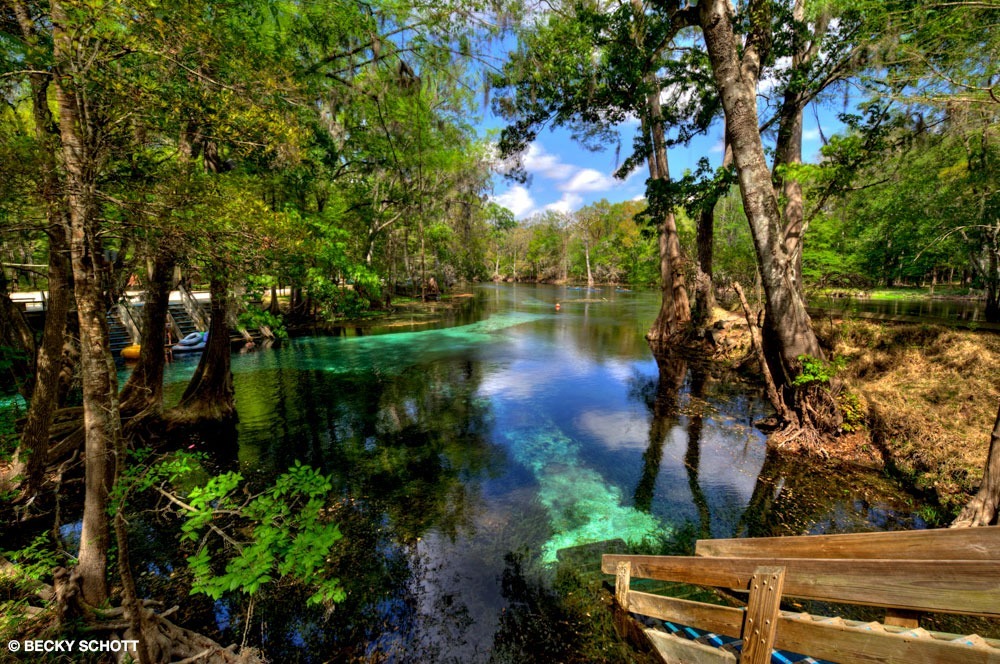
Cavern divers can enjoy low flow in Peacock’s Cavern at just 50 feet (15 m), and the cream-colored limestone walls make it bright for exploration. At Orange Grove, divers can watch light beams illuminate the cavern as their bubbles move around the duckweed on the surface. The park enforces strict certification rules and provides elevated boardwalks and wooden stairs to the water. They have also added picnic tables and gear tables to make it diver-friendly.
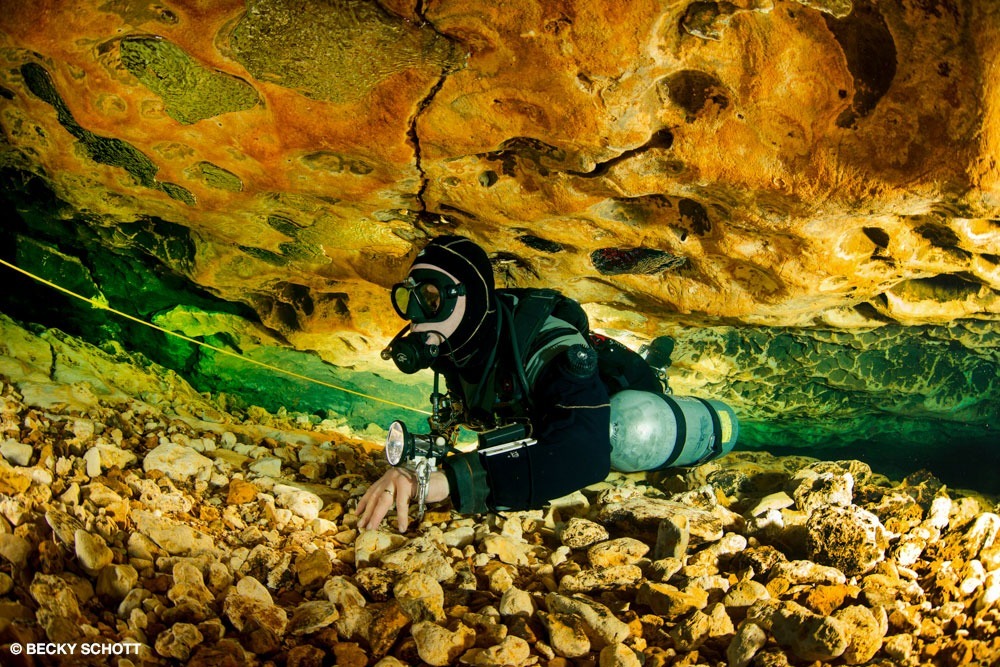
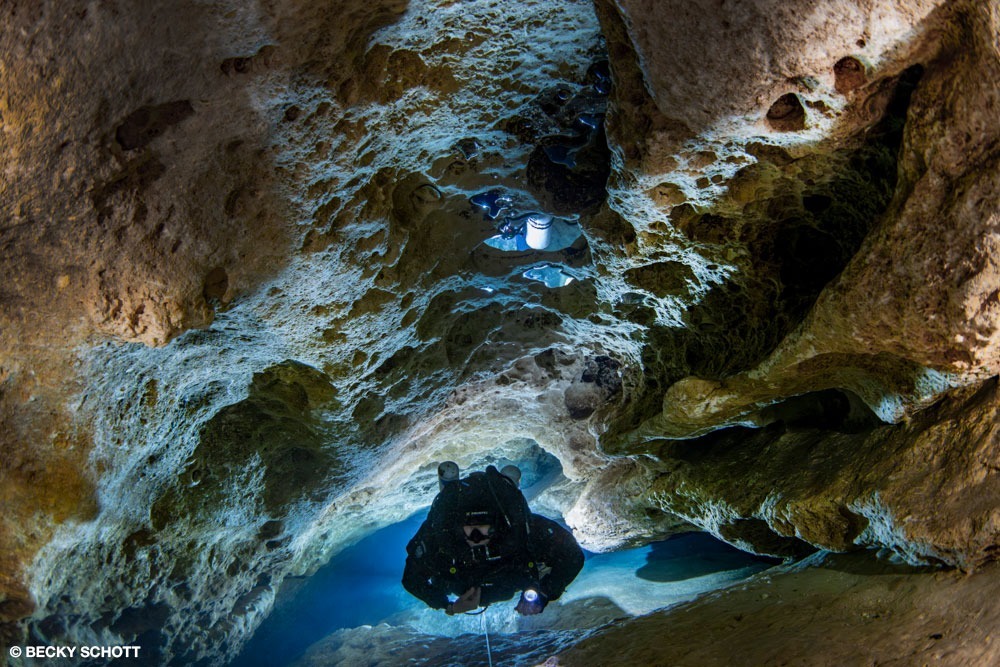
Little River Springs is a higher-flow system in O’Brien, Florida. Little River Cavern is a good size and descends at an angle from 15 to 55 feet (4.6 to 16.8 m). After turning the corner, cave divers will notice the interesting geology and colors in this system. Little River Springs is on the Suwannee River, and river water occasionally siphons into the cave — that’s not the right time to dive it. But when the river water recedes, divers can see how its tannins have stained the cave walls reddish-orange.
The Swiss-cheese-like tunnels and layered clay banks make this cave very photogenic. Cave systems have named tunnels, and Little River’s includes the Serpentine Tunnel, a winding passageway that leads to the circular Merry-Go-Round. Many divers end at Well Casing, where a well descends from the surface straight through the center of the cave tunnel.
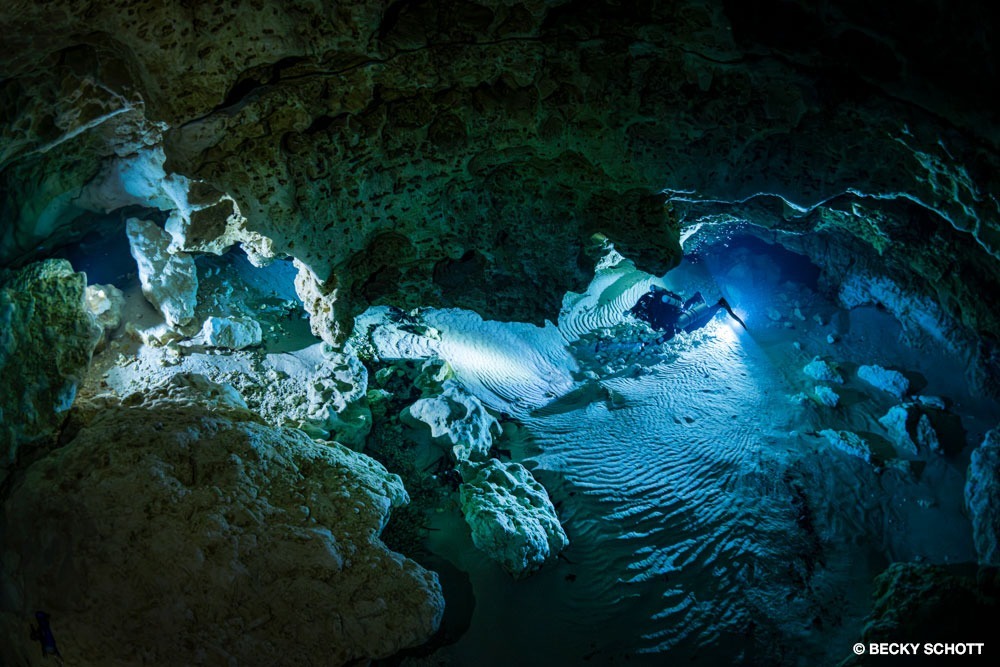
Ginnie Springs, along the Santa Fe River in High Springs, Florida, is a premier destination for cave diving enthusiasts with its intricate network of clear, freshwater caverns. You swim into a sandy-colored limestone room at just 35 feet (10.7 m), where beams of sunlight dance through the entrance. A lot of fossils are embedded in the limestone walls.
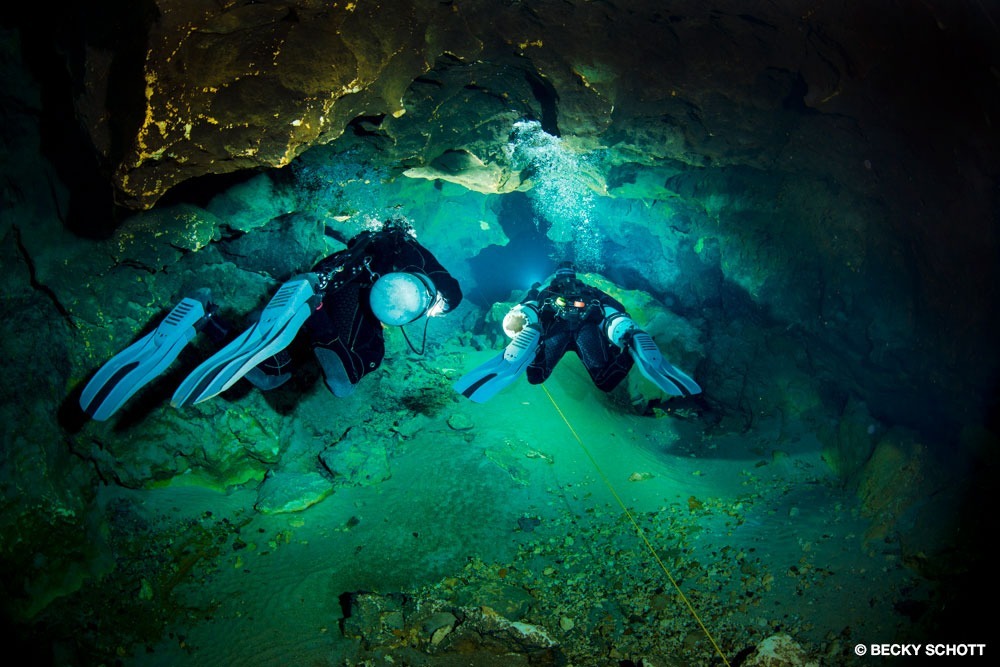
Certified cave divers could spend years inside the Devil’s Spring System. From large tunnels to sidemount passageways, divers can do an easy to an extensive dive plan here. This cave has high flow, which makes penetration and gas management more challenging, but at 70 to 100 feet (21.3 to 30.5 m), this system is a favorite for both newly trained cave divers and the most experienced. Divers travel from afar to experience this first-class, must-dive spring.
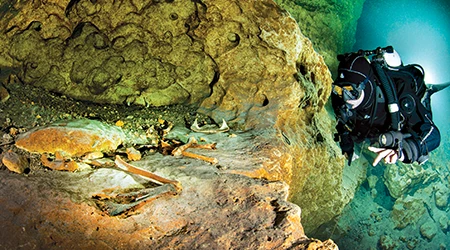
Full cave certification is mandatory for penetration beyond daylight zones. It requires more training, practice, planning, and equipment, but the reward is diving in more challenging environments and swimming through the veins of the Earth, where water has eroded the tunnels. It combines technology with archaeology, paleontology, geology, and exploration. Divers can explore, discover rooms with fossils — such as mastodon bones, giant sloth vertebrae, and dugong ribs — and participate in ongoing mapping projects.

Snorkeling with Manatees
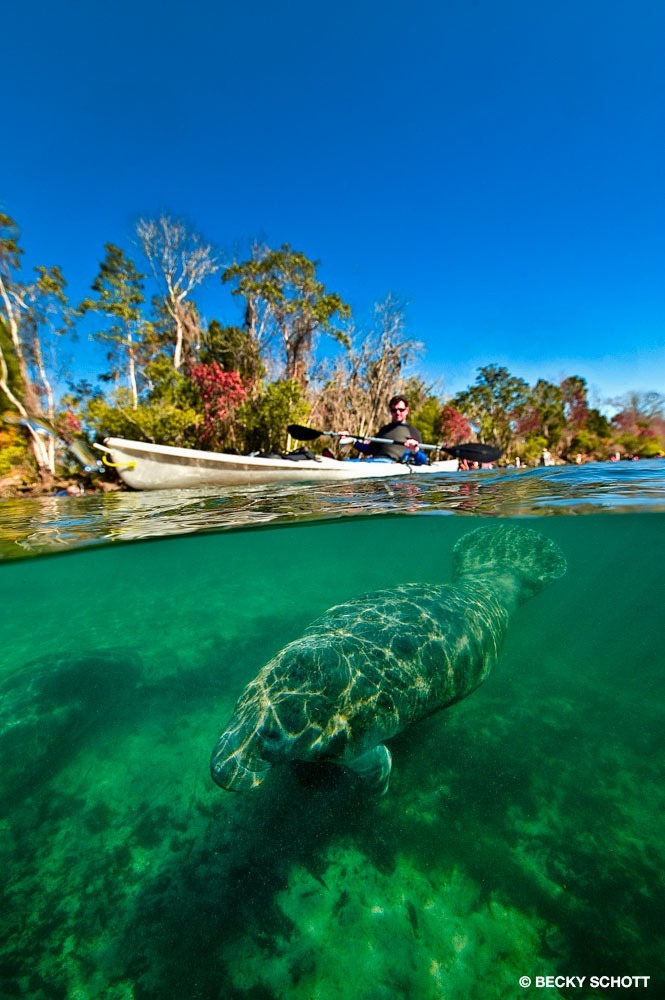
Snorkeling with manatees costs half as much as a Disney ticket and offers memories that will last a lifetime. Picture yourself heading out on a pontoon boat early in the morning just as the sun is rising. The crisp air wakes you up as you put on your mask and quietly slide into the calm, shallow water.
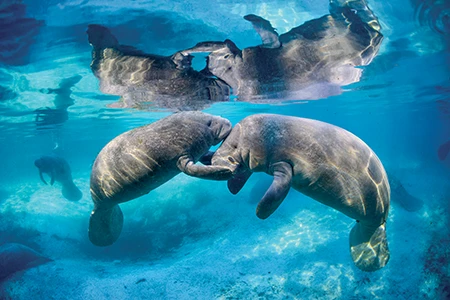
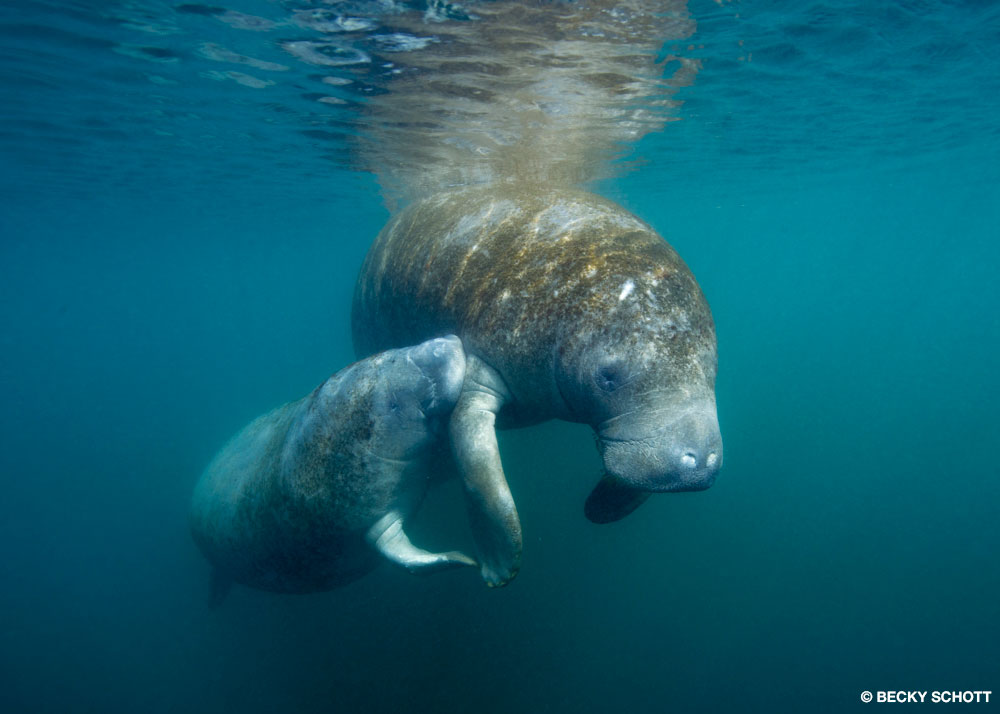
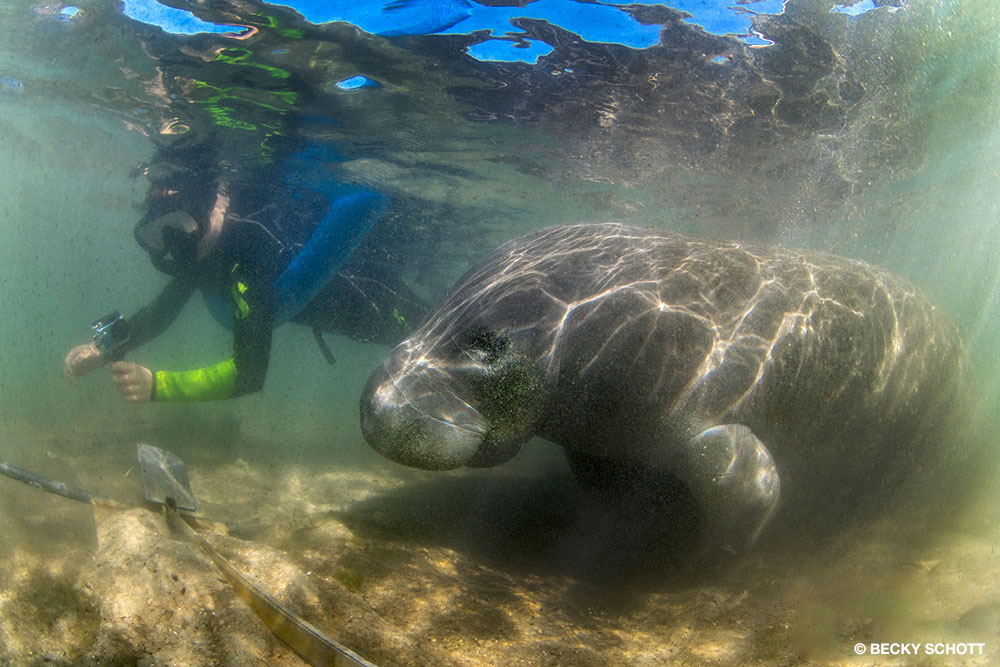
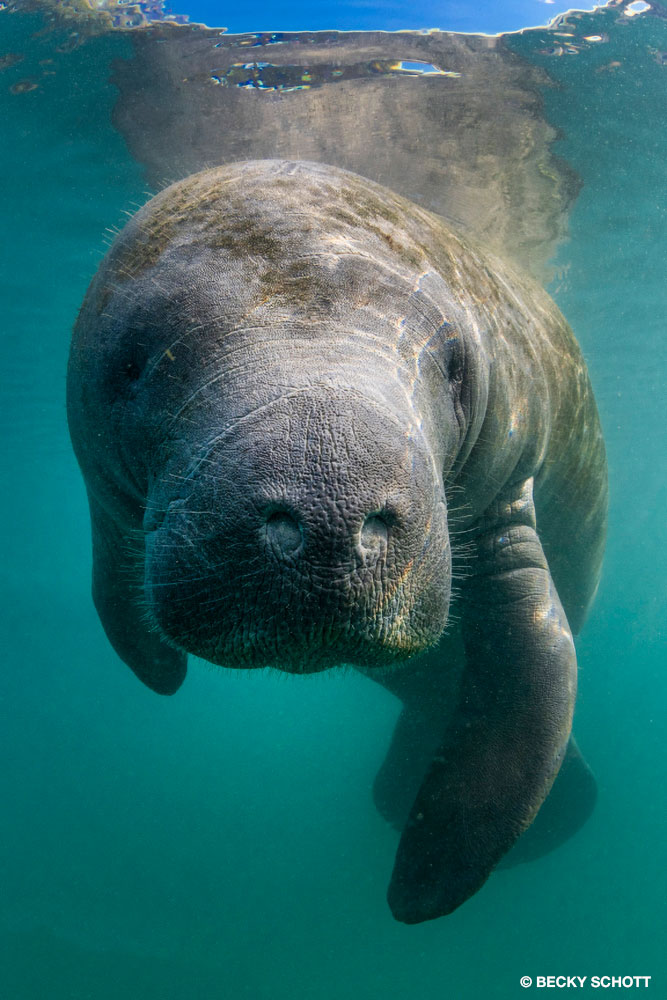
The steam rising from the water glows orange from the sunrise, and you hear the manatees breathing all around you. You put your face into the water and see a large gray body with tiny hairs, and then a whiskered face looks at you with curious eyes. You float quietly, listening and observing as you immerse yourself into their realm.
Located on the Gulf Coast about 90 minutes north of Tampa, Crystal River is known as the Manatee Capital of the World. From November to March it hosts the largest aggregation of West Indian manatees, which depend on the 72°F (22°C) waters of the natural springs here when temperatures drop in the gulf. These gentle giants, also called sea cows, gather here to graze on seagrass and vegetation in shallow waters.
Crystal River is a fantastic introduction to the underwater world because all you need is a mask, snorkel, and fins to float silently among these 1,000-pound (454-kilogram) herbivores. The experience is like diving inside a National Geographic documentary, with manatees gliding effortlessly through the water, newborn calves nursing, and the sounds of breathing as their noses break the surface for air.
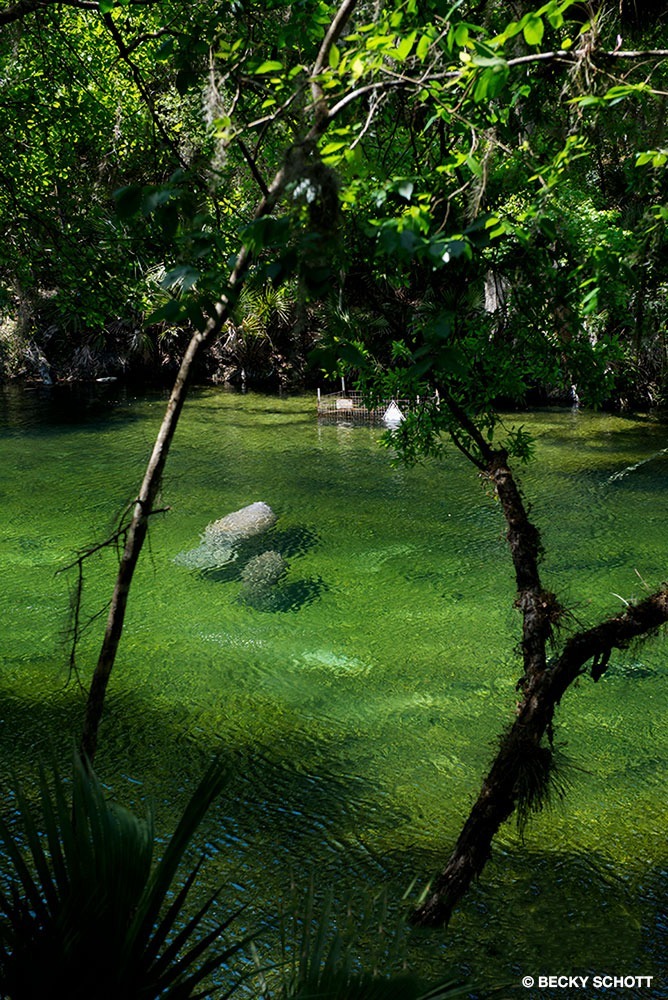
There are several ways to see manatees. Three Sisters Springs has a boardwalk viewing area for those who want to stay dry and observe from above. Hundreds of manatees crowd this area during cold winter days, so the view from the boardwalk is excellent.
For those who want to get face-to-face with manatees, dive shops offer guided tours to snorkel with them. These tours typically go out a few times a day and last for two to three hours. The earliest morning trips during the week are usually best because there are fewer people. The manatees are also more active in the morning and tend to rest in the afternoon.
Three Sisters is famous for manatee encounters, but it is often closed in the winter because so many manatees squeeze into the warm springs. Snorkelers are permitted outside, but it can get busy there, so be open to exploring other locations around Crystal River with your guide. Several other great springs are along the river for a quality encounter.
Snorkelers must follow strict guidelines and stay outside of clearly marked manatee refuge areas with no-entry signs. Snorkelers are encouraged to take their time, not make noise, and observe the manatees. You’re not allowed to touch or chase a manatee, or you could be fined. Calmly and quietly floating on the surface is the best way to see these curious sea cows.
A successful seagrass restoration project over the past few years has involved vacuuming more than 350,000 tons of algae mats and thick muck that suffocate eelgrass, the manatees’ primary food source. An invasive algae overgrowth due to nutrient pollution and sediment buildup had smothered the seagrass beds, making the river murkier and depleting the manatees’ food supply.
Removing the algae and muck unclogs spring vents and restores better light penetration through the water. Once the sandy bottom is exposed, biologists can hand-plant seagrass pods and then place a protective steel cage over the area so the grass can grow and flourish. All this seagrass means clearer water, a healthier ecosystem, and an ample food source for manatees. Save Crystal River’s Kings Bay Restoration Project has been focused on restoring native seagrass meadows since 2015 and has become a model of success for other spring and river restoration projects.
In the 29 years I’ve been going to Crystal River, it’s an experience I cherish not only for spending time with manatees but also for making memories with my family. I introduced my cousin’s kids, who are 7 to 12 years old, to these charismatic creatures last year. My hope is to inspire them and other young divers, snorkelers, and observers to protect manatees and freshwater springs and ignite their passion for the underwater world.
I’m proof that you never know where these experiences can lead. Being introduced to Florida’s springs was life-changing for me.
Plan Your Trip
Pour s'y rendre : Orlando (MCO), Tampa (TPA), and Gainesville (GNV) airports are within a 90- to 120-minute drive of most sites. Devil’s Den and Ginnie Springs offer on-site cabins, RV hookups, and camping. There are hotels in Alachua and Gainesville.
Conditions : The best time to see manatees in Crystal River is from December to March. All of Florida’s springs are accessible year-round. A 5 mm wetsuit or drysuit is essential. I usually spend several days in Crystal River. Conditions and encounters can vary. It’s a great place for wide-angle and nature photography.
Other Activities:Visit the mermaids at Weeki Wachee Springs, kayak or paddleboard in Silver Springs, and enjoy some North Florida barbecue.
En savoir plus
See more of the underwater wonders of Florida’s Springs in a bonus photo gallery and this video.



© Alert Diver – Q1 2026