Pensez à la première fois où vous avez utilisé un appareil photo sous-marin : quelle était votre motivation initiale ? Peut-être souhaitiez-vous immortaliser vos plongées ou montrer la beauté du monde sous-marin à vos amis et à votre famille qui ne pratiquent pas la plongée. Peut-être étiez-vous un photographe terrestre désireux d'élargir vos horizons ou un plongeur expérimenté cherchant à ajouter une nouvelle dimension à votre pratique.
Quelle qu'en soit la raison, une fois que vous êtes entré dans le monde à la fois frustrant et indéniablement addictif de la photographie sous-marine, il y a de fortes chances que cette obsession vous ait conquis. Il ne vous a probablement pas fallu longtemps avant de ne plus pouvoir imaginer plonger sans appareil photo.
Une fois que vous avez été complètement converti, vous avez peut-être suivi des ateliers approfondis, fait des voyages exotiques, participé à des concours photo ou vendu vos photos. Cela a probablement rapidement coûté cher. En fin de compte, la photographie sous-marine demande un investissement financier et en temps tellement important que la plupart des photographes, quel que soit leur niveau d'expérience, ne sont pas intéressés par la création d'images à des fins caritatives.
C'est là où j'en étais il y a encore 10 ans, lorsque je passais la plupart de mon temps sous l'eau à réaliser des photos pour des concours ou des commandes. Mais début 2016, j'ai fondé Dive into the Pink, une organisation à but non lucratif 501(c)(3) sans salaire qui mobilise la passion et l'enthousiasme de la communauté des plongeurs pour collecter des fonds destinés à la recherche contre le cancer et au soutien des patients.
En tant que survivante du cancer du sein, je souhaitais associer ma passion pour la plongée sous-marine à mon désir de collecter des fonds pour la lutte contre le cancer, et je voulais lancer une initiative transparente qui permettrait de reverser le maximum d'argent à cette cause. Notre objectif initial était modeste : organiser une ou deux sorties de plongée par an en Californie. Cependant, nos exploits sur les réseaux sociaux ont rapidement attiré l'attention, ce qui est facile à réaliser avec des bateaux remplis de plongeurs vêtus de tutus roses.
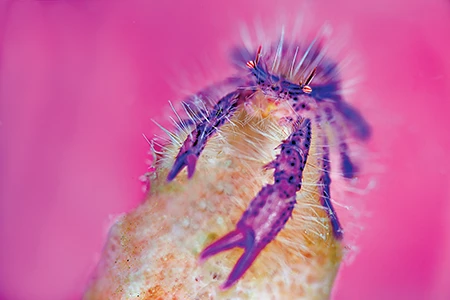
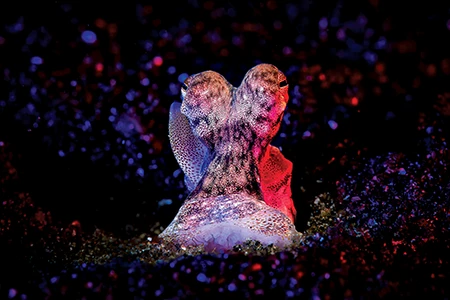
En l'espace de quelques mois, nous avons reçu plusieurs dons importants de la part de centres de plongée et de compagnies de croisières de plongée, ce qui nous a amenés à organiser une vente aux enchères en ligne. Très vite, j'ai commencé à recevoir des invitations pour organiser des voyages de plongée à distance, axés sur la photographie, afin de collecter des fonds. Malheureusement, ce projet s'est avéré impossible à réaliser en raison de mon emploi du temps chargé au travail et des voyages personnels que j'avais déjà prévus pour les années à venir. Je me suis résigné à séparer mon activité à but non lucratif de ma passion pour la photographie sous-marine.
Cette situation a changé l'année suivante lorsque j'ai rencontré le célèbre photographe Mike Bartick, photographe professionnel de longue date au Crystal Blue Resort à Anilao, aux Philippines, qui m'a demandé si j'avais envisagé d'organiser un concours photo spécialisé. J'ai ri : bien sûr que non. Comment peut-on même commencer à organiser un concours photo ? Malgré mon rejet initial de l'idée, celle-ci ne m'a pas quitté.
J'ai commencé à réfléchir à ce qu'impliquait la participation à un concours photo, notamment aux étapes spécifiques que les photographes doivent suivre pour soumettre une image. Même si j'étais familière avec les concours photo, je n'étais certainement pas une experte en création de sites web. Je savais que si je voulais mener à bien ce projet, je devrais me débrouiller seule, car nous n'avions pas les moyens de faire appel à un développeur de sites web.
J'ai contacté mes amis de Dive Photo Guide (DPG), avec lesquels j'avais déjà collaboré sur une série de photos intitulée « In Praise of Pink » (Éloge du rose), qui mettait en avant des images contenant du rose prises par des photographes que j'admirais. Lorsque je leur ai demandé s'ils seraient intéressés par un partenariat dans le cadre d'un concours de photographie sous-marine mettant en vedette des images contenant la couleur rose, ils ont accepté le défi avec enthousiasme.
Fin 2017, le premier concours Think Pink a été lancé. Bartick a accepté d'être l'un de nos juges, Crystal Blue Resort a généreusement sponsorisé notre premier prix, et nous avons bénéficié du soutien supplémentaire de Kraken Sports et du photographe Alex Mustard, PhD. Bartick et moi avons utilisé nos propres images pour promouvoir le concours et attirer des participants, même si je doutais que nous suscitons beaucoup d'intérêt. Après tout, le rose peut être un sujet controversé.
J'avais tort. Ce premier concours a rapporté plus de 4'000 dollars américain, ce qui est certes peu comparé aux grands concours de photographie sous-marine, mais tout à fait honorable pour une petite association à but non lucratif et un concours à catégorie unique. Mieux encore, la photo qui a remporté le premier prix, un phoque gris capturé par le talentueux photographe Nick More, a attiré l'attention et contribué à faire connaître nos efforts.

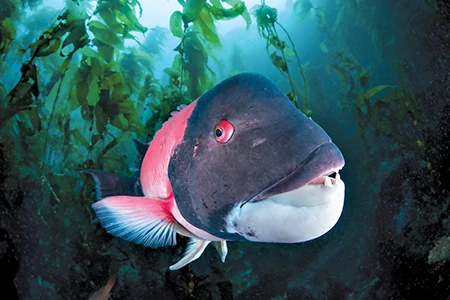
Comme pour la plupart de nos travaux, nous avons réparti les fonds entre un laboratoire de recherche — le Guise Laboratory, actuellement hébergé au MD Anderson Cancer Center à Houston, au Texas — et une initiative de soutien aux patients — la Young Survival Coalition, une organisation nationale qui vient en aide aux patientes atteintes d'un cancer du sein âgées de moins de 40 ans.
Depuis lors, DPG et moi-même avons organisé conjointement six concours d'imagerie Think Pink, avec le soutien continu de Crystal Blue Resort, Kraken et Mustard, généralement avec Bartick comme juge. Nous avons eu la chance d'obtenir le soutien d'entreprises telles que Lissenung Island Resort, Dive Damai, Backscatter Underwater Video and Photo, Sea and Sea, Ultralight Camera Solutions, Saga et Scott « Gutsy » Tuason. Nous avons récolté près de 20'000 dollars, grâce aux soumissions d'images contenant du rose.
Chaque année, nous continuons à recevoir des contributions et des dons spectaculaires et remarquables de la part de photographes passionnés (et parfois très connus), ce qui ne manque jamais de me réchauffer le cœur. Lors de journées qui semblent parfois remplies de réunions monotones, de responsabilités incessantes et d'actualités déprimantes, je me sens chanceuse d'avoir un aperçu direct de la nature bienveillante et généreuse des gens, une perspective qui est une source de joie constante.
Mieux encore, le concours n'est pas figé ; nous pouvons le personnaliser si nous le souhaitons. La cinquième édition annuelle du concours Think Pink en 2024 a été particulièrement émouvante, car la communauté des plongeurs californiens venait de perdre Deanne King, une plongeuse locale très appréciée, une photographe sous-marine talentueuse et une amie très chère. Elle venait de rentrer chez elle, justement du Crystal Blue Resort, lorsqu'on lui a diagnostiqué une tumeur cérébrale agressive. Sa maladie a progressé rapidement et elle est décédée en quelques mois, peu avant le début des inscriptions.
À la fin de la période d'inscription, j'ai demandé au rédacteur en chef de DPG, Ian Bongso-Seldrup, et à nos juges si nous pouvions sélectionner une photo supplémentaire pour célébrer le sens de la créativité de Deanne (elle adorait essayer de nouvelles techniques et de nouveaux équipements), et tout le monde a accepté sans hésiter. Rich Neely, le vainqueur de cette catégorie honorifique, a habilement capturé un gobie commun de Californie, créant ainsi un bokeh (technique de photographie implicant le flou) inhabituel et magnifique sur un fond rose pastel.
À la fin de l'année 2024, en plus de nos bénéficiaires habituels, nous avons ajouté un don discrétionnaire important au Fonds de recherche sur le cancer du cerveau de l'UCLA en l'honneur de Deanne. Je ne nierai pas avoir versé une larme en signant le chèque.
Évidemment, pas tous les photographes sous-marins ont envie de se lancer dans un projet d'envergure tel qu'un concours photo, et je les comprends parfaitement, car cela représente une charge de travail considérable. Mais il existe de nombreuses façons de mener des activités altruistes avec la photographie, à commencer par la simple sensibilisation à l'environnement marin et à la vie océanique. Cet effort peut être aussi simple que ce que beaucoup d'entre nous faisons déjà : partager des photos avec des amis non plongeurs ou sur les réseaux sociaux, une activité quotidienne qui peut être extrêmement puissante en termes d'éducation populaire.
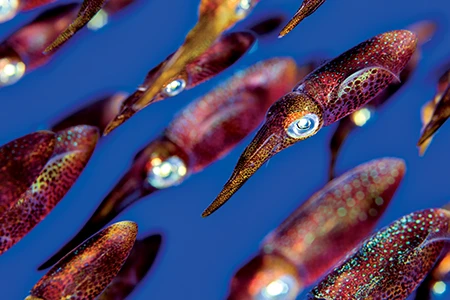
De nombreux concours de photographie sous-marine s'engagent à reverser une partie des recettes à une œuvre caritative. Vous pouvez également envisager de faire don d'une photographie ou même d'une séance de portraits sous-marins à une organisation qui vous tient à cœur, ou encore de donner de votre temps pour photographier un événement à but non lucratif.
D'autres moyens courants de donner en retour consistent à participer à une expédition scientifique en tant que photographe et à accepter que des tiers utilisent les images que vous prenez pendant votre participation, ou à vous inscrire à un voyage dont une partie des recettes sera reversée à une cause importante.
Certaines de ces idées peuvent sembler controversées, car tous les aspects de la photographie sous-marine sont coûteux, du matériel et de la plongée aux frais de voyage et de bagages. Mais si vous trouvez une cause qui vous tient à cœur, je vous encourage vivement à réfléchir à la manière dont vous pouvez la soutenir grâce à votre photographie. Cela ajoutera sans aucun doute une nouvelle dimension à votre passion, et je peux également vous promettre que les récompenses seront plus grandes que vous ne pouvez l'imaginer.
Remarque : tous les fonds récoltés grâce à cet article seront reversés à l'association Dive into the Pink (diveintothepink.org). Je tiens à exprimer ma profonde gratitude envers les généreux photographes gagnants qui ont accepté que leurs clichés soient publiés afin de soutenir cet article.
© Alert Diver – Q3 2025