Nos océans sont menacés. La pêche industrielle destructrice entraîne un déclin généralisé des espèces. Le réchauffement des océans dû au changement climatique provoqué par l'homme déclenche des épisodes de blanchiment massif des coraux, dont l'intensité et la fréquence ne cessent d'augmenter.
Parallèlement à cette tragédie mondiale, une petite région de la province indonésienne du Sulawesi du Sud-Est est en plein essor : Wakatobi, qui est une combinaison des noms des quatre plus grandes îles de l'archipel de Tukang Besi (Wangi-wangi, Kaledupa, Tomia et Binongko).
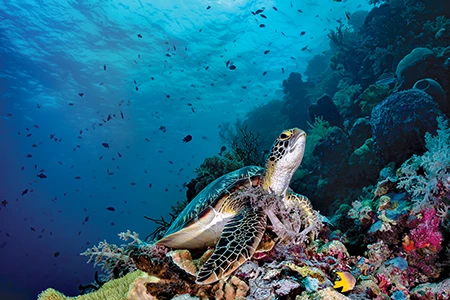
Alors que je plonge au-dessus des jardins de corail du parc national de Wakatobi, j'enlève ma cagoule de plongée, comme je le fais souvent pour écouter la vie du récif. Julia Mellers, biologiste marine résidente au Wakatobi Resort, récupère un hydrophone qu'elle avait placé quelques jours plus tôt. Après la plongée, nous examinons ensemble les données recueillies.
« Il y a beaucoup de crevettes-pistolets qui produisent des bulles de cavitation, mais ce qui nous intéresse surtout, ce sont les poissons qui communiquent entre eux », a déclaré Mellers. « Un récif bavard où les poissons communiquent sur toute une gamme de fréquences et où les espèces vocales chantent en chœur est le signe d'un écosystème sain et riche en biodiversité. »

Des prophètes avec un but
Pour comprendre comment les récifs sont devenus si riches, il faut remonter dans leur histoire. Lorsque Lorenz Mäder, fondateur du Wakatobi Resort, a rêvé de construire un complexe hôtelier dédié à la plongée dans les années 1990, ses critères étaient loin d'être simples. L'emplacement devait être isolé et biologiquement riche, avec des chenaux profonds favorisant les échanges d'eau, des courants plus frais et une vie marine florissante.
Des eaux claires étaient également essentielles, non seulement pour la visibilité, mais aussi pour disposer de suffisamment de lumière pour la croissance des coraux en profondeur. La zone devait également être exempte de concurrence touristique, suffisamment spacieuse pour permettre au complexe hôtelier de se développer progressivement et d'offrir des emplois à la communauté locale, et, surtout, être en mesure de développer et de faire croître un sanctuaire de récifs activement protégé.
Bien que le caractère isolé et les courants marins aient été des facteurs importants et nécessaires dans le choix de l'emplacement de ses opérations, une idée simple mais puissante était au cœur du projet : si les gens peuvent tirer un bénéfice financier de la santé de leurs ressources naturelles, ils les protégeront.
« Nous voulions introduire un nouveau type de tourisme », explique Mäder. « Quand nous avons dit aux locaux que les visiteurs viendraient ici juste pour observer les poissons sur leurs récifs, ils avaient du mal à nous croire. »
Une chose dont il était certain, c'était que s'il pouvait offrir aux pêcheurs locaux une alternative à la pêche et augmenter la valeur qu'ils pouvaient tirer de leurs zones de pêche traditionnelles, il pourrait alors mettre fin à la destruction du récif tout en leur offrant différentes opportunités.
Alors que de nombreuses entreprises touristiques ne mettent en place des pratiques significatives et durables qu'après avoir réalisé des bénéfices, Mäder a compris dès le départ la nécessité de protéger les récifs et d'offrir des opportunités aux populations locales. Il œuvrait dans ce sens bien avant que cela ne devienne une nécessité mondiale.

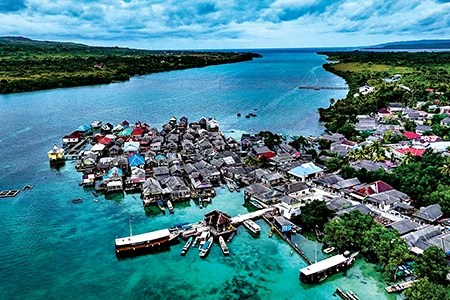
Il lui a fallu plus de 30 ans, avec son frère Valentin, pour construire le Wakatobi Resort. Cela a notamment impliqué de soutenir et de financer une réserve marine collaborative gérée par le secteur privé qui, grâce à de nouveaux accords conclus cette année avec les villages locaux, a triplé sa superficie afin de protéger 60 kilomètres de récifs florissants et emploie désormais 450 personnes locales. Presque tous les habitants du village de l'île de Lamanggau, ont un lien avec le complexe hôtelier.
« Dès le début, il s'agissait d'un accord commercial avec la population locale, et comme l'argent provenant du complexe hôtelier est directement reversé à la communauté locale, la destruction des récifs a cessé », explique Mäder. « Le fait que des visiteurs viennent du monde entier pour plonger ici a prouvé à la population locale qu'elle possède quelque chose de vraiment spécial. Elle comprend désormais mieux ce que nous essayons d'accomplir. »
Nous pouvons en voir la preuve dans les récifs. Ce sont des merveilles éclatantes, pleines de vie, bien loin de ce qu'elles étaient il y a quelques années, sous l'effet des pratiques de pêche destructrices.
Dans le cadre du programme collaboratif de conservation des récifs de Wakatobi, créé en 1997, le complexe hôtelier travaille avec 17 villages dans le cadre d'accords de location de récifs. Chaque village reçoit une rémunération du complexe hôtelier en fonction de la taille et de la valeur écologique de ses récifs et de ses zones de pêche traditionnelles. En contrepartie, les villages s'engagent à interdire toute pêche, y compris les pratiques destructrices telles que la pêche à l'explosif et au cyanure, et ils collaborent avec le complexe hôtelier pour surveiller les activités de pêche dans leurs eaux.
« Nous finançons désormais plus de 120 pêcheurs locaux qui ne pêchent plus dans leurs zones traditionnelles, mais qui les patrouillent et empêchent toute activité de pêche », explique fièrement Mäder. Ces accords s'étendent également aux Bajau, une communauté qui dépendait traditionnellement presque entièrement de l'océan pour sa survie. Sans leur accord et leur implication continue, le projet aurait sans doute été voué à l'échec.
Bien que la pêche soit toujours autorisée en dehors des zones protégées, les populations de poissons ont recommencé à se développer dans les zones protégées, ce qui signifie que les pêcheurs restants peuvent encore maintenir leur mode de vie en profitant de l'effet induit par la migration des espèces au-delà des frontières.
Le résultat de ce partenariat est bénéfique pour tous : la biomasse des poissons se reconstitue, les récifs coralliens sont en meilleure santé et plus riches en biodiversité, le tourisme prospère et les populations locales gagnent un revenu fiable et équitable. Le complexe hôtelier investit également dans les infrastructures locales, l'éducation et la formation, intégrant ainsi davantage la conservation dans le mode de vie quotidien du village. Mäder admet que ce long parcours nécessite des efforts soutenus, mais il reconnaît que le succès repose sur « le courage et la bienveillance ».
Preuve de vie
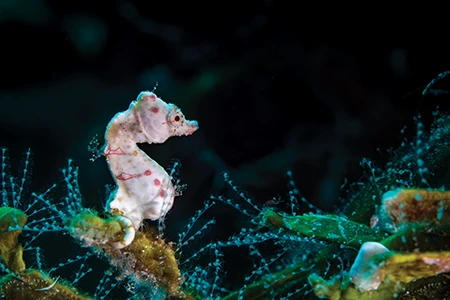
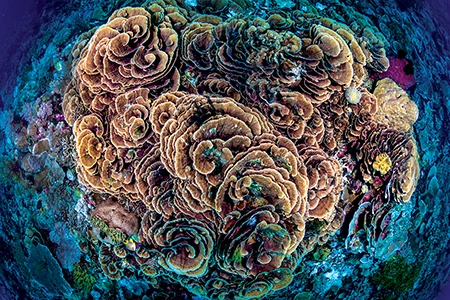
L'état des récifs ici n'est pas le fruit du hasard, et il suffit de plonger sous la surface pour constater leur succès. Un paysage sous-marin envoûtant nous accueille à mesure que nous descendons. De luxuriants récifs coralliens tropicaux ornent les tombants spectaculaires, les pinacles exubérants et les jardins de corail magiques qui constituent un habitat idéal pour la vie marine.
Bien que les accomplissements de Wakatobi soient profondément ancrés dans ses partenariats avec les communautés locales, le complexe hôtelier utilise désormais des techniques scientifiques innovantes pour intensifier ses efforts visant à comprendre et à garantir la santé à long terme de ses récifs.
C'est là qu'intervient Mellers. Elle est titulaire d'un master en biologie marine de l'université d'Oxford et passionnée par l'écologie des coraux. En tant que responsable du Reef Health Assessment Program à Wakatobi, elle et son équipe surveillent les récifs à l'intérieur et à l'extérieur des aires marines protégées (AMP) gérées de manière privée par le complexe hôtelier.
Nous suivons la biodiversité récifale à travers l’arbre du vivant afin d’établir une vision complète de la santé de l’écosystème, à l’intérieur comme à l’extérieur de l’aire protégée.
Ce programme, qui utilise l'analyse d'images assistée par l'IA, la technologie de l'ADN environnemental (ADNe) et l'apprentissage automatique, aide à analyser les grandes quantités de données collectées par l'équipe de Wakatobi afin de révéler des tendances et de fournir des informations jusqu'alors inaccessibles. « Nous ne nous contentons pas de mesurer la santé actuelle des récifs, explique M. Mellers, nous nous efforçons également de comprendre pourquoi ils sont en bonne santé et comment nous pouvons les préserver. »
Bien que l'interdiction de pêcher à l'intérieur de leurs AMP ait clairement contribué à améliorer la santé et la biodiversité des récifs de Wakatobi, leur emplacement est également un facteur important.
« Nous sommes situés à la jonction des mers de Banda et de Flores, un puissant confluent qui favorise les remontées d'eau, fait circuler des eaux riches en nutriments et transporte les larves à travers les récifs », explique Mellers. « Cet afflux introduit de nouvelles espèces, reconstitue les populations et stimule la productivité. Nous avons également un immense récif barrière à 16 km à l'ouest qui aide à protéger la région des grosses vagues. »
Dans le but de comprendre et de protéger l'avenir des récifs coralliens ici, Mellers et son équipe tentent de déchiffrer le code génétique du récif à l'aide de la méthode innovante de l'ADNe. Ils collectent et filtrent l'eau du récif afin de capturer des traces de matériel génétique sous forme de cellules, de peau, de déjections et de mucus. Ils piègent l'ADN du récif sur un filtre et l'envoient à un laboratoire pour entamer le processus complexe d'identification des organismes présents.
L'analyse de l'ADNe a confirmé la présence de 11 espèces de coraux vulnérables et d'autres espèces rares vivant dans les récifs de Wakatobi. « Il est intéressant de noter que les coraux les plus rares que nous avons trouvés se trouvaient presque exclusivement dans les sites les plus riches en biodiversité de la zone protégée », a expliqué M. Mellers, « ce qui renforce le lien entre les efforts de conservation et la résilience des récifs ».
Les découvertes de l'équipe sont très encourageantes : une grande diversité corallienne abritant de nombreuses espèces rares, une biomasse de poissons importante et peu de signes de dégradation des récifs, en particulier par rapport aux récifs situés en dehors de la zone marine protégée du complexe hôtelier.
Les résultats indiquent que les récifs situés dans la zone protégée de Wakatobi sont en bien meilleure santé que ceux des zones voisines non protégées. Contrairement à de nombreuses régions touchées par les récents épisodes de blanchissement généralisé, Wakatobi n'a pas connu de blanchissement significatif.
« Nous savons que nos récifs sont résistants aux effets du changement climatique », a déclaré M. Mellers. « Bien que nous ne puissions pas prédire le rythme du changement, nos données suggèrent que les efforts de conservation contribuent à maintenir la résilience des récifs, même dans un océan qui se réchauffe. Nous prenons le pouls du récif en temps réel, ce qui nous aide à identifier les changements ou les signaux de stress avant qu'ils ne deviennent un problème. »
Les données recueillies fournissent les preuves en temps réel que l'approche collaborative et communautaire de la station en matière de conservation fonctionne.
Leçons pour l'avenir
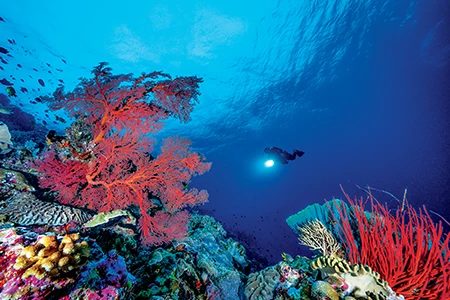
Il serait facile de considérer Wakatobi comme une anomalie. Après tout, il s'agit d'un modèle touristique haut de gamme isolé, avec un faible nombre de visiteurs, et Mäder disposait du capital et de la vision nécessaires pour investir massivement dans la conservation dès le début. Mais la philosophie d'autonomisation des communautés, de planification à long terme et de rigueur scientifique est universellement puissante et évolutive.
Seuls 8 % des océans mondiaux sont protégés, et moins de 3 % sont considérés comme entièrement ou fortement protégés. Wakatobi est relativement modeste, mais démontre que des AMP bien gérées peuvent conduire à une biodiversité croissante, à une amélioration des populations de poissons, à une plus grande résilience face aux pressions environnementales et à de meilleurs résultats pour les communautés locales.
Alors que la température des océans continue d'augmenter, que le blanchiment des coraux s'intensifie et que la surpêche industrielle décime nos océans, les zones protégées offrent un refuge à la vie marine pour qu'elle puisse se rétablir, s'adapter et se propager dans les zones environnantes. Les zones entièrement protégées contribuent non seulement à sauver les espèces et les récifs coralliens, mais aussi à améliorer la sécurité alimentaire et les conditions de vie.
À une époque où le désespoir continue de faire la une des journaux, Wakatobi illustre parfaitement ce qui fonctionne et ce qui doit être fait à l'échelle mondiale. En tant que citoyens de l'océan, nous devons soutenir les destinations qui investissent dans des initiatives telles que celles-ci. Il ne s'agit pas seulement d'une bonne pratique, mais aussi d'une partie de la solution.
© Alert Diver – Q4 2025