El gas respirable seguro es el salvavidas del buceador bajo el agua, y su contaminación puede poner en peligro la vida o provocar lesiones graves. Los contaminantes pueden proceder de diversas fuentes, por lo que es importante comprender cómo se produce la contaminación, cómo reconocer las señales de alerta y qué hacer si se sospecha que se ha producido una contaminación.
Cómo se produce la contaminación
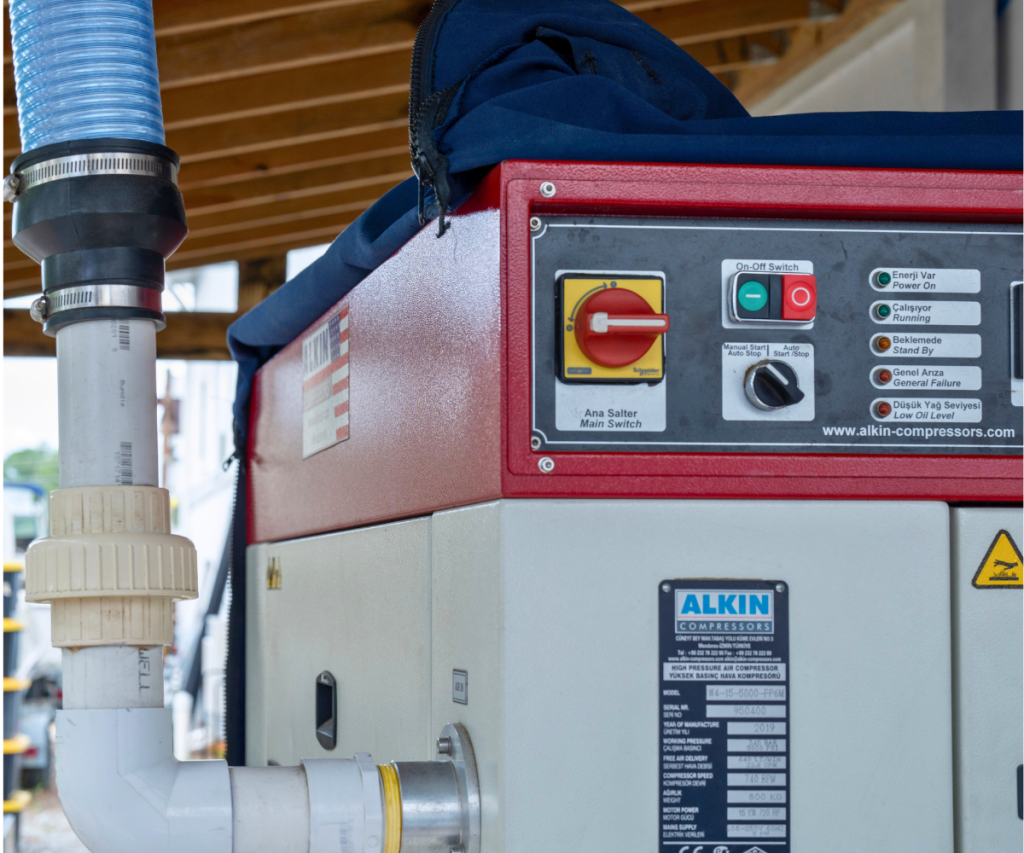
El gas respirable se comprime en cilindros mediante un compresor. Aunque los sistemas de compresión varían, todos cuentan con una válvula de admisión que aspira aire ambiente antes de la compresión. Los compresores también disponen de sistemas de filtración que eliminan los contaminantes, pero los filtros se deterioran con el tiempo y es necesario sustituirlos.
Las empresas de llenado de confianza deben seguir procedimientos de llenado seguros, realizar pruebas periódicas de la calidad del aire y llevar a cabo un mantenimiento rutinario de los compresores. Sin embargo, los problemas de mantenimiento, las condiciones ambientales, los fallos en los equipos, los errores en los procedimientos y otros problemas imprevistos dan lugar a que puedan entrar contaminantes en las botellas de gas respirable.
Las posibles fuentes de contaminación provienen de impurezas presentes en el entorno, como los gases de escape de los motores, el dióxido de carbono o las partículas de polvo, o bien de subproductos del proceso de compresión, como el monóxido de carbono (CO) o los hidrocarburos procedentes de los lubricantes de los compresores.
Las fuentes de contaminación dependen, en parte, de la ubicación de la válvula de admisión del compresor. En el caso de las tomas de aire exteriores, entre las posibles fuentes se pueden incluir los gases de escape de los vehículos, el humo, la materia orgánica o los residuos, la suciedad y cualquier fuente de combustión. En el caso de las tomas de aire interiores, entre las posibles fuentes se pueden incluir los vapores de pintura, las reformas recientes, los productos de limpieza, los productos químicos almacenados, una ventilación deficiente u otros contaminantes presentes en el aire.
Contaminantes y síntomas
Los síntomas de la contaminación del gas respirable pueden ser poco específicos y parecerse a los de otras enfermedades o afecciones relacionadas con el buceo. Si sospechas que has estado expuesto a gas respirable contaminado, acude al médico y, siempre que sea posible, haz que analicen el gas.
| TABLA DE CONTAMINANTES Y SÍNTOMAS | |
|---|---|
| Monóxido de carbono (CO) | Dolor de cabeza, mareos, debilidad, náuseas, vómitos, dificultad para respirar, alteración del juicio, confusión, pérdida del conocimiento. |
| Dióxido de carbono (CO₂) | Hiperventilación, mareos, confusión, pérdida de conciencia. |
| Hidrocarburos volátiles | Fatiga, dolor de cabeza, confusión, alteración del juicio, entumecimiento, arritmias cardíacas, pérdida de conciencia. |
| Petróleo (condensado) | Dolor de cabeza, náuseas, alteración de la función respiratoria. |
| Polvo (partículas) | Alteración de la función respiratoria. |
El CO es especialmente peligroso porque es inodoro, incoloro e insípido. Sin un instrumento de detección, puede resultar difícil identificar el CO antes de que aparezcan los síntomas. Dispositivos de detección de CO entre ellos se incluyen dispositivos desechables de alerta temprana y analizadores específicos. Otros contaminantes pueden conferir al gas respirable un olor o sabor característico, pero la ausencia de olor o sabor no descarta la posibilidad de contaminación.
Cómo detectar problemas relacionados con la calidad del gas
Realiza una comprobación de gases antes de la inmersión
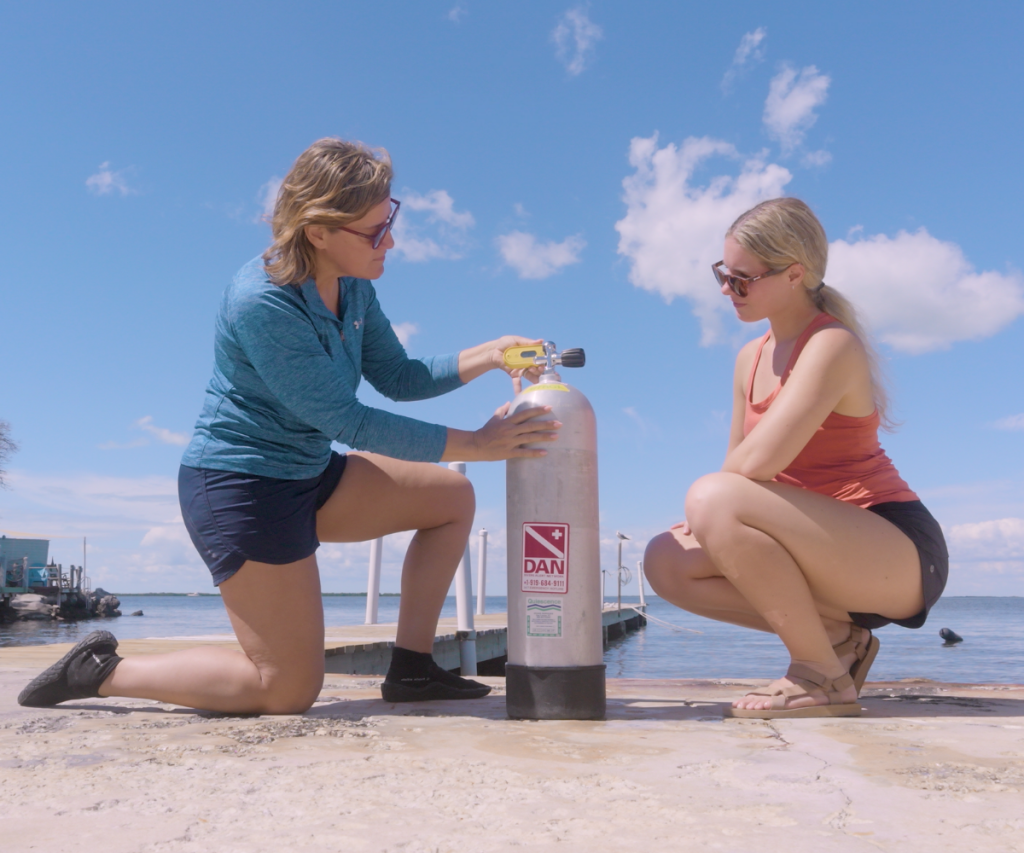
Realizar una comprobación del gas antes de cada inmersión en todas las botellas puede servir como señal de alerta temprana de un posible problema. Esta comprobación debe incluir oler y probar el gas, realizar una prueba de CO y analizar el contenido de oxígeno.
- Comprueba el olor y el sabor: Si el gas respirable tiene un olor o sabor inusual o desagradable, no bucees con él.
- Análisis de CO: En algunas operaciones de llenado se utilizan monitores de CO continuos, pero el uso de un analizador de CO portátil personal constituye una valiosa medida de seguridad adicional para cada buceador.
- Análisis del oxígeno: Aunque el oxígeno no es un contaminante al uso, los errores en el etiquetado de las botellas y las confusiones pueden resultar potencialmente peligrosas. Analizar el contenido de oxígeno de cada botella garantiza que los buceadores sepan exactamente qué porcentaje de oxígeno están respirando y puedan planificar sus inmersiones en consecuencia.
Evaluar el entorno de llenado
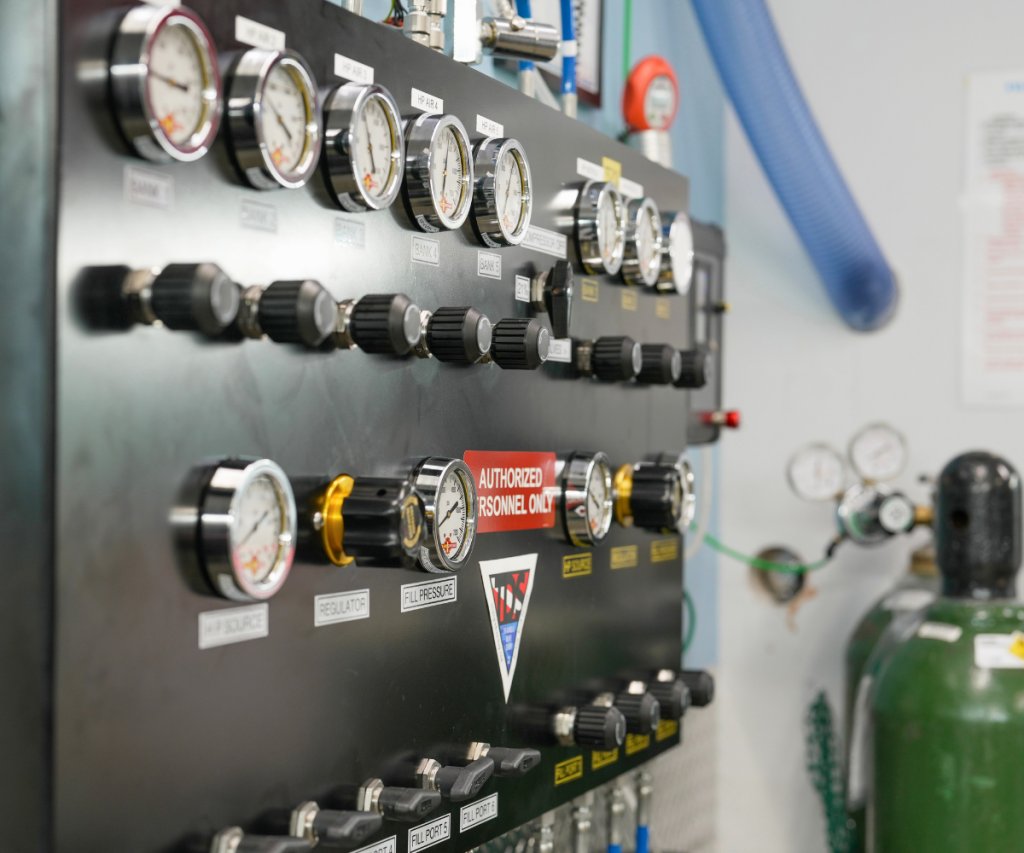
Cuando visites un nuevo centro de buceo, tómate tu tiempo para evaluar el entorno y observar las prácticas de llenado. Echa un vistazo a la estación de llenado y a la zona circundante en busca de posibles fuentes de contaminación. La ubicación de la válvula de admisión del compresor varía, por lo que es recomendable preguntar dónde se encuentra y si puedes verla. Una vez identificada su ubicación, plantéate las siguientes preguntas.
| Si la toma de aire es interior | Si la toma de aire está al aire libre |
|---|---|
| ¿Está el espacio limpio y ordenado? | ¿Está protegida la válvula de admisión? |
| ¿Está bien ventilado? | ¿Hay restos orgánicos cerca de la toma de agua? |
| ¿Se nota algún olor en la habitación? | ¿Cómo es la calidad del aire exterior? |
| ¿Hay productos químicos, combustibles, pintura o productos de limpieza almacenados en las inmediaciones? | ¿Está la tienda cerca de alguna carretera, fábrica, restaurante u otras fuentes de contaminación? |
| ¿Se ha reformado el edificio recientemente? | ¿Hay alguien fumando cerca? |
| ¿El personal está cocinando o limpiando mientras el compresor está en marcha? | ¿Hay embarcaciones, vehículos, generadores o compresores que funcionen con gasolina en las inmediaciones? |
La clave para tener conciencia situacional es la observación. Presta atención a los procedimientos del centro. ¿Parece que los trabajadores siguen un protocolo específico de llenado? ¿Cuenta el centro con señalización de seguridad visible, credenciales de los operadores y documentación sobre la calidad del aire a disposición del público? ¿Informan los buceadores de algún olor o sabor en sus botellas, o experimentan síntomas después de las inmersiones?
La observación puede aportar pistas, pero también conviene hacer preguntas sobre los procedimientos de seguridad y las precauciones que se siguen en la tienda a la hora de rellenar los envases.
Podrías plantearte preguntar:
- ¿Qué medidas tomáis para garantizar la calidad del gas respirable y la seguridad de los compresores?
- ¿Con qué frecuencia compruebas la calidad del aire?
- ¿Podría mostrarme el certificado más reciente de la prueba de calidad del aire?
- ¿Con qué frecuencia se revisa el compresor?
- ¿Podría mostrarme sus registros de mantenimiento?
- ¿Realiza pruebas de monóxido de carbono (CO)?
Expresa tus preocupaciones
Si tienes alguna duda sobre una botella, avisa al personal del centro. Las dudas relacionadas con los gases respiratorios deben tomarse muy en serio. Si se ignoran tus dudas, no hay documentación disponible o los miembros del personal no están dispuestos a hablar sobre los procedimientos de seguridad, valora si el centro cumple con tus expectativas en cuanto a la seguridad en el buceo. Dependiendo de las circunstancias, las dudas no resueltas pueden justificar una conversación más detallada con la dirección del centro u otra autoridad competente.
Hacer preguntas y expresar tus inquietudes puede resultar incómodo en ese momento, pero dar tu opinión puede ayudar a proteger tanto tu seguridad como la de los demás. La detección precoz de problemas de seguridad relacionados con los gases respiratorios puede ayudar a prevenir incidentes antes de que se produzcan.
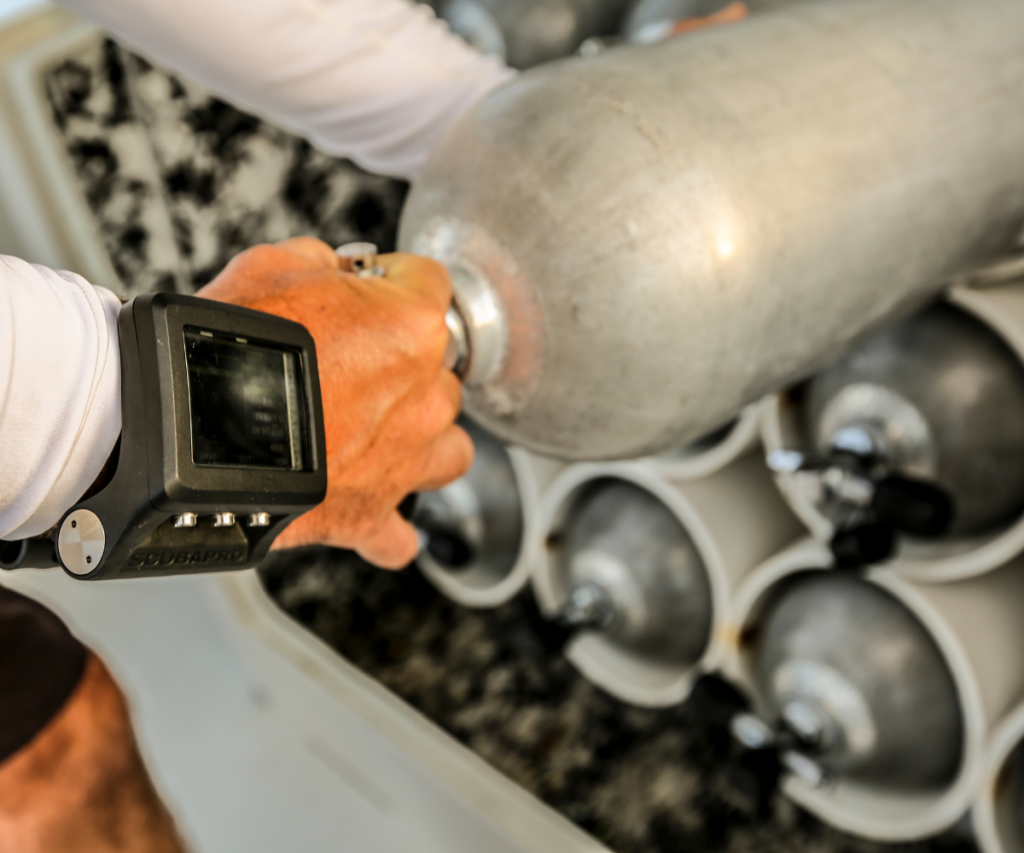
DAN ofrece asistencia en el análisis de gases. Si has sufrido un incidente que pueda estar relacionado con la inhalación de gas contaminado y tienes la custodia legal del depósito, conserva el depósito y ponte en contacto con el departamento de Mitigación de Riesgos de DAN en o al +1-919-684-2948, Opción 2.