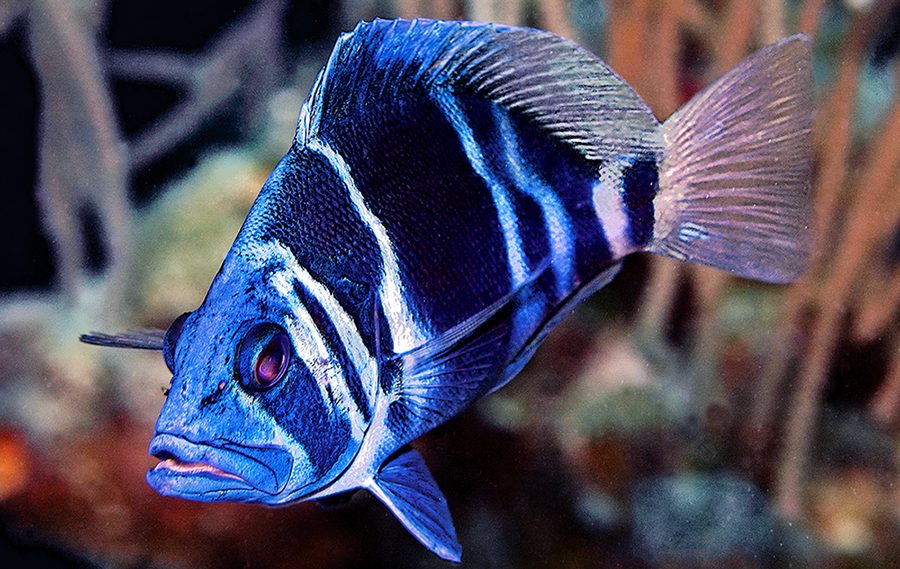
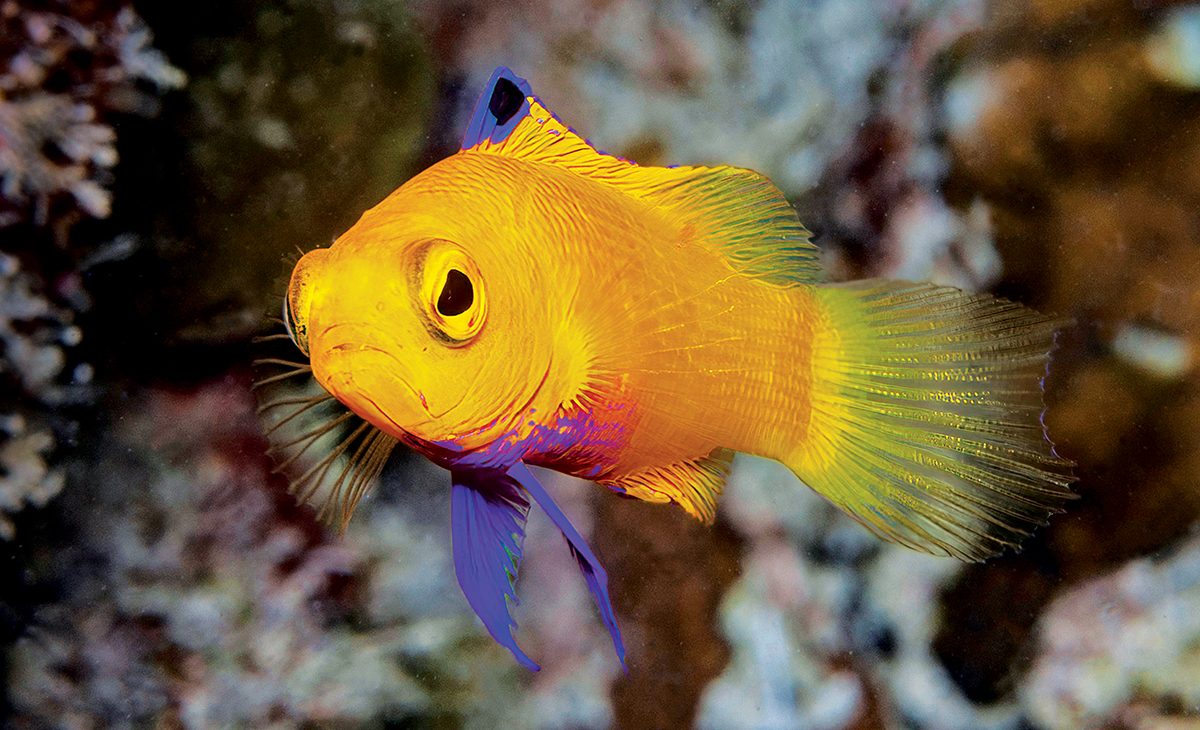
DEPUIS LA FIN DU XIXe siècle, les taxonomistes marins débattent du statut d'espèce des petits bars majestueux des Caraïbes du genre Hypoplectrus, communément appelés hameçons. Au cœur de la controverse se trouve l'essence même de la taxonomie : Qu'est-ce qui définit une espèce ?
MANY JAPANESE DIVERS LOVE UNDERSEA CREATURES, particularly the home-grown varieties living in abundance along the country’s craggy volcanic coastlines and offshore islands. They also have an infatuation for the eccentric — the stranger the better.
On our first trip to Hachijō-jima in 2015, we were in the company of friends on a mission to photograph a scientifically undocumented pygmy seahorse the size of a pumpkin seed. Even after a concerted four-day search, the tiny target eluded our efforts until a single seahorse miraculously materialized in the last minutes of the last dive on the last day.
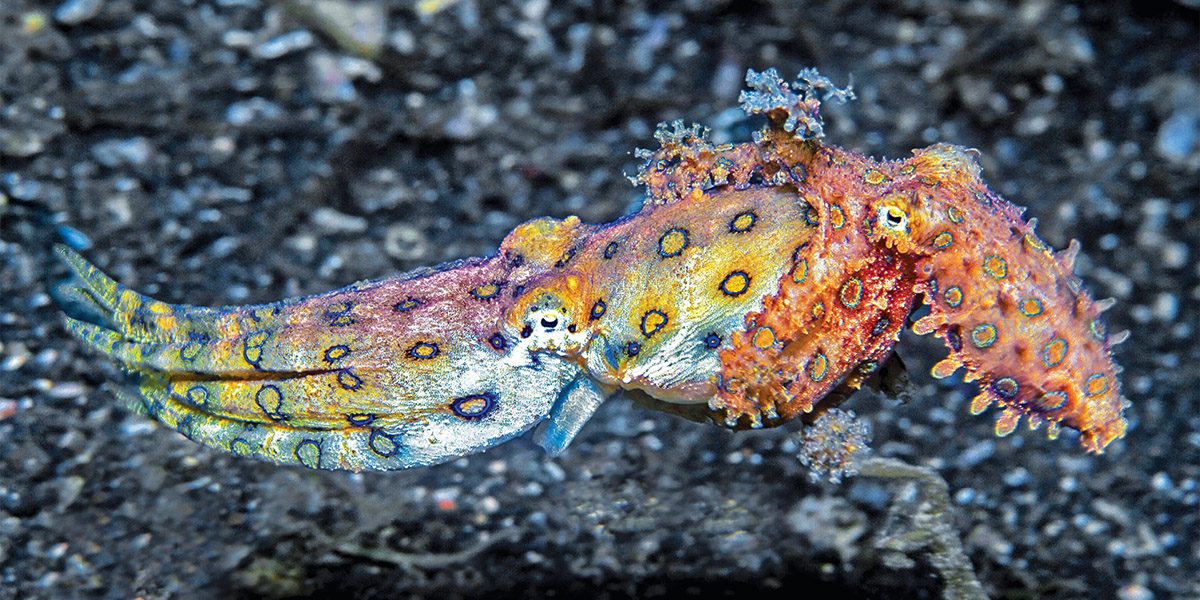
What diver isn’t enchanted by an octopus, especially a beguiling beauty with the reputation of an assassin? Even though we searched for legendary blue-ringed octopuses across their territorial waters of the Asia-Pacific, it took five years before we made our first sighting in Lembeh Strait.
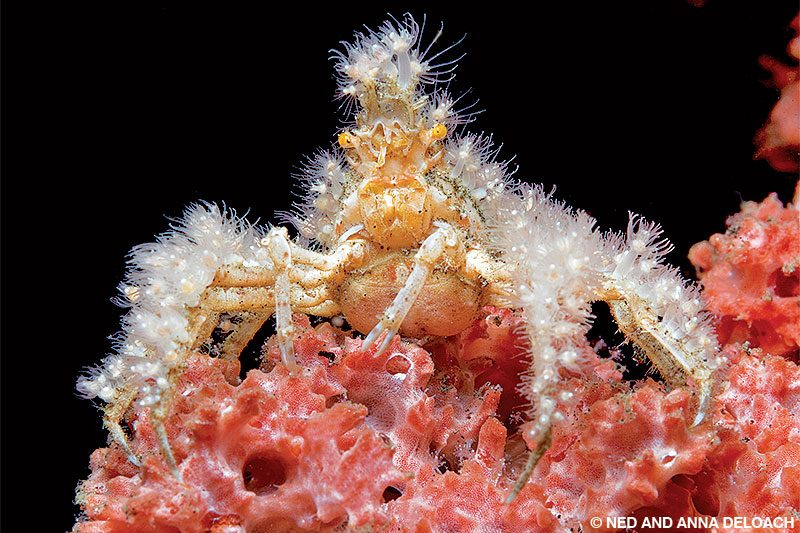
Most decorator crabs belong to one of eight families in the superfamily Majoidea, commonly referred to as spider crabs. About 75 percent of the group’s more than 1,100 global species mask their presence by wearing disguises made from living organisms scissored from the landscape. They commonly hijack seaweeds, sponges, tunicates, bryozoans and hydroids. The crabs manipulate the purloined pieces of attire with their mouths before attaching them to one of the many fishhook-shaped bristles arranged in rows on the carapace, rostrum, walking legs and claw arms, depending on the species.
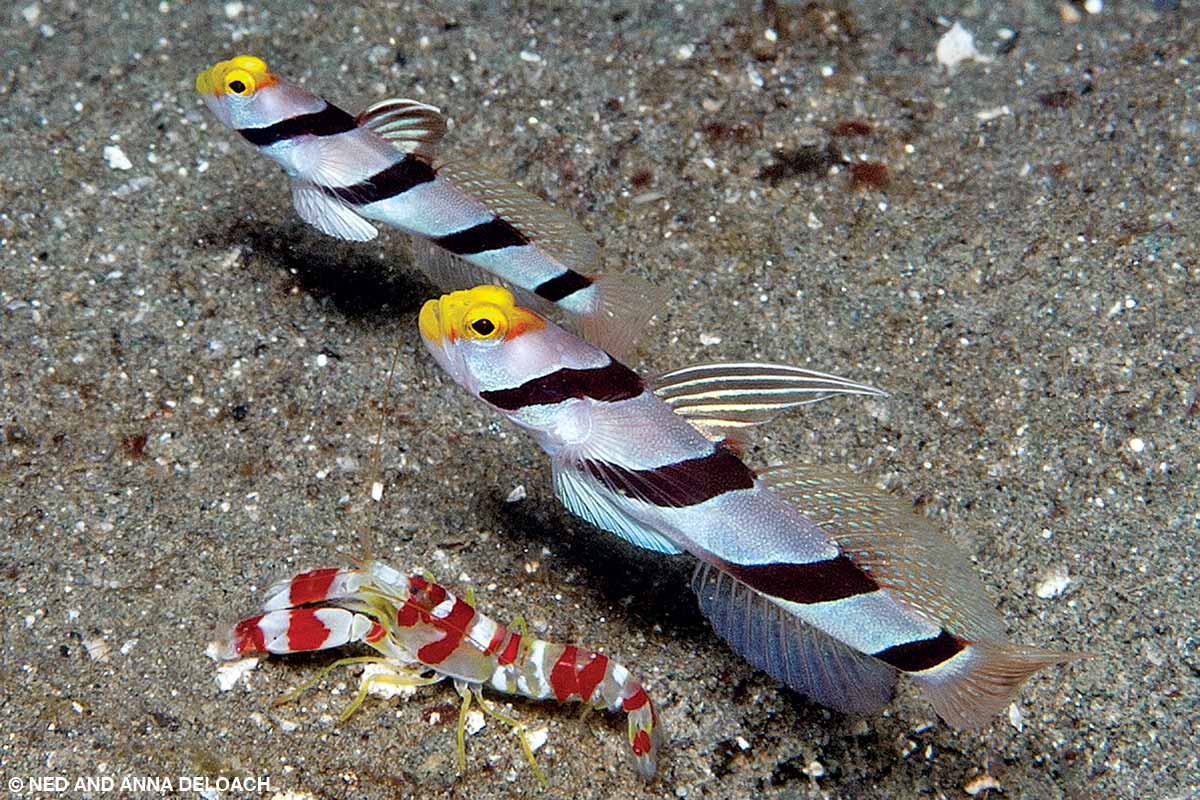
Interactions between different species, whether above or below water, typically revolve around confrontations between predators and prey. At the opposite and more harmonious end of the spectrum, a scattering of unrelated species coevolved to form lifelong alliances for their mutual security. These relatively rare go-along-to-get-along partnerships provide a net benefit for both parties, improving each species’ reproductive success. The close living arrangement between weak-eyed alpheid snapping shrimp and sharp-eyed partner gobies is a classic example of symbiosis in the sea.
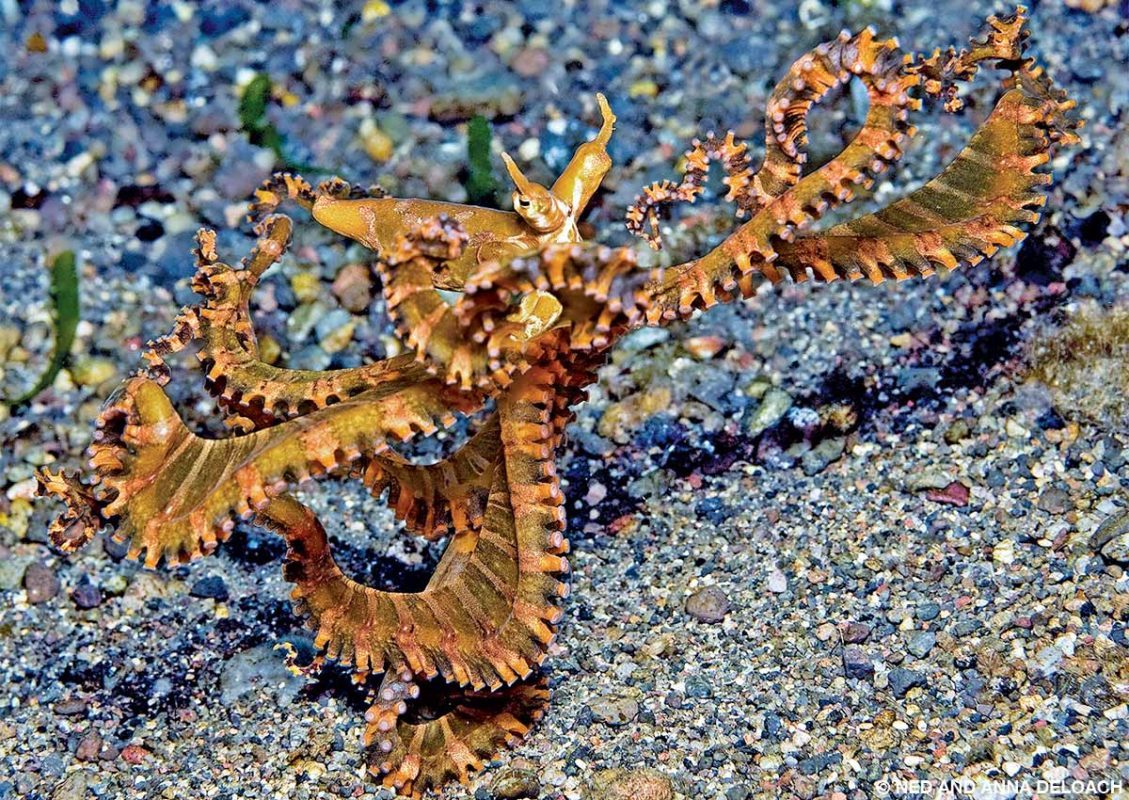
In 1995, when we first explored wunderpus territory, which overlies much of the Coral Triangle, the then-undescribed octopus’ fame had spread far and wide. The newly sensational creatures attained much of their acclaim for dancing like dandies across sandy seafloors on eight unimaginably limber arms — an eye-popping feat of acrobatic dexterity well worth traveling halfway around the world to see.
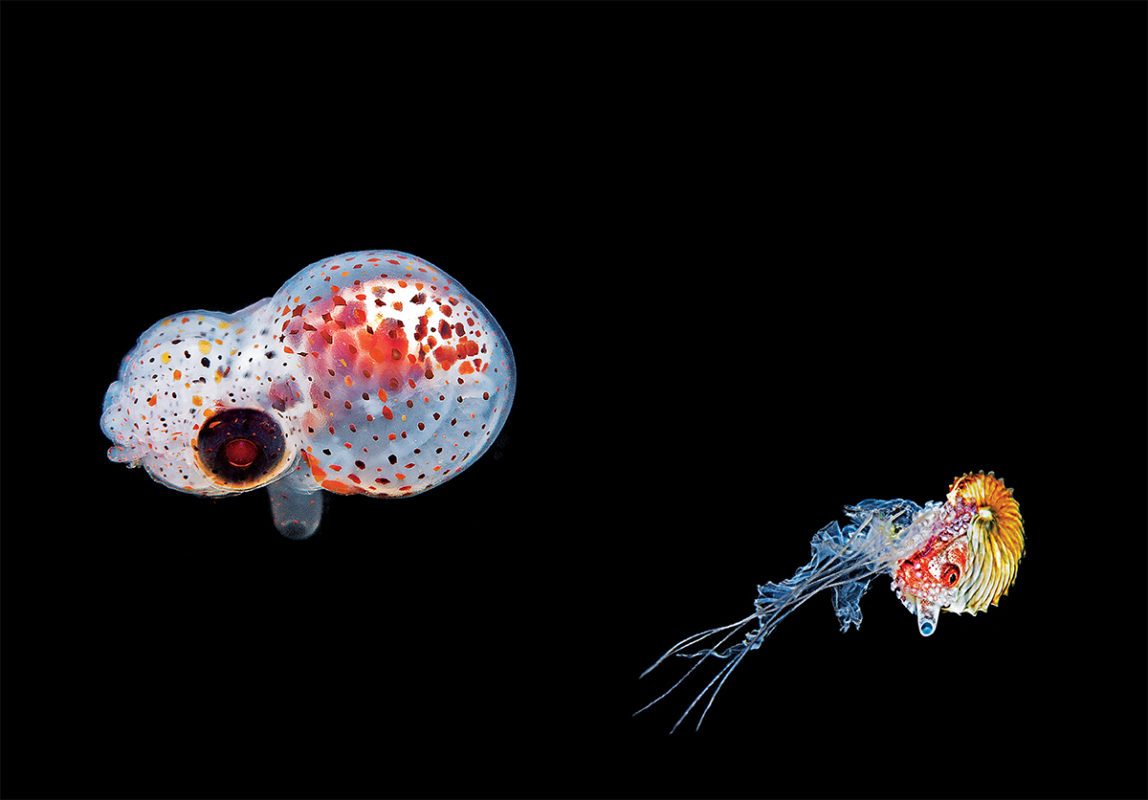
I DON’T EXPECT TO SEE ANIMALS much larger than my thumbnail while I’m drifting on a night dive in the ocean. So I’m surprised when a translucent skirt of tentacles […]
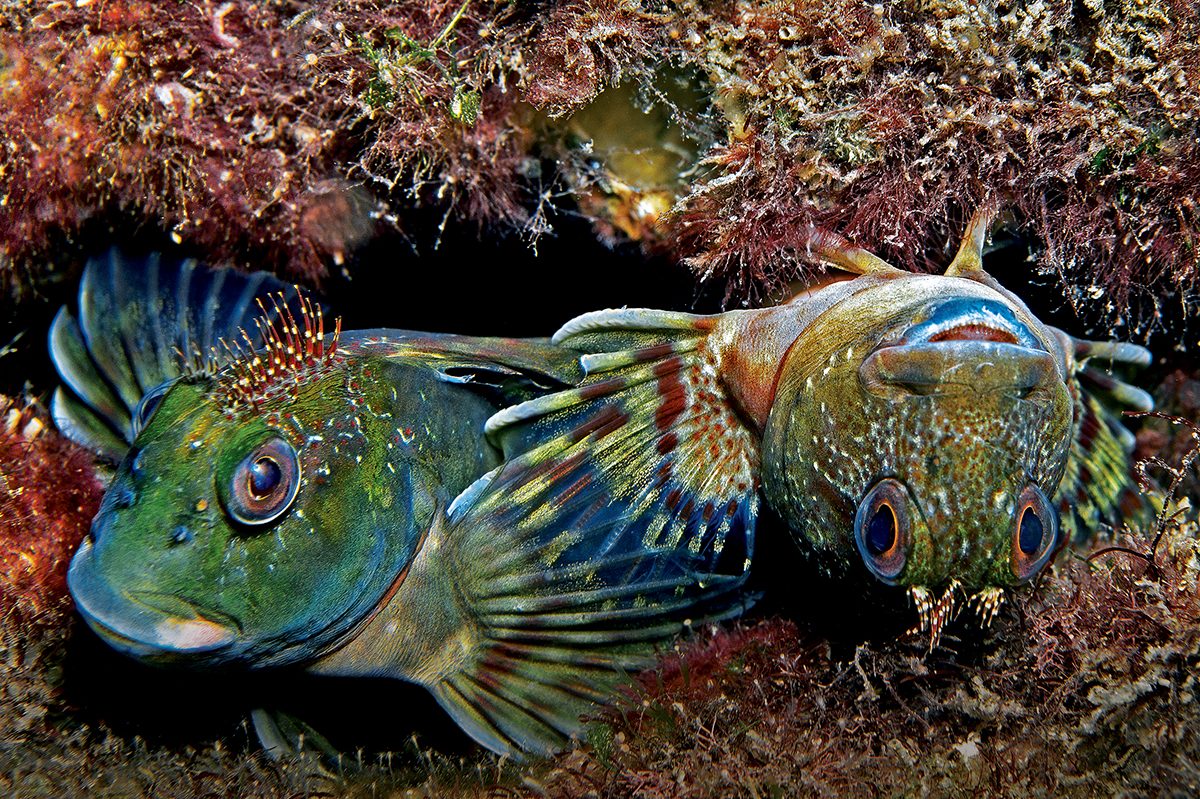
OF ALL THE FISHES IN THE SEA THAT ANNA ADORES, blennies perch high atop her favorites list. Her fascination with the tribe of typically small, hole-inhabiting bottom-dwellers …
IT HAD BEEN A BUSY WEEK for the fish surveyors aboard the Avalon ll, and things were just beginning to wind down. The Reef Environmental Education Foundation (REEF) team of 16 volunteer research divers had recorded population estimates for 246 fish species on 26 reef, seagrass, mangrove, and ironshore sites within the benevolent boundaries of […]