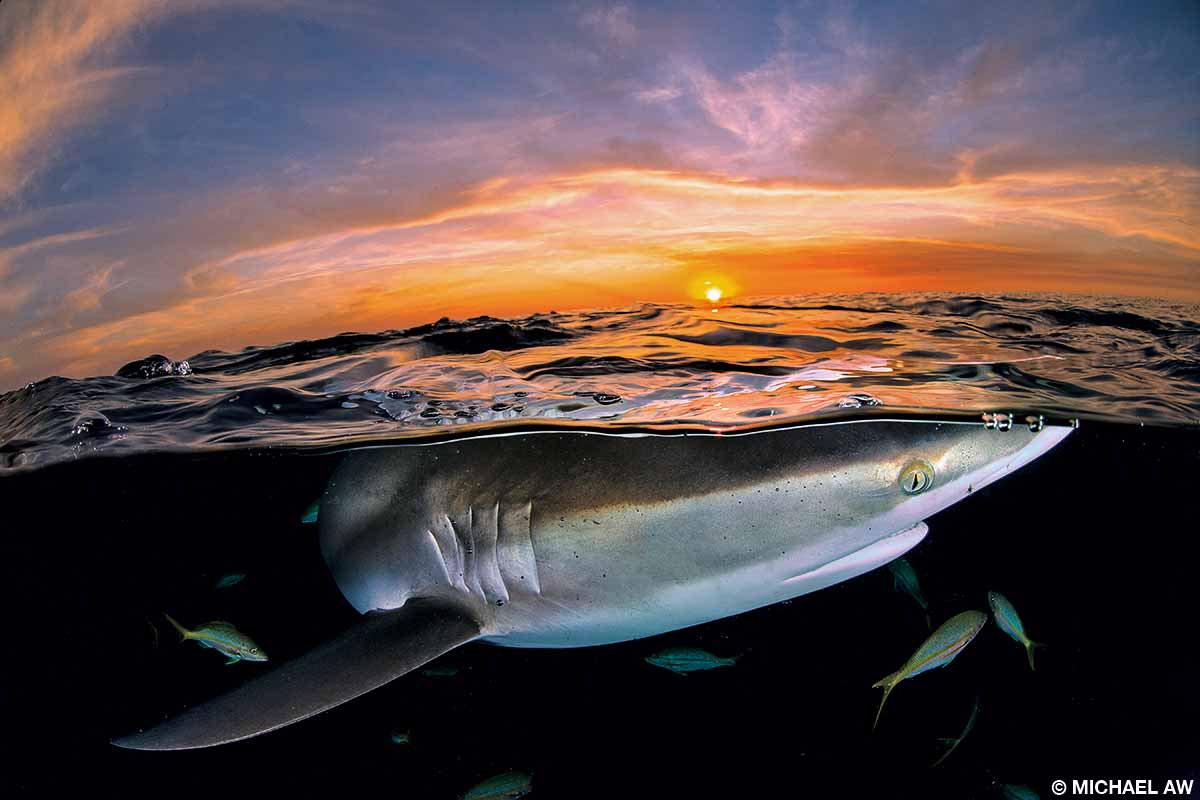
Michael Aw’s early life while growing up in Singapore — he didn’t see the ocean until age 17 — gave few clues that he would one day become one of the most influential print journalists in destination diving and ocean conservation. The author of or major contributor to 43 books, Aw created Ocean Geographic magazine in 2007 and also leads expeditions, often to exotic regions. He now hopes to raise awareness of the folly of shark-finning and the overexploitation of our marine resources.
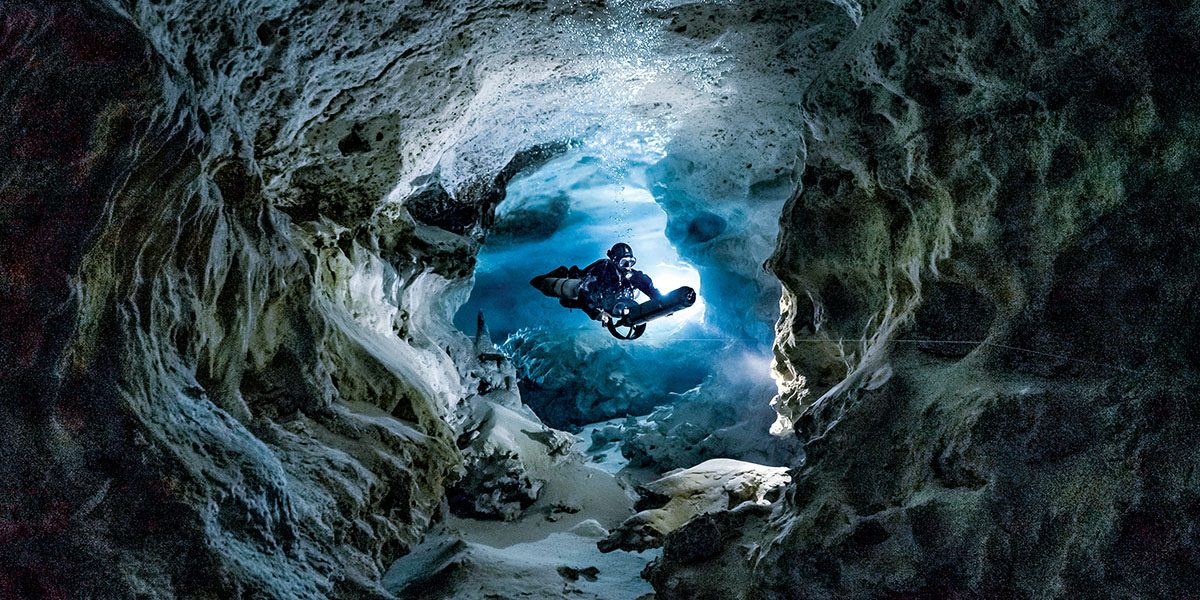
Tandis que je flotte dans l'obscurité douce d'une grotte inondée, un tunnel s'éloignant de moi attire mon attention. Comme un sentier de montagne, le passage offre des vues spectaculaires, des défis physiques et de l'exaltation. En expirant dans l'eau, je ressens une dissolution de moi-même. Mon objectif en tant que photographe est de transmettre cette sensation dans une photo.
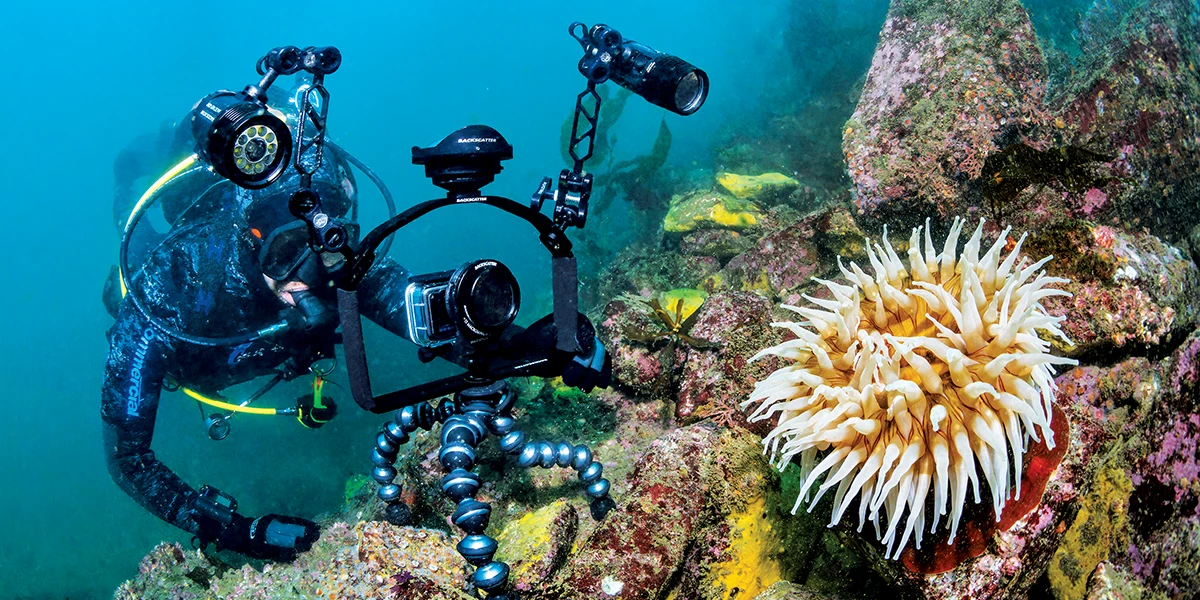
Les caméras d’action sont une solution compacte très répandue pour capturer d’excellentes vidéos, et parfois des photos. Avec la diversité des marques et la multitude d’accessoires disponibles — filtres, lentilles, éclairages — il n’a jamais été aussi simple d’obtenir de belles images sous-marines.
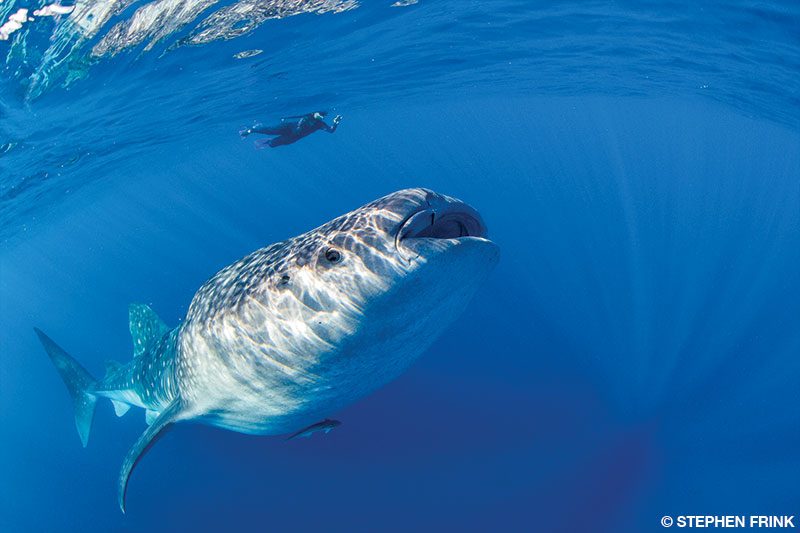
Underwater photographers usually evolve a specialty, but the first fork in their road typically involves defining an interest in either photographing natural history — marine life in particular — or concentrating on editorial and commercial work that inevitably involves photographing people underwater. Photos of charismatic marine life help tell the story of a dive destination or might be used for photo décor or stock photography. Compositions that illustrate people interacting with marine life bridge both disciplines and combine each approach’s rewards and challenges.
LA VOIE VERS LA PROMINENCE EN PHOTOGRAPHIE SOUS-MARINE est variée et en constante évolution.
It doesn’t seem so long ago that I rolled into Key Largo, Florida, with a Nikonos II camera and a darkroom sink in the back of my Chevy van to figure out how to make a living as an underwater photographer. Things have changed since 1978, and underwater photography is not the novelty it was when I started.
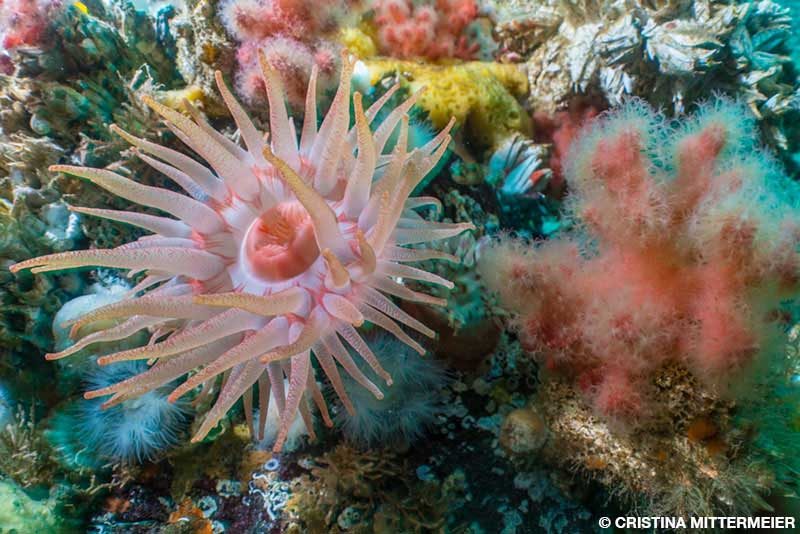
After reading the Shooter column “Cristina Mittermeier: Commitment to Conservation,” view this additional photo gallery of her work.
MANY DIVERS DON’T WANT TO TAKE LARGE digital single-lens reflex (DSLR) housings or expensive mirrorless cameras on their dives. Their goal is to capture memories to show their family or post on social media, not to get the highest-quality underwater images.
Think about the first time you picked up an underwater camera — what was the initial reason? Maybe you wanted a way to record your dives or a mechanism to show your nondiver friends and family the beauty of the underwater world.
Turbid water can be a challenging environment for underwater photographers, particularly when shooting wide angle. Turbid water may not appear brown or green from the surface — in many cases the water looks entirely different once we drop in and begin the dive. All water is turbid to some degree. Understanding what causes turbidity and knowing how to work around it can make a world of difference when shooting in those conditions. One of the best skills a photographer can develop, particularly for shooting wide angle, is learning how to read water quality.