Los colores salvajes y psicodélicos de los peces de arrecife suelen ser lo primero que cautiva a los buceadores. ¿Existe una explicación evolutiva que explique por qué estos pequeños y sabrosos animales se adornan con colores vivos en lugar de camuflarse para protegerse de los depredadores hambrientos?
El especialista en visión del color Justin Marshall, doctor en Filosofía, señaló sobre los hábitats de los arrecifes de coral que «es casi inconcebible que solo una fuerza evolutiva esté detrás de los colores de un conjunto tan diverso».
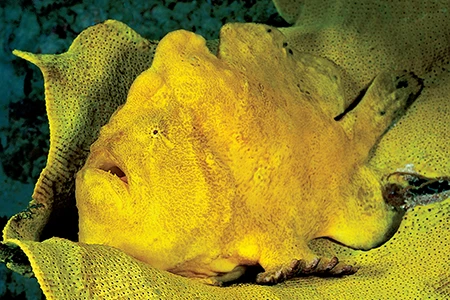
Alfred Russel Wallace, un pensador evolutivo del siglo XIX, propuso que los peces de arrecife son coloridos porque se camuflan contra los coloridos arrecifes. Sin embargo, Wallace no era buceador y no podía ver que la mayoría de los peces de arrecife nadan constantemente frente a fondos muy variables, que a menudo son menos coloridos que los animales. Los peces rana y los caballitos de mar son excepciones notables, ya que son en su mayoría sésiles y a menudo adaptan sus colores a los corales blandos y las esponjas donde residen.
Más recientemente, algunos ecologistas han propuesto que los peces podrían adoptar colores brillantes simplemente porque pueden hacerlo. La mayoría de los peces de arrecife nadan cerca de la seguridad del entorno estructuralmente complejo del arrecife de coral y pueden refugiarse fácilmente de los depredadores que se acercan, por lo que tal vez no importe lo visibles que sean. Los peces que nadan muy por encima del arrecife suelen ser menos coloridos, lo que les permite mezclarse con el agua abierta.
Otra teoría postula que la mayoría de los peces de arrecife no se camuflan porque no pueden. En las aguas tropicales claras y brillantes, con el fondo muy variado de un arrecife de coral, no existe prácticamente ningún patrón de camuflaje que proporcione seguridad a un pez que nada.
La prueba de esta teoría es una comparación entre los peces de ambos lados del istmo de Panamá, que comparten un ancestro común pero se han diversificado en especies diferentes. Estos peces evolucionaron por separado para adaptarse a diferentes hábitats. Los peces de las vibrantes y cristalinas aguas del Caribe son más coloridos que sus parientes del entorno más turbio y monocromático del Pacífico.
Algunas características de un patrón de colores llamativos pueden impedir la depredación. Los depredadores suelen buscar los ojos de sus presas para saber en qué dirección nadarán cuando ataquen y tomar el enfoque correcto en un ángulo . Muchos peces de colores vivos tienen marcas oscuras que ocultan sus ojos. Algunos tienen ojos falsos, normalmente cerca de la cola, para confundir al depredador y que ataque en la dirección equivocada.
Los colores brillantes pueden resaltar la biología defensiva, como la mancha naranja brillante del pez unicornio de espinas naranjas alrededor de las espinas afiladas de su cola. Otros peces pueden utilizar colores brillantes, como los nudibranquios y las ranas venenosas, para anunciar su toxicidad o su sabor desagradable. Algunos ejemplos son los pequeños peces globo y los peces cofre con su baba nociva, los blennios con colmillos que pueden dar un mordisco venenoso y los peces león con sus espinas dorsales venenosas.
Estos colores de advertencia concuerdan con la famosa explicación del conductista Konrad Lorenz sobre los colores de los peces como «vallas publicitarias». Un pez puede querer proclamar muchas cosas sobre sí mismo, al igual que los humanos utilizan la ropa, el peinado y los bienes materiales para anunciar su riqueza, su estatus social o su afiliación a un grupo. La identidad de la especie es un atributo clave para los peces. Los arrecifes de coral se encuentran entre los hábitats con mayor biodiversidad de la Tierra, y los peces necesitan ser capaces de distinguir rápidamente su propia especie para aparearse y ahuyentar a los competidores por las parejas y el alimento.
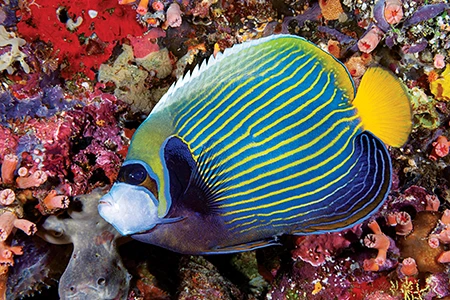
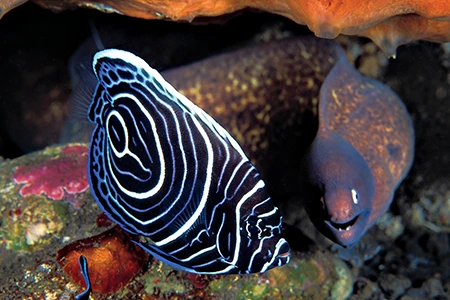
Los peces ángel emperador son muy territoriales y ahuyentan agresivamente a los miembros de su propia especie que puedan competir por los recursos. Los juveniles, al igual que los adultos, son de colores vivos, pero tienen un patrón de color muy diferente que les permite compartir el arrecife con los adultos sin ser atacados. Su patrón de color anuncia: «Mi dieta es diferente a la tuya, así que no malgastes energía persiguiéndome».
Muchos peces de arrecife, en particular los lábridos y los peces loro, tienen sexos de colores diferentes. Los patrones de color distintivos pueden indicar a un macho territorial que un pez es una hembra que quiere mantener dentro de su territorio y otro es un macho al que debe desplazar.
Además de marcar su especie, sexo y edad, los patrones de color pueden distinguir a algunos peces como individuos. Los investigadores pueden aprender a identificar a los peces individuales por las variaciones en sus patrones de color, por lo que es probable que los peces puedan hacer lo mismo para reconocer a sus parejas o agresores.
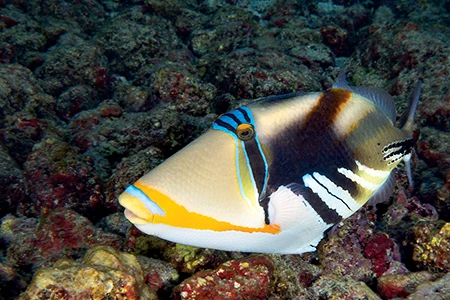
Algunos peces pueden cambiar su patrón de color o intensidad casi instantáneamente, a menudo en combinación con una muestra de agresividad. Algunos peces muestran o intensifican sus colores durante el cortejo. El pez ballesta negro, por ejemplo, muestra líneas de color azul eléctrico y amarillo en lugar de su habitual color negro sólido durante el cortejo y otras interacciones sociales. También utilizan patrones neón para atraer a los peces limpiadores y que estos los elijan entre los muchos peces que compiten por llamar su atención en una estación de limpieza.
Los peces limpiadores utilizan colores brillantes para anunciar sus servicios. Este comportamiento conduce a otra razón por la que los peces de arrecife pueden tener colores brillantes: el mimetismo. Varios blénidos con colmillos lucen colores que imitan a los lábridos limpiadores con los que se asocian. Las víctimas inocentes que esperan un servicio de eliminación de parásitos se ven sometidas, en cambio, al ataque del blénido, que se come y se escapa. Los incisivos en forma de colmillos que hacen el trabajo sucio pueden inyectar veneno si un depredador ataca.
Otros blénidos no venenosos imitan los colores brillantes del blénido con colmillos y se benefician de una menor depredación. Otros peces pueden copiar los colores brillantes de especies especialmente numerosas de peces de arrecife para reducir su riesgo individual de depredación. Los peces cirujanos de banda naranja juveniles, por ejemplo, son de color amarillo brillante y a menudo se agrupan con peces cirujanos amarillos.
Una exhibición dinámica es otra forma de disuadir a los depredadores. Este comportamiento podría consistir en revelar repentinamente un patrón de colores brillantes que asuste al depredador el tiempo suficiente para que el pez escape. Varios tipos de peces escorpión tienen patrones de colores del arco iris ocultos en sus aletas pectorales. El resto del pez es de un color apagado que se confunde con los restos del arrecife, donde el pez escorpión descansa al acecho. Si tiene que huir de un depredador más grande, muestra los brillantes colores del arco iris, que desaparecen cuando el pez se detiene en una nueva ubicación. Otros peces tienen patrones sorprendentes en sus aletas dorsales que pueden mostrar cuando lo necesitan.
Los patrones de color dinámicos suelen comunicar algo a los peces cercanos. Sin embargo, se desconoce si el pez que cambia de color está enviando intencionadamente un mensaje concreto o si se trata de una respuesta involuntaria a un estado emocional.
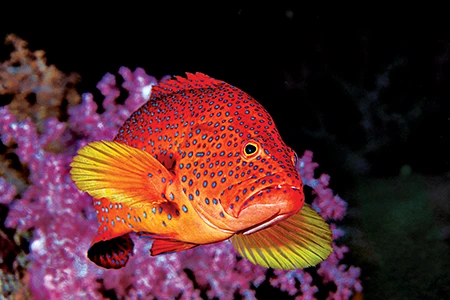
Los peces pueden desarrollar colores brillantes que no ofrecen ninguna ventaja para la supervivencia, siempre y cuando no supongan una desventaja. Muchos peces de aguas profundas y nocturnos que se refugian bajo los arrecifes durante el día, como los peces ardilla, los peces soldado y los peces ojones, son de color rojo intenso. El rojo no es visible por la noche ni por debajo de unos 20 metros, por lo que podría ser funcionalmente equivalente al negro.
Los peces no ven necesariamente los colores como nosotros. Muchos peces que viven en aguas más profundas no pueden detectar la luz roja, pero algunos peces de estos entornos no solo son sensibles a la luz roja, sino que también pueden producirla (u otros colores) mediante uno de dos mecanismos. Algunos son fluorescentes, absorben la energía de la luz azul a ultravioleta (UV) que penetra profundamente en el océano y la reemiten como luz roja. Otros generan luz roja a través de una reacción química (bioluminiscencia). Cualquiera de los dos métodos proporciona a estos peces un canal de comunicación privado para enviar señales a los miembros de su especie sin alertar a los depredadores.
Algunos peces de arrecife pueden detectar al menos cuatro colores, incluidas las longitudes de onda UV, que nosotros no podemos ver. Las especies que pueden controlar su reflectividad UV pueden utilizarla para la comunicación intraespecífica, indetectable para un depredador. El pez damisela de dos barras, por ejemplo, tiene una mancha altamente reflectante de los rayos UV en su aleta dorsal, que puede subir y bajar como una bandera de señalización. Algunos peces pueden mezclar los rayos UV con otros pigmentos e es para producir colores adicionales, como el amarillo UV, y algunos detectan la luz polarizada, utilizándola potencialmente para la navegación.
Los peces de arrecife utilizan sus encantadores colores de muchas maneras, pero ¿cómo los experimentan? Es dudoso que un pez mire a otro y piense en cómo la pigmentación de la piel indica la aptitud metabólica para una pareja más adecuada. Es más plausible que la evaluación de la apariencia de otro pez provoque una respuesta emocional no cognitiva y percepciones de atractivo o amenaza.
Carl Safina señala en su excelente libro Becoming Wildque es natural que los animales vean a los de su propia especie como hermosos, pero la verdadera pregunta es por qué los humanos también los encuentran hermosos. Safina concluye que la naturaleza ha dotado a todas las criaturas de una percepción de la belleza que les permite sentirse cómodas en el mundo al que se han adaptado.
Además, postula que los seres humanos heredamos no solo la capacidad de apreciar la belleza, sino también nuestros valores estéticos visuales de antepasados lejanos que compartimos con los peces y las aves. Aunque no puedo confirmar ni refutar esta provocativa idea, he visto peces huir de turistas que se acercaban con trajes de baño poco favorecedores.
© Alert Diver – Q1 2026