Cómo sobrevivir al «Night Shocker»
Un buzo comercial de yacimientos petrolíferos que utilizaba aire suministrado desde la superficie estaba inspeccionando por la noche una pequeña fuga de petróleo en un oleoducto de aguas profundas. Mientras nadaba a lo largo del conducto, el responsable de la superficie oyó unas palabras entrecortadas a través del sistema de comunicación por cable: «pez… electricidad».
La imagen de la cámara del casco del buzo se congeló, mostrando el fondo marino, y el operador no consiguió obtener respuesta verbal. El buque de apoyo envió inmediatamente a un buzo de seguridad, quien encontró al buzo comercial inconsciente en el fondo, con el casco inundado y lleno de vómito. Probablemente no habría sobrevivido si hubiera estado buceando con botella.
El buzo de seguridad sacó a su compañero inconsciente a la superficie y lo trasladó a la cámara de recompresión del barco. El buzo ya había recuperado la conciencia cuando llegaron al hospital en tierra, donde fue tratado por fibrilación auricular y recuperó la función cardíaca normal.
Las imágenes de la cámara del casco revelaron al misterioso culpable: una gran raya eléctrica con forma de tortita se acercó al buceador justo antes de que perdiera el conocimiento. Se registraron cuatro descargas eléctricas que aparecieron como ráfagas de estática en el monitor.
La raya torpedo del Atlántico occidental (Tetronarce occidentalis) es una especie gigante entre las rayas, que alcanza hasta 6 pies (1,8 metros) de longitud y más de 200 libras (91 kilogramos). También es la campeona de peso pesado en potencia eléctrica, con hasta 220 voltios y 30 amperios, lo cual es suficiente —aunque poco probable— para matar a un ser humano.
Las rayas torpedo son depredadoras sigilosas que se entierran en la arena durante el día y salen a cazar peces por la noche. Su disco corporal alberga órganos con forma de riñón, compuestos por células musculares modificadas en cada aleta, que actúan como gigantescos condensadores de descarga. Las rayas torpedo se abalanzan sobre su presa y liberan una rápida serie de descargas eléctricas, lo que provoca el colapso del sistema nervioso. La corriente es lo suficientemente fuerte como para provocar contracciones musculares que rompen las espinas de los peces presa. La raya se traga a la presa de cabeza, alojando la comida en su espacioso estómago.
Llevo 32 años estudiando esta enigmática especie y he marcado a más de 100 ejemplares durante mis inmersiones de buceo, utilizando marcadores de seguimiento hidroacústicos para desvelar parte de su historia natural. Estas rayas solían ser poco comunes en el Atlántico Norte, frente a las costas de Nueva Escocia, pero en los últimos 15 años, a medida que las temperaturas estacionales del agua aumentan más rápidamente y se mantienen cálidas durante más tiempo, hemos observado rayas torpedo en cantidades nunca antes documentadas en ningún lugar. Mi récord en un solo día fue de 14 ejemplares de ambos sexos en una zona del tamaño de una pista de tenis.
Hemos realizado muchos nuevos descubrimientos al estudiar esta especie, incluidos nuevos hallazgos sobre su comportamiento y sus movimientos. Una raya marcada cerca de Halifax, en Nueva Escocia, viajó durante más de tres meses, recorriendo más de 685 millas (1.100 kilómetros) hacia el interior del Atlántico Norte antes de que se desprendiera su marcador, lo que reveló por primera vez que esta especie tiene una fase costera, en aguas poco profundas, y una fase pelágica en su ciclo de vida. También he documentado un uso extensivo del planeo pasivo, que les permite desplazarse y migrar río arriba y río abajo con las corrientes al curvar su cuerpo a modo de hidroala.
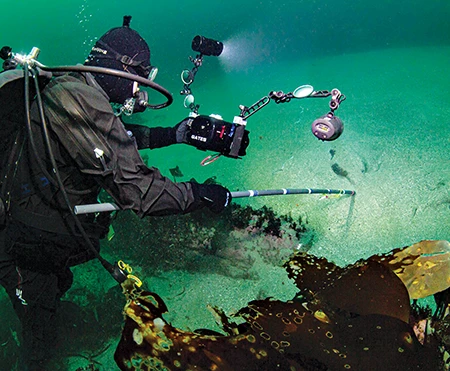
El trabajo diario de investigación, que consiste en bucear para estudiar una especie potencialmente letal y en gran parte desconocida, ha sido fascinante. Llevamos oxígeno y un desfibrilador externo automático (DEA) en la pequeña embarcación que utilizamos para el trabajo de campo y cumplimos con las normas de buceo de investigación de la Asociación Canadiense de Ciencias Subacuáticas. Utilizo una pértiga de marcado no conductora con una punta de marcado desmontable y biocompatible que se inserta bajo la piel de la raya.
Las rayas suelen ser difíciles de detectar cuando están enterradas en la arena, y lleva algún tiempo desarrollar la habilidad para localizarlas. Utilizando una cámara de vídeo sumergible con un conjunto de láseres verdes paralelos, coloco la pértiga de marcado en el fondo junto a la raya y me sitúo a 8 pies (2,4 m) por encima de ella para registrar su tamaño. A continuación, nado hasta la cola y compruebo la presencia o ausencia de apéndices copuladores masculinos levantando suavemente la cola con la pértiga.
Por último, etiqueto a la raya por detrás, normalmente en un lado de la cola, cerca de la primera aleta dorsal. La mayoría de las rayas reaccionan muy poco ante este procedimiento, y a menudo puedo completar todo el proceso sin que la raya salga de su madriguera.
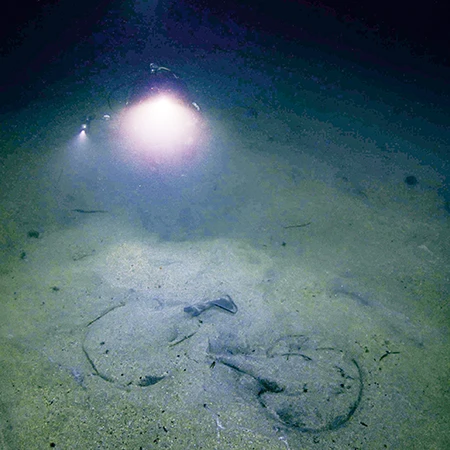
He tenido algunas interacciones reveladoras con las rayas. En varias ocasiones descubrí que tienden a atacar ciertos dispositivos electrónicos. Una vez fueron los flashes del kit de iluminación doble de un compañero. El desencadenante pareció ser el zumbido y la luz intermitente del flash mientras se recargaba, lo que provocó unos 20 segundos de ataques coordinados, incluyendo mordiscos repetidos al flash.
En otra ocasión, un amigo que no se había dado cuenta de que había encontrado una raya torpedo la había descubierto al agitar las aletas, y luego se colocó delante con una cámara de vídeo para grabar su hallazgo. La raya, irritada, se abalanzó sobre él; el visor se llenó de la parte inferior del animal mientras este se aferraba a su cabeza , y un grito prolongado sirvió de banda sonora mientras recibía descargas eléctricas repetidas. Afortunadamente, sobrevivió.
Me atacaron dos veces seguidas mientras utilizaba una GoPro en un palo corto. Se me había olvidado apagar la luz azul intermitente de la cámara, que atravesaba la escasa visibilidad de 10 pies (3 m) hasta llegar a la raya que estaba grabando. Oí a mi compañero gruñir; cuando levanté la vista, una segunda raya que nadaba rápidamente surgió de la oscuridad y chocó contra mi pecho. Se aferró a mi brazo y me dio varias descargas fuertes.
Solté la cámara, a la que la raya persiguió antes de desaparecer en la oscuridad, seguida por su compañera a la que había estado grabando. Cogí el palo y las seguí, pero en cuestión de segundos me atacaron de nuevo de la misma manera. La raya se detuvo en cuanto solté el palo.
Lo que relacionaba mi experiencia con la del buzo profesional era que la luz y los dispositivos electrónicos parecen ser desencadenantes comunes de los ataques. Los elasmobranquios, como las rayas y los tiburones, suelen utilizar la electrorrecepción y la visión —junto con otras modalidades sensoriales, como el sistema acústico-lateral y el olfato— para detectar a sus presas. Es posible que los ajustes de algunos equipos electrónicos imiten las débiles señales eléctricas que emiten los peces. Parece probable que la linterna de mi máscara de buceo, las luces de mi cámara de vídeo y los dispositivos electrónicos asociados sean desencadenantes de ataques, ya sean depredadores o defensivos.
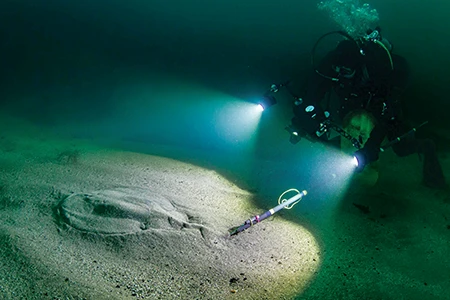
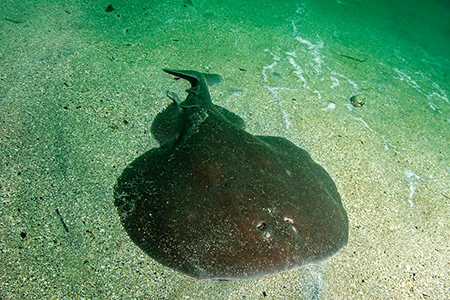
También he estado en el fondo, cerca de las rayas, y he sentido un suave cosquilleo de advertencia cuando me encontraba a unas pocas pulgadas de ellas. La documentación muestra que las rayas torpedo pueden modular la cantidad de electricidad que descargan, dependiendo de si quieren aturdir o matar. Eso tiene sentido desde el punto de vista de la eficiencia, ya que parece que a la raya le lleva mucho más tiempo y energía regenerar su capacidad para descargar electricidad tras una descarga importante.
He desarrollado un sano respeto por esta especie a lo largo de cientos de inmersiones realizadas durante 30 años. Evidencias recientes sugieren que muchas especies de tiburones evitan a las rayas eléctricas por razones obvias: probablemente sea similar a comerse una valla eléctrica.
Si te encuentras con una raya torpedo, mantén una distancia de seguridad y ten preparado un plan de evasión. Estar preparado para alejarte nadando rápidamente hacia arriba es una habilidad esencial cuando te encuentras con rayas torpedo. Pueden pasar de ser habitantes del fondo aparentemente letárgicos a perseguidores rápidos y persistentes en un abrir y cerrar de ojos.
Evita la parte delantera de este animal, ya que descargan la descarga desde delante, entre las puntas de las aletas. Sin embargo, situarse directamente detrás de ellas tampoco te protege de un ataque. Pueden girar boca abajo para dar la vuelta y girar en milisegundos, lo que les permite volver directamente hacia ti, y probablemente no de buen humor.
Existen varios casos documentados de buceadores que han perdido el conocimiento al recibir una descarga de una raya torpedo. Algunos buceadores han sufrido arritmias cardíacas tras recibir la descarga y han necesitado una cardioversión para restablecer su ritmo cardíaco normal.
La conclusión, dado el aumento de la presencia de esta especie en aguas costeras del Atlántico Norte, es que, si te encuentras con una, no provoques al oso —o, en este caso, a la raya—.
Explore Más
Descubre más sobre las rayas torpedo eléctricas en estos vídeos.
© Alert Diver – Q3 2026