As I drove west past Port Alberni on Vancouver Island, British Columbia, on my way to a photo shoot, I watched in disbelief as the temperature gauge in my vehicle rose from 64°F (18°C) to 113°F (45°C). I thought something was wrong with my gauge, but a local radio station reported the same temperature. British Columbia had record-high temperatures throughout the province that week in June 2021.
When you think of a billfish, what comes to mind? Perhaps it’s a swordfish, a sailfish, or even the giant marlin from Ernest Hemingway’s classic The Old Man and the Sea. It can be confusing because 12 species are collectively known as billfish: one swordfish, four spearfish, two sailfish, and five marlins.
Ses pattes se déplacent rapidement alors qu'elle se fraye un chemin sur le sable vers un grand récif de corail. C’est une décision audacieuse et risquée, car les étendues de sable entre les formations coralliennes sont remplies de prédateurs prêts à profiter d’une langouste solitaire.
In November 2021 I was diving on the HMHS Letitia shipwreck in Halifax Harbour, Nova Scotia, one of Canada’s Maritime provinces. The British hospital ship, which lies near a gray seal colony, ran aground and sank in 1917 while returning from Liverpool, England, with wounded Canadian soldiers.
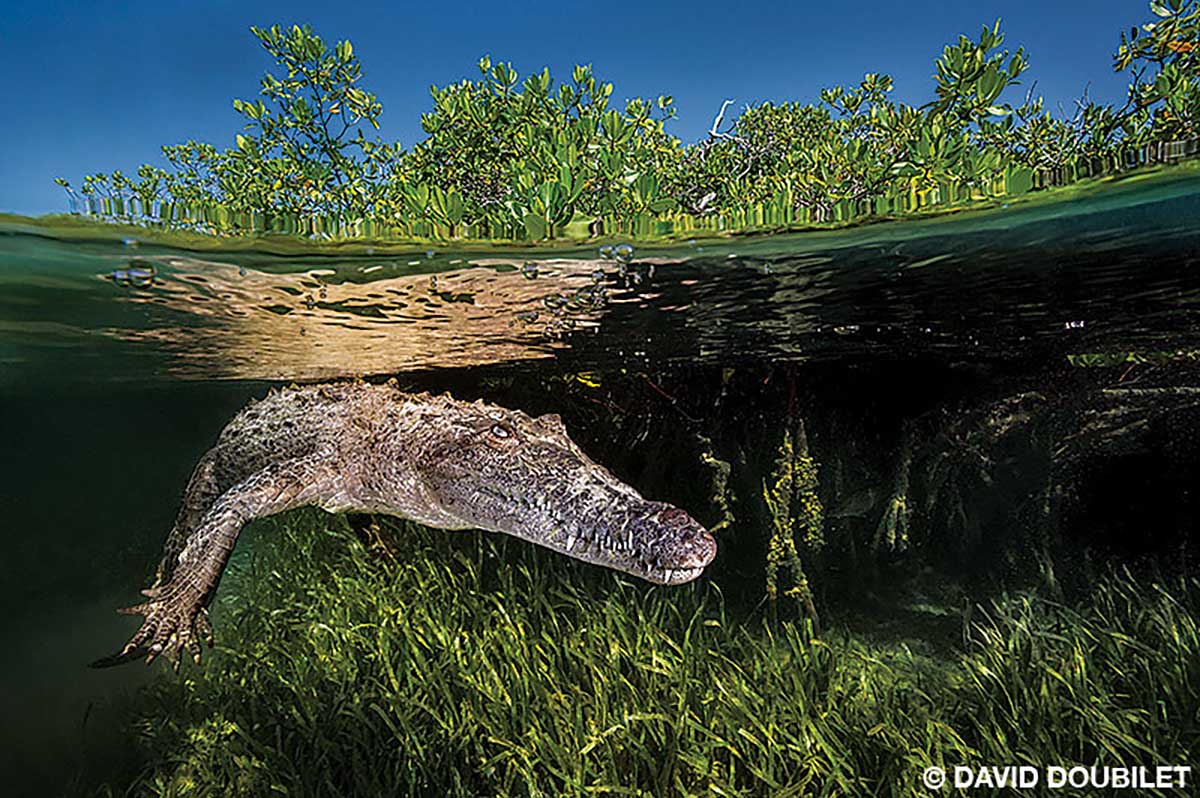
Crocodiles are apex predators, and in the wrong place and time, humans are potential prey. There are exceptions, but most of these wonderful and primitive reptiles won’t squander encountering a potential meal. When swimming in any reptile habitat, know who and what you may encounter, or don’t swim at all. The resident American crocodiles at Jardines de la Reina routinely share their waters with snorkelers and divers, but Jen Hayes didn’t feel the same comfort working in Nile crocodile waters in Botswana.
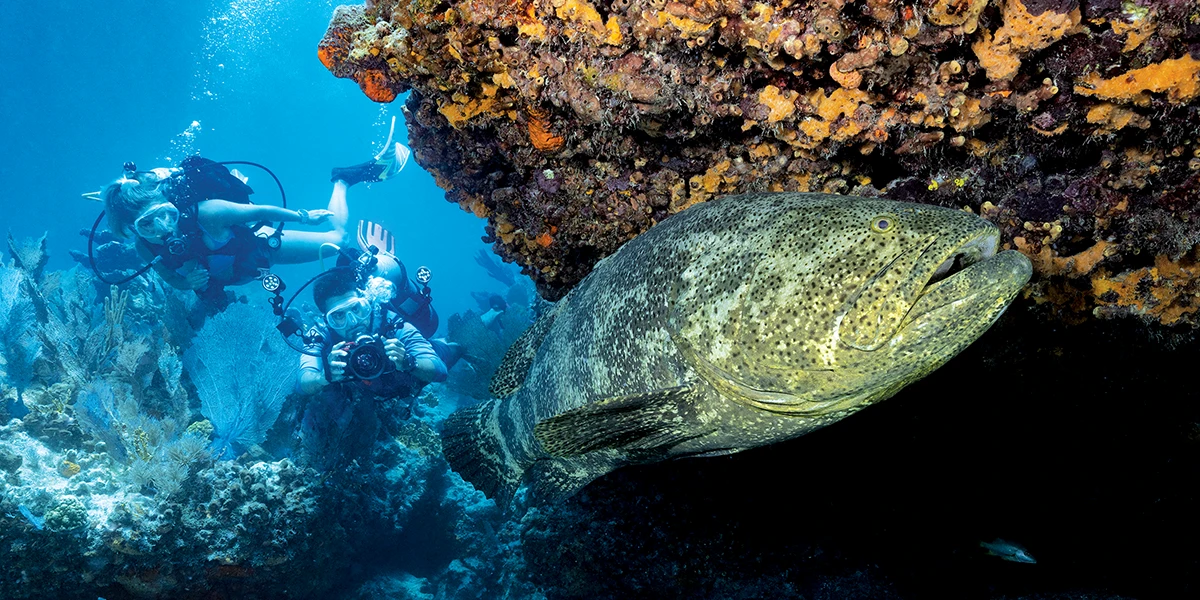
Notre groupe de six chercheurs a effectué une entrée en bascule arrière depuis le bateau près de Jupiter, en Floride, et entamé la descente vers le fond sablonneux, à près de 24 mètres (80 pieds) de profondeur. Lorsque l’épave est apparue, notre équipe s’est mise en formation pour commencer notre mission : repérer des mérous goliath.
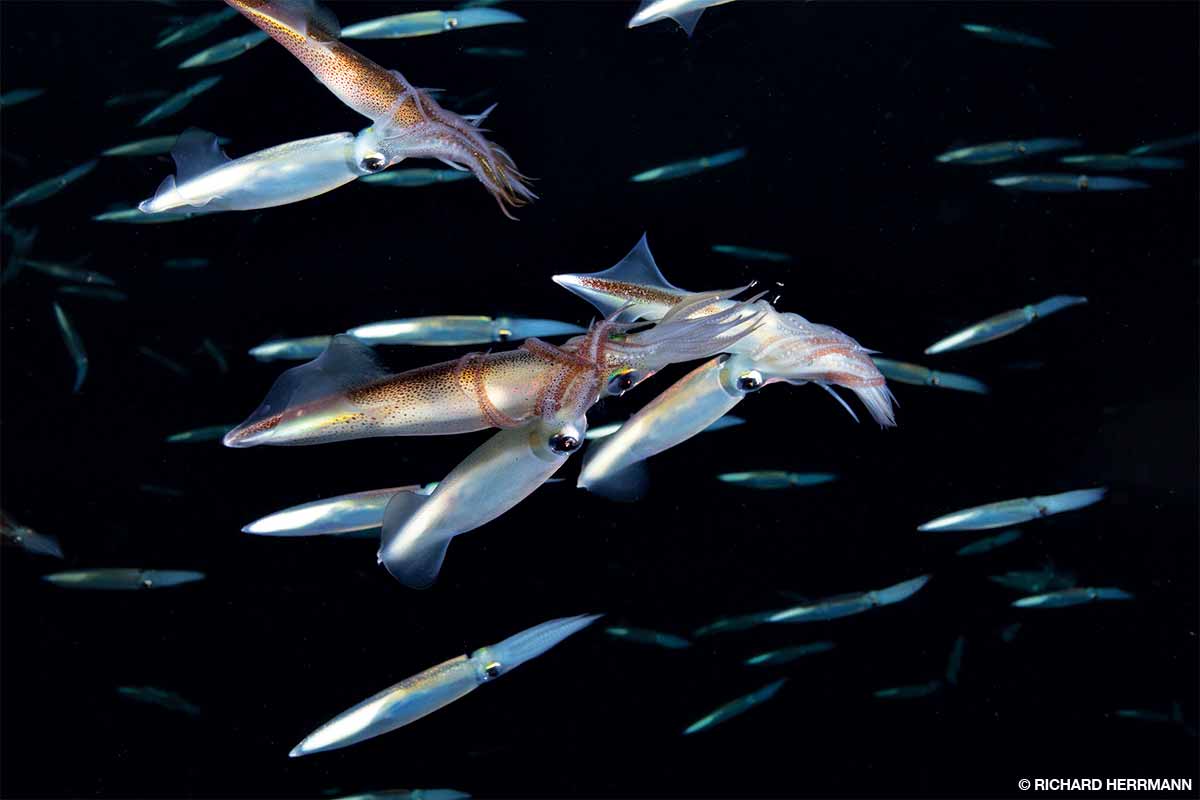
Alors que vous tombez dans une eau aussi noire que la nuit, des milliers de calmars en quête de partenaires vous entourent soudainement. L'activité nuptiale est omniprésente, plusieurs mâles s'attaquant à des femelles isolées. Les chromatophores (cellules pigmentaires) des calmars excités font clignoter des couleurs qui rappellent les néons de Las Vegas et vous placent au milieu d'un spectacle lumineux vivant et mouvant. L'action est si frénétique que les animaux sont dans votre équipement et rebondissent sur chaque centimètre de votre corps.
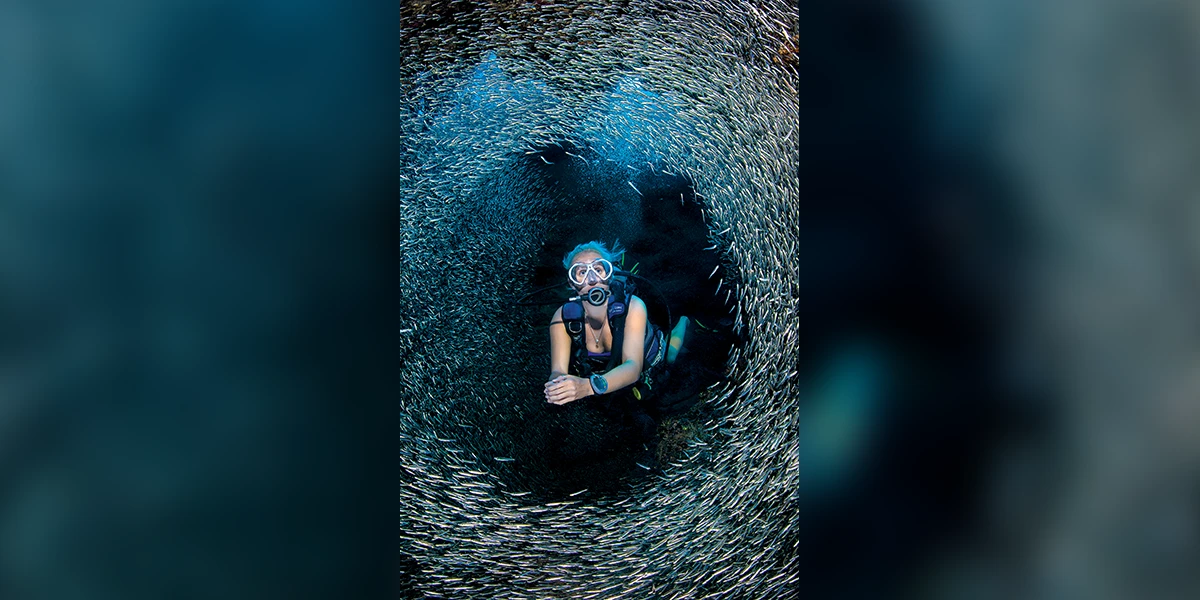
Les poissons m’enveloppent complètement. Leurs minuscules corps argentés scintillent dans la pénombre tandis que je flotte, suspendu au centre d’une sphère d’eau claire et tiède. J’ai l’impression d’être à l’intérieur d’une boule à facettes.
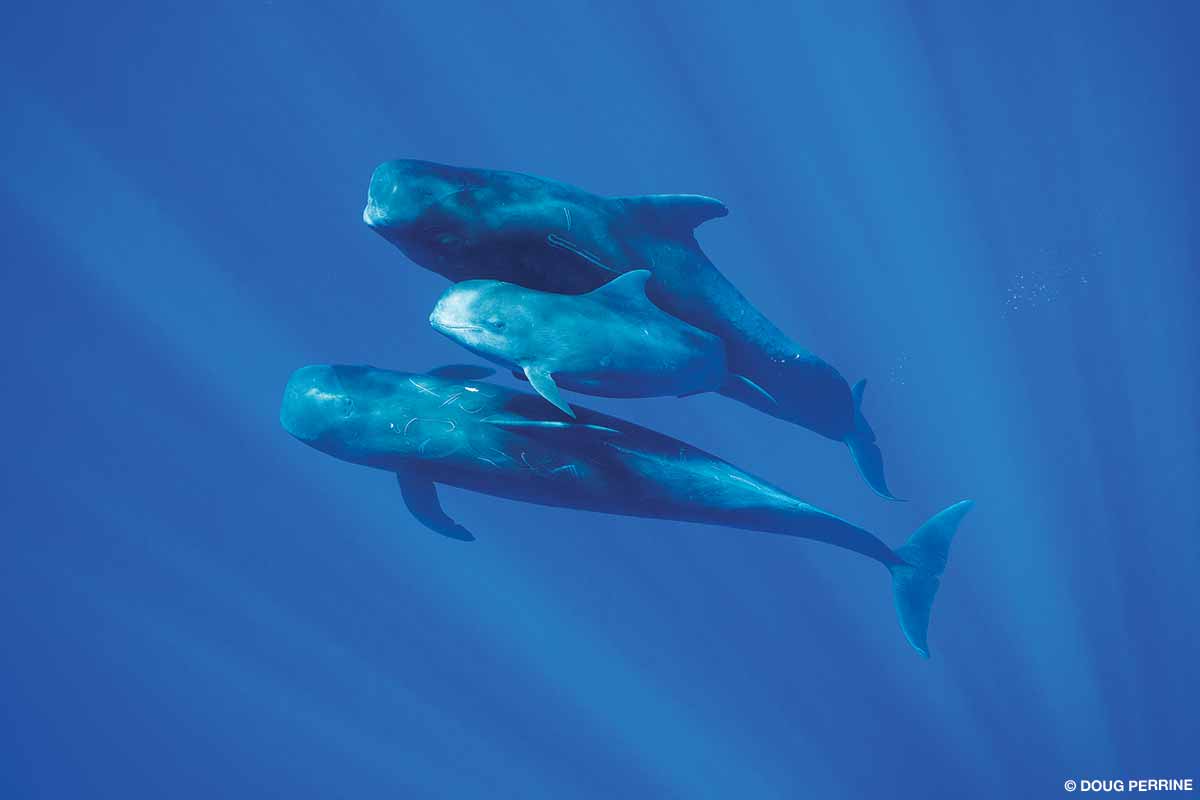
Where we encounter marine megafauna, we see only a tiny slice of their habitats and lives, which rarely includes feeding. These animals may travel thousands of feet vertically or migrate a few thousand miles horizontally to meet their nutritional needs. Some of them — sperm whales, for example — must do both: descend to depths of up to a mile or more to feast on aggregations of squid and roam across large swaths of the Pacific to avoid depleting their food resources in any one area.
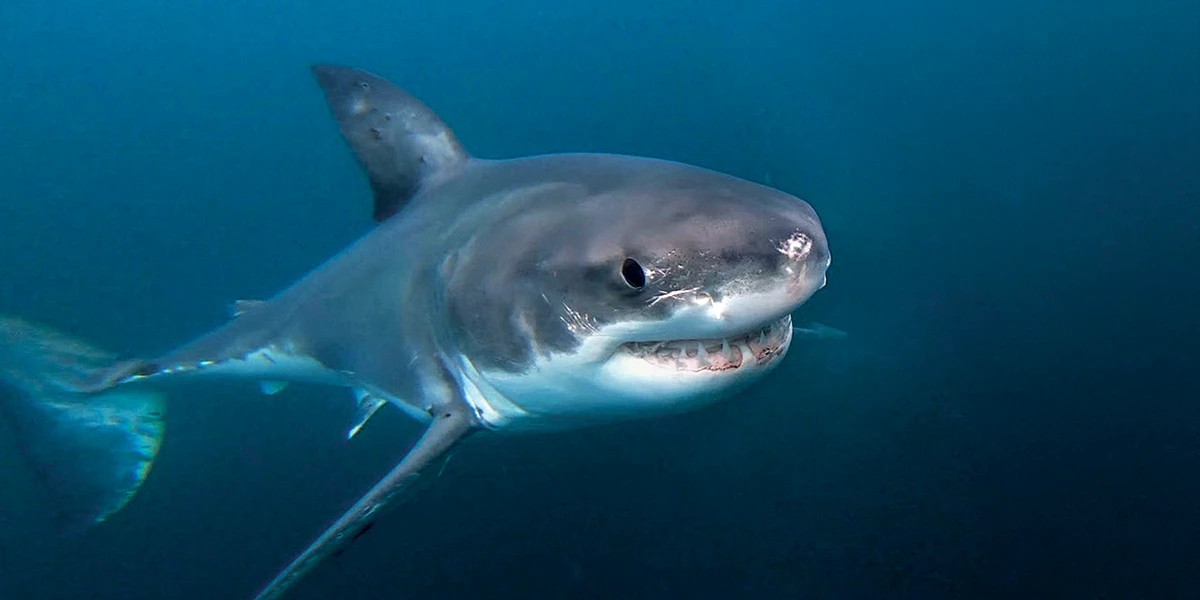
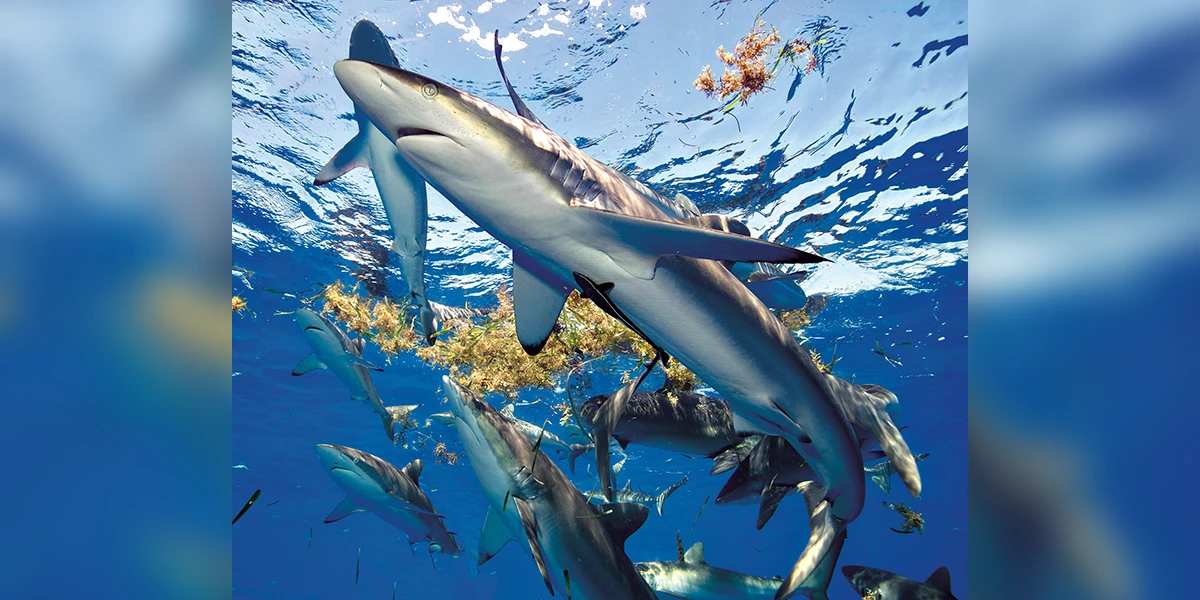
Sharks are among the ocean’s oldest survivors. They have cruised through Earth’s seas for more than 450 million years — long before the first trees grew or Saturn formed its rings.