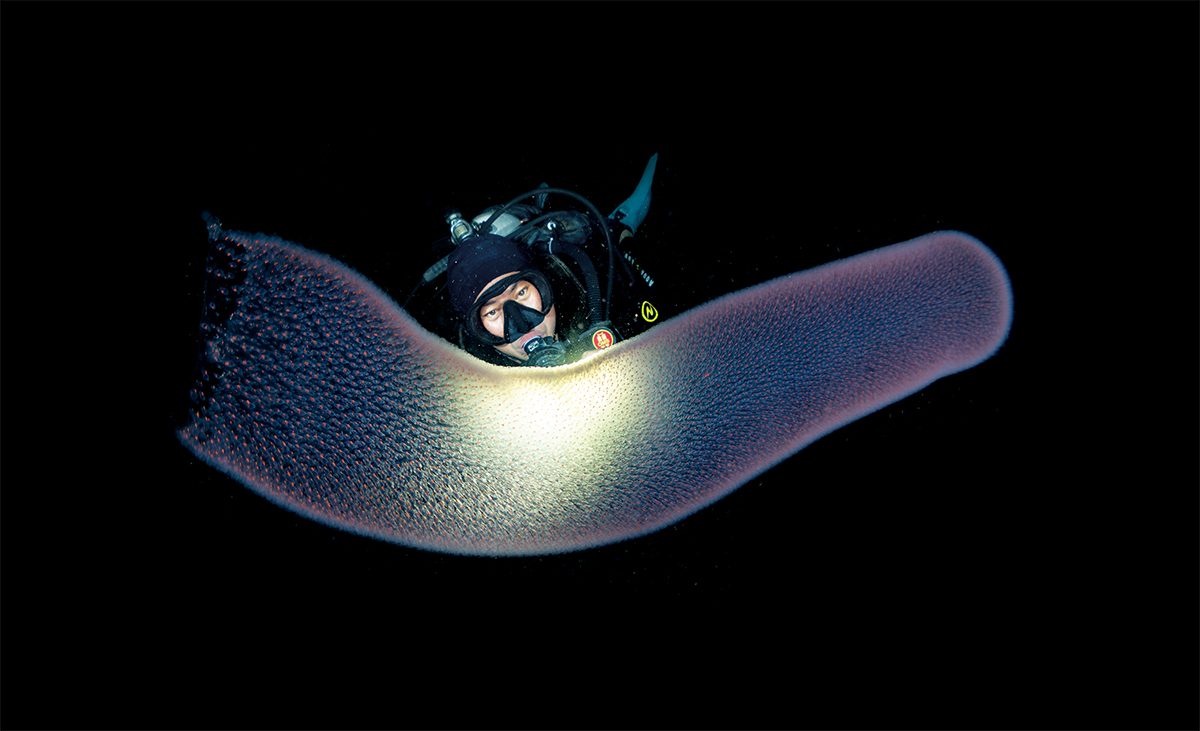
Every night as the sun slips below the horizon, countless aquatic creatures begin migrating up from the deep in what is quite possibly the greatest show on Earth. Seeking nourishment in shallow water, zooplankton must risk a perilous journey upward, avoiding a gauntlet of predators while remaining in the safety of darkness and then returning […]
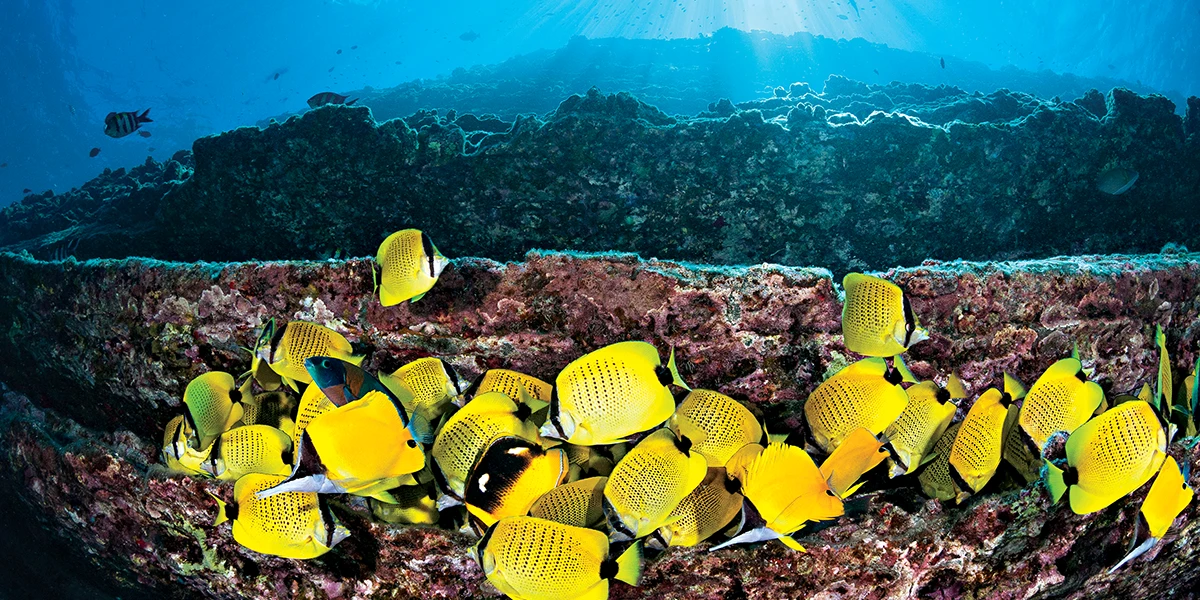
Les couleurs éclatantes, presque psychédéliques, des poissons de récif sont souvent ce qui captive en premier les plongeurs. Mais d’un point de vue évolutif, pourquoi ces petits animaux — souvent des proies — arborent-ils des teintes si vives au lieu de se fondre dans leur environnement pour échapper aux prédateurs ?
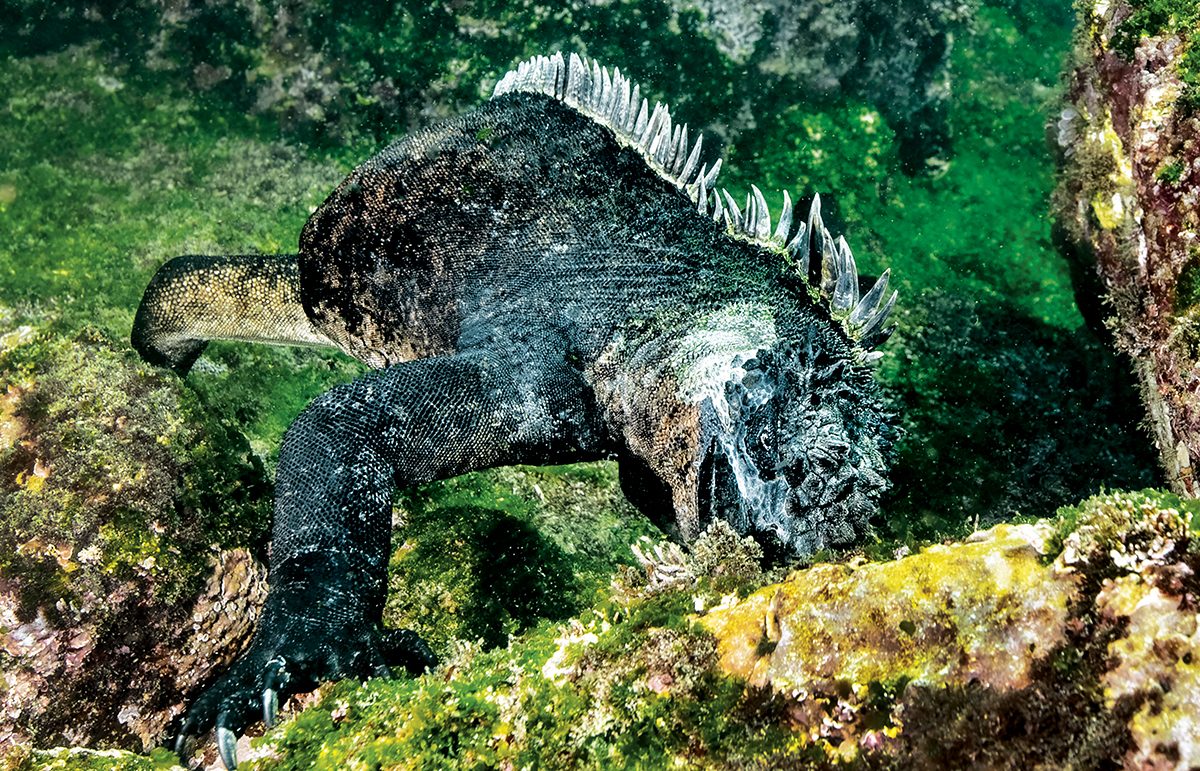
IT IS DAY FIVE OF THE VOYAGE, and our liveaboard has finally finished the overnight crossing south from the warm waters of Darwin and Wolf islands to Cape Douglas, Isla Fernandina. Although we don’t travel a great distance …
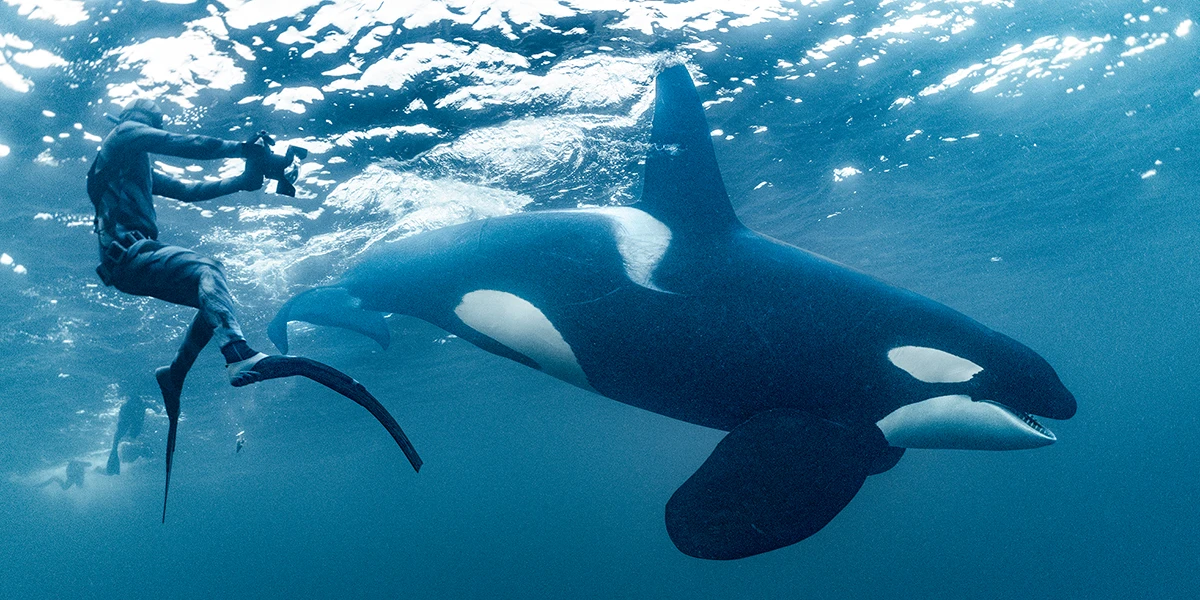
Learn how orcas in Norway adapt their hunting skills to thrive in diverse ecosystems and follow the herring migration.
IT IS DAY FIVE OF THE VOYAGE, and our liveaboard has finally finished the overnight crossing south from the warm waters of Darwin and Wolf islands to Cape Douglas, Isla Fernandina. Although we don’t travel a great distance …
The wreck of the USS Kittiwake in Grand Cayman is a crowd-pleaser of a dive. Now 15 years underwater, it lies on its side but is still easy to explore […]
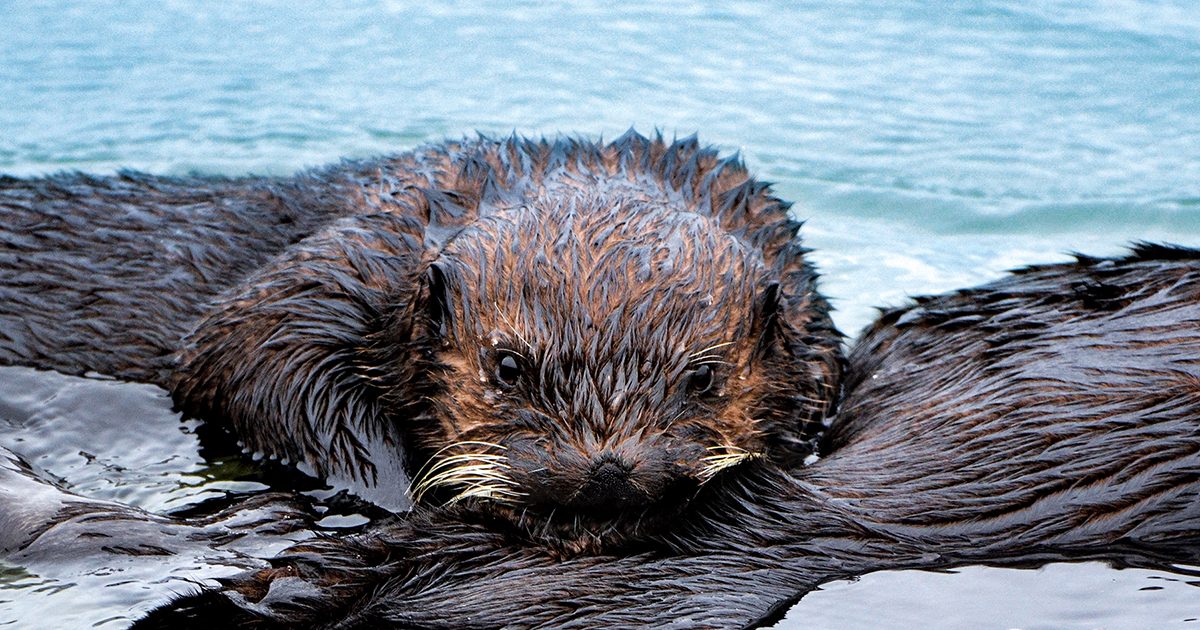
I WAS HOOKED THE FIRST TIME I saw a southern sea otter bobbing in the surf off the coast of California’s Big Sur. I didn’t know then that I would be as spellbound by these rare creatures decades later as I was at that very first sighting.
L'un des plus grands symboles de la vie sauvage dans le règne animal, les manchots se font aimer par leurs pitreries et nous impressionnent en s'épanouissant dans des environnements incroyablement hostiles.
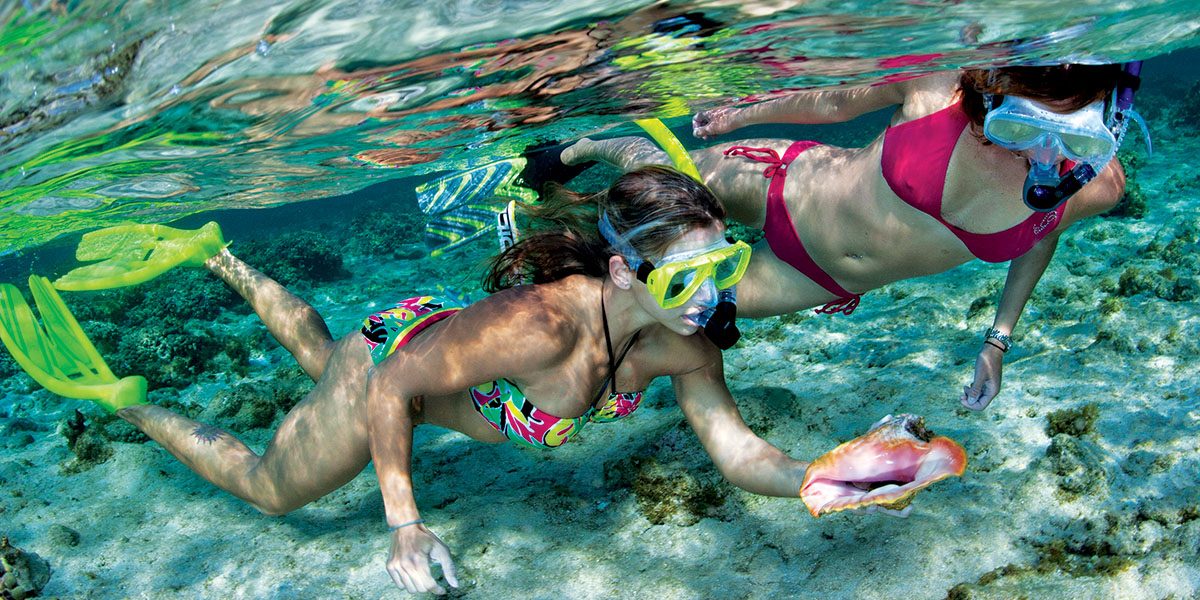
AN EDIBLE, SLOW-MOVING ANIMAL that lives in clear, shallow waters doesn’t have a high chance of survival these days. Conchs, specifically queen conchs, used to be widespread throughout the Florida Keys and the Caribbean.
PARTAGER L'ESPACE AVEC DES ANIMAUX SAUVAGES dans la nature est l'un des plus beaux cadeaux que la vie puisse offrir. Vous avez peut-être croisé le regard d'un orang-outan à Bornéo ou observé un poisson-clown s'occuper délicatement de ses œufs sur un récif. Vous avez peut-être aperçu une armée de fourmis coupeuses de feuilles qui ramenaient des bouts de plantes à leur colonie ou regardé par-dessus la proue d'un bateau pour croiser le regard d'un dauphin.