Learn to Understand Animal Behavior for Better Photos
Most underwater photographers begin as visual collectors. We collect fish and nudibranchs. We collect sharks, turtles, and octopuses. If we are lucky enough to find a species we have never photographed before, we swim back to the boat convinced we’ve had a great dive. I did exactly the same thing.
For years I measured my success underwater by numbers. How many different species had I photographed? Was one of them rare? Do I have something my friends haven’t seen? I filled slide pages with fish portraits and never questioned whether I was missing anything. The reef seemed indifferent to my passions. It simply kept going about its business.
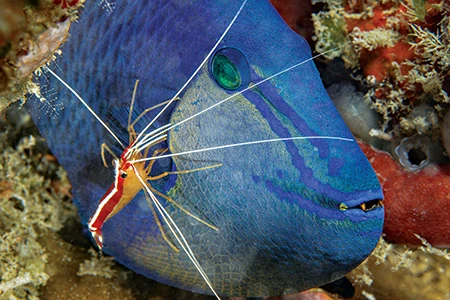
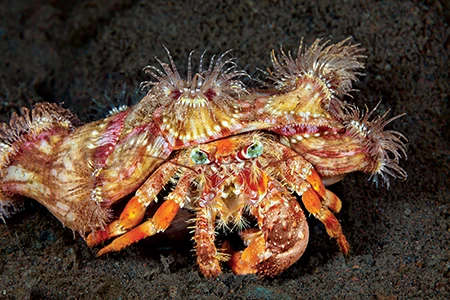
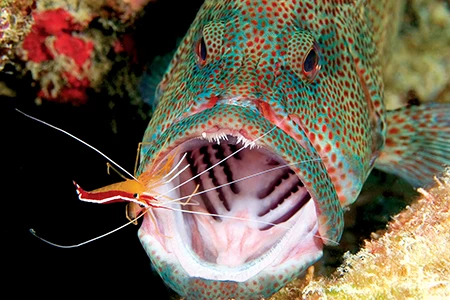
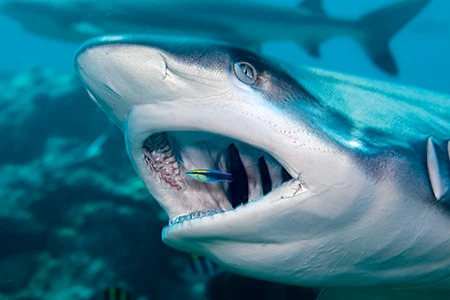
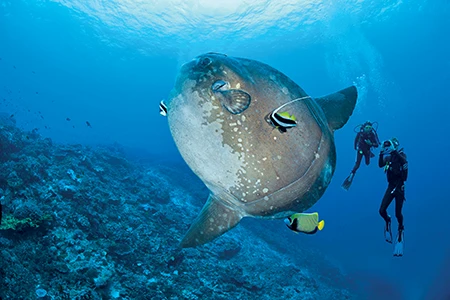
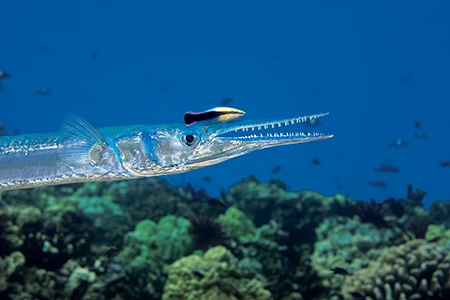
Cleaner wrasses continued advertising their services. Gobies stood guard over nearly blind shrimp. Decorator crabs patiently covered themselves with living sponges. Predators hunted together. Tiny guard crabs defended corals from predators many times their own size. Entire stories unfolded while I swam past looking for the next fish.
I wasn’t failing because I lacked a better camera. I was failing because I hadn’t yet learned how to really see. That realization happened slowly, over hundreds of dives spread across four decades. Somewhere along the way I noticed I was taking fewer photographs but coming home with better ones — not technically better, but more interesting.
The difference was behavior. A portrait tells us what an animal looks like. Behavior tells us something about its life. If someone asks me what has most improved my underwater photography, they usually expect me to mention mirrorless cameras, autofocus, or strobe technology. Those things certainly help, but what most improved my photography is understanding what I am looking at.
Wildlife photographers on safari don’t simply recognize lions. They recognize when a lion is about to hunt. Bird photographers don’t react when an osprey is diving. They recognize the posture that tells them the dive is coming. The reef works the same way.
Once you begin recognizing behavior instead of simply identifying species, the underwater world becomes remarkably predictable — not because every dive is the same, but because animals repeat behaviors that have allowed them to survive for millions of years.
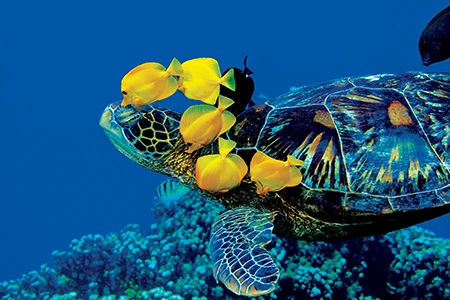
A cleaner wrasse dancing above a coral head isn’t simply another fish. It’s an invitation to waiting fish to come for a cleaning. A goby sitting unusually upright outside its burrow isn’t resting. It’s watching. A turtle hovering motionless over the reef isn’t posing for photographs. It’s waiting to have its shell cleaned.
Those small clues changed everything, teaching me that the most rewarding underwater photographs rarely come from finding something rare. They come from recognizing something familiar just before it becomes extraordinary. That’s when I stopped photographing fish and started using my camera to tell stories.
The Reef Communicates
One afternoon a dive guide tapped his tank and pointed toward what looked like an ordinary patch of sand. I looked and saw nothing. He pointed again. Still nothing. Finally, two tiny eyes appeared. A goby was standing motionless at the entrance to a burrow with an opening no larger than my thumb.
I lifted my camera and began composing the photograph. Then something moved. Had I blinked, I might have missed it altogether. A small cloud of sand spilled from the entrance as a pistol shrimp emerged cautiously into the daylight carrying another load of rubble. It dumped the sand outside the burrow, turned around and disappeared underground. A few moments later it returned, and then again. The shrimp was busy, but the goby wasn’t — or at least that’s what I thought.
The more I watched, the more I realized the goby was working just as hard. It was watching. One antenna from the shrimp rested lightly against the goby’s side. The two animals never lost contact. Every time the shrimp ventured into the open, its slender antenna remained connected to its partner like a utility line. Then suddenly the goby’s posture changed, stiffening — not dramatically but just enough so that I almost missed it. The shrimp reacted instantly, dropping its load of sand and disappearing backward into the burrow. The goby followed less than a second later.
The danger had passed before I ever figured out what had caused it. A few minutes later the goby cautiously returned to the entrance. The antenna reached out, and the shrimp resumed digging. The conversation continued without either animal making a sound.
That tiny exchange lasted only a split second, but it has stayed with me for decades. The longer I watched, the more I realized I wasn’t simply photographing two animals. I was photographing symbiotic trust. The shrimp had solved one problem, and the goby had solved another. Separately, each was vulnerable. Together, they became a successful team.
That afternoon I came away with a photograph and a question. How many partnerships had I been swimming past all these years without ever noticing them? That question changed the way I dive. Now if I find a goby, I’m not in a hurry to press the shutter. I settle into the sand a respectful distance away and simply watch. Sooner or later a shrimp emerges, an antenna reaches out, and the goby scans the reef. The story begins again.
By then I had begun to understand something that seems obvious now. The reef isn’t built around individual animals. It’s built around relationships. Once I started looking for those relationships, I found them almost everywhere. Sometimes they were obvious, but most of the time they were hidden in plain sight.
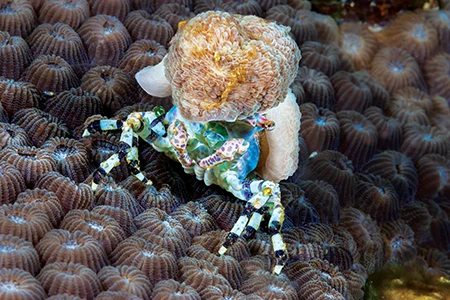
A decorator crab was one of those discoveries. At first glance it looked like nothing more than a sponge-covered rock slowly walking across the reef. It usually doesn’t look like a crab but rather a sponge, a tuft of algae, or another piece of the reef that your eyes dismiss without a second thought. That’s exactly the point.
The first decorator crab I photographed was sitting in plain view while I was searching for something more interesting. Only after my guide pointed directly at it did the crab slowly begin to move. The reef hadn’t fooled me — the crab had. Decorator crabs don’t simply hide among the reef. They become part of it. Using tiny hooked hairs that cover their shells, they attach pieces of living sponge, algae, hydroids, and tunicates to their bodies. Those living decorations continue to grow, making the disguise even more convincing and creating a camouflage that is never finished. Every day the crab quietly improves it.
For a photographer, that’s a remarkable story — not because the crab is beautiful, but because it challenges one of the assumptions we all make underwater. We tend to notice what stands out, while nature often rewards what blends in. The longer I spend underwater, the more I realize that some of the reef’s most successful animals survive because they attract no attention. They’re often the most rewarding subjects to photograph — not because of the difficulty finding them, but because finding them means you have started to see the reef differently.
A few years ago I realized something else: The best dives aren’t always the ones where I photograph the most animals but rather the ones where I come back with the most questions. Why was that decorator crab rebuilding its disguise? Why did that cleaner wrasse ignore one customer but immediately service another? Why did those predators suddenly begin hunting together?
Curiosity has a funny way of changing a dive. Instead of swimming faster, you slow down. Instead of looking farther, you look closer. Instead of searching for the next subject, you begin wondering what the one in front of you might do next. The biggest difference between a diver carrying a camera and an underwater photographer is that one records appearances while the other waits for behavior.
The reef occasionally gives you something completely unexpected. One afternoon I noticed a juvenile whitemouth moray eel weaving through coral far from the safety of its usual crevice. That immediately caught my attention. Morays are creatures of habit. This one seemed to have somewhere to be. Then I noticed it wasn’t alone.
A blue goatfish stayed close beside it. As the eel slipped into cracks and crevices, flushing small fishes into the open, the goatfish waited just outside, ready to intercept anything that tried to escape. Within minutes another hunter joined them. Then another. Each species hunted differently, yet together they covered far more of the reef than any one predator could alone. Years earlier I probably would have photographed the moray and moved on. Now I stayed. I wasn’t solely interested in the eel; I was interested in the story. That simple change in perspective has shaped almost every memorable photograph I have made over these past decades.
I still appreciate a beautifully lit portrait of a reef fish. There is nothing wrong with documenting a species, especially one you have never seen before. But the photographs that continue to mean the most to me aren’t portraits — they are moments: a cleaner wrasse disappearing into the mouth of a grouper, a goby standing guard while a shrimp rebuilds its home, a decorator crab quietly adding another piece to its living disguise, and predators working together in ways that seem almost impossible until you witness them for yourself. Those images remind me that the reef is not a collection of individual animals. It’s a community built on relationships.
The greatest lesson underwater photography has taught me has little to do with cameras. It has taught me to be patient: to stop aimlessly searching and to watch before pressing the shutter. The more thoughtfully I observe, the more the reef reveals — not because the animals suddenly change their behavior, but because my understanding evolves.
After 40 years as a diver, I believe the best underwater photographers aren’t necessarily the ones with the newest camera or the sharpest lens. They’re the ones who notice the small things that everyone else swims past and who have the skills to capture them.
The reef has been telling the same stories for millions of years. The defining moments in marine life interactions are there if you’re not too busy looking for yet another fish portrait to notice them.
© Alert Diver – Q4 2026