How a Coral Spawn Could Save the Reef
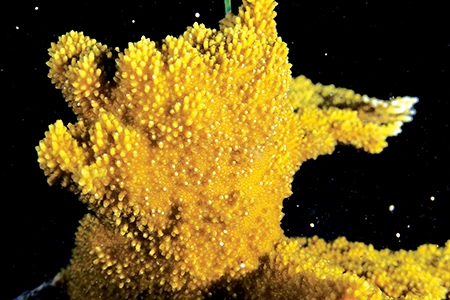
Ken Nedimyer calls them his “rock stars.” The veteran scientist and technical director for Reef Renewal USA coined the nickname in 2023 after making welfare checks on a coral nursery off Key Largo, Florida. Hundreds of elkhorn corals hung like ornaments from treelike underwater structures in 30 feet (9 meters) of water. An unprecedented heatwave had bleached most of them to death, but a handful never flinched.
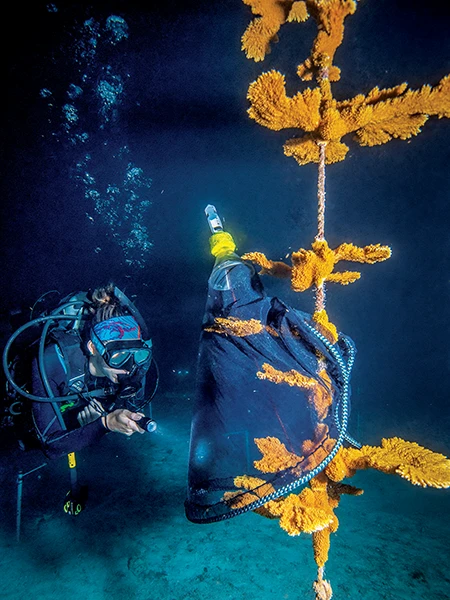
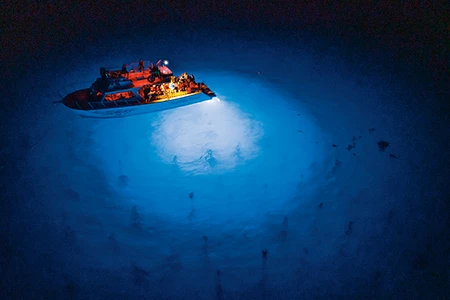
Those survivors, Nedimyer knew, were viable candidates for reproduction, and they stepped into the spotlight just after the July 2026 full moon. Under the cover of darkness, an army of divers slipped beneath the surface at the Reef Renewal nursery, where 100 elkhorn corals had been set aside.
And then they waited.
Underwater Snow Globe
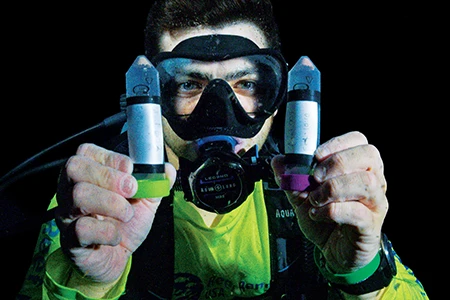
At exactly 10:20 p.m., the first spawn began to rise; buoyant bundles containing eight to 10 eggs clustered around packets of sperm. Tents positioned above the elkhorn fragments funneled tens of thousands of gametes into collection tubes.
“The corals spawned better than I thought they would,” a giddy Nedimyer said after the first of seven spawning nights. “We had one that put out tons and tons of eggs. It was awesome.”
Coral spawning is one of nature’s enduring mysteries — a synchronized reproductive event in which millions of coral polyps release bundles of eggs and sperm into the water column on just a handful of nights each year. Scientists believe the strategy overwhelms predators while maximizing the chances of successful fertilization. Yet exactly how brainless, stationary animals coordinate spawning within a 15- to 30-minute window across vast stretches of ocean has puzzled marine biologists for decades.
“When there are enough corals in the ocean, this kind of broadcast spawning works,” Nedimyer said. “It’s how the reefs were built. But today, when we say a reef is functionally extinct, we mean there are not enough wild corals to reproduce naturally. We are collecting the elements needed for reproduction and giving nature a boost.”
Matchmaking
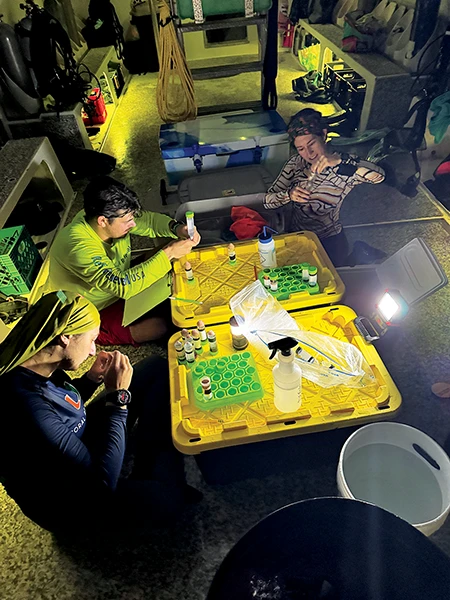
In human terms, this was no blind date. Eggs and sperm collected from the nursery corals must be fertilized within hours, so gametes were rushed to a facility at John Pennekamp State Park in Key Largo, where another team managed strategic pairings for the next phase.
“We are able to identify which parents and familial crosses to prioritize to make the most resilient and genetically diverse families that we can,” said Celia Leto, senior coral reproduction biologist at Mote Marine Laboratory’s Elizabeth Moore International Center for Coral Reef Research and Restoration on Summerland Key. “Our decisions are based on three data points: the parent colony’s original collection location, colony traits gleaned from years of laboratory experiments, and field survivorship data.”
More than 1.5 million embryos were produced, and more importantly, researchers were able to create thousands of new, genetically distinct elkhorn corals using more than 100 different parental combinations.
“Every successful cross represents an opportunity to increase the genetic diversity of these critically important coral populations and strengthen their future resilience,” said Keri O’Neil, director of the Coral Conservation Research Center and one of four team members The Florida Aquarium assigned to the project. “As the first organization to successfully spawn elkhorn corals in a laboratory and the largest producer of surviving elkhorn coral offspring in Florida over the past five years, we’re honored to help secure the future of a species that has become functionally extinct across Florida’s reef.”
Within days the fertilized eggs were transferred to land-based facilities in Miami, West Palm Beach, Summerland Key, and Tampa, where they will grow into juveniles. Some will be conditioned to tolerate warmer temperatures, and ultimately the corals will return to the Florida Keys for outplanting on reefs desperate for a new generation of survivors.
“It’s going to take a village, and we are that village,” said Andrew Baker, PhD, director of the Coral Reef Futures Lab at the University of Miami. The gamete collection was part of a four-year grant from the National Oceanic and Atmospheric Administration (NOAA), managed by Baker and titled Re5 — short for Resilient Reef Research, Rescue, and Restoration.
Other partners of the grant include the Phillip and Patricia Frost Museum of Science, Nova Southeastern University, SECORE International, The Reef Institute, Smithsonian Marine Station, Biscayne National Park, and AECOM, with work in the Florida Keys conducted under permit number FKNMS-2026-038 and FKNMS-2026-057.
“I don’t think we’ve worked as collaboratively as this in the past,” Baker said, “but I think everybody realizes that this is only going to work if we all collaborate and coordinate. Our barriers are down. We just want what’s best for the corals.”
Swipe Right
Corals can propagate asexually by fragmenting exact clones, but a lack of genetic variation leaves them highly vulnerable to sudden environmental changes, such as ocean warming and disease. Reproducing sexually creates new and hopefully stronger genotypes, providing a crucial evolutionary advantage by driving genetic diversity.
Mote cryopreserved some of the sperm collected during the spawning event for gene banking and future crosses with heat-tolerant corals from other regions. The strategy reflects Charles Darwin’s Principle of Divergence: The greater the genetic diversity within a population, the better its chances of adapting, competing, and surviving.
“This undertaking is kind of epic and world-class,” Nedimyer said. “We’re trying to save this species, and this is the only future these corals have. If we can’t accomplish the selective breeding that we’re trying to do right now, it’s game over.”
The 2026 spawn collection may be the last at this scale. Nedimyer helped pioneer the treelike structures that make it possible to grow corals in the water column, but the current forecast of El Niño threatens the spawn in August 2027, which will occur later in the month. The potential loss of these large breeding corals created the focus and urgency of this year’s effort.
“It may be that in two or three years all the spawning work will be done in aquariums because rising water temperatures will make it too difficult to keep the broodstock alive in the offshore nursery,” Nedimyer said.
Coral restoration specialists are anticipating that next stage. Reef Renewal, for example, has established a sprawling compound in the Tampa Bay area with enough capacity for 125,000 corals, far beyond the volume that can be achieved in-water.
Somewhere in those tanks the offspring of a few stubborn survivors are beginning life — corals that scientists hope will inherit the resilience their parents displayed during Florida’s hottest summer on record. If they do, the next generation of genetically advantaged rock stars may someday rebuild reefs that could no longer rebuild themselves in the new normal of a warming ocean.
Jelajahi Lebih Lanjut
Renewing The Reefs of the Future: Elkhorn Coral Spawn 2026
Reef Renewal USA 2026
© Alert Diver – Q4 2026