Strengthening Emergency Preparedness Across Indonesia
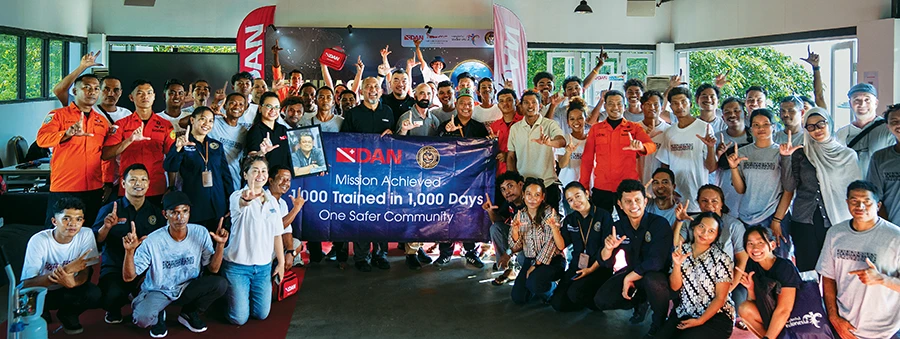
Dive professionals gathered in Labuan Bajo, Indonesia, in April as the 1,000th participant completed training under DAN’s One Thousand in One Thousand initiative, a multiyear effort to strengthen emergency preparedness throughout the country’s dive industry.
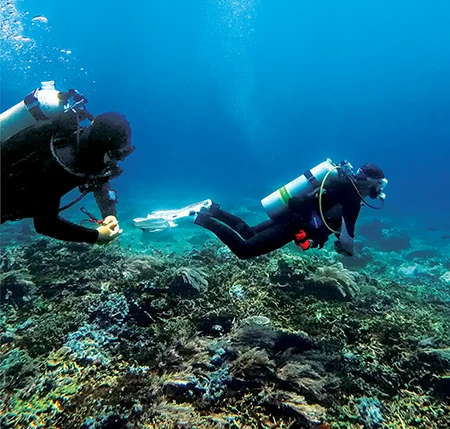
Indonesia sits at the heart of the Coral Triangle, home to world-class dive destinations such as Raja Ampat, Komodo, Bali, Bunaken, and the Lembeh Strait. The same archipelago that draws divers from around the globe, however, spans more than 17,000 islands, and many of its best dive sites are hours from the nearest hospital.
These geographic and medical access realities are why the program set out to provide first aid training to 1,000 dive industry professionals within 1,000 days. It also helped build something harder to quantify: confidence and competence among the people most likely to be on the front lines when a diver experiences an emergency.
“Risk can never be eliminated from diving,” DAN President and CEO Cliff Richardson said during the training’s closing ceremony. “But through preparation and training, we’re able to mitigate it and make diving safer.”
Achieved in fewer than 1,000 days, the milestone represents a growing network of trained professionals, improved access to first aid and emergency oxygen equipment where it is needed most, and a deeper culture of dive safety throughout Indonesia.
A Vision for Safer Diving
Because many of Indonesia’s most popular dive destinations are far from major medical facilities, the first responders when something goes wrong are often dive guides, boat crew, deckhands, and other on-site staff — making them the natural focus of the training effort.
The stakes reach beyond a response to any single emergency. Visitors expect their chosen destinations to take preparedness seriously, affecting the tourism economy as well as safety outcomes.
Protecting divers protects the businesses, livelihoods, and surrounding communities. Recognizing diving’s value to the country’s fast-growing marine tourism economy, Indonesia’s Ministry of Tourism partnered with DAN on the One Thousand in One Thousand initiative to strengthen that connection.
DAN Indonesia Country Coordinator Bayu Wardoyo directed the initiative in coordination with dive training agencies — including NAUI, PADI, and SSI — as well as local dive operators and associations. The effort built on years of groundwork by Wardoyo and his DAN Indonesia colleague, the late Rendra Hertiadhi, whose partnership with the Ministry of Tourism first identified where Indonesia’s dive safety net needed the most support.
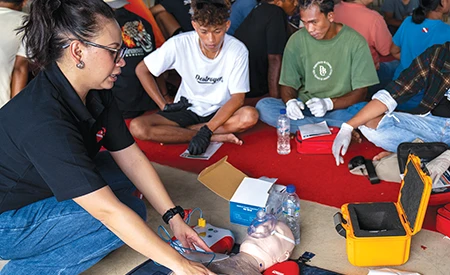
Together, DAN and these government and industry partners built a curriculum combining hands-on emergency response training, first aid and oxygen administration, and DAN’s dive medicine expertise. The curriculum also incorporated emergency action planning, communication, and risk awareness, strengthening the kind of preparedness that matters most when every second counts.
The initiative aimed to accomplish more than issuing certifications. It also sought to build dive professionals’ confidence in responding under pressure and encourage local leaders to view diver safety as part of caring for their communities.
Building the Network
Training sessions stretched from Banten and Jakarta’s Thousand Islands in western Indonesia to Raja Ampat in Papua, including Bali, Lombok, the Gili Islands, Maratua, Bunaken, Lembeh, Ternate, and Komodo. Trainings in Waisai and Ternate extended that reach into surrounding communities throughout Raja Ampat and North Maluku.
Local partnerships made it happen. Regional organizations — including the Indonesia Dive Tourism Company Association (IDCA), Bali Professional Divers Association (P3B), Gili Island Dive Alliance (GIDA), North Sulawesi Watersports Association (NSWA), Komodo Professional Divers Association (P3KOM), Dive Operator Collaboration Komodo (DOCK), and the Professional Association Diver of Raja Ampat (PADRA) — brought local knowledge and relationships that would have been difficult for any outside organization to establish on its own. They worked alongside DAN and training agencies to help ensure the training reached the communities that would benefit most.
Confidence Through Preparedness
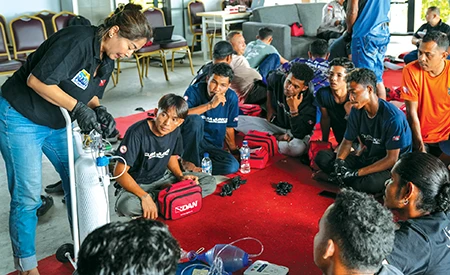
Not every outcome can be measured simply by the number of people trained. Dive professionals who completed the training reported feeling more confident in recognizing risks and responding to emergencies. They left the training better equipped to support the divers who depend on them when something goes wrong.
Knowing how to respond in an emergency reduces hesitation when seconds matter. It sharpens decision-making under pressure and helps professionals catch problems before they escalate into serious incidents. Prevention may be the program’s most important achievement.
Divers place their safety in the hands of local dive professionals and crew, and that trust is easier when those professionals have first aid training and access to the right equipment. It is a confidence that extends beyond the operator to the destination itself.
Visitors travel long distances to experience Indonesia’s underwater environments, and they expect strong safety standards to accompany exceptional diving. For individual operators, that expectation is now part of doing business. For the country’s dive tourism industry, meeting that standard translates into divers feeling safe enough to return and recommending Indonesian diving to others.
Safety as a Shared Responsibility
The initiative brought together government entities, dive training agencies, medical professionals, and the dive industry professionals doing the work on the ground.
Indonesia’s Ministry of Tourism saw preparedness and professionalism as central to the country’s reputation as a world-class dive destination. Training agencies helped expand the program’s reach, while regional associations adapted it to local needs. DAN contributed training resources and equipment as well as ongoing support through the DAN Indonesia hotline, with Indonesia-based DAN medic Imelda Donosepoetro, MD, championing the initiative alongside Wardoyo as a first aid trainer and advisor.
The local dive industry professionals who are carrying forward those lessons embody the program’s real purpose. The training offered them both a professional credential and an opportunity to strengthen their ability to protect their guests while supporting their communities’ future in tourism.
In many Indonesian communities, that spirit has already outgrown the initiative’s original goals. The Komodo Professional Divers Association recently offered a free open water diver course to 20 local youth, including seven young women, providing an early step toward potential careers in their own community’s dive operations.
Equipping Communities for Emergencies
DAN gave every participant a complimentary first aid kit, bringing their total distribution to more than 1,000 kits across Indonesia. Because administering oxygen is often the earliest and most important intervention before a diver can reach definitive medical care, DAN also prioritized access to emergency oxygen kits. As of mid-2026, they had provided 139 oxygen kits to dive operations in Jakarta, Bali, Lombok, Komodo, Raja Ampat, Makassar, and Ternate — locations selected based on local dive activity and distance from advanced medical care. Additional kits will continue to roll out in phases.
Operators found particular value in the oxygen kits’ bull-nose regulator connectors, which are compatible with the oxygen cylinders commonly used throughout Indonesia. That compatibility lets neighboring operators share resources when needed, which matters in places where replacement equipment is scarce.
Compatibility is a practical but important detail. Safety equipment helps only if it works where and how it is needed. Ensuring the oxygen kits could be readily used and shared across Indonesia’s dive operations made them even more valuable.
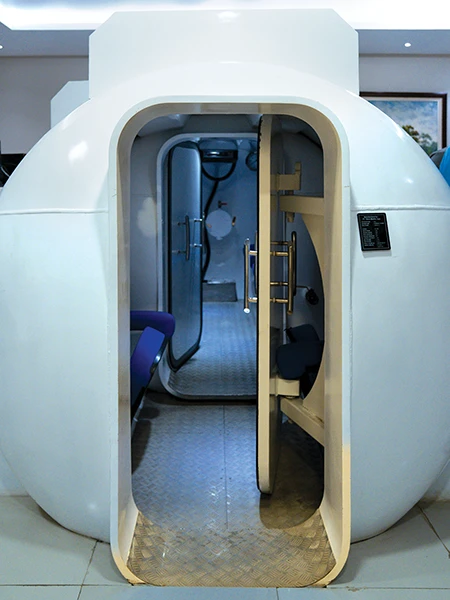
DAN also expanded its Recompression Chamber Network in Indonesia, adding well-equipped facilities to the global system of hyperbaric chambers available to treat divers in need. For a country where the nearest chamber can be hours away by boat or plane, increased availability helps close the gap between first aid and the medical care a diver may need.
A Voice on the Line
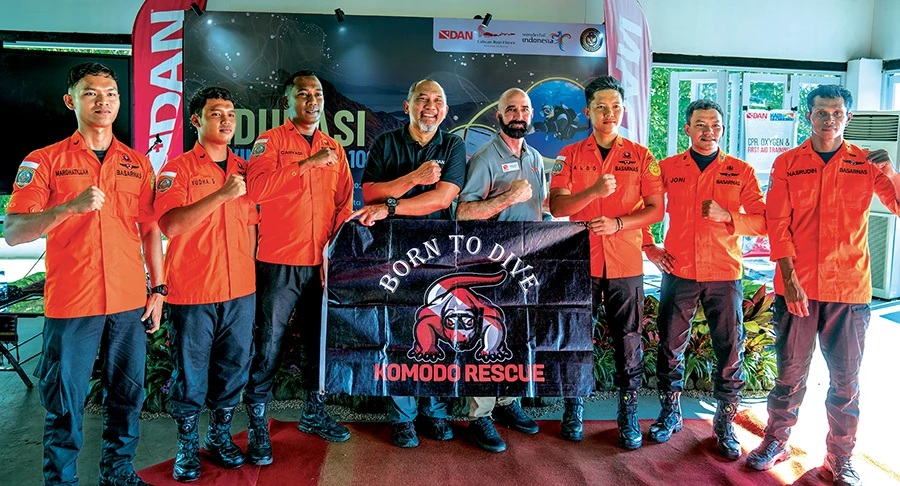
While training and equipment matter, even the most prepared dive professional may need guidance from a dive medicine expert. DAN Indonesia introduced participants to their 24/7 emergency hotline, which connects local professionals with Indonesian physicians.
Being able to speak to a medic in their own language during a stressful situation makes a difference. Professionals can clearly describe a diver’s injury and receive assistance from local DAN staff who understand both dive medicine and the realities of Indonesia’s maritime environment.
Looking Ahead
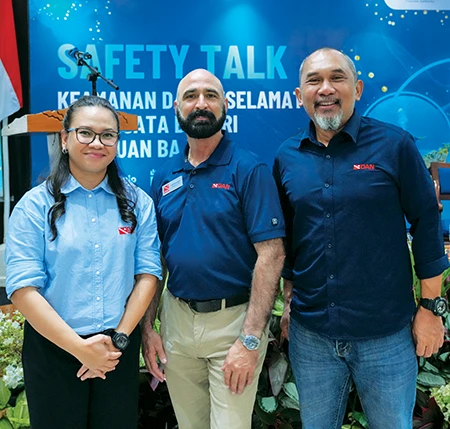
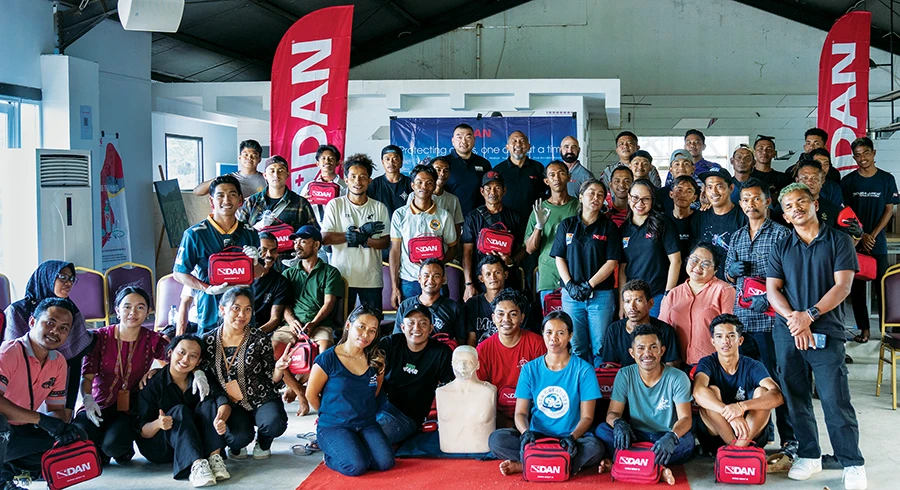
Indonesia’s Ministry of Tourism and the Labuan Bajo Flores Tourism Authority hosted a “Safety Talk on Marine Tourism” to mark the milestone achievement. Government officials, marine tourism representatives, local dive industry professionals, and the DAN team were there to celebrate the collective accomplishment of reaching 1,000 trained Indonesian dive professionals. DAN Indonesia is already expanding what comes next, including DAN Instructor training for local dive professionals in Labuan Bajo.
The 1,000th participant completed training in Labuan Bajo, but the milestone number tells only part of the story. Ask a local dive operator what has changed, however, and they are likely to point to the oxygen kit that’s finally within reach or the crew member who now knows how to properly dress a wound rather than cite a training statistic.
Dive industry professionals across Indonesia put their first aid training to use every day, whether by recognizing signs of a dive injury or administering emergency oxygen. It is why divers exploring Indonesia’s waters are safer today than they were 1,000 days ago, and it is why the work continues.
© Alert Diver – Q4 2026