Los tiburones blancos son peces caprichosos. Son icónicos, impresionantes, fotogénicos e imponentes pero también frustrantes. Esa frustración no es completamente por el animal —parte de ella se debe a la poca cantidad de lugares en el mundo que se pueden visitar para verlos—.
Los buzos solían visitar la Isla de Guadalupe, cerca de la costa de Baja California, México, pero el gobierno mexicano cerró el área para las actividades turísticas relacionadas con tiburones en enero de 2023. Algunas personas especularon que la prohibición se debe a los productores demasiado entusiastas que buscan encuentros cada vez más escabrosos, mientras que otros sugieren que el motivo de fondo fue algo más perverso. Independientemente del motivo, Guadalupe ya no es una opción para encuentros con Carcharodon carcharias .
Asimismo, Sudáfrica solía ser un excelente destino para ver tiburones blancos. Había poblaciones de tiburones blancos constantes cerca de Gansbaai y False Bay, atraídos por las grandes colonias de focas que proporcionaban abundante comida. Se desarrolló una flota de organizadores de aventuras con tiburones para brindarles a los turistas oportunidades en jaulas dentro del agua y los espectaculares saltos en la superficie que definieron los documentales Air Jaws. Pero los tiburones blancos no son los superdepredadores cuando hay orcas cerca. En un mismo día, los cadáveres de tres tiburones llegaron a la costa solo con su hígado arrancado, una alarma que marcó el final del enclave debido a los ataques de orcas.
Investigaciones posteriores confirmaron que los tiburones no habían diezmado por completo, sino que se habían desplazado hacia el este a lugares más acogedores como Algoa Bay y la franja costera de KwaZulu-Natal. Si bien los tiburones están allí, como sabemos que están frente a la franja noreste de Estados Unidos y las islas Farallón cerca de California, no se los puede encontrar de forma consistente ni previsible en ningún lugar en particular. Además, no hay condiciones marítimas favorables que resulten confiables ni normas que apoyen las operaciones de visualización dentro del agua.
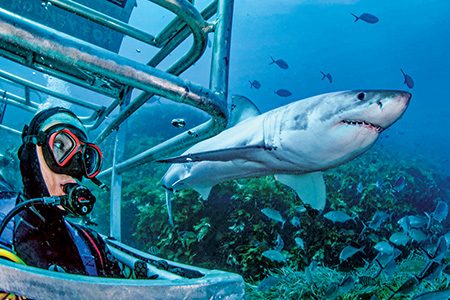
Eso convierte el sur de Australia en el último destino de buceo en jaulas con tiburones blancos que queda—pero esto no es pan comido—. He hecho la travesía siete veces hasta el momento, incluso un par de visitas en la época en la que se utilizaba película de diapositivas, y tuve encuentros productivos en cinco de ellas. En mi viaje más reciente en octubre de 2023, tuvimos encuentros con tiburones desde el momento en que llegamos a las islas Neptuno hasta que nos fuimos cinco días más tarde.
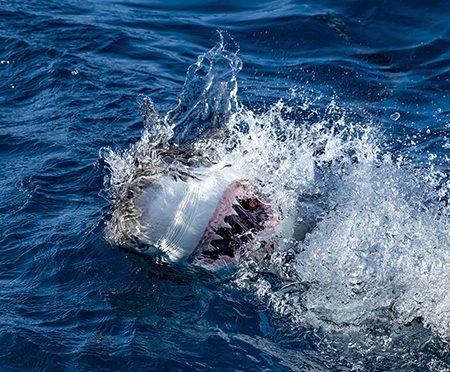
La mejor imagen que capturé en ese viaje —y quizás la mejor de todos los viajes— fue en el último lanzamiento de cebo. El capitán dijo que debíamos levar ancla y regresar al puerto, pero que podíamos tener una última oportunidad. Sentado en la plataforma de baño con mi domador de tiburones y mi cámara de superficie a nivel del agua, preenfocada donde esperaba que el tiburón emergiera, reflexioné sobre el raro privilegio de estar en presencia de estos majestuosos depredadores otra vez.
Cuando el tiburón apareció precisamente en el lugar correcto, el accionamiento por motor rápido de mi cámara hizo clic y logré la imagen que se puede ver en la portada de esta revista. La dopamina que fluía por mi cerebro en ese momento me aseguró que regresaría para una octava expedición.
Así fue como finalizó el viaje, pero había comenzado con un largo vuelo desde Miami, Florida, a Doha, Qatar, a Adelaida, Australia, y luego a Port Lincoln en el sur de Australia. El tiempo y el dinero necesarios para hacer una expedición con tiburones blancos en el sur de Australia es un factor decisivo para muchos viajeros de América del Norte, pero para aquellos que sí hacen el viaje, hay dos opciones de operadores autorizados para realizar buceos en jaulas dentro del Parque de Conservación de las Islas Neptuno (Neptune Islands Conservation Park): la embarcación de vida a bordo MV Rodney Fox ofrece expediciones de varios días y Calypso Star Charters realiza viajes de un día. Rodney Fox books multiday expeditions, and Calypso Star Charters does day trips.
Las Islas Neptuno son dos grupos de islas —Islas Neptuno del norte e Islas Neptuno del sur— en la Gran Bahía Australiana, una gran bahía oceánica abierta frente a la costa sur de Australia. Dada la distancia y las fluctuaciones del mar, el viaje requiere el uso de embarcaciones grandes, estables y aptas para la navegación para poder hacer el viaje, si bien hay fondeos protegidos al llegar allí. Entre Port Lincoln y las Islas Neptuno hay un trayecto de tres horas, por lo que debe tener en cuenta que seis horas de las excursiones del día estarán dedicadas a los traslados y no al buceo en jaulas.
Leones marinos australianos
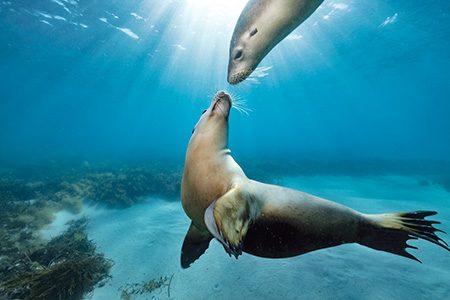
Un gran elemento diferenciador de las aventuras con tiburones en el sur de Australia es que hay mucho más para ver que solo tiburones. La mayoría de los tours pueden incluir una visita a Hopkins Island o Grindal Island para ver leones marinos australianos (Neophoca cinerea). Son uno de los pinnípedos más carismáticos y raros, con una población estimada de 10.000 a 12.000 en todo el mundo.
Visitamos el lugar dos veces, por la mañana de camino a las Islas Neptuno y luego por la tarde de regreso a tierra firme. El encuentro matutino fue increíble —mantuvimos distancia de acuerdo con las normas, pero los leones marinos nadaron con entusiasmo directo hacia nosotros—. Al llegar la tarde estaban calentitos y cómodos en la playa y totalmente indiferentes a nuestra presencia.
Cuando echamos el ancla de nuestra pequeña lancha esa mañana los leones marinos se acercaron nadando de inmediato para darnos la bienvenida, dando vueltas y brincando, completamente listos para interactuar con nosotros en el agua. Los encuentros cercanos eran un hecho ya que nadaron directamente hacia nuestras cubiertas tipo domo y daban vueltas alrededor del lecho marino cubierto de kelp a solo 4,6 metros (15 pies) de profundidad.
El mayor desafío de este encuentro no es la proximidad —si los leones marinos están en el agua, se acercarán— sino los problemas de flotabilidad. Es posible que utilice un traje seco o más neopreno de lo que acostumbra, y tal vez use equipo de buceo de alquiler ya que para el buceo en jaulas no necesita su propio compensador de flotabilidad (chaleco), regulador o aletas. Por calcular cuánto lastre necesitábamos algunos perdimos oportunidades significativas con los leones marinos. Pero si logra superar los ajustes iniciales del equipo, es una experiencia gloriosa. Tal vez no sacrifique un día productivo de buceo con tiburones para volver un par de horas para bucear con leones marinos australianos, pero nadar un rato al salir durante su primer día es algo que no debe perderse al visitar el sur de Australia.
Tiburones blancos
Después de pasar tiempo con los leones marinos, estábamos listos para el evento principal: los tiburones blancos. Su embarcación llegará a las Islas Neptuno del norte o las Islas Neptuno del sur. Las Islas Neptuno del norte están más acerca de Port Lincoln, el centro continental del buceo con tiburones del sur de Australia, por lo que los viajes de un día normalmente se realizan allí, mientras que las embarcaciones de vida a bordo pueden visitar cualquiera de los grupos de islas. Nuestro tour se concentró principalmente en las Islas Neptuno del sur, pero navegamos a las Islas Neptuno del norte por un día a mitad de la semana para no desaprovechar ninguna oportunidad.
Tuvimos buena suerte en ambos lugares, pero el legado de tirar carnada al agua constantemente en las Islas Neptuno del norte ha tenido la consecuencia imprevista de atraer grandes bancos de jureles gigantes alrededor de las jaulas. Es difícil componer una foto de un tiburón blanco distante a través de una pared de peces plateados sumamente reflectantes rodeando la jaula.
Nos retiramos a las Islas Neptuno del sur después de un día de frustración y fotos muy poco significativas. Habríamos estado felices de quedarnos en torno a las islas del norte si los tiburones hubieran estado allí, lo que a veces sucede. En este viaje tuvimos mejor suerte fotográficamente en las Islas Neptuno del sur, donde tomé todas las fotos de este artículo.
Un día en la vida de un buzo en jaulas
La tripulación está ocupada con la tarea de atraer tiburones desde el momento en que se echa el ancla. Un gran cubo de vísceras de pescado congeladas y trituradas (la carnada) se coloca en un cubo en la plataforma de buceo. Mientras el agua de mar fluye constantemente hacia el cubo, la tripulación va rompiendo la masa que se descongela lentamente de modo tal que la sangre y los trocitos de carne creen una mancha que anuncie nuestra presencia a cualquier tiburón blanco que esté en el área. Esta actividad continúa en el fondo durante todo el buceo con tiburones.
Un poco de atún, normalmente la cabeza y las agallas, por lo general es el atrayente principal. El domador de tiburones lo sujeta a una línea, lo lanza al agua reiteradamente y luego lo arrastra nuevamente a la plataforma de baño. El cebo es manipulado con una línea de sisal biodegradable, así que no hay ninguna posibilidad de dañar a un tiburón que tome la carnada. El objetivo no es alimentar al tiburón, sino atraerlo cerca de la jaula y que idealmente nunca la golpee. El parque de conservación tiene reglas de interacción claras y los operadores saben que conservar sus permisos depende de su cumplimiento.
Las reglas más relevantes que afectan a los buzos en jaulas son no hacer daño ni alimentar intencionadamente a los tiburones, evitar dejar algún atrayente a base de pescado en el agua sin vigilancia ni desecharlo en el parque y detener cualquier forma de atracción de tiburones por 15 minutos si un tiburón “muerde, toma o ingiere cualquier atrayente a base de pescado no triturado o entra en contacto contundentemente con la jaula submarina, el equipo o el buque”.
Los domadores hacen su mejor esfuerzo para no permitir que los tiburones tomen el cebo, aunque sucede. Los tiburones se saciarían o se aburrirían si obtuvieran la carnada todo el tiempo, y si no la obtuvieran, se rendirían. Atrapar la carnada de vez en cuando y aleatoriamente los mantiene muy participativos.
Si bien los domadores de tiburones son máquinas de movimiento perpetuo en la cubierta trasera, la inactividad de los tiburones puede hacer entrar a los huéspedes en un estado de letargo. Solo porque no veamos tiburones en la superficie no significa que no estén ahí. Los tiburones blancos son depredadores furtivos y con frecuencia sorprenden a todos con un enorme salto en la superficie en busca de la carnada. La actividad se acelera con el frenético grito de “tiburón” desde la popa. Quien tenga su turno previsto en las jaulas debe tener puesto el traje de neopreno y estar listo con la cámara preparada para la acción.
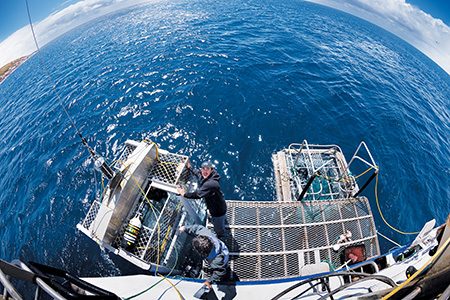
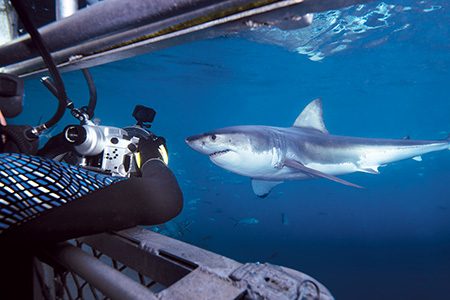
Nuestra embarcación para este viaje, el MV Rodney Fox, tiene dos jaulas. Una es una jaula de superficie amarrada en la banda de babor en la popa, mientras una grúa baja la jaula sumergible de estribor hacia el lecho marino cubierto de kelp 21 metros (70 pies) más abajo. Este sistema de doble jaula puede albergar de cuatro a seis buzos a la vez. Una larga manguera y un regulador proporcionan aire comprimido a la jaula de superficie, por lo que no es necesario contar con una certificación de buceo con aire comprimido. Los buzos en jaulas sumergibles utilizan tanques de buceo tradicionales, compensadores de flotabilidad y reguladores, así que deben estar certificados y a gusto buceando con un perfil plano a 41 metros (70 pies), generalmente con aire. Hay tanques de Nitrox disponibles para una carga adicional si los buzos los reservan con anticipación.
Un contenedor en la jaula del fondo contiene carnada. El capitán de la jaula lo aplasta hasta hacerlo añicos, y el cebo flota hacia la columna de agua para atraer tiburones y otros coloridos habitantes del lecho marino subtropical. No hay carnada amarrada para atraer a un tiburón cerca de la jaula, pero la jaula se vuelve un ecosistema en sí mismo, y los tiburones a menudo son curiosos.
No tuve un encuentro súper cercano mientras estaba en la jaula sumergida, pero otras personas de nuestro grupo sí lo lograron. En la jaula del fondo debe invertir bastante tiempo para crear su propia suerte. Es una experiencia más aleatoria que la jaula de superficie, pero el sur de Australia es el único lugar del mundo donde se puede experimentar estar en una jaula en el lecho marino. Incluso en Guadalupe, donde la mayoría de las embarcaciones ofrecían una jaula bajo la superficie, el agua era tan profunda que la jaula aún estaba amarrada en medio del monótono mar azul. Las bahías del sur de Australia son lo suficientemente superficiales como para ubicar la jaula sobre el lecho, revelando así un fondo de pastos marinos y kelp y vida marina diferente a la que encontraría en la superficie.
La jaula de superficie fue un lugar muy concurrido durante el tiempo que pasamos en las Islas Neptuno del sur. Con solo nueve buzos—reservamos el barco chárter a propósito a media capacidad para maximizar el tiempo en la jaula— y dos jaulas, además de todas las oportunidades fotográficas fuera del agua gracias a la acción de los tiburones en la superficie, nadie sufrió la carencia de interacción con tiburones. Fuimos afortunados de tener tiburones activos cada día, pero esa no siempre es la realidad.
Cada vez que me entusiasmo al hablar sobre espectaculares encuentros con tiburones, recuerdo los viajes donde hubo poca acción e incluso aquel donde no logramos ver ni un solo tiburón. Estas situaciones suceden por varios motivos. La presencia de un cadáver de ballena en el Golfo de Spencer puede alejar a los tiburones blancos de las Islas Neptuno, o bien barcos atuneros de Port Lincoln pueden alejarlos de las islas con sus grandes redes de atún vivo arrastrando detrás de ellos.
Los tiburones blancos están allí principalmente por los lobos marinos del sureste que habitan las costas escarpadas a lo largo de las Islas Neptuno, y la pequeña cantidad de cebo triturado que en ocasiones es arrastrado al mar junto con algunas agallas de atún desde nuestras líneas de tirada no va a sustentar a un tiburón de 5 metros (16 pies). Sin embargo, siempre que lo consideren un buen juego, esta sigue siendo una de las aventuras verdaderamente grandiosas para cualquier amante de la megafauna marina.
Cómo bucear en este lugar
Cuándo viajar: el verano australiano (invierno norteamericano) ofrece el agua más cálida y una buena oportunidad de ver tiburones. De febrero a mayo está más fresco y el período de agosto a octubre tiene las temperaturas del agua más frías. La cantidad de tiburones registrada más alta por día en los últimos años alcanzó su punto máximo de septiembre a noviembre.
Cómo llegar: se puede llegar a Port Lincoln a través de Adelaida por medio de QantasLink y otros transportistas regionales. Cuentan con aviones más pequeños y tienen restricciones sobre el tamaño y el peso del equipaje de mano. Al viajar al sur de Australia deberá ser creativo con su manera de empacar: dos maletas registradas de 23 kilogramos (50 libras) cada una y un pequeño bolso de mano de 6 kilogramos (15 libras) son sus limitaciones publicadas.
Buceo en jaulas: necesitará un buen traje de neopreno (se recomienda uno de 7 mm) o un traje seco para agua con una temperatura de 15 °C a 20 °C (alrededor de los 60 °F), además de botines, una capucha y guantes. Lleve una máscara cómoda, pero no necesitará un compensador de flotabilidad ni aletas a menos que quiera tener su propio equipo para bucear con leones marinos. Tener un snorkel es una buena idea, incluso si no lo usa. La jaula de superficie utiliza aire suministrado desde la superficie. Los buzos de las jaulas del fondo utilizan un tanque convencional y equipo de buceo con aire comprimido sin aletas. Necesitará una computadora de buceo específica para la inmersión a 21 metros (70 pies) con un perfil plano, y si lo hace dos veces al día deberá controlar su tiempo de fondo y sus límites de no descompresión.
Tratamiento en cámara hiperbárica: si bien los buzos en jaulas de superficie no pueden tener problemas de burbujas, permanecer demasiado tiempo en la jaula del fondo puede ser peligroso. La unidad de medicina hiperbárica en el Royal Adelaide Hospital es el servicio de referencia estatal del sur de Australia para medicina hiperbárica y de buceo. Cuentan con un centro de tratamiento con oxígeno en cámara hiperbárica con una cámara de recompresión de triple compartimiento de última generación que puede tratar a hasta 20 pacientes en dos compartimientos.
Claridad del agua: la visibilidad normalmente es de 18 a 30 metros (60 a 100 pies). El proceso de colocación de cebo puede crear material particulado como resultado del lanzamiento de carnada y los tiburones que mordisquean el atrayente.
Elección de lente en la superficie: la capacidad atlética de estos tiburones impresionará incluso al fotógrafo submarino más entusiasta, y los saltos en la superficie no son inusuales. Una lente con zoom de 80 a 200 mm fue una buena longitud focal para capturar los momentos cuando los dientes, los ojos y las aletas estaban por encima del agua a la altura de la popa.Actividad de tiburones: se puede acceder a una base de datos de encuentros con tiburones de Calypso Star Charters de 2011 hasta el presente en tinyurl.com/calypsostar. Esta información puede ayudarlo a planificar con mucha anticipación qué meses son los mejores para los encuentros con tiburones para poder evitar la temida sequía de tiburones durante su aventura con tiburones blancos en el sur de Australia.
© Alert Diver — Q1 2024