La primera detonación me dejó inmóvil en plena patada de aleta. Un latido después, una triple explosión de trueno pareció sacudir las paredes que se elevaban a ambos lados de mí.
Al oír y sentir esa fuerza a 18 metros bajo el agua, no hacía falta mucho esfuerzo de imaginación para creer que el abismo zigzagueante por el que nadábamos podría haber sido creado por explosiones igualmente violentas en el pasado. Me invadió una sensación de claustrofobia. Tenía que salir de allí.
Cuando por fin me sacudí la parálisis y reanudé las brazadas para salir de la imponente fisura del arrecife de Roatán, descubrí coloridas esponjas que brillaban entre gorgonias y corales en una preciosa pared. Docenas de lábridos criollos violetas pasaban a toda velocidad, y dos peces ángel reina se turnaban para guiarse mutuamente en círculos perezosos y coquetos. Una enorme morena verde, tan gruesa como mi muslo, serpenteaba entre los gorgonios como un esquiador deslizándose por una pista de eslalon.
El buceo no iba a ser todo pesimismo. Las cosas empezaban a mejorar para nosotros en el sitio de buceo conocido como Calvin’s CrackLa tormenta seguía arreciando, con cortinas de lluvia cayendo a cántaros de unas nubes plomizas y amenazantes, pero el ambiente bajo las olas había cambiado decididamente de aterrador a sublime. Nuestra expedición a bordo de un crucero de buceo por las Islas de la Bahía de Honduras había comenzado, sin duda —y de forma bastante literal—, con una explosión.


La costa sur de Roatán
Más tarde ese mismo día nos reubicamos bajo un cielo tranquilo y casi despejado; la tormenta primaveral había desaparecido. Aunque era mi primera vez en Mary’s Place, ya lo conocíamos. Había leído a menudo sobre este lugar especial de Mary durante los últimos 20 años, ya que aparecía regularmente en las listas de los mejores sitios de buceo de Honduras y de los lugares imprescindibles del Caribe. Se encuentra cerca de Brick Bay, a lo largo del flanco sur de Roatán, a unas 7 millas (11 kilómetros) al oeste de donde habíamos empezado, en Calvin’s.
Desde la parte superior del arrecife de Mary’s, a unos 9 metros (30 pies), nos dejamos caer por el borde, donde la visibilidad llegaba hasta los 18 metros (60 pies), y un banco de chubs trazaba un arco a través del azul. Debajo de ellos, un grupo compacto de peces maestro me atrajo hacia abajo. Amablemente mantuvieron una formación cerrada mientras me acercaba para hacer una foto.
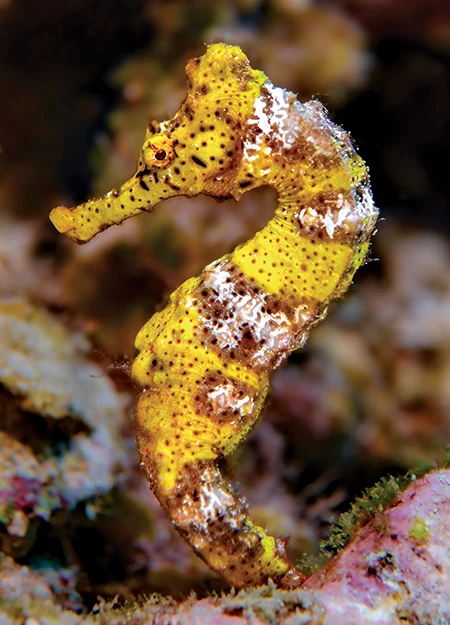
Debajo de ellos, en una plataforma a unos 24 metros de profundidad, nuestro divemaster nos señaló un caballito de mar de hocico largo amarillo que se erguía orgulloso. Mi esposa, Melissa, llevaba un objetivo macro en su cámara, así que capturamos un retrato para la posteridad.
Durante el ascenso por la pared, descubrimos un pargo carnero bien gordo descansando detrás de un racimo de corales blandos, unos cuantos meros negros y de Nassau, y un mero de aleta amarilla con la cola de su última comida asomando por la boca. Todas estas especies han sufrido descensos de población en gran parte del Caribe, por lo que fue reconfortante codearse con estos peces grandes, sabrosos y —al menos aquí— relativamente seguros. Mary’s se encuentra en el Parque Marino de Roatán, y su condición de área marina protegida (AMP) confiere cierta protección a los habitantes de este arrecife estelar.
Valle de los reyes era un nombre de lugar que no conocía. Se encuentra justo al sur de French Harbour, el punto de partida (y de llegada) de nuestro crucero de una semana, y es otro sitio con una magnífica estructura de arrecife tridimensional. Aquí encontramos gorgonias de aguas profundas y matorrales de gorgonias, esponjas barril gigantes y esponjas de cuerda y tubulares de color naranja, marrón y rosa. Escondidos en esta jungla de invertebrados había peces hamlet índigo, peces lima rayados y peces loro semáforo. Los jureles crevalle patrullaban frente al muro, y nubes de sargento mayor revoloteaban sobre la cresta del arrecife.
Nuestro guía de buceo nos ofreció dos inmersiones en el cercano Mr. Buds, donde yace un pequeño buque de carga de 75 pies (23 m) a unos 60 pies (18 m) de profundidad, cerca de French Cay. Fue hundido intencionadamente en 1995 para ampliar la extensa oferta de sitios de buceo de Roatán. Nuestra inmersión a última hora de la tarde nos permitió explorar el pecio y el arrecife circundante, y fue una útil introducción orientativa para la inmersión nocturna. Desde el punto de vista fotográfico, preferí la inmersión tras la cena.
Entre los guías de buceo de vista aguda y nuestros compañeros de viaje, avistamos tres caballitos de mar. Solo llevábamos dos días de viaje y Honduras ya había demostrado ser un destino excepcional para los caballitos de mar. Mi recuento ya ascendía a seis.
Caracoles lengua de flamenco, crípticos cangrejos lágrima adornados con mechones de esponja roja y un pulpo camaleónico al acecho de cangrejos y camarones fueron algunos de los momentos más destacados de la inmersión nocturna. Las langostas también habían salido de sus escondites diurnos en la sombra para pasearse con descaro al amparo de la oscuridad.

Montes submarinos
Aunque ya habíamos visto muchos de estos mismos animales anteriormente durante nuestras visitas a países de la zona central y oriental del mar Caribe, la zona oceánica de Honduras, que forma parte del famoso Sistema Arrecifal Mesoamericano, era nueva para nosotros. Esperábamos abarcar el máximo terreno posible en el poco tiempo del que disponíamos para nuestra primera visita.
Por ello, elegimos un crucero de buceo para ir de isla en isla entre Roatán, Cayos Cochinos y Utila, en lugar de reservar tres complejos turísticos diferentes en tierra y los vuelos y ferris de conexión necesarios. Nuestra plataforma de buceo móvil fue sin duda la forma más adecuada de recorrer las Islas de la Bahía de manera fácil y eficiente, con la comodidad añadida de no tener que hacer y deshacer las maletas una y otra vez.
En las primeras horas del tercer día, soltamos amarras y pusimos rumbo al sur, hacia la costa de Honduras. Nos despertamos en medio de la nada, listos para sumergirnos de nuevo. El monte submarino Coco Grande se extendía bajo nosotros. Su punto menos profundo está a unos 40 pies (12 m); el más profundo es muchas veces mayor.
Lejos de la costa, en aguas abiertas entre Roatán y Cayos Cochinos, el lugar es conocido por sus aguas cristalinas, la exuberante vegetación de corales blandos, los bancos de peces y los ocasionales visitantes pelágicos. La tripulación llenó nuestras botellas con aire enriquecido al 32 % (EANx), y yo preparé mi cámara para tomar fotos con gran angular.
Una vez bajo el agua, disfrutamos de una visibilidad de 24 metros, una temperatura de 27 °C y prácticamente toda la vida marina mencionada en la sesión informativa. Las gorgonias, las varas marinas y las plumas marinas salpicadas por el sol en la cresta del monte submarino se balanceaban con el suave oleaje, pintando una imagen mental de los campos de trigo dorados de Kansas listos para la cosecha. Una gran barracuda que apareció nadando recalibró rápidamente mi imagen mental.
Nos deslizamos más profundamente hacia la ladera occidental de Coco Grande, nadando contra una corriente suave mientras el fondo se alejaba bajo nosotros. La corriente choca y se divide aquí, por lo que tiene sentido que sea donde a los peces les gusta estar.
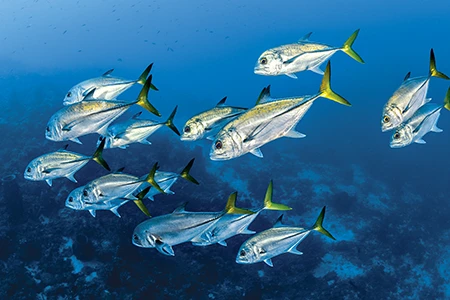
El capitán de nuestro barco lideraba la inmersión y nos hizo señas para que nos detuviéramos y esperáramos en un punto apodado Fish MarketEfectivamente, un momento después, unos doscientos jureles de ojo de caballo irrumpieron en escena a unos 27 metros de profundidad, con sus brillantes alevines plateados destellando en el azul oscuro. El banco se dividió en grupos más pequeños que giraron a nuestro alrededor como un ciclón durante un instante antes de alejarse rápidamente nadando, quién sabe hacia dónde.
Lo siguiente fue un peto, y luego, unos instantes después, caballas reales. A continuación, nos visitó un escuadrón de peces espátula. Entrecerré los ojos para mirar a lo lejos todo el tiempo, preguntándome qué más habría por allí. No podía olvidar que el capitán había mencionado que una vez vio un tiburón tigre en este lugar.
Utila: aquí se habla de buceo
Continuando nuestro recorrido por las Islas de la Bahía en un circuito en sentido horario, navegamos hacia el oeste durante unas horas. Cuando la isla de Utila apareció a la vista, la tripulación anunció que celebraríamos la hora feliz con una inmersión al atardecer en Jack Neil Point.En contraste con las aguas limpias y azules del montículo submarino y las vistas panorámicas submarinas, esta sería una inmersión en lodo para relajarnos y asomar la cabeza cerca del fondo marino para admirar a las pequeñas criaturas que viven en el fondo arenoso inclinado y en las grietas del arrecife a ambos lados.
Se me olvidó preguntar quién era Jack Neil y por qué este sitio lleva su nombre, pero fue una inmersión divertida de 75 minutos en la que avistamos blénidos de aleta velera, peces aguja, anguilas de jardín, extraños erizos ratón excavadores y cangrejos araña astutamente camuflados entre restos de algas. Un pez sapo barbudo —indudablemente feo e inexplicablemente carismático— me miraba con aire desafiante desde su guarida.
La competencia era feroz, pero los calamares de arrecife del Caribe, de entre 15 y 20 centímetros, que revoloteaban sobre la arena, fueron las estrellas del espectáculo. Se emparejaron brevemente en parejas y tríos, realizando un hermoso y extraño ritual de cortejo cefalópodo con brazos rizados, colores pulsantes y cambios dramáticos en los patrones de su piel.
Como de costumbre, también teníamos programada una inmersión nocturna. Es fácil hacer cuatro inmersiones al día en este itinerario de crucero de buceo. Spanish Bay nos deparó más calamares, una raya amarilla, lenguados, peces león y montones de cangrejos flecha. Allí tuvimos que vigilar nuestra flotabilidad, ya que remover el sustrato de limo fino y pulverulento provoca condiciones de visibilidad nula.
Utila es la más pequeña, la más plana y la más occidental de las Islas de la Bahía de Honduras. A pesar de tener una población estimada de entre 4000 y 7000 personas, la isla es un gran destino para el buceo. El ambiente desenfadado, asequible y sociable del estilo de vida playero de Utila lleva mucho tiempo atrayendo a buceadores, tanto turistas como (en su mayoría) jóvenes profesionales del buceo que buscan mejorar su nivel.
Pasea por una calle de arena o entra en un bar, y probablemente te encontrarás con gente de todo el mundo trabajando en este paraíso en sus cursos de divemaster e instructor. Los avistamientos fiables de tiburones ballena durante todo el año fueron otro gran atractivo de Utila en décadas pasadas, pero los peces más grandes del planeta se han marchado en su mayoría.
Afortunadamente, los tiburones nodriza siguen merodeando por la zona. Cannery Bank , frente a la costa occidental de Utila, es un lugar favorito de siempre. Un sol radiante, una excelente claridad del agua y tres tiburones nodriza nos dieron la bienvenida en la primera inmersión matutina. Pasé la mayor parte de mi hora de tiempo de fondo haciendo fotos alegremente, siguiendo a los tiburones alrededor del montículo submarino a una profundidad de entre 30 y 80 pies (9 y 24 m).
No fue difícil acercarse a estos tiburones marrones de hocico romo. La gente que alquila barcos de día a veces les da de comer pez león, por lo que a menudo se acercan con descaro a los buceadores. El reto estaba en crear imágenes atractivas con los buceadores e iluminar adecuadamente los corales blandos que adornan el arrecife. Cuando estás demasiado cerca, la distorsión de un objetivo ojo de pez puede transformar el esbelto perfil del animal en algo cómico, parecido a un renacuajo regordete.
Revisar las fotos durante el intervalo en superficie y ajustar mi estrategia de disparo mejoró mi tasa de fotos válidas en la segunda inmersión. La segunda inmersión también me dio tiempo para apreciar los racimos de tunicados campana azul de Cannery Bank y su río de lábridos criollos.
Asimismo, realizamos dos inmersiones La tripulación del Pinnacle, un lugar de primera categoría llamado así por el pilar de roca puntiagudo que se eleva de forma espectacular junto al borde del arrecife principal. Seguimos al divemaster durante la primera inmersión para familiarizarnos con el terreno y luego repetimos por nuestra cuenta en la segunda, volviendo sobre el mismo camino pero moviéndonos más lentamente y deteniéndonos con frecuencia para observar a los peces y jugar con las cámaras.
El programa del día permitió que nuestra embarcación permaneciera amarrada y mantuviera la cubierta de buceo abierta durante casi cuatro horas, por lo que podríamos haber bajado de la plataforma de popa una vez más para hacer una tercera inmersión, pero dos inmersiones largas resultaron perfectas.
Las inmersiones nos dieron tiempo de sobra a lo largo de la pared escarpada a 70 pies (21 m) para tomar fotos de un caballito de mar rosado, tímido al principio, que se aferraba con su cola prensil a una esponja rosa. Grammas reales de exquisitos colores púrpura y amarillo se deslizaban boca abajo por las oscuras grietas de la aguja que da nombre al sitio, a 50 pies (15 m) de profundidad, y peces cofre lisos de labios carnosos se movían lentamente entre los gorgonios en la plataforma del arrecife, a solo 20 pies (6 m) de profundidad.
También disfrutamos observando a los omnipresentes peces globo de nariz afilada con sus tatuajes faciales de color azul eléctrico, un enfrentamiento entre dos roncos que luchaban con las mandíbulas, peces loro que esperaban pacientemente en una estación de limpieza y el paso sorpresa de una antigua tortuga boba.


Regreso a Roatán
Soportamos una travesía nocturna, agitada y con mucho oleaje, de vuelta a Roatán para terminar nuestro crucero explorando la parte norte de la isla. El arrecife costero de allí presenta principalmente una arquitectura clásica de espolones y surcos, con una plataforma de arrecife poco profunda que desciende hacia el mar por una pared escarpada. Tuvimos muchos sitios completamente para nosotros solos en los montes submarinos de alta mar y alrededor de Utila, pero esperábamos —y de hecho encontramos— compañía en la costa norte de Roatán.
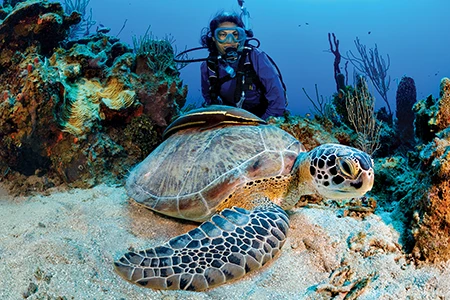
Media docena de lanchas de excursión llevaban y traían a los buceadores de diferentes puntos de inmersión mientras nos acercábamos Half Moon Bay Wall.Los encuentros con tortugas realzaron nuestra inmersión en este popular lugar. Aunque dos tortugas carey ( ) seguían sus propios planes y no paraban de moverse, una tortuga verde pasó al menos cinco minutos frotando su caparazón contra un afloramiento del arrecife, ajena a nuestra presencia. Tras terminar el masaje, posó y nos miró somnolienta antes de quedarse dormida.
Las vibrantes formaciones de esponjas y gorgonias más abajo en el muro también me llamaron la atención. Tavianna’s Wall albergaba langostas espinosas, cangrejos de canal, gobios neón, peces mandíbula de cabeza amarilla y muchos otros personajes interesantes.
A quien madruga, Dios le ayuda. Los buceadores madrugadores evitan las aglomeraciones y son los primeros en hacerse con la boya de amarre. Una inmersión a las 6 de la mañana en el último día de nuestro crucero de buceo nos compensó en el pecio El Aguila , cerca de Sandy Bay. Tuvimos todo el carguero de 230 pies (70 m) para nosotros solos.
Hundido por Anthony’s Key Resort en 1997, este punto de inmersión tan solicitado es uno de los lugares emblemáticos de Roatán. El buque está ahora partido en tres partes debido al huracán Mitch. La cubierta superior de la sección de proa, intacta y en posición vertical, se encuentra a unos 24 metros (80 pies) bajo la superficie, y la profundidad hasta el fondo es de 34 metros (110 pies).
Recuperando el equilibrio en tierra
Una semana nunca es suficiente. Por suerte, habíamos planeado una breve pero agradable prolongación tras el crucero de buceo. Tres días en un resort de buceo de primera categoría nos proporcionaron una terapia acuática adicional y muy necesaria en las acogedoras aguas de Roatán antes del inevitable regreso a nuestro hogar sin salida al mar en el este de Washington.
Dos meros simpáticos y fotogénicos nos hicieron sonreír en Melissa’s Reef, llamado así no por mi esposa, sino por alguna sirena aventurera de antaño. Nuestro guía demostró su destreza para encontrar criaturas presentándonos cangrejos de cuello, corvinas manchadas, peces lagarto, peces escorpión y babosas marinas lechuga en Peter’s Place.
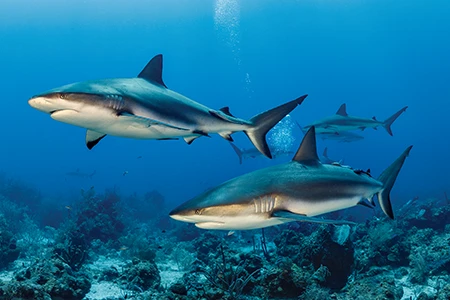
Gibson’s Bight nos entretuvo con sus sinuosos barrancos y pasadizos, y con la pandilla de cirujanos azules —un banco de peces cirujanos que cambian de color y se alimentan de algas, y que se deslizaban hambrientos por la meseta poco profunda del arrecife—. La última, y quizás la mejor, de nuestras siete inmersiones extra tuvo lugar en Marco’s Placedonde al menos 10 tiburones de arrecife del Caribe nadaban con calma y confianza a nuestro alrededor. No esperaba una inmersión con tiburones tan increíble en Honduras.
Mientras charlábamos durante la cena de nuestra última noche con gente que lleva más de 15 años viniendo a Honduras casi todos los años, me di cuenta de que las Islas de la Bahía no son un destino de buceo para una sola visita. Apenas habíamos empezado a descubrir lo que este rincón del Caribe tiene para ofrecer. Diez días nunca son suficientes. Simplemente tenemos que volver.
Cómo bucear en este lugar
Cómo llegar: American, Delta y United tienen vuelos directos desde EE. UU. al Aeropuerto Internacional Juan Manuel Gálvez (RTB) en Roatán. Varias aerolíneas también vuelan a RTB desde la parte continental de Honduras y otros lugares de Centroamérica y el Caribe. Actualmente, un crucero de buceo recorre las Islas de la Bahía de Honduras y sale de French Harbour, en Roatán.
Condiciones: Se puede bucear durante todo el año. La temperatura del mar suele oscilar entre los 27 °C y los 30 °C en verano, y entre los 25 °C y los 26 °C en invierno. La visibilidad submarina suele ser de entre 15 y 23 m (50 y 80 pies), pero puede superar los 30 m (100 pies) dependiendo de la temporada, la ubicación, el perfil del sitio y las condiciones meteorológicas. En algunos sitios puede haber corrientes, pero, en general, Honduras es conocida por ofrecer un buceo relajado. La temporada de lluvias va de octubre a enero o febrero; noviembre y diciembre son los meses más lluviosos.

Otra información: Es obligatorio llevar pasaporte para visitar Honduras. Los ciudadanos estadounidenses no necesitan visado para entrar con fines turísticos. El lempira hondureño es la moneda oficial del país, pero se aceptan ampliamente los dólares estadounidenses y las tarjetas de crédito. El español es el idioma oficial. Los enchufes eléctricos de tipo A y B (los mismos que en EE. UU.) son los estándar. Además del buceo y el snorkel, Roatán ofrece muchas actividades al aire libre y de aventura, como parques de vida silvestre, paseos a caballo, tirolinas y mucho más.
Explore Más
See more of the Bay Islands of Honduras in these videos.
© Alert Diver – Q1 2026