Pequeños animales que mantienen unido el océano
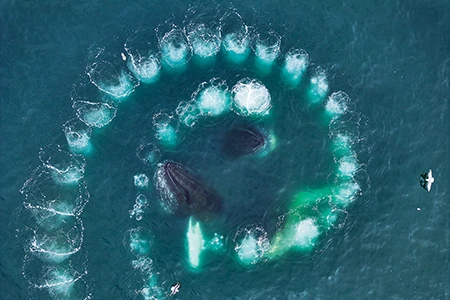
Imagina a una ballena jorobada preñada, con sus 40 toneladas, avanzando por las frías aguas azules hacia una nube rosada. La nube es tan densa que tiene contornos definidos y frena el paso de la luz. La ballena abre la boca y el océano se cuela a raudales a través de sus barbas.
De un solo zampazo, consume cientos de miles de diminutos krill antárticos de la nube rosada. Y luego se da la vuelta y vuelve a hacerlo: está comiendo por dos. La cría que lleva en su vientre, así como las focas, los peces, las aves marinas y otras innumerables especies, dependen de este festín.
Durante unos pocos meses al año, las ballenas jorobadas llegan a la Antártida para reponer sus reservas de energía y poder afrontar la migración, el embarazo, el parto y la lactancia. Cada bocado cuenta. Los científicos que estudian a estas ballenas creen que algo podría estar empezando a cambiar.
«La salud de las ballenas jorobadas está directamente ligada a la salud de las poblaciones de krill antártico», afirma Ari Friedlaender, doctor en Ciencias y ecólogo marino que lleva décadas estudiando a las ballenas jorobadas en aguas antárticas.
Las investigaciones de su equipo y de otros sugieren que las tasas de embarazo en las ballenas jorobadas podrían estar disminuyendo. Los indicadores hormonales asociados a los embarazos exitosos muestran tendencias preocupantes. Al mismo tiempo, el krill del que dependen estas ballenas parece estar sometido a una presión cada vez mayor. Puede que las ballenas nos estén diciendo algo: la alimentación es fundamental.
Cada cría de ballena jorobada es, en un principio, una apuesta arriesgada. La madre debe alimentarse intensamente durante el breve verano antártico, acumular enormes reservas de grasa, migrar miles de millas hasta las zonas de cría tropicales, dar a luz y, a continuación, amamantar a su cría mientras come poco o nada. Si la comida escasea al comienzo de ese ciclo, las consecuencias pueden prolongarse durante años.
El problema es que las ballenas jorobadas no son los únicos animales que dependen del krill antártico. Los pingüinos, las focas y casi todo el Océano Austral dependen de esta pequeña criatura de la que mucha gente nunca ha oído hablar.
El pequeño gigante del Océano Austral
El krill antártico (Euphausia superba) es un crustáceo que comparte una lejana historia evolutiva con el camarón. Alcanza solo unas 2 pulgadas (5 centímetros) de longitud, más o menos el tamaño de tu dedo meñique. Es translúcido, con matices rosados y rojizos, y tiene grandes ojos negros. Sus apéndices alimenticios, con aspecto de plumas, le permiten filtrar el fitoplancton microscópico del agua.
A primera vista, parecen insignificantes. Si los observas más de cerca, se vuelven extraordinarios.
El krill ha evolucionado para sobrevivir en uno de los entornos más extremos de la Tierra. Habita en un mundo de luz diurna veraniega interminable, seguida de meses de oscuridad y hielo. A lo largo de millones de años, ha desarrollado adaptaciones extraordinarias que parecen casi imposibles.
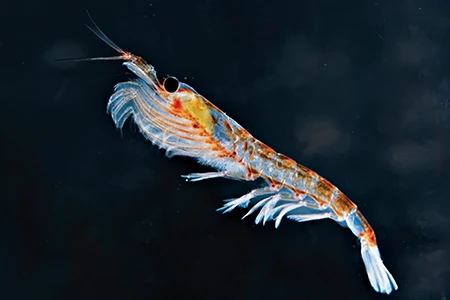
Para empezar, brillan. El krill posee órganos especializados que producen luz, llamados fotóforos. Situados cerca de los ojos, las piezas bucales y el abdomen, los fotóforos emiten una luz suave de color azul verdoso. Los científicos creen que el krill utiliza esta luz como una forma de camuflaje conocida como «contrailuminación». Al imitar la tenue luz que se filtra desde arriba, borran eficazmente sus siluetas y se hacen más difíciles de ver para los depredadores que se encuentran debajo.
Parecen millones de diminutas linternas vivientes a la deriva bajo el hielo antártico. El resplandor fantasmal que los buceadores observan a veces alrededor de las ballenas mientras se alimentan puede ser el brillo colectivo de innumerables krill, cada uno de los cuales pone en marcha su propio sistema biológico de camuflaje.
Su estrategia de supervivencia invernal es igualmente asombrosa. Cuando se forma el hielo marino y desaparece el fitoplancton, el krill no emigra. En su lugar, se reúne bajo el hielo y se alimenta de las algas microscópicas que crecen en su interior. A menudo nadan boca abajo, raspando el alimento de la parte inferior del hielo.
Cuando escasea el alimento, el krill se encoge. En lugar de morir de hambre, reduce su metabolismo y se vuelve más pequeño con cada muda, consumiendo sus propios tejidos corporales para obtener energía. El krill adulto puede sobrevivir durante meses en este estado reducido antes de volver a crecer cuando vuelve a haber alimento. Los científicos suelen monitorizar la relación entre el tamaño de los ojos y el del cuerpo en las poblaciones de krill. Unos ojos grandes en cuerpos que se encogen pueden indicar estrés nutricional.
El krill también es extraordinariamente productivo. Una sola hembra puede liberar miles de huevos en un solo desove. Esos huevos se hunden a gran profundidad en el océano antes de eclosionar, y entonces el krill emprende un largo viaje de regreso hacia la superficie.
Si el hielo marino se forma adecuadamente y las floraciones estacionales se producen según lo previsto, el krill joven sobrevive. Si las condiciones ambientales no son las adecuadas, se puede perder toda una generación. Sus vidas son a la vez resistentes y frágiles, pero su abundancia ha dado forma a todo un océano.
La base de la Antártida
Quizá no haya ningún animal en la Tierra más importante para un ecosistema marino que el krill antártico. Las ballenas azules consumen hasta 17,6 toneladas (16 toneladas métricas) de krill al día durante la temporada de alimentación. Las ballenas jorobadas migran miles de millas específicamente para llegar a los enjambres de krill antártico. Las ballenas minke, las ballenas de aleta y las ballenas francas australes dependen en gran medida de ellas.
Las focas cangrejeras, a pesar de su nombre, se alimentan casi exclusivamente de krill. Sus dientes especializados funcionan como tamices, filtrando los diminutos crustáceos del agua de mar. Los pingüinos, los peces, los calamares, las aves marinas y un sinfín de otros animales dependen del krill de forma directa o indirecta. Si se elimina el krill, el Océano Austral comienza a desmoronarse.
El krill también es un importante aliado climático. Al alimentarse de fitoplancton cerca de la superficie, ayuda a llevar el carbono a mayores profundidades del océano a través de productos de desecho que se hunden rápidamente y de procesos biológicos que contribuyen al almacenamiento de carbono a largo plazo. Los científicos siguen trabajando para comprender el alcance total de esta contribución, pero cada vez está más claro que el krill desempeña un papel significativo en la regulación del clima de la Tierra.
En muchos sentidos, el krill antártico es la base sobre la que se sustenta uno de los mayores espectáculos de la vida silvestre del planeta, y por eso es tan importante lo que está ocurriendo ahora.
Una industria en expansión
La pesca comercial del krill comenzó en la década de 1970. Los avances tecnológicos han transformado esta pesquería en una empresa industrial altamente eficiente. El krill capturado se convierte en harina y aceite de krill, que se utilizan en piensos para acuicultura, suplementos nutricionales y alimentos de alta gama para mascotas.
La comercialización de estos productos resulta muy atractiva. El aceite de krill se promociona como una fuente superior de ácidos grasos omega-3. Los productos para mascotas prometen articulaciones más sanas, pelajes más brillantes, una mejor capacidad cognitiva y un mayor bienestar. La mayoría de los consumidores nunca se plantean de dónde procede ese ingrediente.
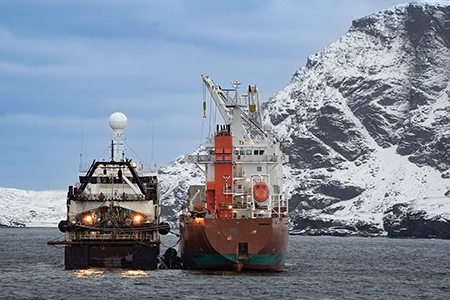
En la temporada de pesca 2024-2025, se capturaron aproximadamente 683 433 toneladas (620 000 toneladas métricas) de krill en aguas antárticas. La pesquería alcanzó su límite de captura permitido por primera vez en la historia, lo que obligó a un cierre anticipado de la temporada.
Los defensores de la pesca señalan que esta captura sigue representando solo una pequeña fracción de la biomasa total estimada de krill. Sin embargo, la mayor preocupación es dónde se lleva a cabo la pesca y si se solapa con las zonas de alimentación de ballenas, pingüinos y focas.
Competencia con las ballenas
Puede que el mayor reto al que se enfrenta el krill antártico no sea el volumen total de capturas, sino más bien la concentración del esfuerzo pesquero en las mismas zonas donde los depredadores se reúnen para alimentarse. Durante años, las medidas de gestión distribuyeron la actividad pesquera por múltiples regiones de la Península Antártica. El objetivo era sencillo: evitar capturas excesivas en lugares especialmente importantes para los depredadores del krill.
En 2024, esas protecciones espaciales dejaron de estar vigentes. El esfuerzo pesquero se ha concentrado cada vez más en la Zona 48.1, donde ahora se produce aproximadamente el 80 % de las capturas —a menudo hacia el final de la temporada, cuando los depredadores se alimentan activamente—.
Esos lugares suelen ser precisamente donde las ballenas jorobadas, los pingüinos y las focas cangrejeras han evolucionado para alimentarse. Una presa concentrada es una presa fácil. Los mismos bancos densos de krill que atraen a las ballenas también atraen a los barcos pesqueros. Quizás por primera vez en la historia de la humanidad, nos encontramos compitiendo directamente con algunas de las especies más emblemáticas de la Antártida por el acceso al recurso que las sustenta.
Esto ya no es una cuestión abstracta de conservación. Se trata de quién se queda con el krill: las ballenas madres que alimentan a sus crías en crecimiento o las cadenas de suministro industriales. Una ballena jorobada no puede simplemente desplazarse cientos de millas para encontrar alimento en otro lugar. Una colonia de pingüinos no puede trasladarse porque la actividad pesquera se haya intensificado en las cercanías. Las consecuencias del agotamiento localizado pueden ser profundas.
La investigación de Friedlaender sobre la salud reproductiva de las ballenas jorobadas ha identificado patrones preocupantes. La menor disponibilidad de presas parece estar asociada a menores tasas de embarazo en una especie que invierte una enorme cantidad de energía en dar a luz y criar a una sola cría.
Cada embarazo que no se produce representa algo más que una estadística. Representa una cría que quizá nunca nazca, una migración que nunca se produzca o una generación futura que nunca se incorpore a la población. Las señales de alerta están ahí. Cuando el alimento se vuelve menos predecible, las madres pasan apuros. Y cuando las madres pasan apuros, las poblaciones sufren las consecuencias.
Dos amenazas, un futuro
La presión pesquera es solo un reto. El cambio climático está creando otro. El hielo marino antártico ha disminuido significativamente en las últimas décadas, especialmente a lo largo de la Península Antártica occidental. El hielo marino de la zona de « » es más que agua congelada para el krill. Es un hábitat de cría, una zona de alimentación invernal y un factor clave para la productividad del ecosistema.
A medida que el hielo marino se reduce, los hábitats del krill también se reducen. Los científicos prevén que el calentamiento de los océanos pueda empujar a las poblaciones de krill hacia el sur, en busca de aguas más frías. Los depredadores que han evolucionado en función de la disponibilidad constante de krill podrían verse cada vez más alejados de su fuente de alimento.
Al mismo tiempo, las salpas gelatinosas son cada vez más comunes en algunas regiones que se están calentando. A diferencia del krill, las salpas aportan poco valor nutricional a las ballenas, los pingüinos o las focas. Las ballenas azules y los pingüinos no pueden alimentarse adecuadamente de salpas.
Por lo tanto, el krill se ve atrapado entre dos fuerzas: un clima cambiante desde abajo y una creciente presión de captura desde arriba. En conjunto, esas presiones generan incertidumbre sobre el futuro del Océano Austral.
Reconsiderar la comida para mascotas
Resulta difícil imaginar a una ballena jorobada y un aditivo de alta gama para alimentos para mascotas en la misma frase. Sin embargo, esa es precisamente la conexión.
En uno de los océanos más remotos de la Tierra, los buques industriales capturan krill en aguas de las que las ballenas, los pingüinos y las focas han dependido durante milenios. Gran parte de esa captura acaba convirtiéndose en harina de krill, aceite de krill, pienso para acuicultura, suplementos nutricionales e ingredientes para alimentos de alta gama para mascotas.
La mayoría de los consumidores no tiene ni idea de que existe esta conexión. No se trata de un argumento en contra de la salud de las mascotas ni de la nutrición humana. Es una cuestión de prioridades. En un momento en el que el krill antártico se enfrenta a una presión cada vez mayor debido al cambio climático y a la intensificación de la pesca, deberíamos preguntarnos si explotar la base de un ecosistema para fabricar productos de consumo es el mejor uso que se le puede dar a este recurso extraordinario.
Qué podemos hacer
El futuro del krill antártico no se decidirá únicamente en revistas científicas o en reuniones políticas internacionales. Los ciudadanos informados ayudarán a darle forma. Científicos como Friedlaender siguen abogando por una gestión más sólida basada en el ecosistema y por el restablecimiento de medidas de protección espacial que impidan la captura concentrada en zonas de alimentación críticas.
Los consumidores también tienen influencia. Lee las etiquetas. Haz preguntas. Averigua de dónde proceden los ingredientes marinos. Plantéate alternativas a los suplementos y productos para mascotas a base de krill. Y lo más importante, , comparte esta historia. Habla con el propietario de tu tienda de suplementos o con el fabricante. Pregunta a tu tendero por el origen de los productos. La concienciación de los consumidores es importante.
Como buceadores, tenemos un interés especial en esta cuestión. Somos una de las pocas comunidades que experimentamos el océano como un sistema vivo y no como una abstracción. Muchos de nosotros hemos tenido el privilegio de ver a las ballenas jorobadas deslizarse por las aguas azules. Hemos visto a los pingüinos lanzarse como cohetes por el mar.
Entendemos que cada encuentro espectacular se sustenta en innumerables conexiones invisibles. Una ballena está conectada con un enjambre de krill. Un pingüino está conectado con el hielo marino. Un buceador está conectado con ambos. Los animales más pequeños suelen tener el mayor peso. El krill antártico brilla en la oscuridad. Sobrevive a inviernos brutales, alimenta a innumerables animales y ayuda a regular nuestro clima, tal y como lo ha hecho durante millones de años.
La pregunta que se nos plantea es extraordinariamente sencilla: ¿Dejaremos suficiente krill para el océano? Cuando protegemos al krill, no estamos simplemente protegiendo a un diminuto crustáceo. Estamos protegiendo a las ballenas madres y a sus futuras crías. Estamos protegiendo el latido vital de la Antártida.
Y lo que quizá sea más importante, estamos reconociendo una simple verdad: las criaturas más pequeñas suelen ser las que mantienen unidos los mundos más grandes. En la Antártida, el futuro de las ballenas puede depender de si decidimos dejar suficiente krill en el mar.
Explore Más
Descubre más sobre la importancia del krill en estos vídeos.
© Alert Diver – Q3 2026