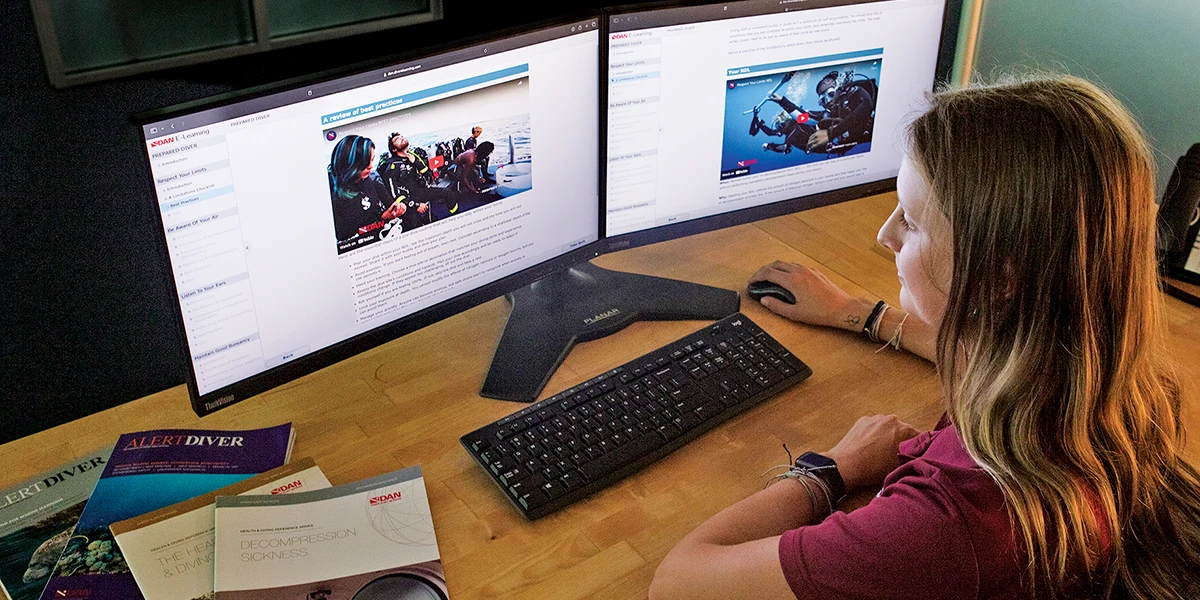
A Timeline of Decompression Stress
Most divers think about decompression in terms of depth, bottom time, ascent rates, and safety stops. But the body experiences a dive as more than just time underwater. Decompression stress […]

Most divers think about decompression in terms of depth, bottom time, ascent rates, and safety stops. But the body experiences a dive as more than just time underwater. Decompression stress […]
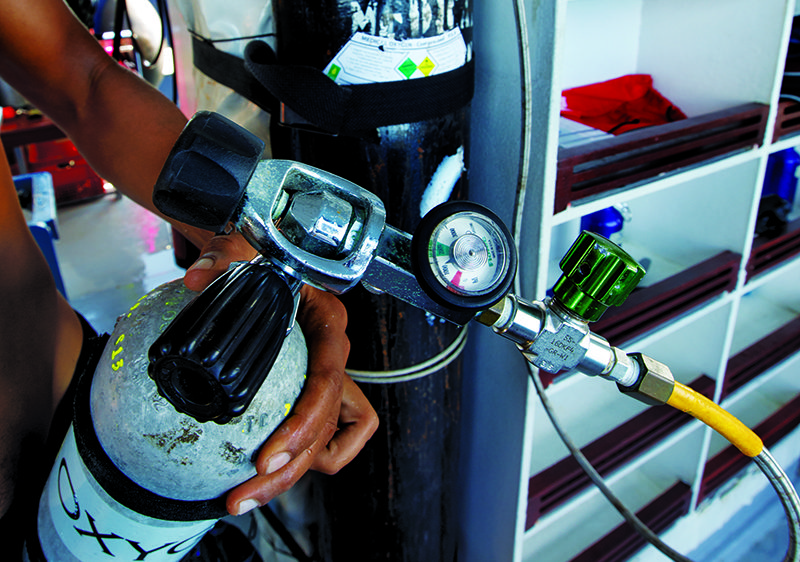
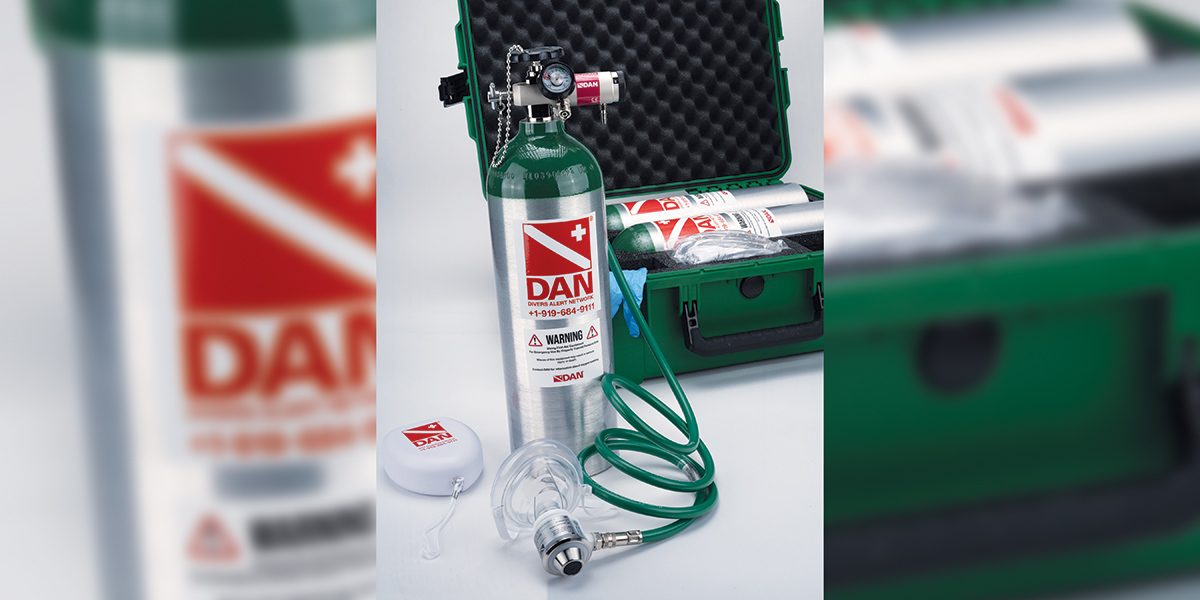
DAN INTRODUCED THE FIRST standardized emergency oxygen course for divers as lay providers in 1991. More people trained in oxygen delivery means that providers in dive locations worldwide need to have emergency oxygen units available. Obtaining oxygen refills, however, is an ongoing problem …
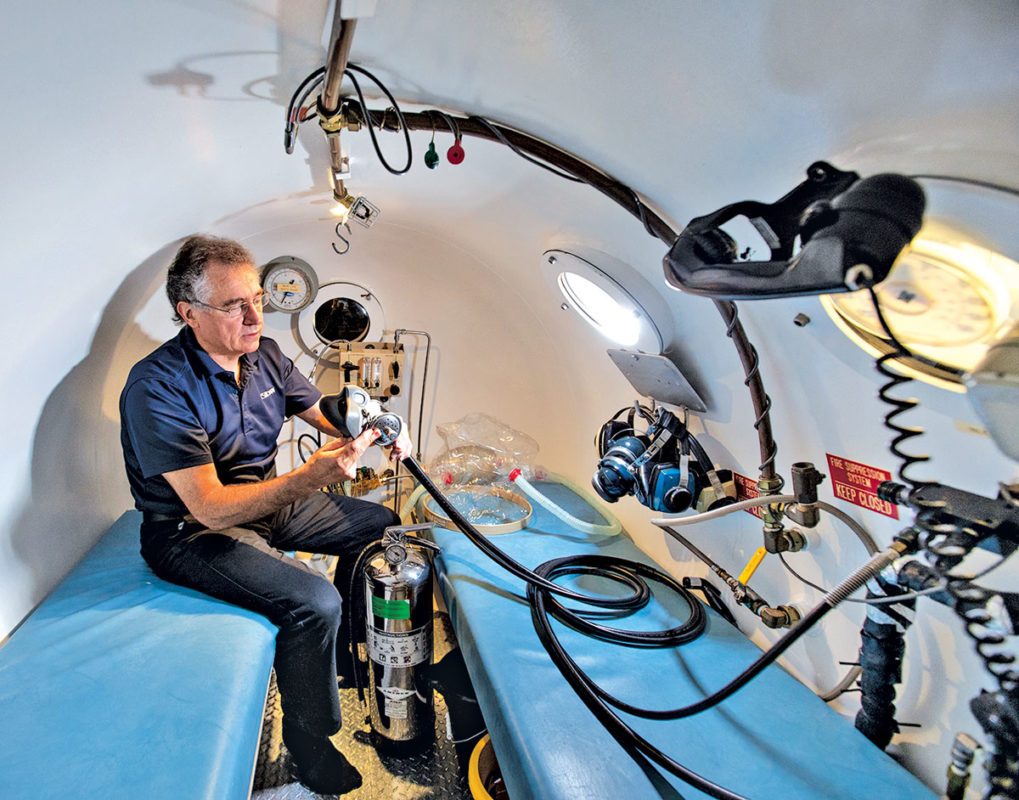
Le Divers Alert Network (DAN) gère un réseau mondial de caissons de recompression, qui consiste en une base de données de tous les caissons hyperbares ayant la capacité et la volonté de traiter les plongeurs blessés.
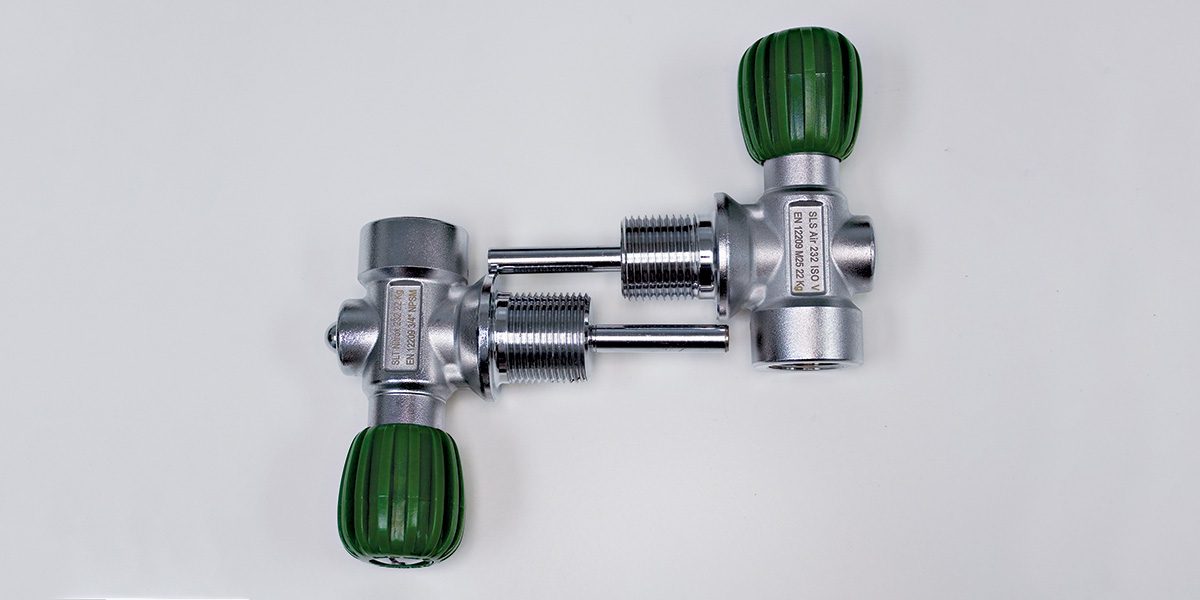
Une erreur de concordance entre un robinet et une bouteille a récemment entraîné une issue fatale en Europe. Ce problème peut être évité grâce à une formation formelle, spécifique à la fonction, et à une compréhension de base des robinets de bouteilles de plongée et des filetages de bouteilles.
LES TROIS GAZ GÉNÉRALEMENT utilisés en plongée récréative et technique sont l'oxygène, l'azote et l'hélium. L'azote est le plus abondant et est généralement le gaz par défaut, mais personne ne semble se préoccuper de sa pureté, bien que la Compressed Gas Association (CGA) des États-Unis fournisse des niveaux de pureté, ou grades, pour diverses applications.
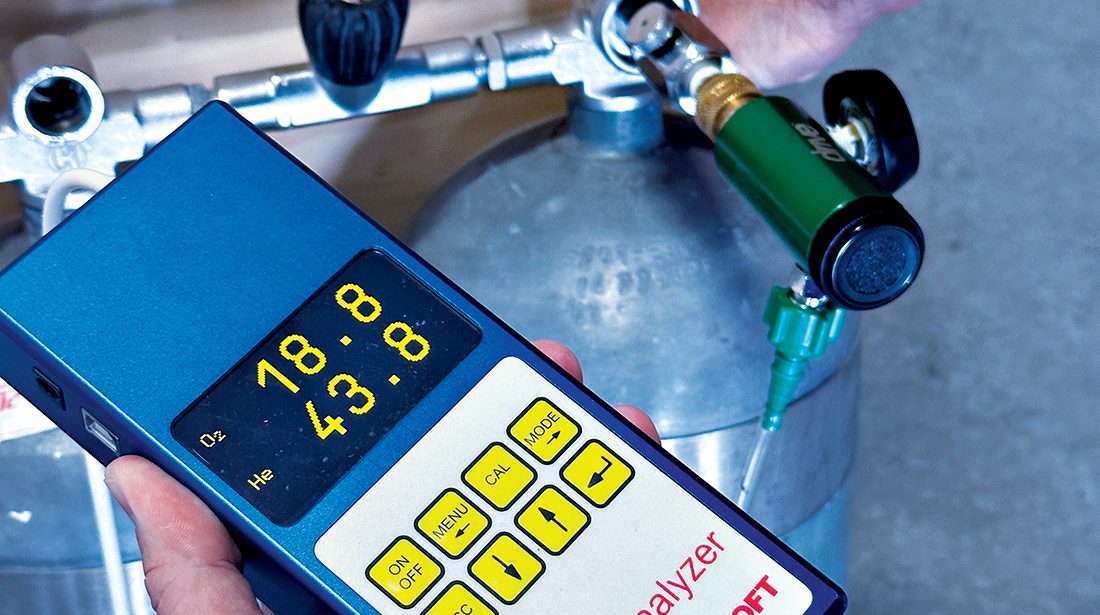
AFTER THE INITAL SCARE AND LOCKDOWNS FROM COVID-19, divers soon started to explore ways to safely get back into the water. Disinfection has always been a consideration in diving, but we needed new standards to allay fears of uncontrolled transmission of infectious diseases.
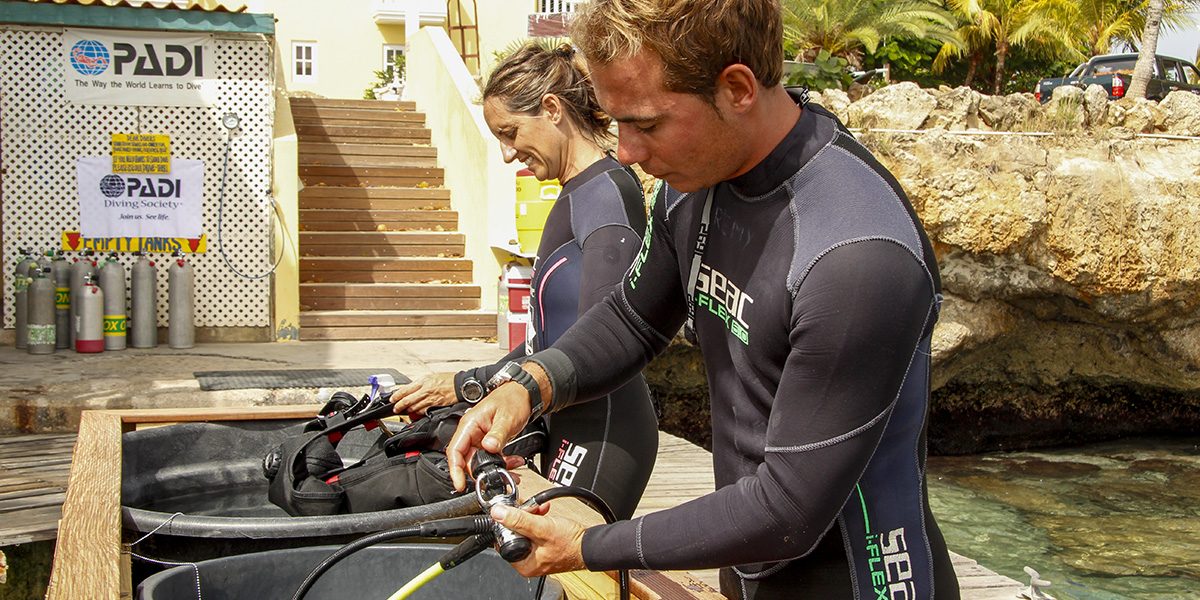
On Sept. 2, 2019, the small passenger vessel Conception burned to the waterline off Santa Cruz Island, California, killing 34 people. This wasn’t the first liveaboard fire, but the fearful reactions to this deadly tragedy echoed throughout the scuba industry. Liveaboard fires that have occurred since this incident have further fueled industry concerns.
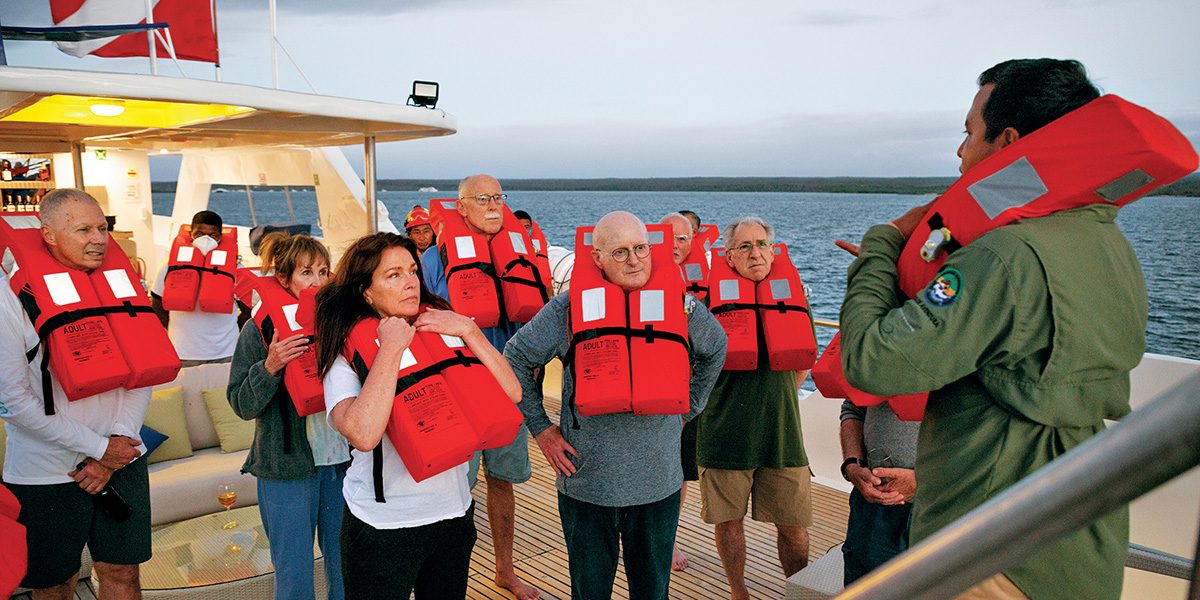
Most divers know their scuba cylinders need a visual inspection every year and a hydrostatic test every five years (referred to as a requalification or a hydro). The actual regulations for cylinders and other dive equipment, however, are less clear.
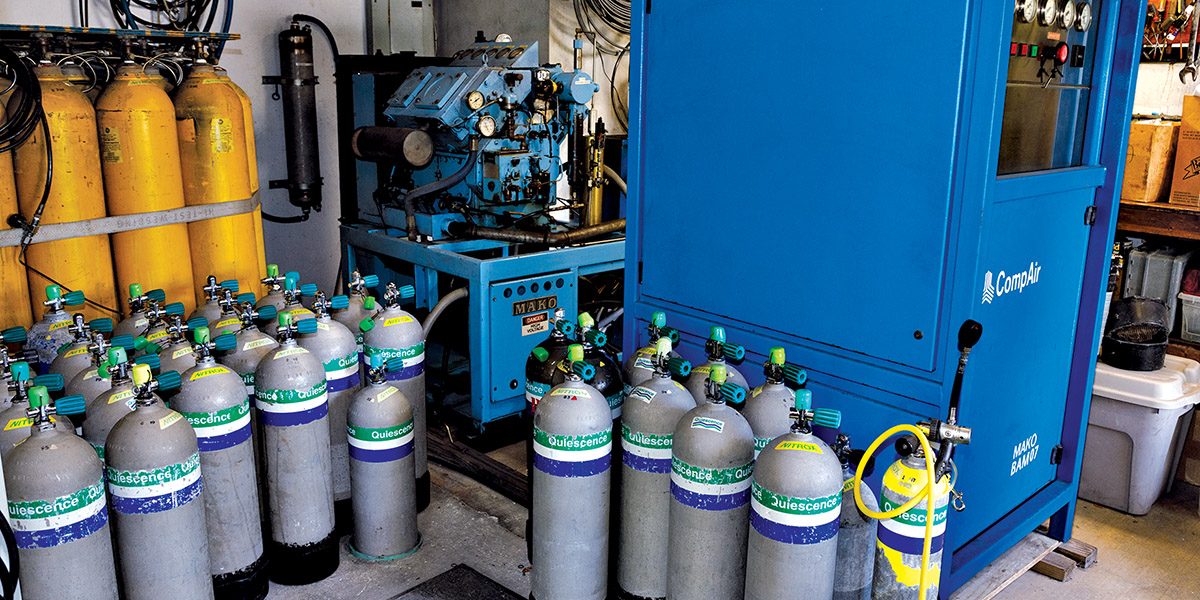
The U.S. Food and Drug Administration (FDA) classifies oxygen as a drug when provided to an injured or ill person. It requires specific labeling and product controls and must be individually prescribed to someone suffering from an ailment. When used incorrectly, oxygen can cause damage to someone’s health.
L’objectif de DAN est de faire en sorte que chaque plongée se déroule sans incident ni accident. Les avancées en matière de formation, d’équipement, d’opérations, de bateaux de plongée et d’ordinateurs de plongée ont considérablement amélioré la sécurité. Cependant, la sécurité d’une plongée dépend avant tout des bonnes pratiques du plongeur.