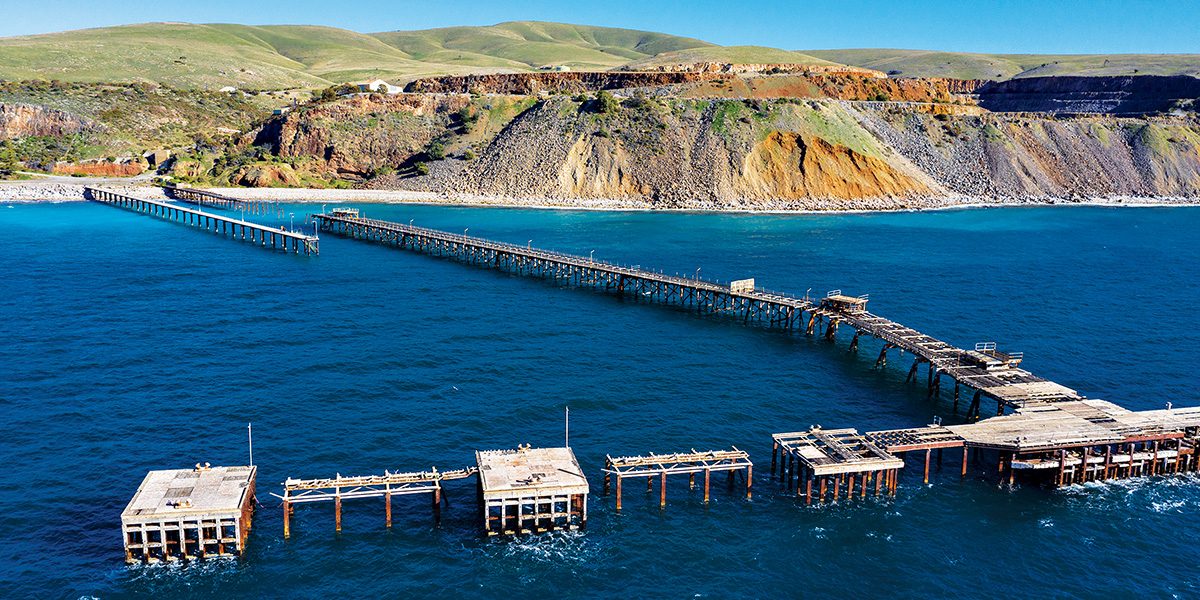
It is early June, the onset of winter in the Southern Hemisphere, and an army has just reached its destination. It has marched from the ocean’s depths into the shallows, amassing among the pilings at Blairgowrie Pier in Port Phillip Bay, south of Melbourne, Australia.
As I drove west past Port Alberni on Vancouver Island, British Columbia, on my way to a photo shoot, I watched in disbelief as the temperature gauge in my vehicle rose from 64°F (18°C) to 113°F (45°C). I thought something was wrong with my gauge, but a local radio station reported the same temperature. British Columbia had record-high temperatures throughout the province that week in June 2021.
When you think of a billfish, what comes to mind? Perhaps it’s a swordfish, a sailfish, or even the giant marlin from Ernest Hemingway’s classic The Old Man and the Sea. It can be confusing because 12 species are collectively known as billfish: one swordfish, four spearfish, two sailfish, and five marlins.
Her legs move quickly as she scrambles over the sand toward a large coral reef. It’s a bold and risky move, as the expanses of sand between coral patches are full of predators waiting to take advantage of a lone spiny lobster.
In November 2021 I was diving on the HMHS Letitia shipwreck in Halifax Harbour, Nova Scotia, one of Canada’s Maritime provinces. The British hospital ship, which lies near a gray seal colony, ran aground and sank in 1917 while returning from Liverpool, England, with wounded Canadian soldiers.
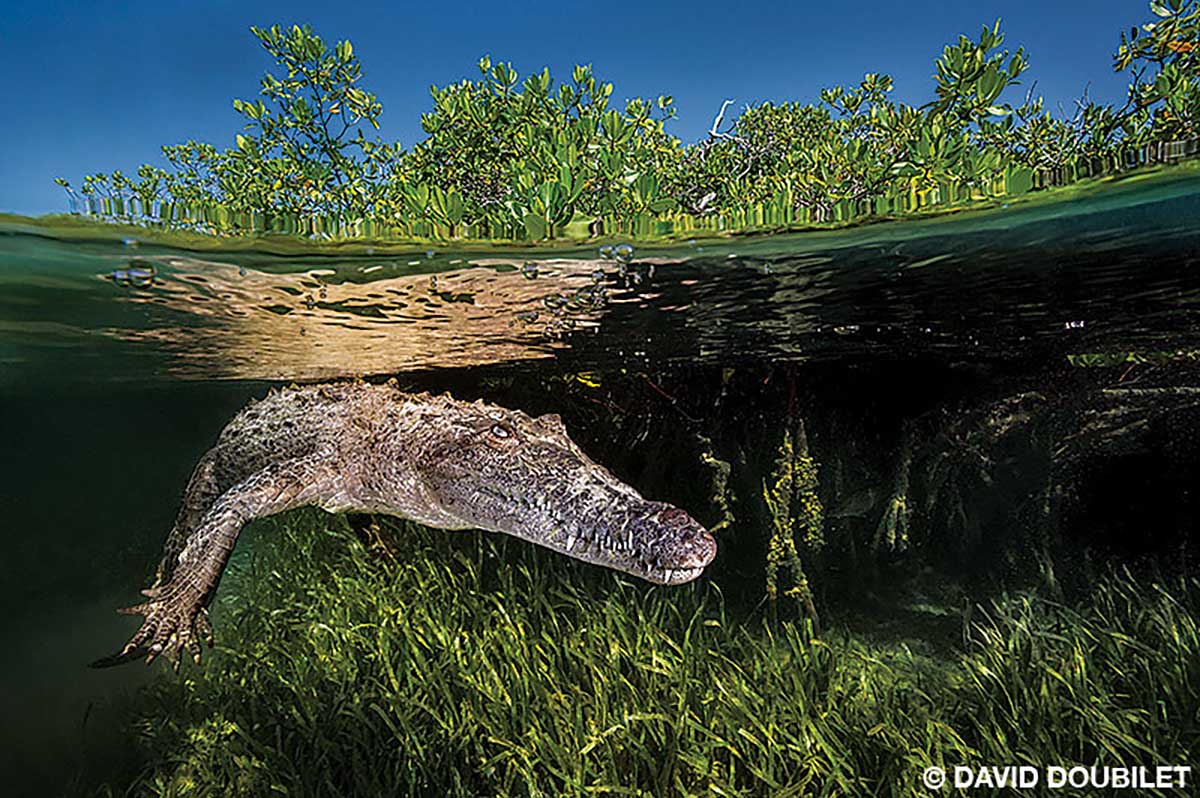
Crocodiles are apex predators, and in the wrong place and time, humans are potential prey. There are exceptions, but most of these wonderful and primitive reptiles won’t squander encountering a potential meal. When swimming in any reptile habitat, know who and what you may encounter, or don’t swim at all. The resident American crocodiles at Jardines de la Reina routinely share their waters with snorkelers and divers, but Jen Hayes didn’t feel the same comfort working in Nile crocodile waters in Botswana.
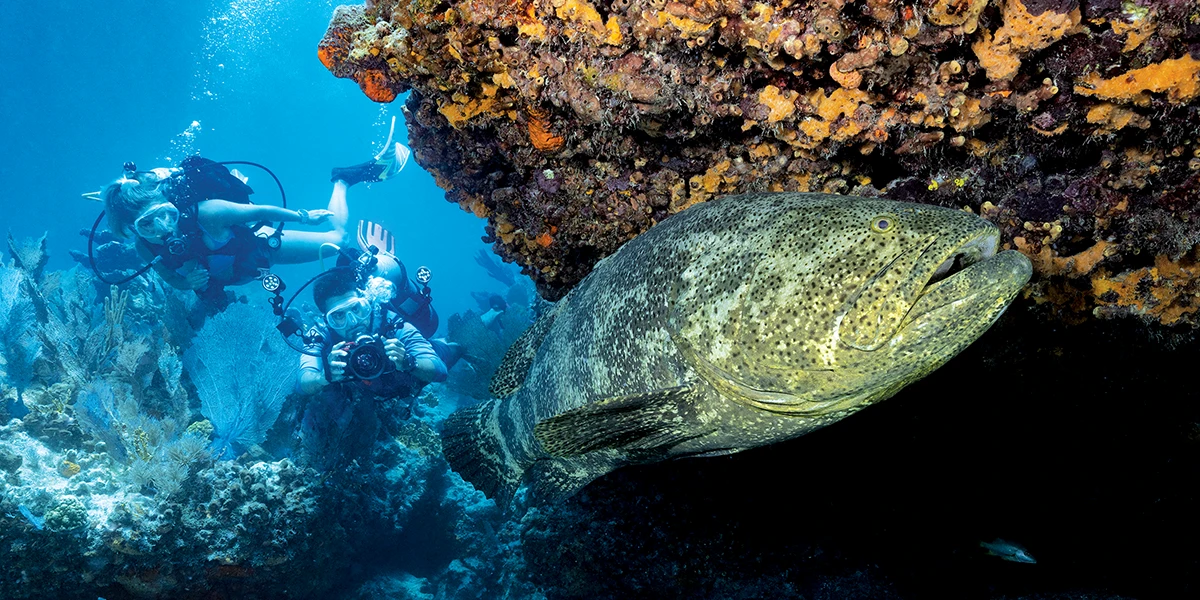
Our group of six researchers back rolled off the vessel near Jupiter, Florida, and began our descent to the sandy bottom nearly 80 feet (24 meters) below. As the wreck became visible, our team streamlined into formation to begin our task: searching for goliath groupers.
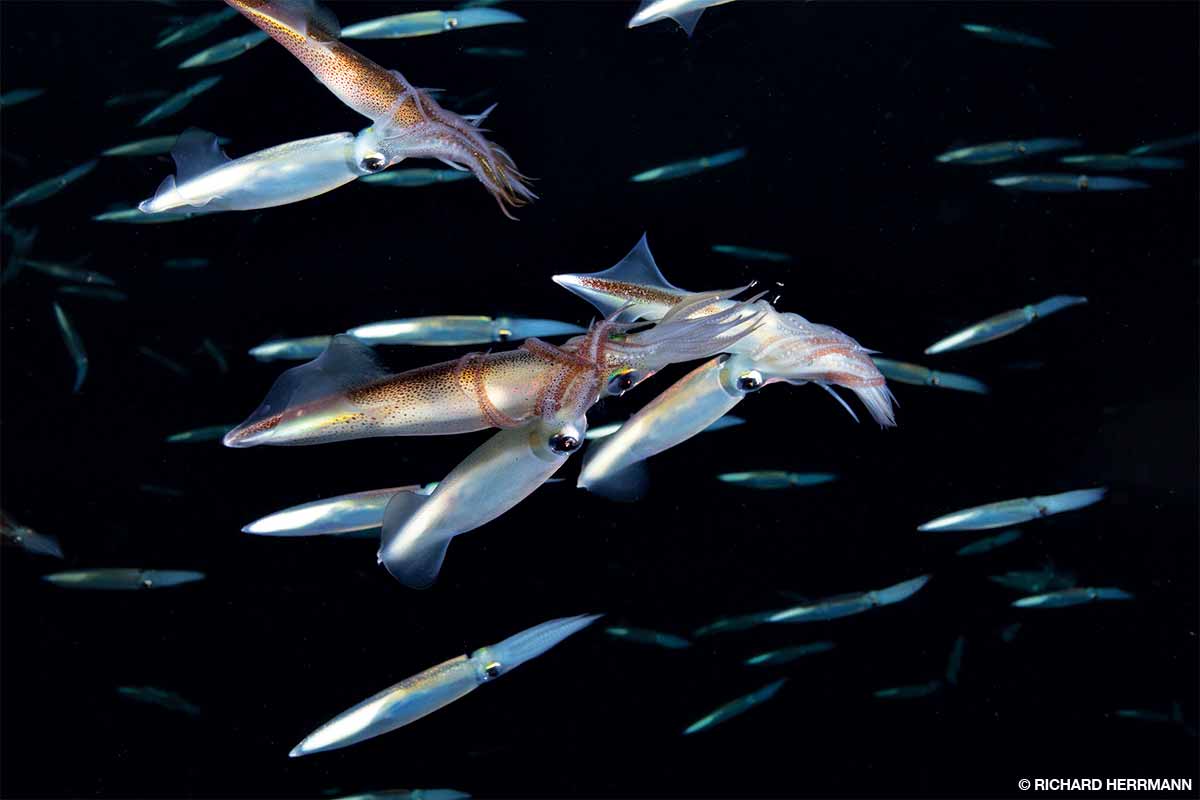
Saat Anda terjun ke dalam air yang berwarna hitam seperti malam, ribuan cumi-cumi yang berdenyut mencari pasangan tiba-tiba mengelilingi Anda. Aktivitas kawin terjadi di mana-mana saat beberapa pejantan menyerang satu betina. Kromatofor cumi-cumi yang bersemangat (sel pigmen) memancarkan warna-warni yang mengingatkan kita pada lampu neon di Las Vegas dan membuat kita berada di tengah-tengah pertunjukan cahaya yang hidup dan bergerak. Aksinya begitu hingar-bingar sehingga hewan-hewan tersebut masuk ke dalam peralatan Anda dan memantul di setiap inci tubuh Anda.
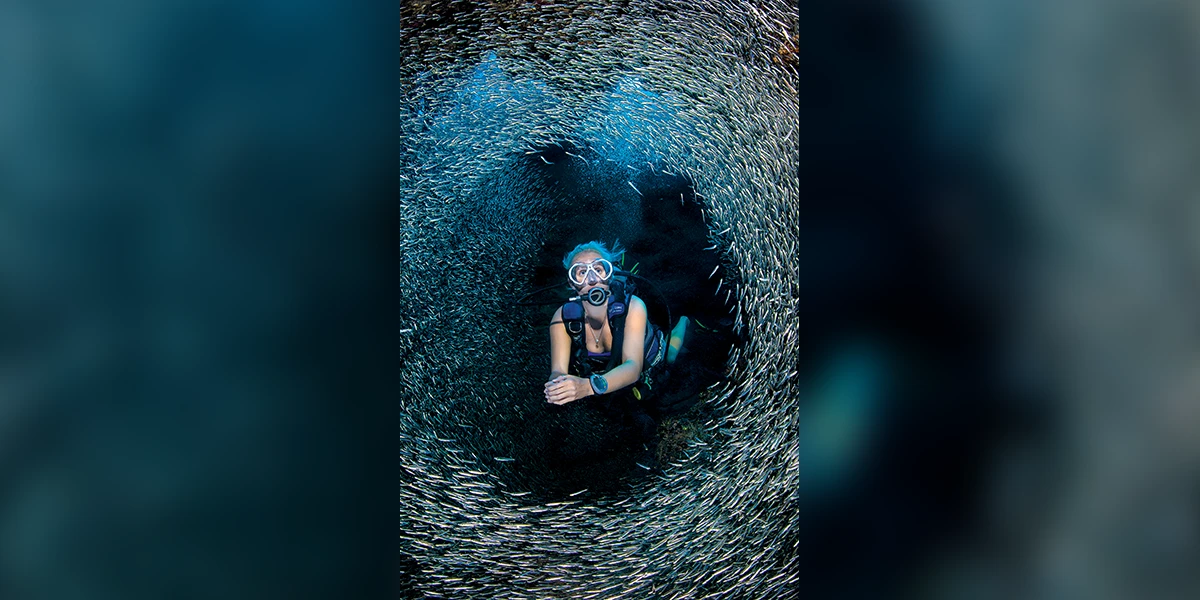
Fish completely enclose me. Their tiny, silvery bodies twinkle in the half-light as I float suspended in the center of a sphere of clear, warm water. I feel like I am inside a disco glitter ball.
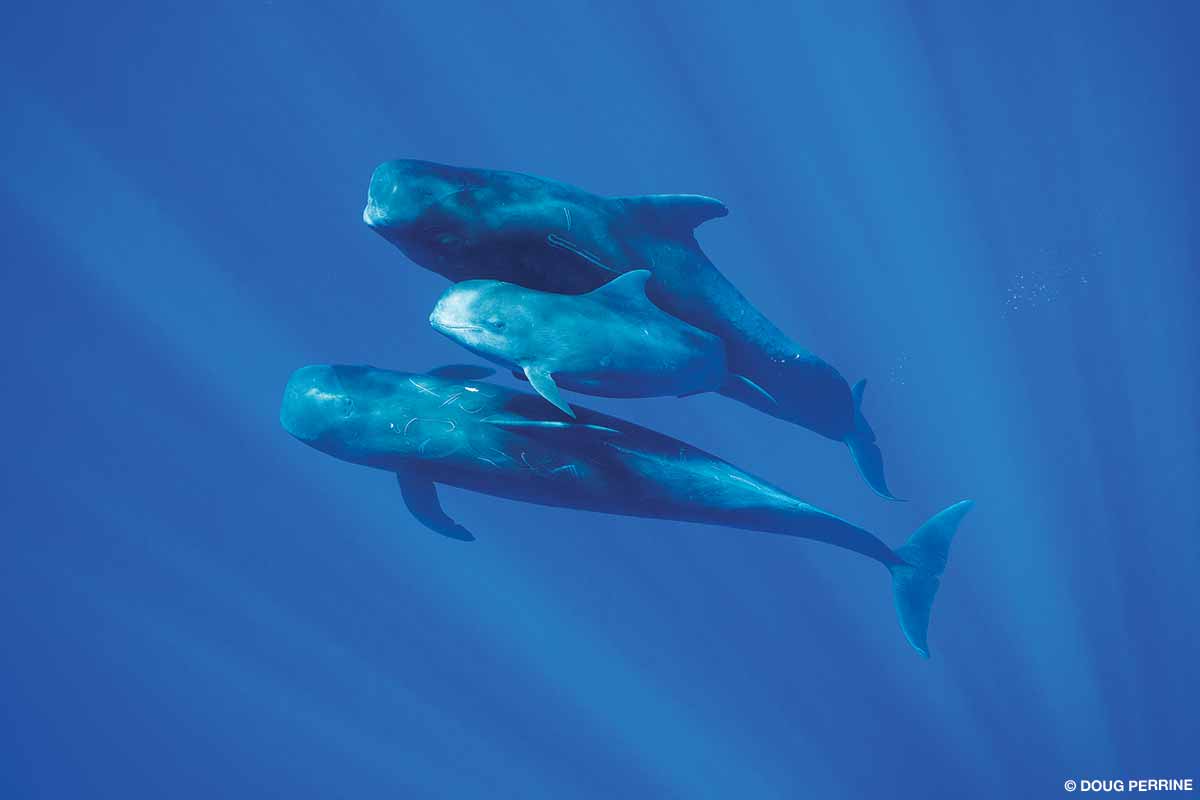
Where we encounter marine megafauna, we see only a tiny slice of their habitats and lives, which rarely includes feeding. These animals may travel thousands of feet vertically or migrate a few thousand miles horizontally to meet their nutritional needs. Some of them — sperm whales, for example — must do both: descend to depths of up to a mile or more to feast on aggregations of squid and roam across large swaths of the Pacific to avoid depleting their food resources in any one area.