En grandissant, j’avais deux objectifs de vie : devenir plongeur et rejoindre l’armée pour faire partie des forces d’opérations spéciales d’élite. Je suis devenu plongeur certifié en 1994, lorsqu’un ami proche m’a convaincu de me lancer avec lui dans les lacs de Louisiane, et j’ai rejoint l’armée américaine un an plus tard.
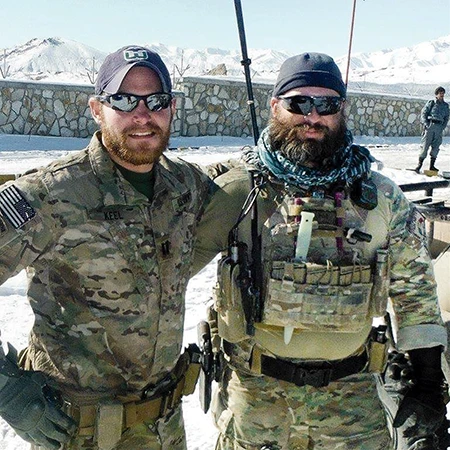
J’ai eu une carrière exceptionnelle au sein du 3e groupe des forces spéciales à Fort Bragg, en Caroline du Nord. Tout au long de mon service, j’ai conservé une passion pour la plongée et pour faire découvrir ce sport aux autres. La plongée était pour moi un moyen de me détendre et de trouver la paix en dehors de nos missions. Je n’imaginais pas alors à quel point elle deviendrait encore plus importante dans ma vie.
En 2013, j’ai été blessé au combat en Afghanistan, frôlant l’amputation de ma jambe gauche. Malgré les médecins qui affirmaient que sa rééducation serait impossible, j’ai insisté pour la sauver.
Ma jambe a finalement pu être reconstruite, mais avec une perte importante de sensibilité nerveuse — un faible prix à payer après qu’elle ait été littéralement détruite par des tirs de mitrailleuse lourde. Après plus de 50 opérations, des perfusions intraveineuses deux fois par jour pendant un an et plusieurs infections combattues, le médecin m’a adressé un avertissement sévère : si quelque chose d’autre arrivait à ma jambe gauche, elle serait irréparable.
Ma carrière a alors évolué vers celle de professionnel de la plongée, plongeur commercial certifié aux mélanges gazeux et instructeur en sécurité publique. Le monde sous-marin que j’aimais est devenu mon univers à plein temps.
Récemment, on m’a demandé d’accompagner un jeune plongeur dans le développement de ses compétences, après son inscription à mon programme avancé, conçu pour élargir l’expérience et renforcer les acquis. Il souhaitait suivre cette formation à Bonaire, un site que je connais bien. Au fil de la semaine, nous avons enchaîné plusieurs plongées, chacune plus complexe que la précédente, afin de lui permettre de progresser.
Le dernier jour, nous sommes allés au nord, sur le site de plongée de Karpata, où l’entrée et la sortie de l’eau peuvent être délicates. Il faut passer près d’un grand bloc de pierre carré, où les vagues, parfois puissantes, augmentent le risque de perdre l’équilibre.
Nous nous sommes arrêtés près du point d’entrée, avons discuté du plan et nous sommes préparés. Les conditions météo et de mer m’ont amené à modifier mon équipement habituel. J’ai porté un short et un rashguard avec des bottillons légers, au lieu de ma combinaison de 3 mm et de mes bottillons épais zippés habituels.
Après être entrés dans l’eau près du bloc de béton, nous nous sommes éloignés avant d’enfiler nos palmes. Nous avons placé un repère à notre point de départ, à côté du récif, à 20 pieds (6 mètres), afin d’identifier facilement le point de retour pour regagner la plage et sortir de l’eau. Nous avons ensuite descendu le long du tombant et profité d’une plongée d’une heure exceptionnelle avant de revenir en suivant l’azimut de retour et de sortir à l’endroit prévu.
Alors que nous tentions de sortir de l’eau, les vagues se brisaient contre le bloc et nous poussaient vers lui. L’équilibre était difficile, mais nous avons réussi à prendre appui et à avancer. Nous avons aperçu un autre binôme en difficulté pour terminer sa plongée, et mon élève a commencé à aider l’une des plongeuses à sortir. Je me suis dirigé vers le bord pour aider son équipier, qui avait lui aussi du mal à sortir de l’eau.
Puis une vague m’a frappé violemment dans le dos, me projetant vers l’avant et enfonçant mon pied gauche dans une cavité du corail, blessant ma jambe gauche. La douleur était minime, et j’ai eu l’impression de m’être simplement tordu la cheville, comme cela m’était déjà arrivé à plusieurs reprises. Je n’y ai pas prêté attention et nous avons terminé notre séjour.
Quelques jours après mon retour à la maison, ma cheville gauche a commencé à gonfler et à devenir douloureuse, ce qui m’a inquiété car cela ne ressemblait pas à une entorse classique. En raison des séquelles de ma blessure d’il y a plus de dix ans, j’ai toujours des problèmes de peau sèche et de croûtes sur cette jambe, alors j’ai pensé qu’il s’agissait simplement d’une rechute et qu’un peu de repos suffirait.
Un matin, toutefois, j’ai ressenti une sensation de relâchement de pression dans la cheville. Ma chaussette était complètement trempée. En la retirant, j’ai découvert qu’un abcès se formait sous la peau. Je me suis rendu chez le médecin en pensant que cela serait réglé en quelques heures.
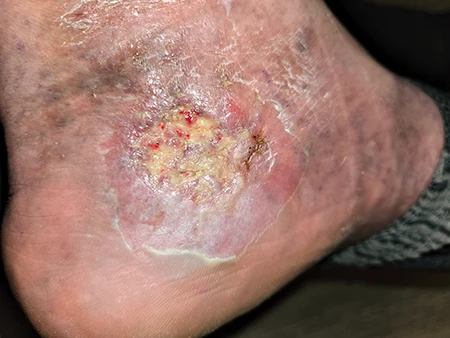
Il s’est avéré que cette gêne mineure était en réalité une infection grave à Vibrio, dont je ne ressentais pas toute l’intensité à cause de ma blessure précédente. Après une semaine d’hospitalisation, j’ai suivi un traitement antibiotique et antiviral pendant deux semaines. Au total, je suis resté hors de l’eau pendant environ quatre mois avant d’être autorisé à replonger sans restriction — une éternité quand la plongée est votre mode de vie. Vibrio infection, but I could not feel its full effects due to my previous injury. After being hospitalized for a week, I took antibiotics and antivirals for two weeks. In total, I was out of the water for about four months before finally being cleared to dive without restriction — that is a long time when diving is your way of life.
Comme le dit le proverbe, l’expérience est le meilleur des enseignants. Allongé sur mon lit d’hôpital, je repensais à toutes les leçons tirées de cet incident. La protection thermique fait toujours partie de ma planification, mais cette fois, j’ai laissé les conditions météo et la température de l’eau dicter mon choix d’équipement.
Je n’ai pas prêté attention à la vie marine autour de nous en marchant et je n’ai pas considéré ce que je ne pouvais pas voir. J’ai attribué les symptômes à une ancienne blessure, sans envisager qu’ils puissent avoir une autre cause. Une plongée simple et sans complication a conduit à une infection grave dont j’ai eu la chance de me remettre, compte tenu de mes antécédents médicaux.
Cette fois, j’ai évité le pire, mais cela aurait pu être bien plus grave. Les infections à Vibrio peuvent entraîner une amputation, même chez une personne en bonne santé.
Ne minimisez jamais une blessure de plongée, même si elle semble bénigne. Ce n’est pas parce que la plongée est terminée que le danger l’est aussi.
© Alert Diver – Q1 2026