For more than 30 years DAN members have shared how DAN was there for them. The circumstances vary, but the pattern is familiar, often beginning with something going wrong: A diver develops symptoms after a dive, an injury occurs in a remote location, or a medical problem disrupts a long-awaited trip. A routine day of diving suddenly becomes an emergency, and DAN becomes part of the story. These firsthand accounts illustrate an important part of DAN’s mission and show what happens when preparation meets the unexpected and specialized assistance becomes necessary.
In these real-life stories, DAN’s introduction to the narrative usually begins near the end. Long before the emergency hotline rings, however, DAN is working behind the scenes to prevent accidents, improve preparedness, answer medical questions, educate divers and dive professionals, and study dive incidents to better understand the risks inherent in diving.
Ask Before You Dive
Divers know to plan around depth, gas supply, weather, currents, and equipment. Personal health conditions deserve the same consideration, yet medical questions do not always have obvious answers.
Is it safe to dive while taking a particular medication? How might a recent illness affect diving? When is it appropriate to return to the water after surgery? Does an existing medical condition warrant evaluation by a physician familiar with dive medicine? Don’t wait until you are on a dive boat to ask these questions.
DAN Medical Services connects divers, dive professionals, and health care providers with specialized dive medical information. DAN medics staff the nonemergency line to answer questions about dive medicine and fitness to dive, and the DAN Physician Referral Network helps connect divers with doctors knowledgeable about dive medicine when evaluation is appropriate.
Not every call to DAN involves an emergency. Sometimes the most valuable conversations are the ones that happen before a diver decides whether to enter the water at all. Seeking reliable information early allows divers to make informed decisions rather than assumptions. Dive accident prevention can begin with something as simple as asking the right people the right questions.

Plan for the Unexpected
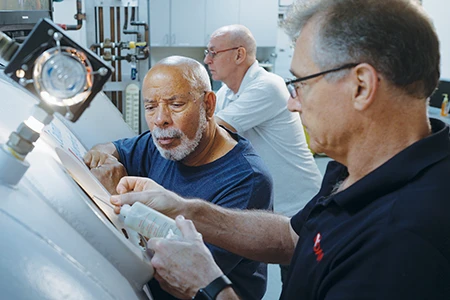
Individual preparation is only one part of dive safety. Dive professionals and operators must prepare not only for the dives they expect to conduct but also for the emergencies they hope never occur.
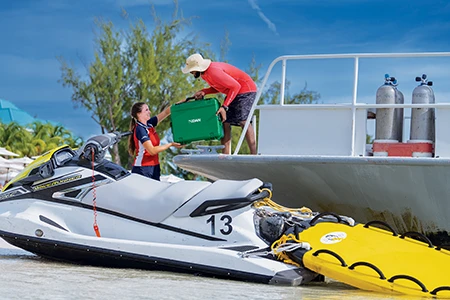
They must consider many questions: What happens if a diver loses consciousness aboard the boat? Where is the emergency oxygen, and who knows how to use it? Who contacts emergency medical services? What is the nearest appropriate medical facility? How will an injured diver be transported? Who accounts for the divers still in the water? An active emergency leaves little time to search for answers.
DAN Safety Services helps dive professionals and businesses identify hazards, reduce risks, and prepare for emergencies. The Hazard Identification and Risk Assessment (HIRA) program provides tools and resources to help operators recognize hazards before they result in injuries or losses.
Emergency action plans (EAPs) turn hazard recognition into immediate response. Effective EAPs account for the realities of a particular operation and location. They identify available resources, establish responsibilities, and provide a framework for responding when circumstances deteriorate quickly. DAN provides a template that helps professionals and operators effectively design their own EAPs.
A plan must be reviewed and practiced. A document sitting unnoticed in a binder offers little reassurance when seconds matter. Operators must check and verify the readiness and functional capability of emergency equipment before the items need to be used.
Get Trained
Equipment alone cannot manage an emergency. Someone must recognize the problem and know what to do. The value of training may not become apparent until a routine dive takes an unexpected turn.
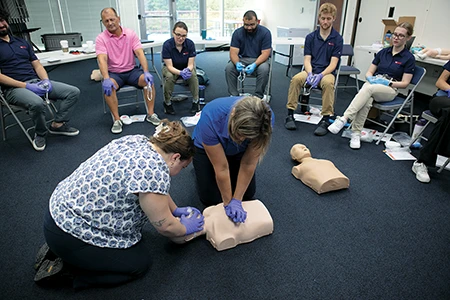
DAN training programs help prepare divers and dive professionals to respond to dive injuries and other emergencies. First aid knowledge, emergency oxygen training, and practiced response skills can make an enormous difference during the interval between recognizing a problem and transferring an injured person to professional medical care.
When someone recognizes symptoms, retrieves oxygen, provides appropriate first aid, and activates an EAP without hesitation, the response may appear to have started the moment the incident occurred. In reality, it started much earlier — when the person chose to get training.
Preparedness is rarely dramatic. Practicing skills, maintaining emergency equipment, and reviewing procedures may not make the most memorable dive stories, but that work often provides an emergency with a better ending.
Making Tomorrow’s Dives Safer
For decades DAN Research has studied dive physiology, injuries, fatalities, and the factors that affect diver health and safety. DAN conducts research internally, collaborates with universities and other institutions, and makes research, accident reports, and safety information available to the dive community. The practical effects of that work can reach divers who may never realize where the information originated.
Research into subjects such as flying after diving, aging and cardiac health, decompression stress, and fitness to dive helps turn observations and data into actionable recommendations for divers. Incident reporting and accident analysis allow the experiences of individual divers to contribute to a broader understanding of risk.
An accident involving one diver can reveal a hazard. Repeated similar incidents can reveal a pattern. Research can help determine what that pattern means and how other divers might avoid becoming part of it. The goal is not only understanding yesterday’s accidents but also making tomorrow’s dives safer.
When the Call Comes
No amount of planning, training, or research can eliminate every risk in diving. Responsible divers make conservative decisions, maintain their equipment, dive within their limits, and choose reputable operators — but emergencies can still happen.
For a life-threatening emergency, first activate local emergency medical services or take the injured diver to the nearest appropriate medical facility before calling DAN. The DAN Emergency Hotline is available 24 hours a day, 365 days a year. DAN medics and doctors assist with dive emergencies and work with divers, emergency personnel, and health care providers when specialized dive medical knowledge is needed.
Locating resources, coordinating care, and arranging transportation depend on systems and relationships DAN has established long before the phone rings. When an emergency requires more than medical guidance, DAN Assistance Services helps turn recommendations into actions. The team coordinates with medical facilities, transportation providers, and other resources to support an injured diver’s care and, when appropriate, arrange emergency medical transportation.
When DAN becomes visible during an emergency is the moment Alert Diver readers most readily associate with the DAN Was There for Me column. But DAN is there for you before you ever need our help.
DAN was there when a diver asked a medical question weeks earlier or when an operator assessed a hazard, developed an EAP, or trained its staff. DAN was there when an instructor learned emergency oxygen skills. And DAN was there years earlier, when researchers studied incidents that ultimately changed the way divers understand and manage risk.
Emergency response to dive incidents will always be an essential part of DAN’s mission, but helping divers after something goes wrong is only part of the goal. The outcome DAN strives for is simple: Prevent the emergency when possible, and prepare people to respond when it is not.
Sometimes the best story is the dive that ends exactly as planned: Everyone surfaces safely. Everyone gets back on board. Everyone goes home. No incidents happened. And DAN was there for that too.
© Alert Diver – Q4 2026