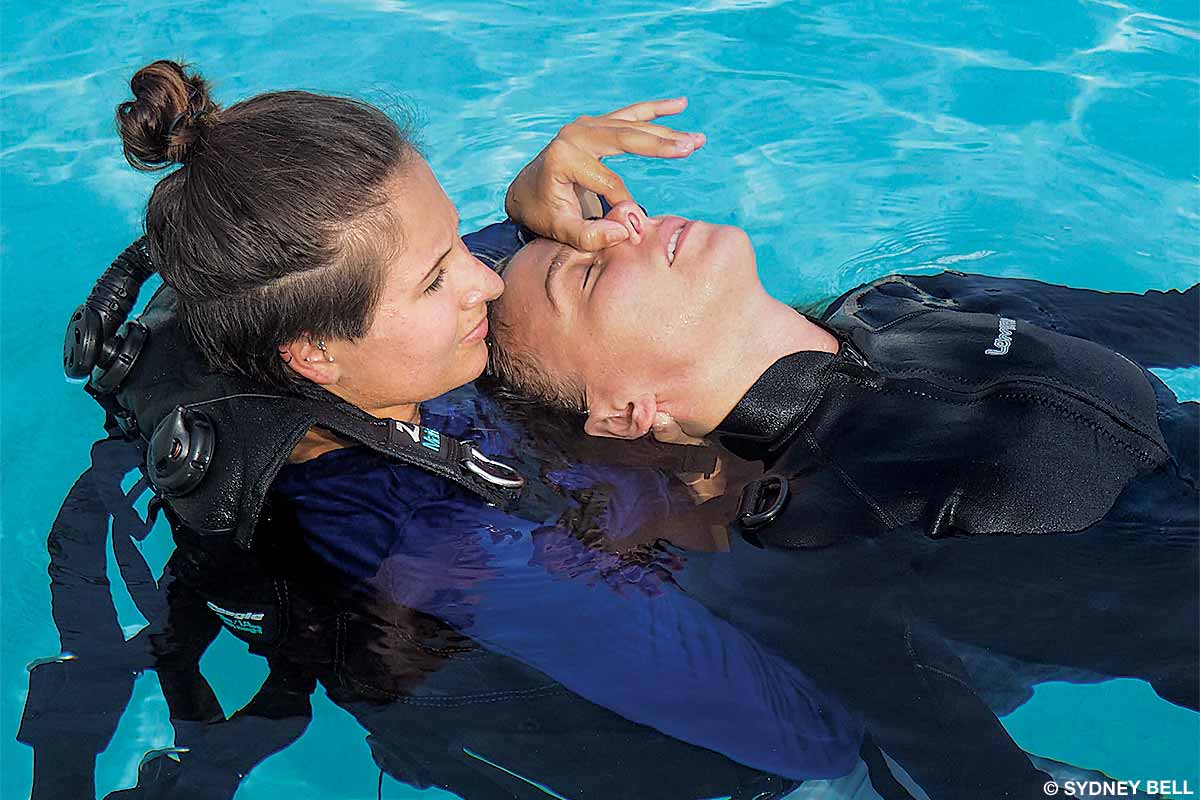
The required skills in a rescue scenario — which involved a surface swim while providing rescue breaths and removing dive gear from the victim and rescuer — were not coming easily, especially if my dive buddy was larger than me. Techniques for rescue diving seemed suited for people with a different body type and skill set — at 5 feet, 4 inches tall, I am a petite woman. Practicing rescues was challenging at best and near-impossible at worst until a course director taught me techniques and modifications that made rescuing more accessible.
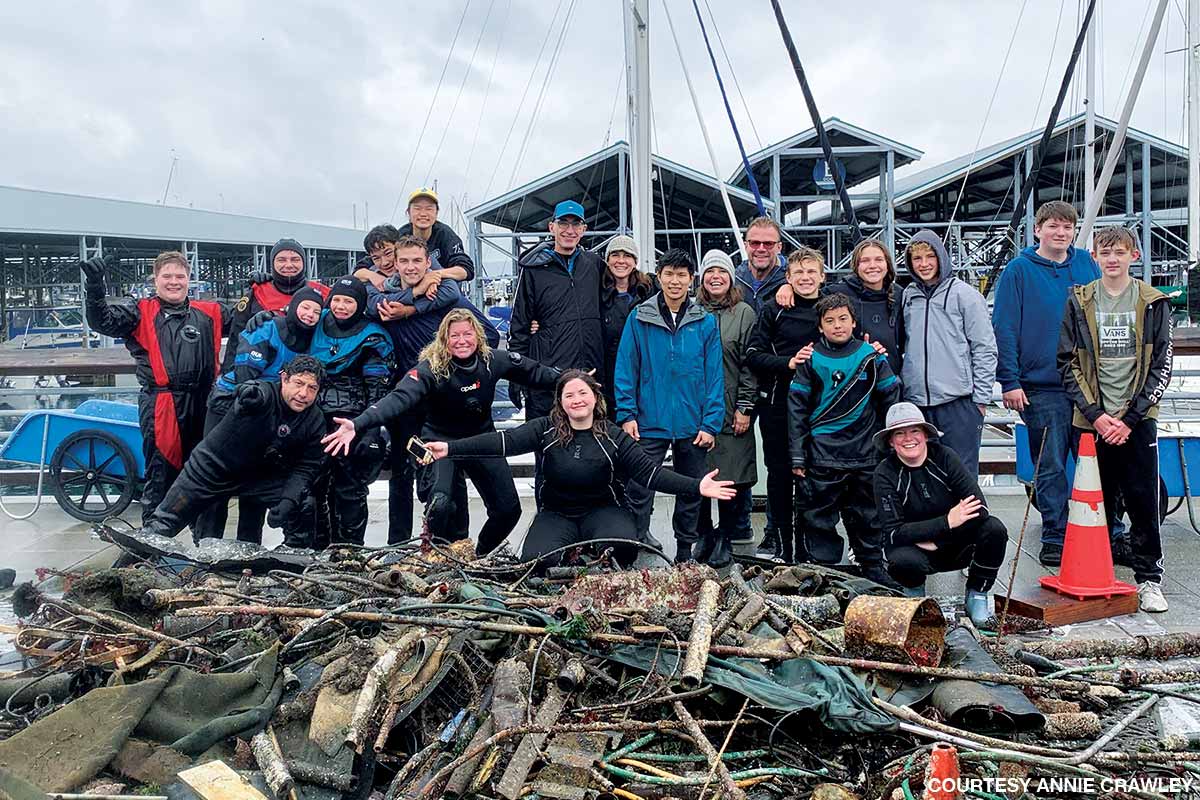
Annie Crawley and her dive team of kids and teens are among the divers who frequent the Edmonds Underwater Park marine protected area just north of Seattle, Washington, in the Puget Sound area of the Salish Sea. With drysuits on and cameras in hand, the young ocean explorers document the underwater world with Crawley as their mentor and guide. Their mission: be a voice for the ocean.
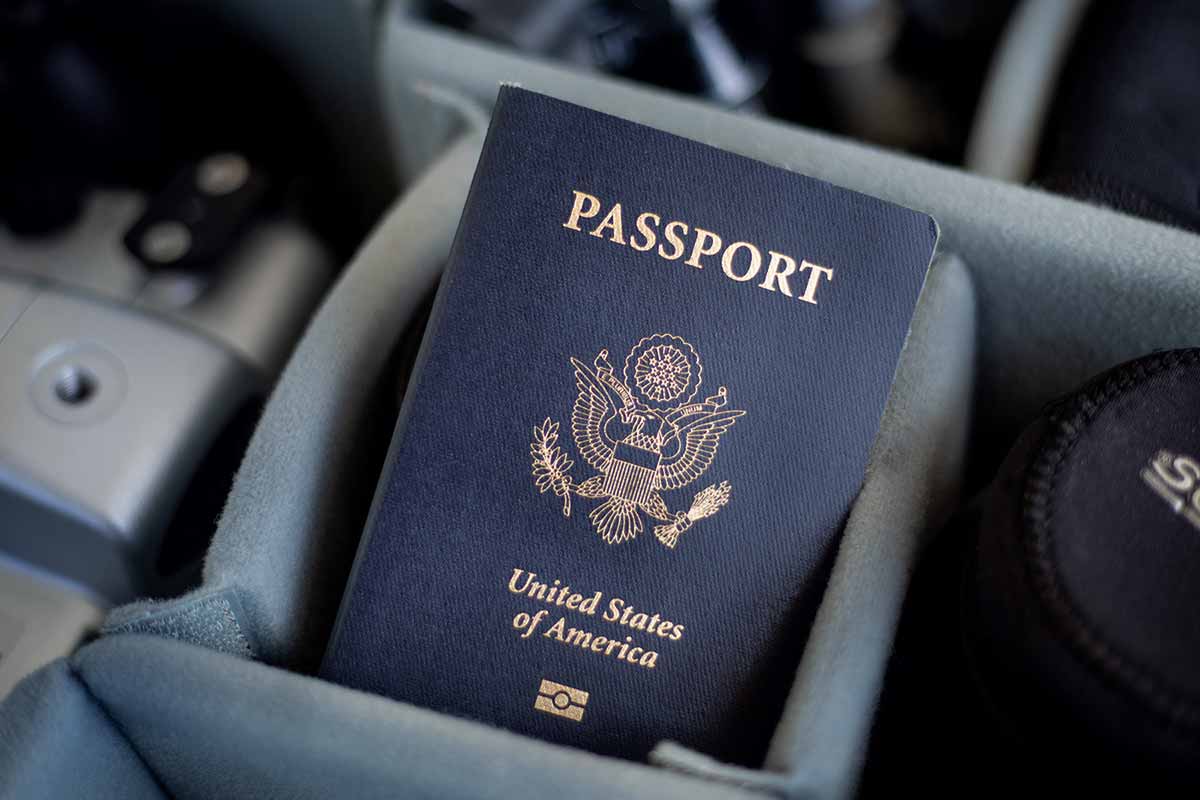
It’s been more than a year since many divers have traveled internationally and visited beloved or new dive destinations. Although it is unclear when and which international destinations will be fully accessible, it’s important to stay proactive about important travel documentation preparation.
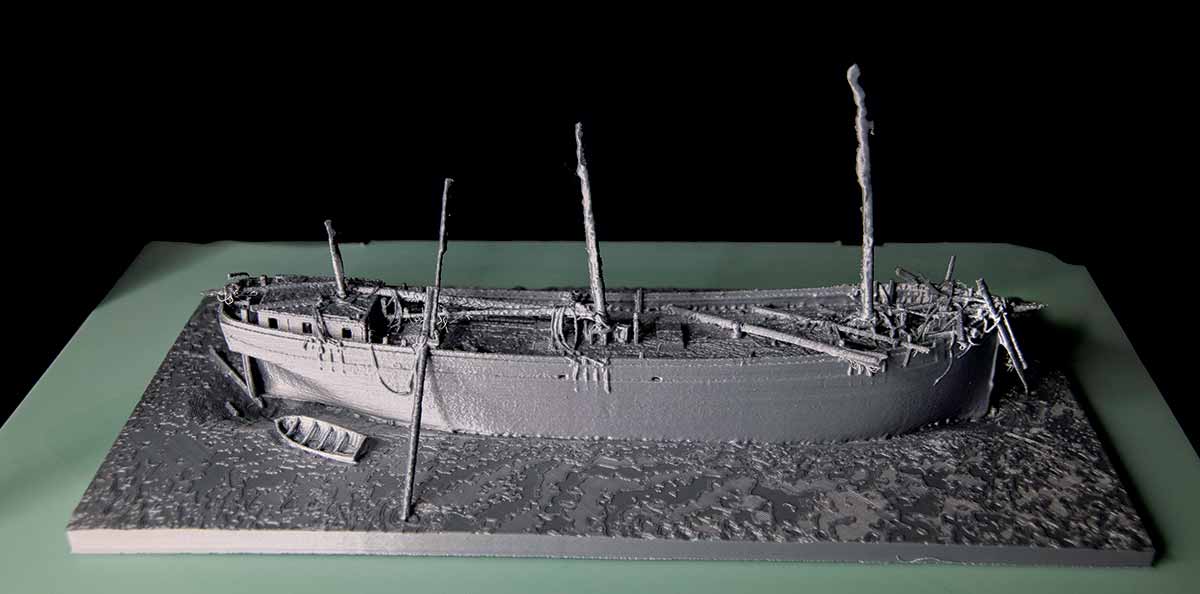
Photogrammetry is the process of collecting a series of still images or videos of an object, such as a shipwreck, and then loading those images into software that can triangulate the photographed points to create a 3D model. Plenty of real-world applications can use this technology, including architecture, engineering, forensics, archaeology, mapping and video games. Becky Kagan Schott enjoys seeing wrecks come to life in a way that a single photo could never accomplish.
On ne saurait trop insister sur les avantages de la protection des herbiers marins. Les herbiers marins purifient l'eau, contribuent à la protection contre l'érosion côtière, aident à maintenir les pêcheries à petite échelle qui soutiennent les communautés, et augmentent les populations de poissons et la biodiversité. Elle séquestre beaucoup plus de carbone par surface que les forêts terrestres et réduit l'acidification des océans. Des herbiers marins en bonne santé sont synonymes d'un océan plus sain.
In her work, Rachel Lance, Ph.D., focuses on extreme environments, particularly the effects of explosions. “The human body is fascinating, especially when it fails,” she says. “We are not naturally equipped to survive in a deep underwater environment, so I am fascinated with the idea of finding ways to do so anyway. Perhaps it’s my naturally rebellious side.”
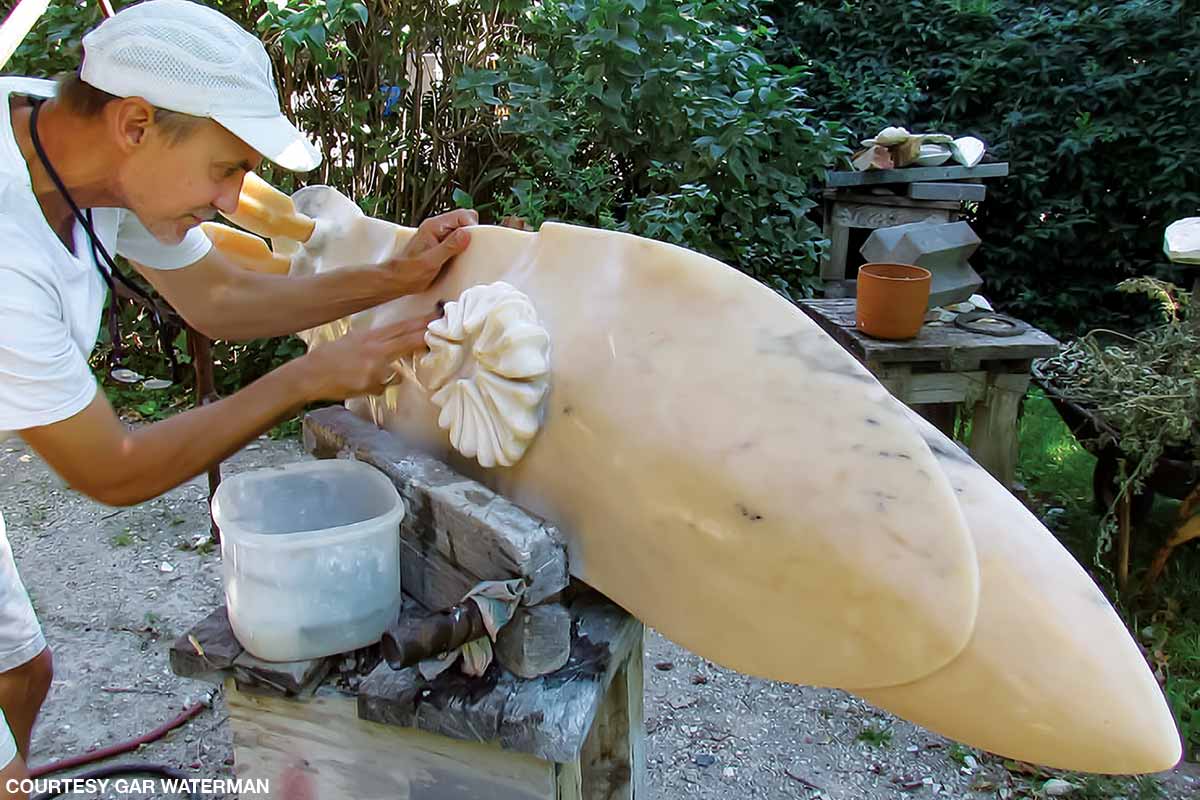
Known for their striking colors, patterns and forms, nudibranchs are found in seas all over the world. Sculptor Gar Waterman’s fascination with these sea slugs extends beyond his aesthetic appreciation for their unique, organic form. Because most nudibranchs have a life span of less than a year and adapt rapidly to changes in their environment, they help scientists understand the impact of global warming on ocean health. With each nudibranch that he has cut, chiseled and polished from stone, Waterman hopes to communicate their quirky beauty and scientific role.
My buddy and I ascended to 20 feet for our safety stop. As soon as we surfaced I thought I saw the boat moving away from me but quickly realized I was disoriented. It felt like vertigo, but I managed to get on board the boat. I removed my gear and was talking to my buddy when I started involuntarily leaning forward until I lost my balance and collapsed face-down on the deck. I felt paralyzed and couldn’t get up.
Octopuses hole up in small dens, are quite excellent at camouflage and are most active at night, so not all divers have seen one on a dive. But biologist Matthew Birk, who studies octopuses, felt that never having seen one in the wild was a blemish on his career and sought to remedy the situation on a trip to Santa Catalina Island off Southern California.
Si le plongeur présente des symptômes et que vous lui prodiguez des soins, vous devez traiter les symptômes. Administrez-lui la plus forte concentration d'oxygène disponible et amenez-le à un centre de soins et de traitement définitif. Rappelez-vous que de nombreuses pathologies présentent des symptômes qui peuvent imiter le SCD. Ce n'est pas parce qu'une personne a plongé qu'elle souffre d'une maladie liée à la plongée. Lors de l'élaboration de votre plan d'action d'urgence, notez l'emplacement de la salle d'urgence la plus proche ou le lieu et la manière d'accéder aux services d'urgence locaux.