A Navigator’s Nightmare, A Diver’s Dream
Let me begin with a disclaimer: I am biased about Bermuda. This enchanting island is where I made my first scuba dive 56 years ago.
I took a tourist resort course there, and even though I was already a stalwart ocean enthusiast who loved boating and surfing, my first full submersion in Bermuda on a shallow coral reef changed my life forever. The colors, shapes, and marine life I witnessed were unimaginable. I hastily secured my YMCA certification card and my first underwater camera, a Nikonos II. I owe it all to Bermuda.
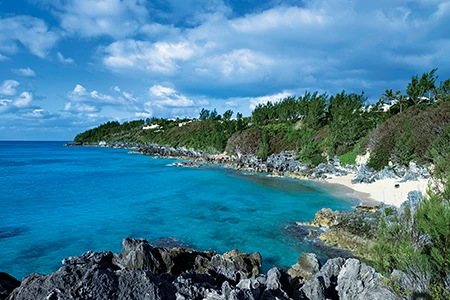
Bermuda, a British Overseas Territory, is a 21-square-mile (54-square-kilometer) hook-shaped island in the North Atlantic Ocean, surrounded by shallow, healthy coral reefs. The reefs are the northernmost in the Western Hemisphere and are bathed in Caribbean-like waters from the Gulf Stream. The closest landmass is Cape Hatteras, North Carolina, about 650 miles (1,046 km) away. Bermuda hosts more than 20 coral species, including hard corals, swaying gorgonian sea whips, and giant purple sea fans.
The shallow coral reefs surrounding the island historically have posed a major risk to incoming ships, especially in stormy weather. Once a navigator’s nightmare, Bermuda’s reefs are now a diver’s dream. More than 300 shallow-water shipwrecks encircle the island, dating from the 1600s to the late 20th century. The shipwrecks are now major attractions for divers, especially those who are captivated by maritime history. Coral reef and shipwreck dives in Bermuda are surprisingly easy, making them appropriate for both beginners and experienced divers.
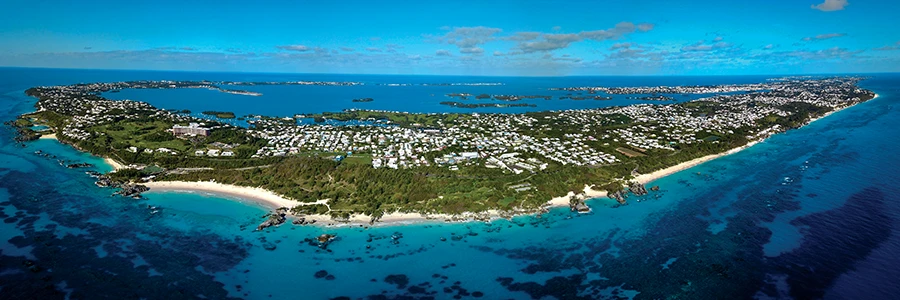
The water is tropically warm in the summer, most dives are less than 50 feet (15 meters) deep, and there are no challenging currents. Bermuda diving is generally an easygoing experience, from boarding the boat to getting back on the dock at the end of a two-dive morning or afternoon trip.
Traveling to Bermuda is also easy, especially if leaving from the U.S. East Coast, where direct flights are less than two and a half hours. Some dive operations in Bermuda operate only during peak season, from May through October, although some are open year-round.
Coral Reefs
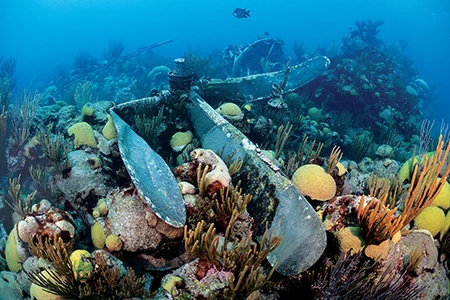
About 280 square miles (725 sq km) of colorful coral reefs wrap around the entire island of Bermuda. The reefs have a variety of stony and gorgonian corals, tropical fish, and marine invertebrates. Although most dives are considered wreck dives, the wrecks are covered with coral growth and have coral reefs nearby. But a few specific reef dives stand out.
Le Cathedral is one of Bermuda’s iconic dives. Located off the island’s east end, the site is adjacent to two formidable wreck dives, the Rita Zovetta et le Pelinaion. Itis a shallow cavern dive with several tunnels, coral domes, and archways.
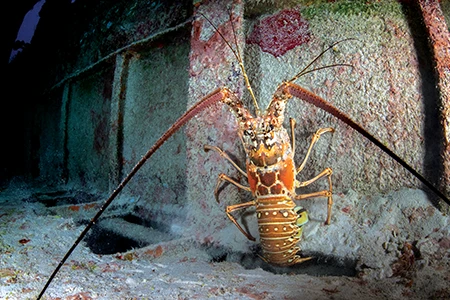
The main entrance to the Cathedral tunnel is only 10 feet (3 m) off the bottom. The tunnel is narrow and requires divers to pass through single file. Once inside, you swim into an enormous grotto that reveals how the site got its name. Light filters through holes in the ceiling, creating shafts of light similar to the effects of stained glass in a cathedral. Look for spiny lobsters in the crevices and on the ledges. Colorful sponges and purple algae blanket the walls.
South West Breaker, located off Church Bay on the south shore, is one of Bermuda’s most gorgeous coral reef formations. It comes so close to the surface that the water boils over it at low tide. Its perimeter reef drops down to only 30 feet (9 m).
A large cavern penetrating the middle of the reef is a highlight, with pink and white sponges dotting its walls. The cavern archway is wide enough for two divers to swim abreast without disturbing marine life, but midway through the reef the passage narrows to single-file width. Expect to see myriads of tropical fish, patrolling barracuda, and banded coral shrimp. Towering purple gorgonian sea fans make stunning subjects for wide-angle shooters.
For a good chance to see large schools of tarpons, check out Tarpon Hole, a shallow dive sloping from 10 to 40 feet (3 to 12 m), just off the west end of Elbow Beach in Warwick Parish. Besides the silvery giants, you are likely to see plenty of other tropical reef fish such as groupers, jacks, and snappers.
Le Arches, another out-of-this-world dive, has winding canyons and other rock formations sculpted by the sea. Expect to see schooling snappers here.
A Sampling of Shipwrecks
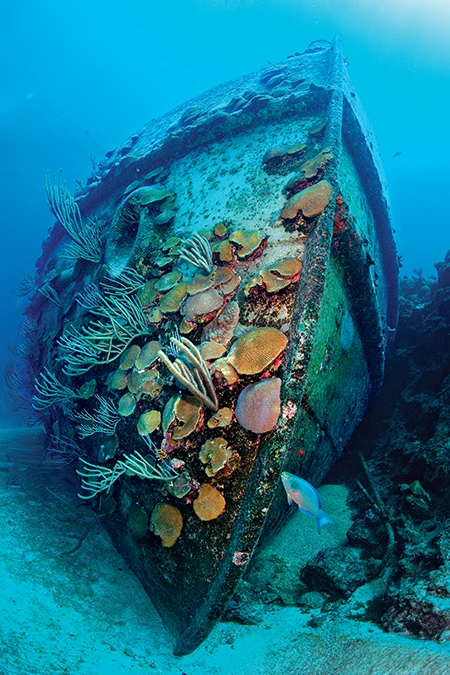
Many of the wrecks are only a 5- to 15-minute boat ride from the dock. Operators often run a two-dive morning trip and two dives in the afternoon. Bermuda’s purview includes a bit of everything: modern passenger steamers, 19th-century schooners and steamships, Civil War-era paddle wheelers, 18th-century frigates, and even the scattered remnants of a few Spanish galleons.
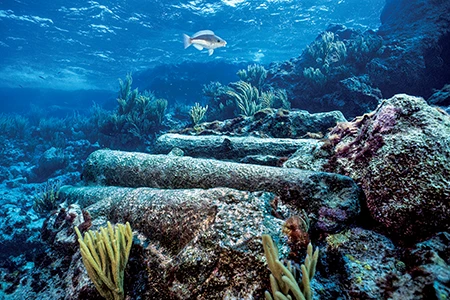
You will be treated to the remains of massive hulls and decks on some wrecks, and others feature old cannons, boilers, deadeyes, portholes, huge winches, and more. Bermuda has several excellent wreck dives.
A Standout Northern Wreck
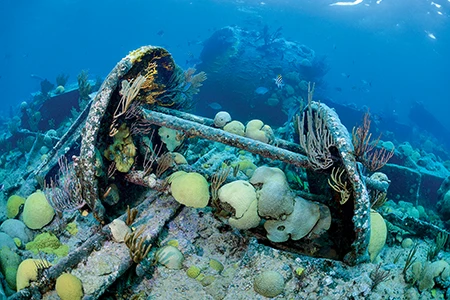
The Spanish luxury liner Cristóbal Colón is the largest shipwreck in Bermuda’s waters. It ran aground under suspicious circumstances while underway from Spain to Veracruz, Mexico, on Oct. 25, 1936, during the Spanish Civil War. There were no listed passengers but an unusually large 160-member crew, who were actually civilian merchant mariners, officers, engineers, cooks, and stewards supporting what turned out to be a covert voyage. It was speculated the ship was redirected to Cuba to pick up arms for the Spanish Loyalists. The grounding was likely due to navigational negligence.
The sturdy reef line splits the wreck into two sections, but the ship has too much to cover on a single dive: eight steam boilers, two massive propellers, prop shafts, and numerous gears and winches. Located 8 miles (13 km) northeast of the dockyard, the wreckage lies at depths of 25 to 55 feet (7.6 to 16.8 m). Farther from the island than most of the wrecks, it’s a more likely location to spot a pelagic cruising in from the depths.
Southern Wrecks
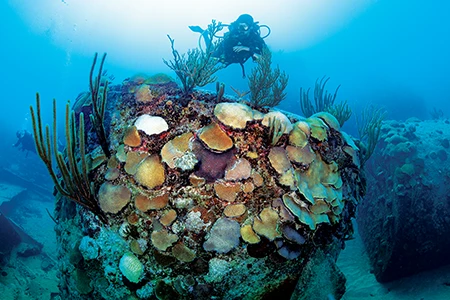
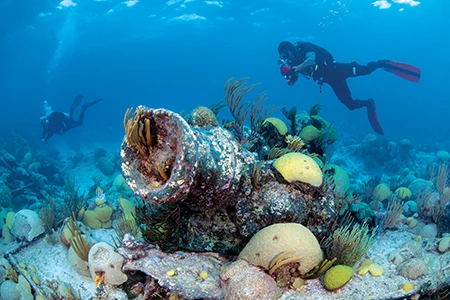
Sunk during the U.S. Civil War, the Mary Celestia was a Confederate blockade runner that left Bermuda on Sept. 6, 1864, with a cargo that included rifles and ammunition. A mishap occurred when the pilot headed up the south shore to drop off the ship’s owner and himself at the foot of Gibb’s Hill.
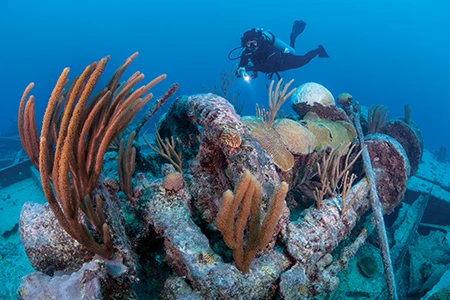
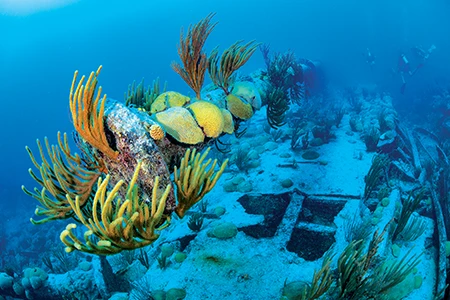
He crashed into a shallow reef, and within minutes the side-wheel steamship sank to a depth of about 55 feet (16.8 m). Much of the hull is now buried in the sand, but both paddle wheels, along with the boiler and various pieces of machinery, stand upright and are covered with colorful, multihued corals.
Le Hermesis one of the most popular wreck dives off Bermuda’s south shore. Unlike the other wrecks, this 165-foot (50-m) freighter built in Pennsylvania in 1943 was intentionally sunk. The owners abandoned the ship in 1985 because they refused to pay refitting costs.
It now sits upright at 75 feet (23 m) in a deep sand hole just offshore of Warwick Long Bay. Schools of barracudas often circle its prominent vertical mast. All the hatches and doors were removed before sinking so divers can swim the interiors and see the engine room, cargo hold, galley, and pilot house.
Eastern Wreck Duo
With a cargo of manganese ore bound for Baltimore, Maryland, the Italian-registered RitaZovettaran aground off St. David’s Island in February 1924. The captain misread the pilot boat’s light in inclement weather and ran off the inlet channel.
An array of massive wreckage and machinery remains on the bottom at depths from 20 to 70 feet (6 to 21 m). A scatter of engine shafts, boilers, and condensers looks like a submerged iron jungle gym. The stern remains well intact, with its massive iron plates having endured the decades. The ship’s huge propeller is wedged against the reef, with two blades sheared off in a testament to the massive impact. Coral coverage and marine life are abundant.
Le Pelinaion,a 385-foot (117-m) Greek steamer, left a British port in West Africa also bound for Baltimore with a large cargo of manganese and iron ore. On Jan. 16, 1940, Capt. Janis Valikas was on the last of his many voyages past Bermuda but was attempting to navigate without the lighthouse — the British had blacked it out to prevent German spying. He ran aground on a shallow reef a mile from Cooper’s Island.
mong the largest shipwrecks in Bermuda, this vessel rests split in half across a reef at a 40-degree incline. The bow section is at 30 feet (9 m), while the stern rests off the reef at 65 to 70 feet (20 to 21 m). Two of its four boilers lie on the reef top, and the other two rest in the sand. Other exposed equipment includes winches, the propeller, and a spare anchor. Gaps between a section of the keel allow divers to easily explore under the wreck. As with all Bermuda’s shipwrecks, you’ll see hard corals, sea fans, and gorgonian adornments along with parrotfish, angelfish, and several other tropical fish species.
Western Wrecks
A few decades ago the Constellationwas easily the most-talked-about shipwreck on the island. It was famous as the inspiration for the Goliath in Peter Benchley’s book Les profondeurs and the 1977 film featuring Robert Shaw and Jacqueline Bisset. The 190-foot (58-m) wooden-hulled general cargo ship sank in 30 feet (9 m) of water in 1943. A massive pile of hardened cement bags marks the wreck’s location.
The ship left New York bound for Venezuela but began to take on water along the way and changed course to get repairs in Bermuda. It hit a shallow reef — or perhaps the wreck of the nearby Montana — which sliced open the hull. The cargo, some of which is still scattered beneath the sands of the wreck area, included sheets of glass, medical supplies, cement, slate, furniture, and whiskey. The hull is broken in two, exposing giant boilers, propellers, massive shafts, and flywheels. Hundreds of bright-colored sergeant majors often hover over the wreckage. This is undoubtedly one of Bermuda’s most memorable wreck dives.
A few minutes’ swim away is the Montana, which was the first of two Civil War blockade runners to wreck in Bermuda. It sank in December 1863 after running into the shallow reefs. All cargo and crew were moved to shore, but it was impossible to refloat the 750-ton (680-metric-ton) vessel because of the magnitude of the gash in its hull. In less than 30 feet (9 m) of water lies its coral-covered paddle wheel, forward stack, steam boilers, and anchor chain. This wreck has plenty of photo opportunities.
If you are looking for an easy-to-reach and easy-to-dive destination that is a combination of ocean adventures, unique downtime experiences, and a storybook setting, Bermuda may be the place for you. The diving has a softer, easier-going rhythm than most places, and the scenery and vibes on the island have a fairyland feel like no other destination I have ever visited. Its combination of pink beaches, winding roads with pastel-colored homes neatly set in the limestone hillsides, and Hawaiian-like lush florals and vegetation is unique, as are the perfumed scents in the air at night along with the soothing chorus of tree frogs.
Bermuda is truly a dreamy kind of place. In all my decades of diving around the world — six continents, four oceans, and more than 20 countries — Bermuda continues to draw me back for more.
Comment y plonger
Pour s'y rendre : Direct flights are available to Bermuda from most U.S. East Coast cities. The currency is the Bermuda dollar, and credit cards are accepted in most places, including by taxi drivers. Tourist transportation includes taxis, the Hitch ride app, or the charming, highly reliable, inexpensive pink buses. Visitors can also rent motorbikes or small, two-seater electric cars. Bermuda’s electrical outlets are the same as in the U.S.
Conditions : Water temperatures are in the low 80s°F (27°C to 29°C) from June through September, so a full 3 mm wetsuit works for most divers. Add some neoprene layers in other seasons. Visibility is usually in the 80-foot (24-m) range but may reach up to 150 feet (46 m).
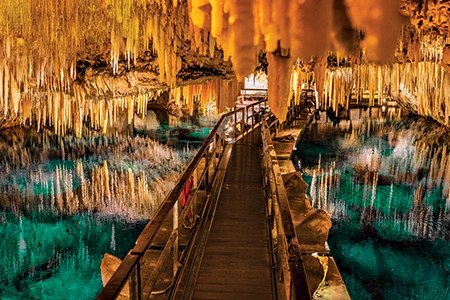
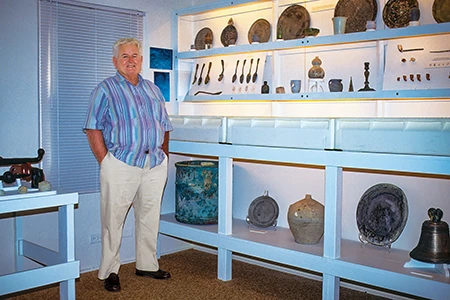
Dessus : Bermuda has many engaging ocean-related sights to visit during your downtime. At the top of the list is the Bermuda Underwater Exploration Institute (BUEI). Located on the outskirts of Hamilton, BUEI was designed by the legendary explorer Teddy Tucker, who located most of Bermuda’s historical shipwrecks. At BUEI you’ll see impressive collections of shipwreck artifacts, Bermuda seashells, and deep-ocean videos, some taken at depths of 4,000 feet (1,219 m). Other sites to check out are the aquarium in Flatts, the National Museum of Bermuda, Crystal Caves, the historic Town of St. George, and Cooper Island’s Turtle Bay beach.
En savoir plus
Bermuda: Life at Ocean’s Edge
© Alert Diver – Q4 2026