Swimming with Southern Right Whales
Along the wild Atlantic coast of Argentine Patagonia lies one of the most extraordinary marine wildlife sanctuaries in the world. Each year the sheltered gulfs surrounding Península Valdés transform into a nursery for southern right whales. These giants of the sea travel about 1,200 to 2,500 miles (1,900 to 4,000 kilometers) to reach the sheltered waters of this peninsula, where they mate, give birth, and nurture their calves, creating one of the greatest marine wildlife spectacles on Earth.
Travelers have visited the region for decades to watch these whales from boats or the shoreline. But in recent years, underwater photographers have gone even further: entering the water and sharing the ocean with these gentle giants in one of the most carefully regulated wildlife encounters in the world.
The remote peninsula is in the Chubut province on Patagonia’s eastern coast. The geography of Península Valdés attracts southern right whales year after year. The peninsula forms two large gulfs: Golfo Nuevo and Golfo San José, which provide sheltered waters protected from the strongest Atlantic swells. The relatively calm conditions are ideal for newborn calves that have not yet developed the strength to swim long distances or cope with rough seas.
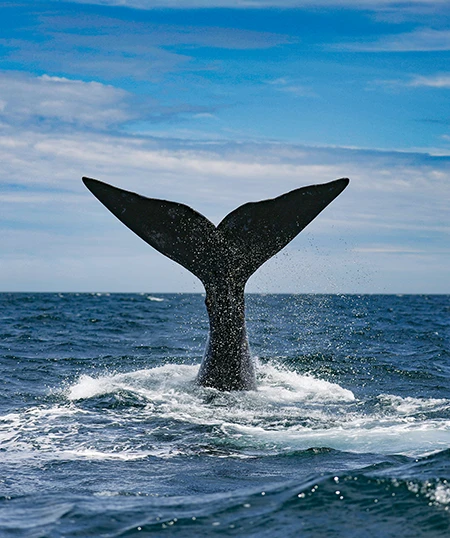
The waters are also relatively shallow and close to shore. This allows mothers and calves to stay in areas where predators are less likely to attack and where the young can conserve energy while they grow.
Península Valdés is among the world’s most important southern right whale breeding grounds. Because of its ecological importance and rich biodiversity, the peninsula has been recognized as a UNESCO World Heritage Site and is widely regarded as one of the most important marine wildlife sanctuaries in the Southern Hemisphere.
Southern right whales are among the largest ocean inhabitants. Adults typically reach lengths of 43 to 56 feet (13 to 17 meters) and weigh up to 88 tons (80 metric tons). They have rough patches of skin on their heads known as callosities, which appear white or yellow because they are colonized by tiny crustaceans. These markings form patterns unique to each whale, allowing scientists to identify individuals.
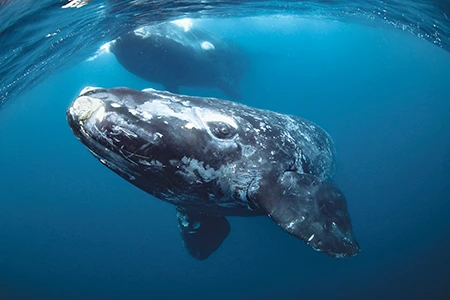
The history of the southern right whale is closely tied to human exploitation. During commercial whaling between the 17th and 19th centuries, these whales were hunted relentlessly. They were considered the “right” whales to hunt because they swam slowly, stayed close to shore, and floated when killed due to their thick layers of blubber.
Their global population collapsed from more than 100,000 animals to an estimated few hundred survivors by the early 20th century. International protection and the global ban on commercial whaling eventually allowed the species to begin recovering, and several populations in the southern oceans are gradually increasing.
The waters around Península Valdés now host one of the highest concentrations of southern right whales in the world. Every year roughly 2,000 whales are recorded in the region during the breeding season. A survey conducted in August 2025 by the Marine Mammal Laboratory — a leading authority on the ecology, behavior, and conservation of marine mammals in the Southwest Atlantic — recorded 2,110 whales, made up of 77 whales in different breeding groups, 381 individuals, and 826 mother and calf pairs.
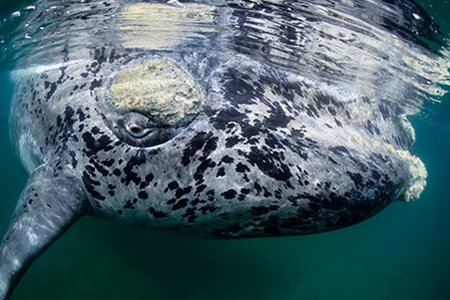
Scientists believe that the broader population visiting the area numbers several thousand individuals. These whales arrive after long migrations from feeding grounds near Antarctica and the sub-Antarctic seas. The first animals typically appear in June, and their presence continues through the austral winter and spring until early December.
Most of the whales visiting the peninsula are pregnant females, mothers with calves, or males searching for mating opportunities. The region functions as both a breeding ground and a nursery. Females reach sexual maturity around 8 to 10 years of age and typically give birth every three to four years. After a gestation period of about 12 months, female whales give birth to a single calf that already weighs about a ton and measures 13 to 20 feet (4 to 6 m).
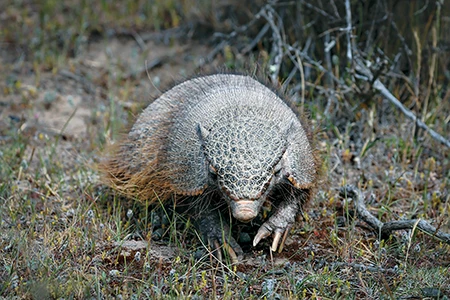
Whales are the primary attraction, but the peninsula is also famous for its abundant wildlife. The dry Patagonian steppe, which covers the land, is home to guanacos, foxes, and the distinctive Patagonian armadillo, which wanders across the dusty plains in search of food.
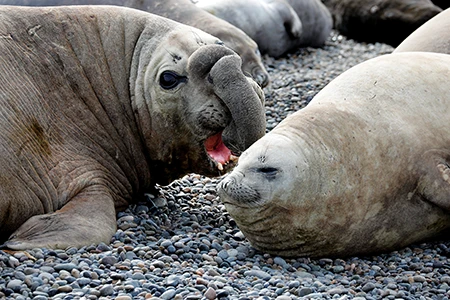
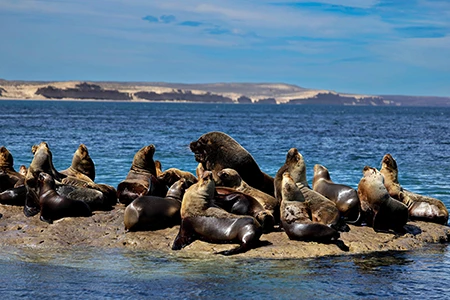
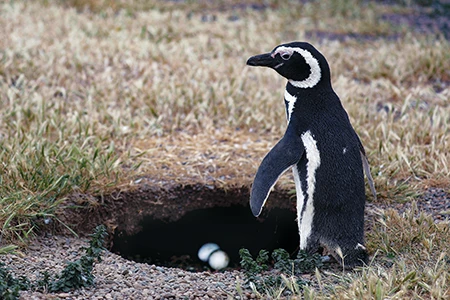
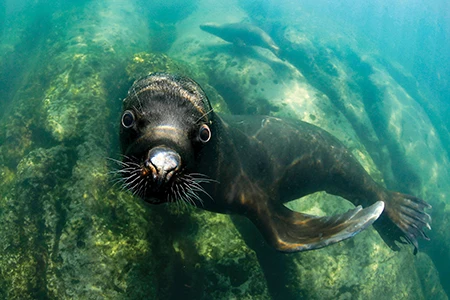
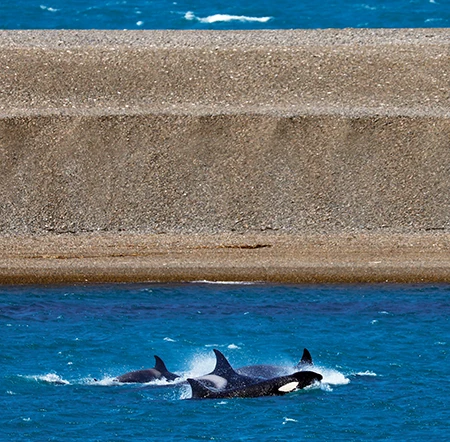
Large colonies of Magellanic penguins arrive along the coastline in September to breed, digging burrows in the soil or nesting beneath low bushes. Southern elephant seals start gathering on the beach around the same time of year. Nearby rocky shores are home to thousands of South American sea lions, and in some areas it is possible to swim with them. You can also see other cetaceans, including resident orcas.
The recovery of southern right whales gave rise to a thriving whale-watching industry that supports local communities while reinforcing conservation. The small coastal town of Puerto Pirámides became the center of these activities. When whale watching first began there in the 1980s, only a few thousand visitors traveled to the region each year. Early records show that only about 5,000 tourists visited for whale watching in 1987.
Over time, the word spread about the extraordinary accessibility of the whales. The number of visitors grew rapidly, reaching around 70,000 by the year 2000. In 2023 more than 134,000 tourists traveled to the region during the whale season, and whale watching has become a vital part of the local economy. There are currently six whale-watching companies, and some have more than one boat. Hotels, restaurants, ground transportation, guides, research organizations, and conservation programs all benefit from tourism revenue, creating strong incentives to protect the whales and their habitat.
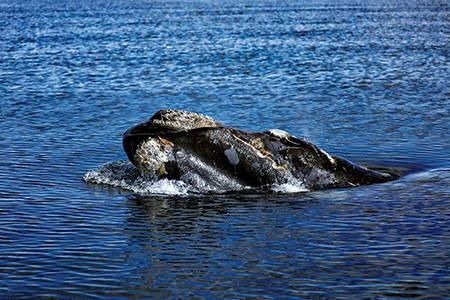
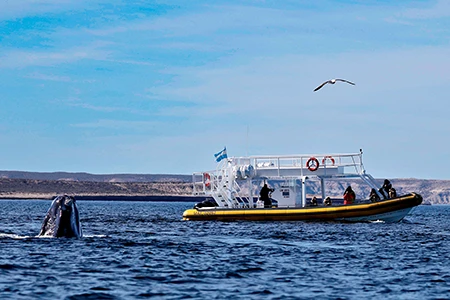
Despite this growth, authorities have taken great care to ensure that tourism does not harm the whales. A limited number of companies are authorized to operate whale-watching boats, and strict guidelines regulate how close vessels can approach the animals. Boats must maintain controlled speeds, limit the number of vessels near a whale at any one time, and avoid disturbing mothers with calves. These regulations are based on decades of scientific research into whale behavior. Studies have shown that excessive boat traffic or aggressive approaches can disrupt resting, mating, or nursing behavior.
For this reason, operators must maintain respectful distances and limit the duration of encounters. No private embarkation is allowed in the area during the whale season. Only licensed boats with adequately trained crews are permitted. Rangers monitor activities within the protected areas, ensuring that tourism remains compatible with conservation goals.
This carefully managed system has helped maintain the well-being of the whales and the quality of the visitor experience. The Marine Mammal Laboratory continues to evaluate the impact of human activities on marine species and to study key subjects such as southern right whale population dynamics and habitat use.
Swimming with southern right whales developed much more recently and remains one of the most exclusive wildlife encounters in the world. Because of the potential risks to both humans and whales, authorities introduced the activity cautiously in the early 2000s after years of research.
Only three licensed operators hold the special permits to offer these experiences. Encounters are carefully managed and conducted under strict supervision by local wildlife authorities. Photographers will need a permit.
Interest in these immersive experiences has grown steadily. The activity and its growth remain carefully managed, and regulatory bodies and operators continuously consult with each other to ensure it is safe for both whales and swimmers. After allowing two photographers in the water at a time for many years, for example, guidelines recently changed to allow only one photographer along with an experienced crew member who serves as a safety snorkeler. Southern right whales can be very inquisitive and may come extremely close to people.
The swimming activity is done very calmly and respectfully. The crew first observes the whales’ behavior. They will attempt to put swimmers in the water only if the whales appear relaxed or are coming to investigate the boat. Swimmers enter the water quietly from a stationary boat and remain close to the embarkation point, waiting to see if the whales approach, ensuring the animals’ natural behavior is not disrupted.
Entering the water with these giants is an unforgettable experience, but it is far from easy. Patagonia is known for its harsh weather conditions. The Atlantic waters here are cold, and strong winds frequently sweep across the gulfs. Even on calm days the chill can be intense, and swimmers rely on thick wetsuits to remain comfortable.
Wearing a drysuit is an option, but it could limit movement and agility in the water, which is not ideal when you might need to swim away quickly from a curious whale that comes to investigate. Therefore, most photographers prefer to wear a wetsuit. Photographers also face challenges posed by plankton and sediments, which often limit visibility.
Yet when a whale suddenly appears in that green-gray water, the effect is extraordinary, and you instantly forget the cold and the low visibility. Southern right whales are known for their curiosity, and mothers sometimes approach slowly with their calves, circling swimmers or passing right beneath them. Inquisitive calves sometimes decide to stick around and play with the swimmers. They can be boisterous and have no respect for personal space.
They also have no awareness of their strength and speed, so swimming with them can be exhausting yet exhilarating. It is probably one of the most humbling, emotional, and unforgettable encounters you will ever experience.
Over the years, whale encounters in many parts of the world have evolved from niche, low-impact activities into increasingly commercialized operations. The rise of social media has made these experiences more visible and accessible, driving a significant increase in demand and boat traffic.
Visitor expectations have also shifted, with a stronger focus on capturing images rather than spending meaningful time observing wildlife. In some regions this has created additional pressure on crews to deliver close encounters, which can translate into greater disturbance for the animals.
In poorly regulated areas, this pressure has led to the development of illegal activities around vulnerable whale populations, contributing to increased stress, disruption of essential behaviors such as feeding, resting, and nursing, and some documented injuries to individuals, including calves.
In contrast, whale swimming in Patagonia stands out as a success in marine conservation and a leading example of responsible whale tourism. By combining scientific research, strict regulations, and controlled access, Península Valdés has maintained a safe haven for the whales and established a framework that allows visitors to enjoy extraordinary encounters without compromising conservation. Revenue from whale watching and related activities supports local communities and funds ongoing research and protection efforts.
It stands as a living example of how humans and wildlife can coexist when tourism is guided by careful management and respect. The continued growth in whale numbers is a testament to the careful work of regulatory bodies and operators and their commitment to sustainable and ethical whale tourism.
The concentration of whales means that it’s not unusual to have more than 20 whales in your field of vision during the peak of the season. The whales encountered are often curious, and the interactions are respectful and happen fully on the whales’ terms.
Swimming with southern right whales becomes far more than an intimate and unique wildlife encounter. It is a powerful reminder of the scale and beauty of ocean life and a testament to the success of protection and conservation.
Floating in the cold waters of Patagonia as a whale and her calf glide silently beneath the surface offers a rare glimpse into a world where so much remains a mystery. It also highlights what true ecotourism is all about: respectful coexistence, care, and a deep commitment to nature.
How to Do It
Pour s'y rendre : From Buenos Aires, fly to either Puerto Madryn or Trelew. Flights from Buenos Aires typically take around two hours. The entrance to Península Valdés is approximately a one-hour drive from Puerto Madryn, while the journey from Trelew takes about 90 minutes.
Imaging permits: Photographers and videographers can apply for a permit by submitting various details (photography background, equipment, and purpose of their trip) to the Ministry of Tourism and Protected Areas for the Province of Chubut. If accepted, the applicant will need to pay a daily fee, which funds conservation and management, including ranger staff, monitoring, research, and protected area infrastructure. Once on location, a wildlife ranger will be present to ensure that rules are respected and that animals are not disturbed.
Fifty photography permits were issued in 2024. Although each person needs to obtain an individual permit, it is possible to prebook dates before completing the application. With the increased interest, booking a boat and permit dates a year before your trip is recommended. The permit prebooking opens on
Jan. 1 for the following year, and dates fill up quickly for the peak period from early July to early October.
En savoir plus
See more of Patagonia’s right whales in this video.
© Alert Diver – Q3 2026