Tanzania’s Hidden Dive Gem
Southeast Asia undeniably has some of the best diving in the world. After many recent trips to Indonesia, however, I was ready to try a different dive destination. The Indian Ocean was new to me, so I researched the area and decided to visit Mafia Island off the coast of Tanzania.
Mafia Island has a complicated history with destructive fishing practices, including dynamite fishing and beach seines, which are vertical nets that are dragged from the surface to the bottom, catching everything in their path. About 40 years ago, the Institute of Marine Sciences at the University of Dar es Salaam surveyed the area’s coral reefs, seagrass beds, and mangrove forests to determine the adverse effects of those practices.
That study ultimately led to a greater focus on conservation and the establishment of the Mafia Island Marine Park in 1995, protecting 317 square miles (821 square kilometers) of the southern coastline and surrounding waters. A daily dive fee supports enforcement of these protections. Tip: Keep your Marine Park receipt. You’ll need it when you depart for the airport.
The Diving
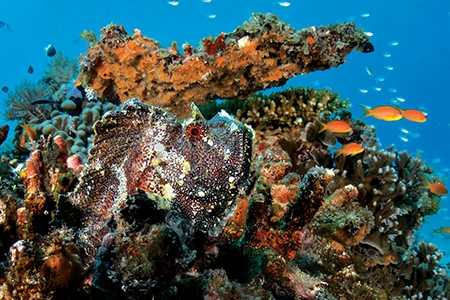
On my dives, many of the creatures were familiar, but there were enough species not found in Southeast Asia to keep me occupied. There were nudibranchs, wrasses, surgeonfish, and butterflyfish native to the Indian Ocean. As a certified fish nerd, I found it fun to spot fish that looked just a bit different (later discovering they were native only to the Indian Ocean) and exhilarating to see fish that were blatantly unique.
Currents dictate everything on Mafia Island. Schedules typically include two dives per day, but occasionally you can get a third dive in the afternoon or evening. Dive operators there don’t offer nitrox because of the island’s remoteness, so the extended surface intervals and moderate depths meant that I never came close to my no-decompression limit.
Two separate current systems govern when and where you can dive. The first is the tidal current, which is moon-driven. New and full moons bring what locals call spring tides, with bigger tidal ranges and correspondingly stronger currents, while other moon phases bring the in-between neap tides, providing calmer conditions.
The second is the seasonal current, shaped by either the Kaskazi (northeast monsoon) or the Kusi (southeast monsoon) season. How these two current systems interact is complex, but generally the sweet spot falls between February and March, when conditions across both current systems tend to align. Tip: Plan your trip around favorable moon phases between February and March for the best conditions. Avoid full and new moons.
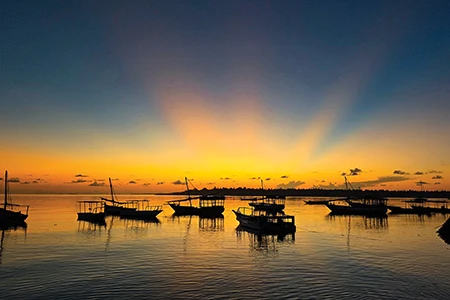
Diving here is tide-dependent in a way I had not experienced anywhere else. The first dive rarely started before 10 a.m. — the tide simply didn’t cooperate any earlier — which meant a slow, unhurried morning on the island before ever getting in the water. It reframed the whole rhythm of a dive trip. There were no predawn scrambles and more time to enjoy the beautiful sunrises.
Chole Bay, the heart of the marine park, is shallow and protected enough from the surrounding conditions to be diveable year-round. Visibility ranges from 30 to 65 feet (9 to 20 meters), but the diving here makes up for it with density. It’s one of the most biodiverse pockets of the island, thick with juvenile fish, nudibranchs, and the kind of small stuff that rewards a slow, patient dive.
The conditions outside Chole Bay are more serious, limiting diving to calmer periods, usually from October through March. Some dive operators will run outside dives only on an incoming tide. The visibility ranges from 65 to 100 feet (20 to 30 m) and is consistently better than inside the bay, because the reefs face the open Indian Ocean and are not affected by mangrove runoff.
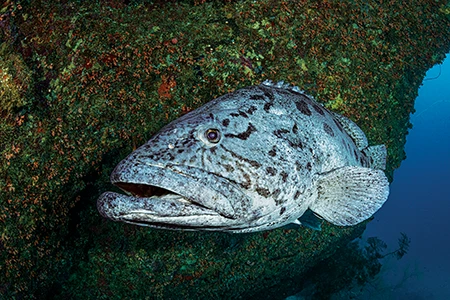
With its strong currents, the water beyond the bay brings opportunities to see larger subjects such as sharks, jacks, barracudas, groupers, and turtles. The dives are mainly wall dives with ledges, undercuts, and overhangs.
A unique shore dive in Chole Bay is over sand and perfect for macro hunting. The entry is in front of several dive resorts, so you simply gear up and walk in. One shore dive was reminiscent of being in Lembeh. Our guide had two muck sticks, and he kept both sticks in the sand for most of the dive, marking critters as he hunted for more.
For about 90 minutes I photographed a hairy frogfish, a painted frogfish, a mototi octopus, several impossibly small and incredibly cute baby pufferfish, several nudibranch species, and more juvenile seahorses than I could reasonably count. I shot continuously and still felt like I had only scratched the surface of what was there.
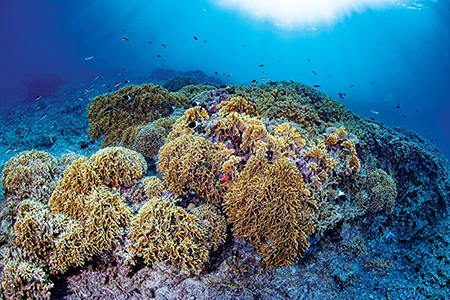
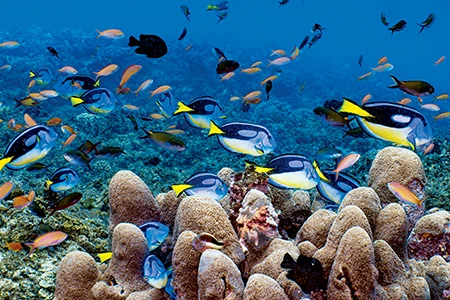
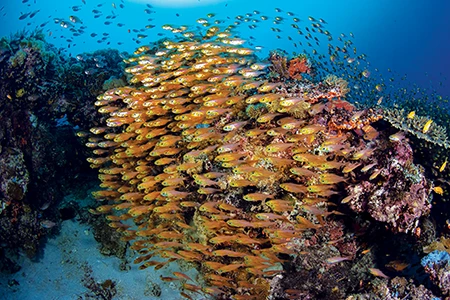
In general, the hard corals are pristine, and the reefs are teeming with life — a direct result of the marine park’s protections. Soft corals are less abundant, but schools of fish more than compensate for that. I have never encountered as many palette surgeonfish or leaf scorpionfish at any dive destination. I eventually stopped photographing the leaf scorpionfish, but I never tired of the palette surgeonfish. Perhaps I have watched le Monde de Nemo too many times.
What I thought would be my penultimate dive of the trip was very memorable. It was outside the bay, and the current was ripping. We raced across beautiful fields of hard corals like we were flying. My dive buddy had his arms stretched wide like a plane. I put down my camera and took in the view, knowing I would not be able to take pictures in such a current.
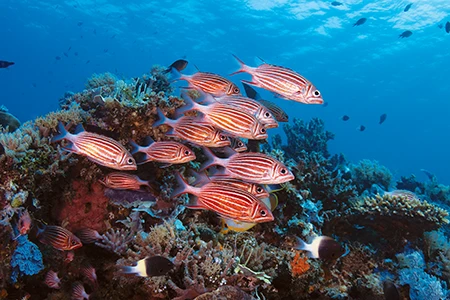
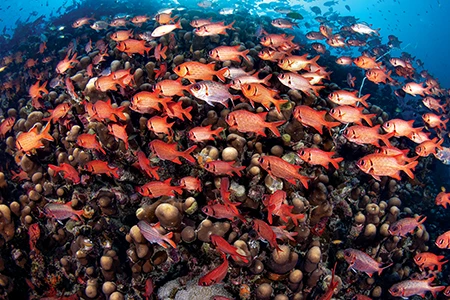
Toward the end of the dive, the current slowed and finally stopped, but things did not calm down for me. I spotted a hard coral patch the size of a UPS truck that was teeming with soldierfish. The sheer number of fish and their synchronous movements mesmerized me.
I checked my watch and realized it was time to end the dive and exit the water so I would have a long enough surface interval before making my final dive. But this special encounter was too good for me to pass up, so I decided to spend a lot of time shooting the incredible sight instead. That extra time underwater meant it was my last dive on Mafia Island, but it was the perfect way to end my trip.
Requins baleines
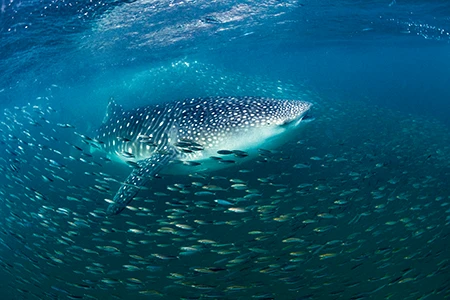
Most visitors come to Mafia Island to snorkel with whale sharks. From November through March, the success rate for encounters is 80% to 90%. I spent half a day searching for them, but the unusually warm surface water had pushed the whale sharks into the cooler depths.
Visibility that day was less than 10 feet (3 m), and the water was green from an abundance of plankton fed by nutrients from the Rufiji River, which empties into the bay and fuels a seemingly inexhaustible sardine population. To photograph whale sharks, I would return during the shoulder season, when the odds of spotting one drop to around 50% but the water is blue, and clarity improves dramatically.
Topside Activities
Although I was there to dive, there are nondiving activities that make Mafia Island unique. Juani Island, just outside of Chole Bay, is part of the marine park and is one of East Africa’s most important nesting sites for sea turtles, particularly green sea turtles as well as hawksbill turtles.
Before 2001, approximately 80% of the turtle nests were poached, mainly by the local villagers. Within two years Sea Sense, a turtle conservation group, reduced poaching to less than 2% by hiring some local villagers as conservation officers and training others to run ecotourism tours to see the turtle hatchings. The tours include a 30-minute boat ride to Juani Island followed by a 45-minute hike across the island to the turtle-nesting beach.
Although there is no guarantee, the odds are reasonably good that you will be able to witness the turtles emerging from the sand and scurrying their way to the ocean. Unfortunately, the peak months for turtle hatchings are from June through September and not during the dive season, so I missed this thrilling encounter.
You can also watch humpback whales as they migrate from their Antarctic feeding ground to the warm Indian Ocean water to mate and calve. The whale-watching season runs from July through October. There are tours by boat, but you are not allowed to get into the water to swim with the humpbacks. From the boat you can see surface whale behavior such as breaching and tail slapping.
Mafia Island is ideal for divers who favor macro subjects, healthy hard corals, and dense populations of reef fish — and for those who appreciate having a dive site entirely to themselves. The whale shark encounters are a remarkable bonus for those who can time their visit to do both.
Comment y plonger
Pour s'y rendre : Getting to Tanzania from California was surprisingly straightforward, with no overnight hotel stop. It is best to fly to Julius Nyerere International Airport (DAR), the country’s largest airport. Customs can be very disorganized, so make sure you allow for about three hours of layover time to get to the domestic terminal. Tip: Tanzania has a ban on plastic bags. Leave them at home, or you will surrender them upon arrival.
It is a direct, 35-minute flight from DAR to Mafia Island. There are two airlines, each with several daily flights on a 13-seat propeller plane with no overhead bins. But my carry-on bags fit comfortably in a generous storage area behind the last rear seat. The plane flies low enough to maintain cell service for much of the flight, and the views are spectacular. Tip: Board early, and grab a front-row seat for an unobstructed view right behind the pilot.
Hébergement : Options range from simple backpacker-style tents to four-star boutique lodges with infinity pools, so the island can accommodate a wide range of budgets and comfort expectations. What’s consistent across nearly all of them is a slow, unhurried island pace — a function of the tide-dependent dive schedule as much as anything else.
Conditions : The water temperature is warm year-round, with only a 7°F (4°C) swing between the coolest and warmest months. During the dive season, the water temperature is the warmest at 84°F (29°C), while it is coolest from July to September at 77°F (25°C).
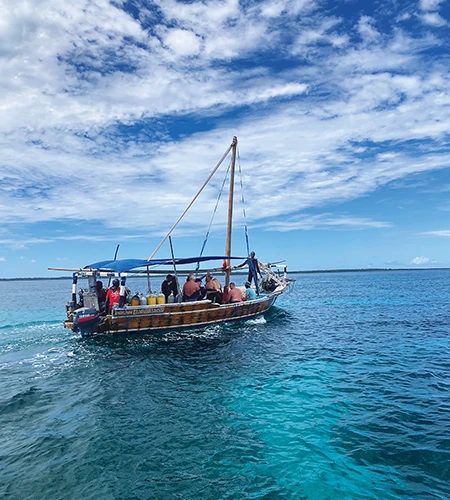
Dive operations: The dive operators on Mafia Island use three types of boats: traditional wooden dhows, fiberglass boats, and speedboats. The dhows are slow but offer superior stability and generous deck space, which makes gearing up and water entries considerably easier, especially with a camera rig or for divers with mobility concerns. Speedboats cut transit time to the outer sites almost in half, saving a lot of time when diving outside the bay.
Safety practices: Given the island’s remote location, no nitrox is available, and the nearest hyperbaric chamber in Dar es Salaam requires evacuation by aircraft. Confirm the safety infrastructure for your trip before you book rather than after you arrive. Email operators directly to ask about oxygen availability on the boat, staff certifications, diver-to-guide ratios, and evacuation protocols. The answers may vary enough between the island’s operators that a few minutes of research can make a real difference in your comfort level once you are out on the water.

A Tanzania Safari
by Hagai Zvouloun
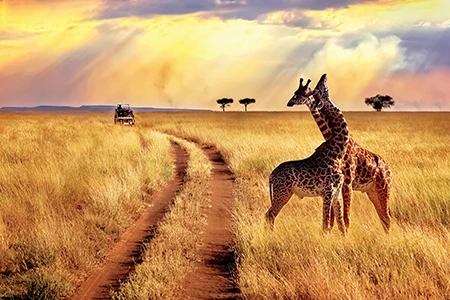
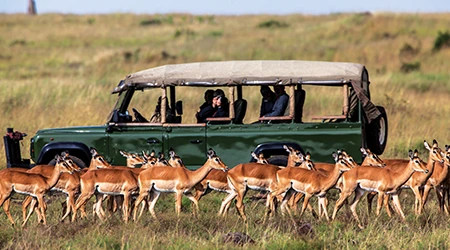
Adding a safari to a dive holiday on Mafia Island is easy. Daily 30-minute flights connect Dar es Salaam (DAR), Tanzania, to Mafia Island (MFA), allowing explorers to visit the vast, remote parks of southern Tanzania for a few days or to explore the wildlife-rich Serengeti ecosystem on a longer safari.
Tanzania has more land under wildlife protection than any other safari destination in Africa. Its network of national parks, conservation areas, and game reserves covers almost a third of the country, creating an extraordinary diversity of landscapes and wildlife. Within a single journey you can explore the endless plains of the Serengeti, descend into the Ngorongoro Crater, wander through ancient baobab country, or visit remote wilderness areas where seeing another vehicle is the exception rather than the rule.
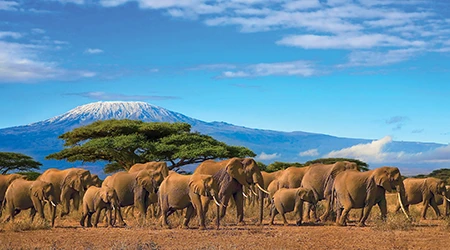
It is also home to Kilimanjaro, Africa’s highest mountain. While reaching the summit is a serious challenge, it is a trek rather than a technical climb, making it achievable for those with strong physical conditioning, proven altitude tolerance, and proper medical suitability.
The Serengeti is synonymous with the Great Migration. It is often misunderstood as a short-lived spectacle, but it is actually a year-round movement of more than a million wildebeests, accompanied by zebras and gazelles, continually following the rains across the Serengeti ecosystem. There is no real beginning or end, only different chapters of the same remarkable journey. It is one of Tanzania’s defining wildlife experiences, but only one part of what the country has to offer.
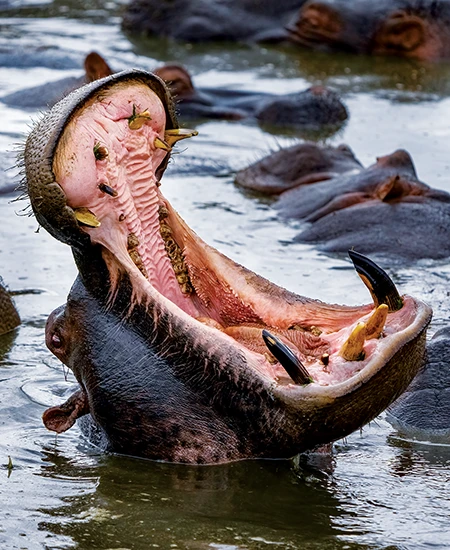
Game drives remain at the heart of most safaris, but they are only one way to experience Tanzania. Walking safaris reveal details easily missed from a vehicle. Boat safaris on the Rufiji River offer another perspective, as elephants, hippos, and crocodiles share the waterway.
Night drives reveal an entirely different side of the bush, while fly camping and overnights spent on a raised platform nestled among the branches of a giant baobab immerse you in the nocturnal sounds and rhythms.
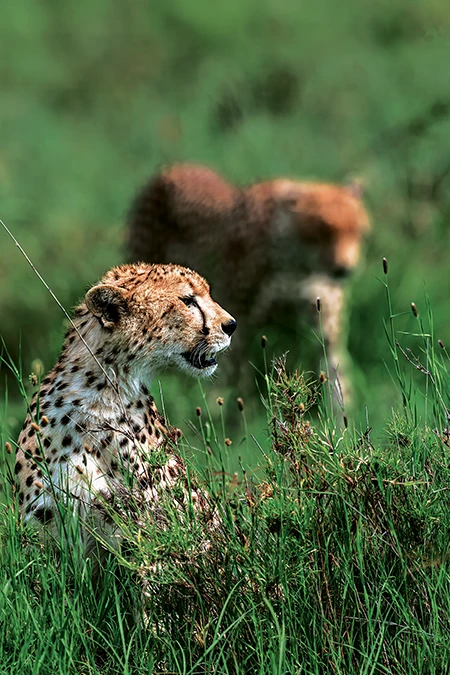
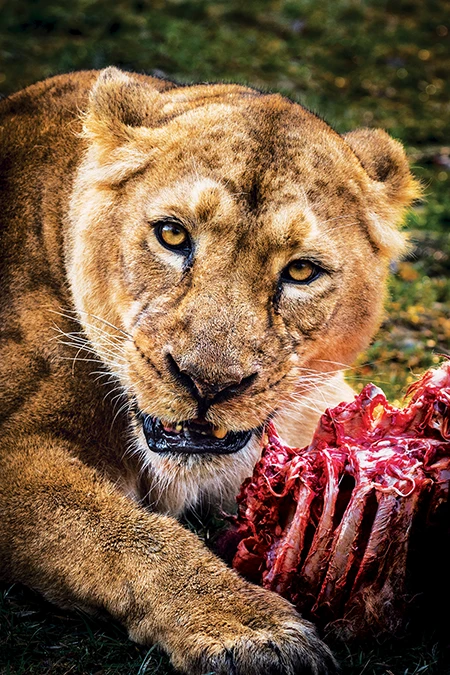
The pace is just as important. Tanzania still offers places where a lion sighting is measured not by the minutes before moving on to the next radio-identified encounter but by the time you choose to spend watching. Many wilderness areas remain remarkably quiet, allowing guides to interpret behavior, explain the landscape, and let the experience unfold naturally. It is this combination of scale, diversity, and time that keeps many visitors returning.
If you have a few days before or after diving, you can leave Mafia Island after breakfast, and by sunset the same day you could be watching elephants from a safari vehicle, with a drink in your hand. One of Tanzania’s great strengths is how the country’s remarkable diversity of landscapes is matched by the ease with which they can be combined, from coral reefs and rivers to mountains and some of Africa’s finest wildlife areas, all within a single journey.
In practical terms, you will want to account for jet lag and flying after diving, which might suggest planning the safari segment at the front end of the holiday. But whether the safari is before or after your dive adventures, it is worth the time to behold the wonder of terrestrial Tanzania.
En savoir plus
From Nudibranchs to Whale Sharks: Diving Mafia Island
© Alert Diver – Q4 2026