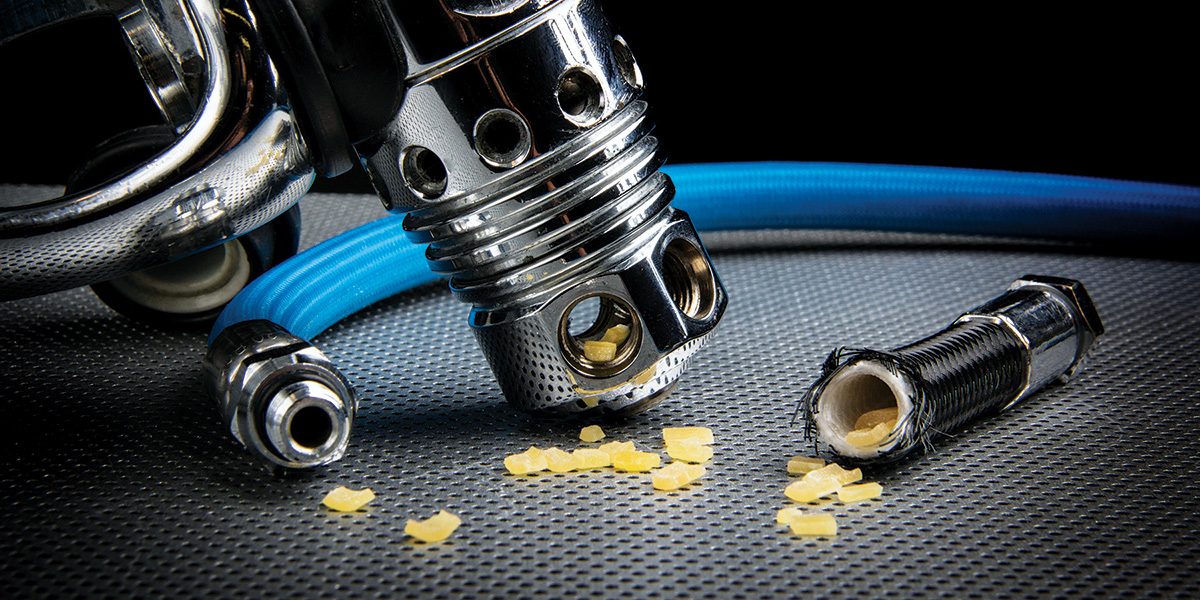
Some first-stage scuba regulators have a shared low-pressure hub. Purging the second-stage regulator to release pressure from all hoses before disassembling gear causes gas in the other hoses to move backward toward the first stage. The gas could carry debris from the other low-pressure hoses and possibly through the first-stage regulator into the hose being used to vent the system. Performing regular maintenance, checking your hoses and noting any difficulty in breathing or inflation during your predive check should prevent hose degeneration from causing an underwater incident.
There are many standards and guidelines for safe limits, including the results of various occupational health and safety studies on the effects of extended exposure. For diving, the situation is different. So what are safe limits for recreational diving with much shorter exposures than navy divers? Particularly, what is a safe limit for carbon dioxide (CO2), the most abundant potential contaminant?
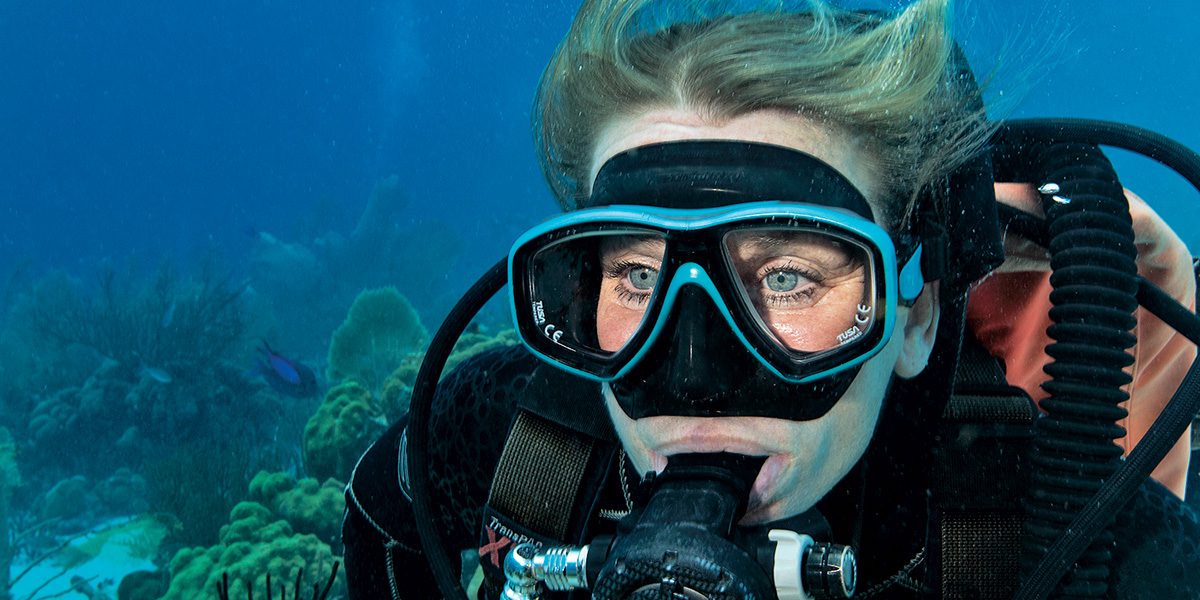
There are many options currently available for divers who need corrective eyewear. With the right mask or lens, divers are better able to enjoy the underwater sights.
Are you prepared to handle a faulty regulator? Here is how one person handled this hazardous situation and DAN’s response to the handling.