MANY JAPANESE DIVERS LOVE UNDERSEA CREATURES, particularly the home-grown varieties living in abundance along the country’s craggy volcanic coastlines and offshore islands. They also have an infatuation for the eccentric — the stranger the better.
On our first trip to Hachijō-jima in 2015, we were in the company of friends on a mission to photograph a scientifically undocumented pygmy seahorse the size of a pumpkin seed. Even after a concerted four-day search, the tiny target eluded our efforts until a single seahorse miraculously materialized in the last minutes of the last dive on the last day.
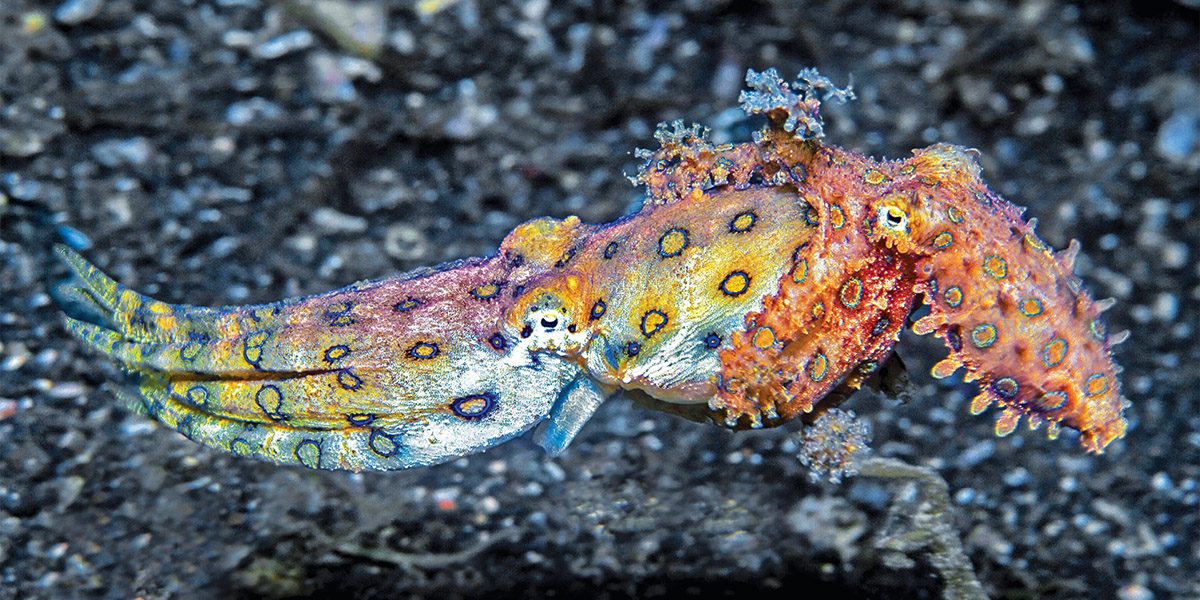
What diver isn’t enchanted by an octopus, especially a beguiling beauty with the reputation of an assassin? Even though we searched for legendary blue-ringed octopuses across their territorial waters of the Asia-Pacific, it took five years before we made our first sighting in Lembeh Strait.