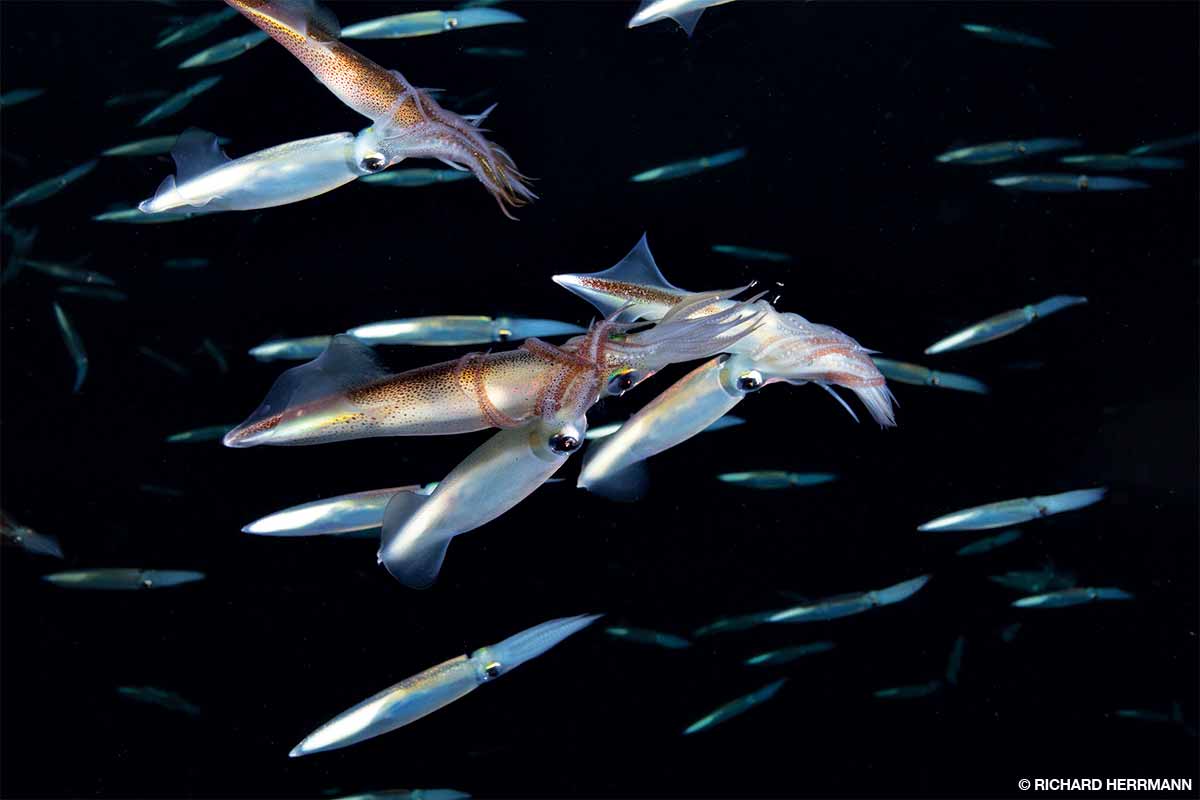
As you drop into water as black as night, thousands of pulsating squid in search of mates suddenly surround you. Mating activity is everywhere as multiple males attack single females. The excited squids’ chromatophores (pigment cells) flash colors reminiscent of a Las Vegas neon sign and put you in the middle of a living, moving light show. The action is so frenetic that animals are in your gear and bounce off every inch of your body.
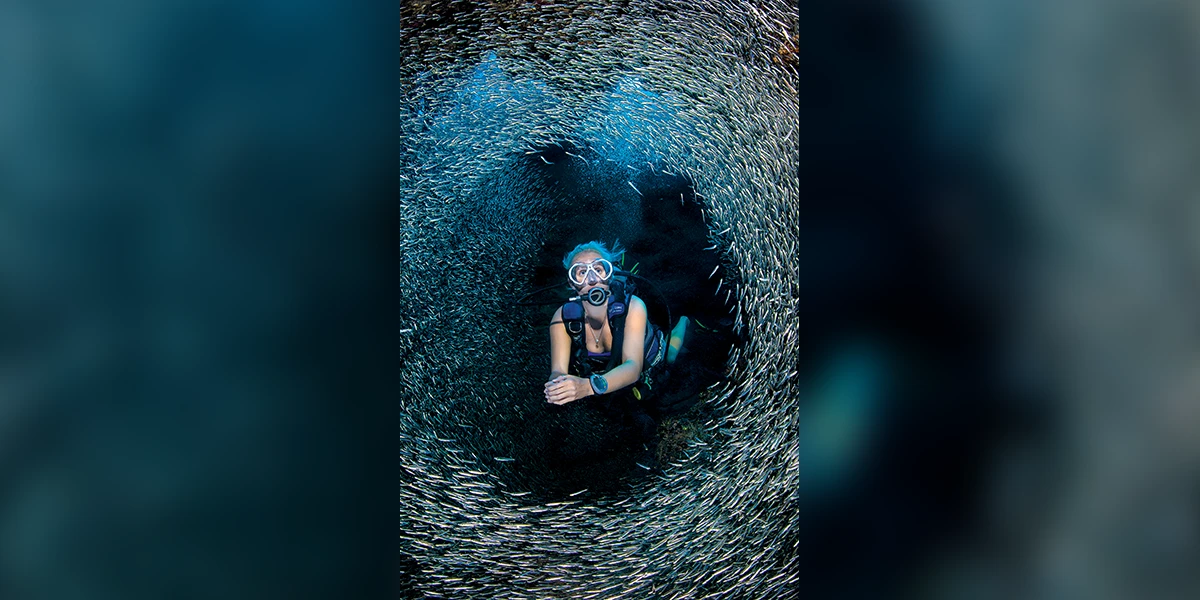
Fish completely enclose me. Their tiny, silvery bodies twinkle in the half-light as I float suspended in the center of a sphere of clear, warm water. I feel like I am inside a disco glitter ball.
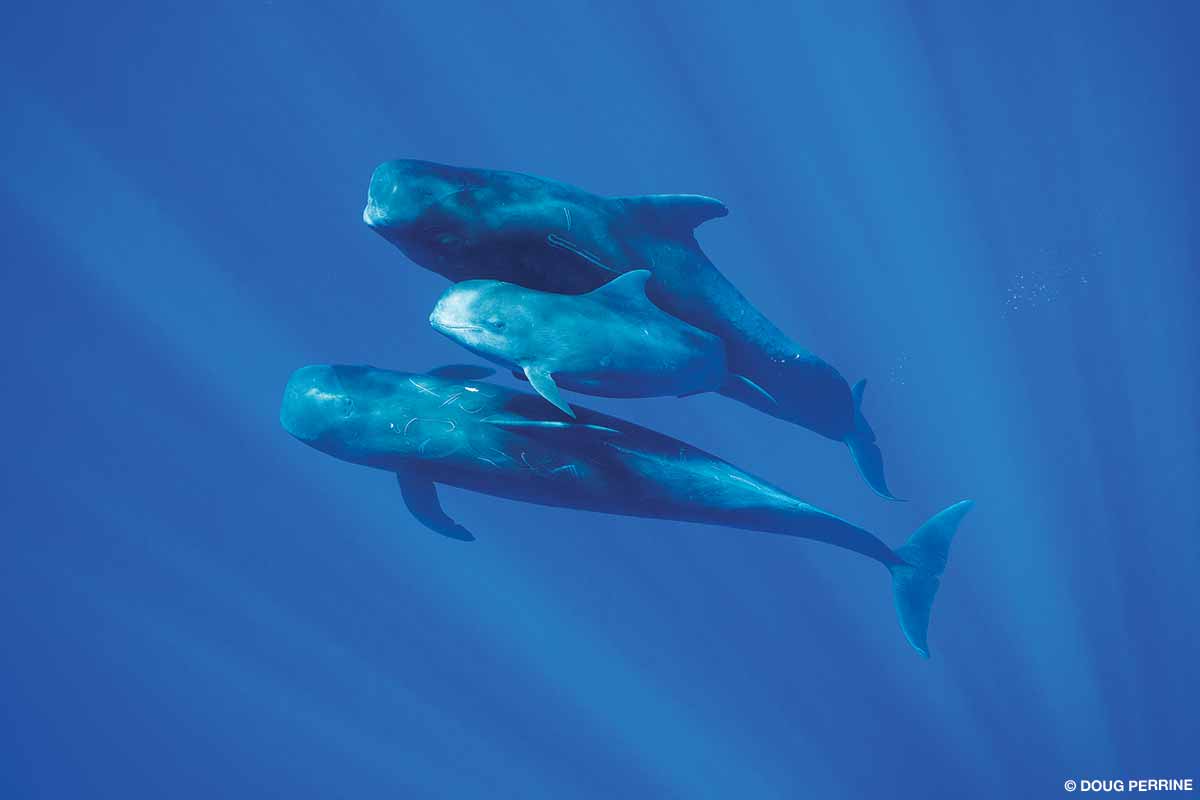
Where we encounter marine megafauna, we see only a tiny slice of their habitats and lives, which rarely includes feeding. These animals may travel thousands of feet vertically or migrate a few thousand miles horizontally to meet their nutritional needs. Some of them — sperm whales, for example — must do both: descend to depths of up to a mile or more to feast on aggregations of squid and roam across large swaths of the Pacific to avoid depleting their food resources in any one area.
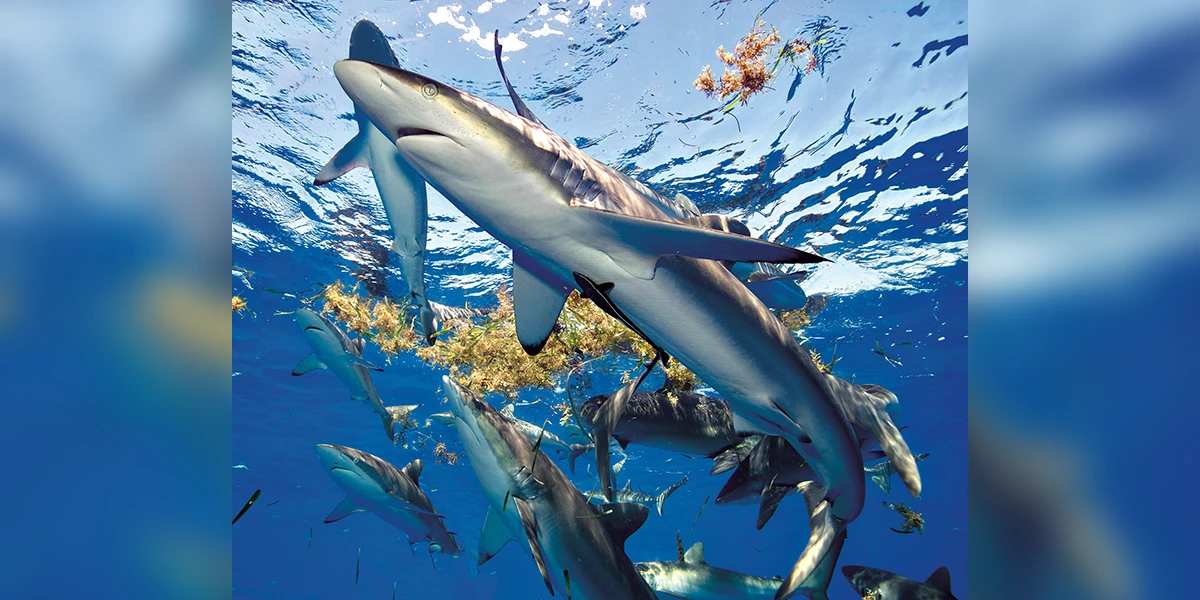
Sharks are among the ocean’s oldest survivors. They have cruised through Earth’s seas for more than 450 million years — long before the first trees grew or Saturn formed its rings.
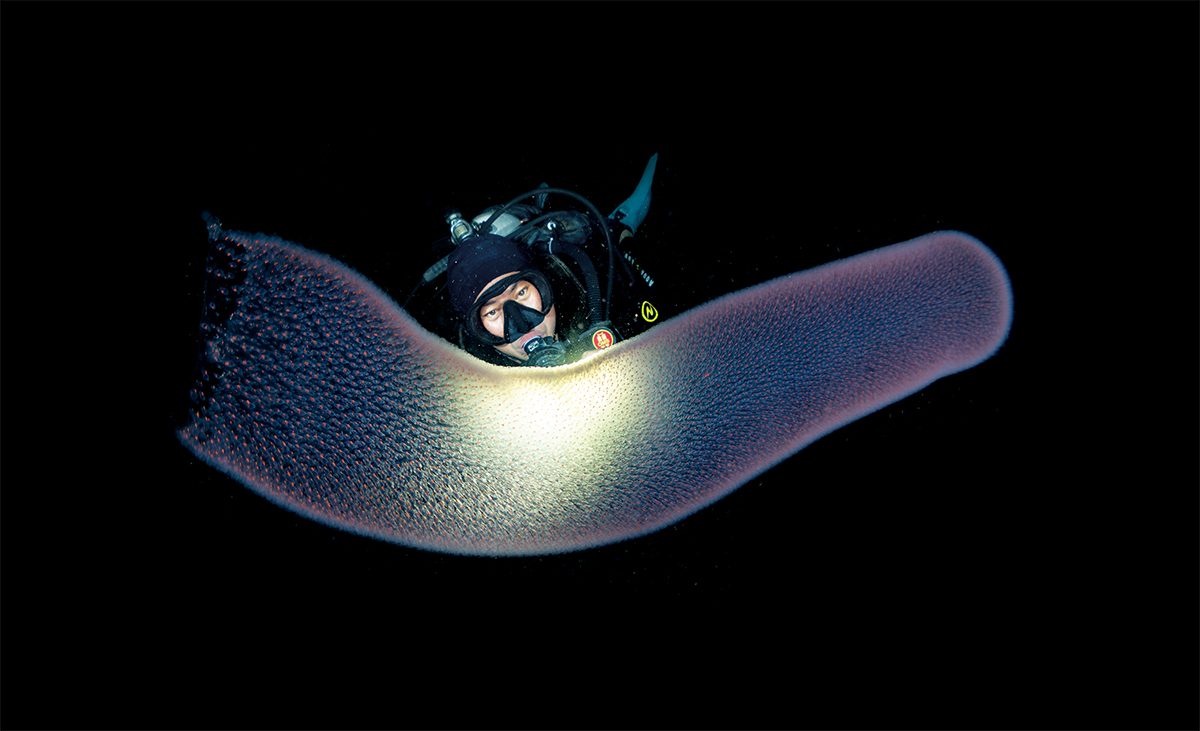
Every night as the sun slips below the horizon, countless aquatic creatures begin migrating up from the deep in what is quite possibly the greatest show on Earth. Seeking nourishment in shallow water, zooplankton must risk a perilous journey upward, avoiding a gauntlet of predators while remaining in the safety of darkness and then returning […]
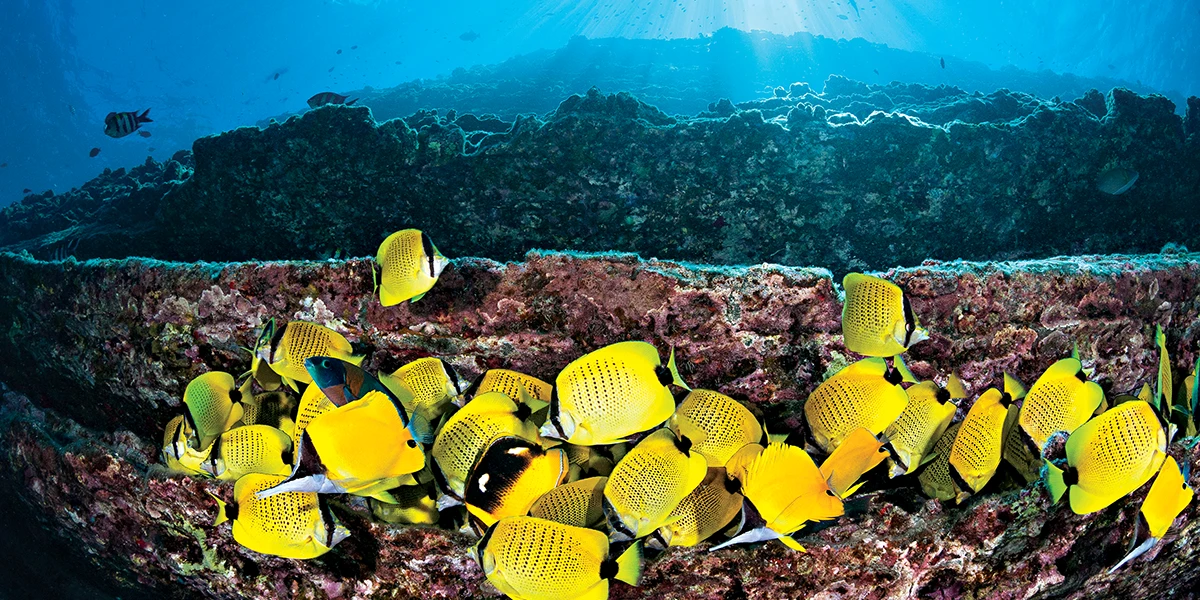
The wild, psychedelic colors of reef fish are often what first enraptures divers. Is there an evolutionary explanation for why small, tasty animals adorn themselves in vivid colors instead of camouflaging themselves from hungry predators?
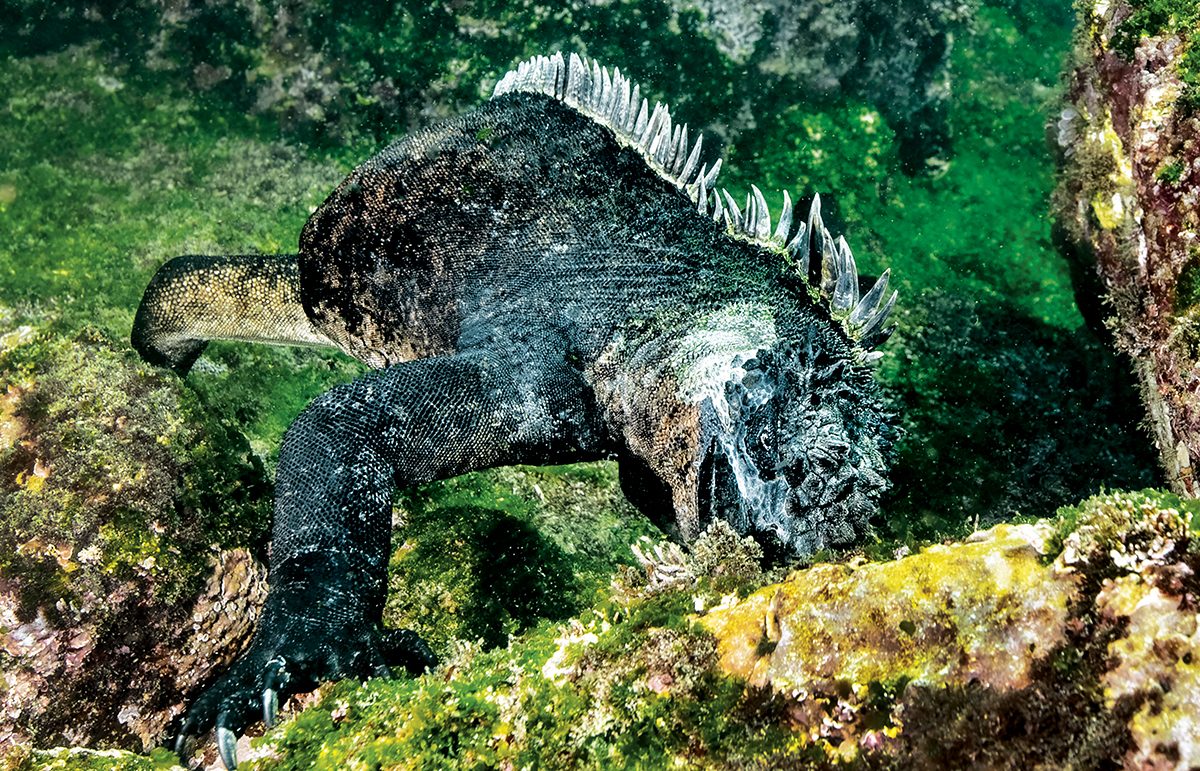
IT IS DAY FIVE OF THE VOYAGE, and our liveaboard has finally finished the overnight crossing south from the warm waters of Darwin and Wolf islands to Cape Douglas, Isla Fernandina. Although we don’t travel a great distance …
IT IS DAY FIVE OF THE VOYAGE, and our liveaboard has finally finished the overnight crossing south from the warm waters of Darwin and Wolf islands to Cape Douglas, Isla Fernandina. Although we don’t travel a great distance …
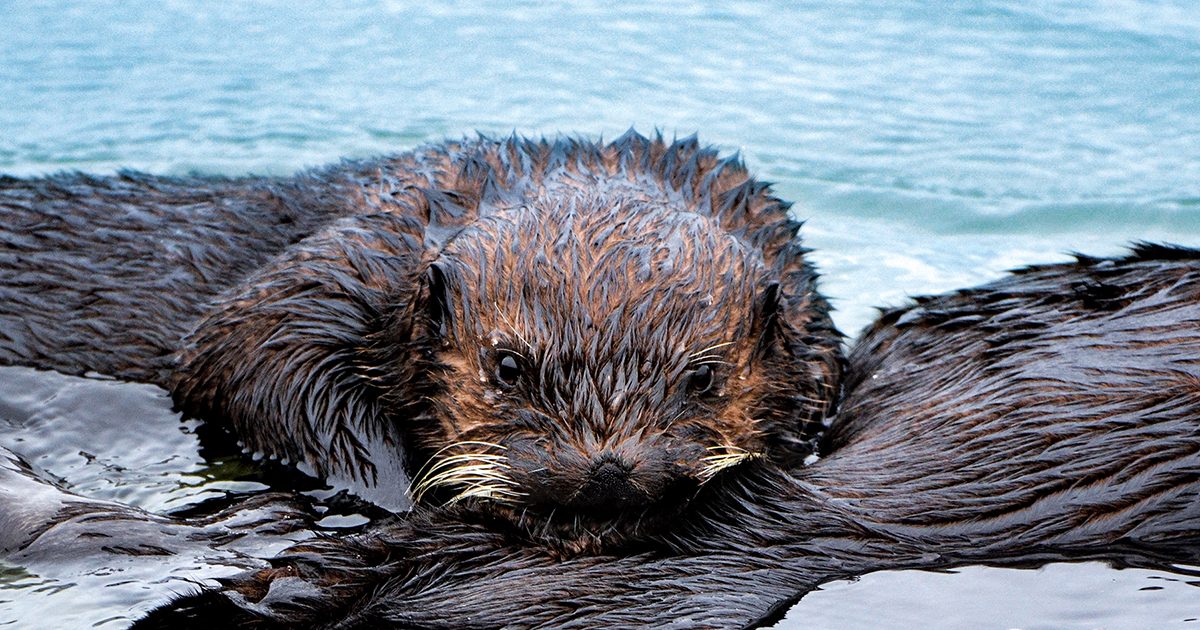
I WAS HOOKED THE FIRST TIME I saw a southern sea otter bobbing in the surf off the coast of California’s Big Sur. I didn’t know then that I would be as spellbound by these rare creatures decades later as I was at that very first sighting.
One of the greatest symbols of wildlife in the animal kingdom, penguins endear themselves with their comical antics and wow us by thriving in unbelievably hostile environments.