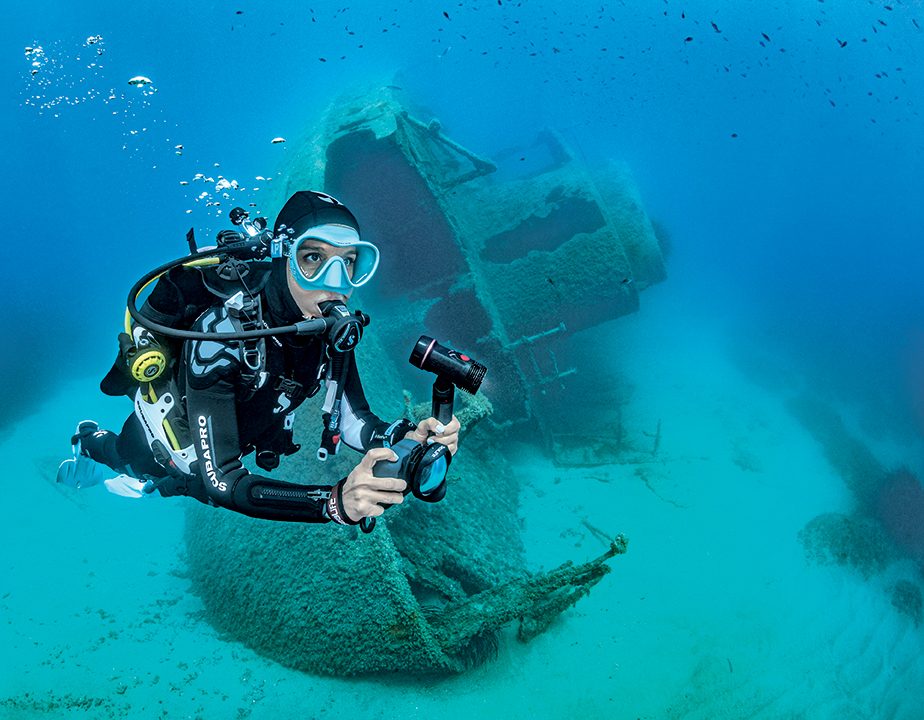
MANY DIVERS DON’T WANT TO TAKE LARGE digital single-lens reflex (DSLR) housings or expensive mirrorless cameras on their dives. Their goal is to capture memories to show their family or post on social media, not to get the highest-quality underwater images.
Think about the first time you picked up an underwater camera — what was the initial reason? Maybe you wanted a way to record your dives or a mechanism to show your nondiver friends and family the beauty of the underwater world.
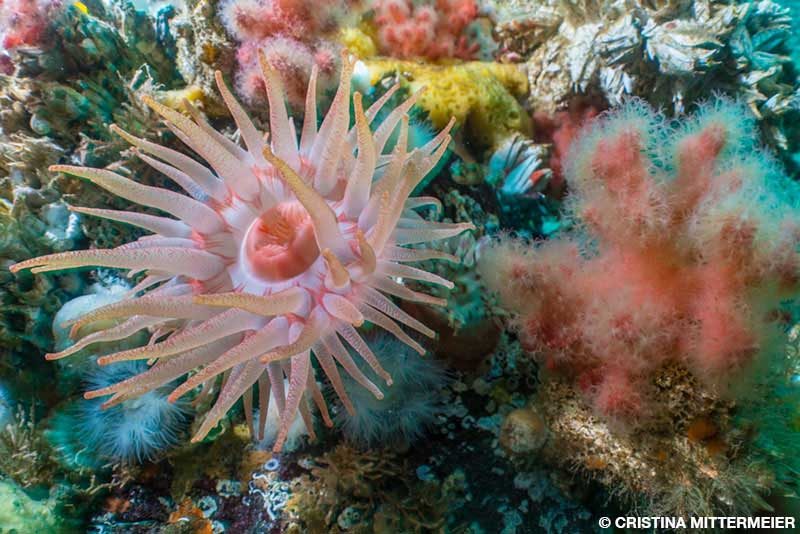
After reading the Shooter column “Cristina Mittermeier: Commitment to Conservation,” view this additional photo gallery of her work.
READERS WILL KNOW THE BYLINE “David Doubilet and Jennifer Hayes” from scores of National Geographic magazine features. Working as a team they have photographed the wild ocean from the tropics to both polar regions and even some rather unusual aquatic realms in between.
The sea enthralled lmran Ahmad from a very early age. Growing up in Singapore, young lmran never missed an opportuniry to go fishing with his father, a police officer, on their boat off the coast.
Turbid water can be a challenging environment for underwater photographers, particularly when shooting wide angle. Turbid water may not appear brown or green from the surface — in many cases the water looks entirely different once we drop in and begin the dive. All water is turbid to some degree. Understanding what causes turbidity and knowing how to work around it can make a world of difference when shooting in those conditions. One of the best skills a photographer can develop, particularly for shooting wide angle, is learning how to read water quality.
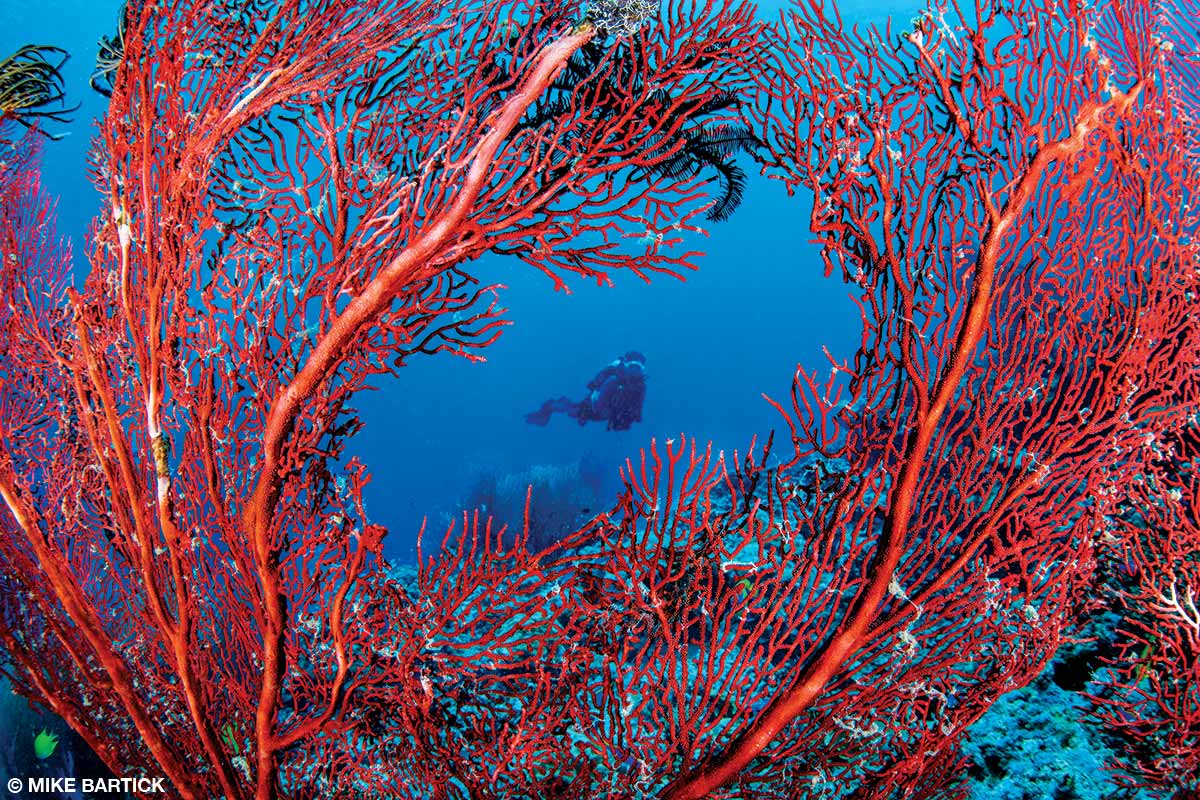
IMAGINE SCROLLING THROUGH SOCIAL MEDIA posts or flipping through your favorite dive magazine. Your eye catches a photo of the most pristine waters you have seen. The sun is peeking through the surface, beautifully illuminating coral in pops of color in every direction. A diver overhead perfectly balances the composition.
Working with models underwater has been a fundamental cornerstone of my career for more than four decades. I love shooting images of marine life, but for magazine editorial assignments, advertising photographs, and stock photography with model-released people, collaboration with a skilled underwater model has been paramount.
BEFORE THE INTERNET WAS AVAILABLE, people read print magazines to learn about scuba diving — how to do it, what gear to buy, and where to go. For 51 years, from 1951 to 2002, the king of the genre was Skin Diver magazine. The undisputed queen of cover photography for Skin Diver was Geri Murphy.