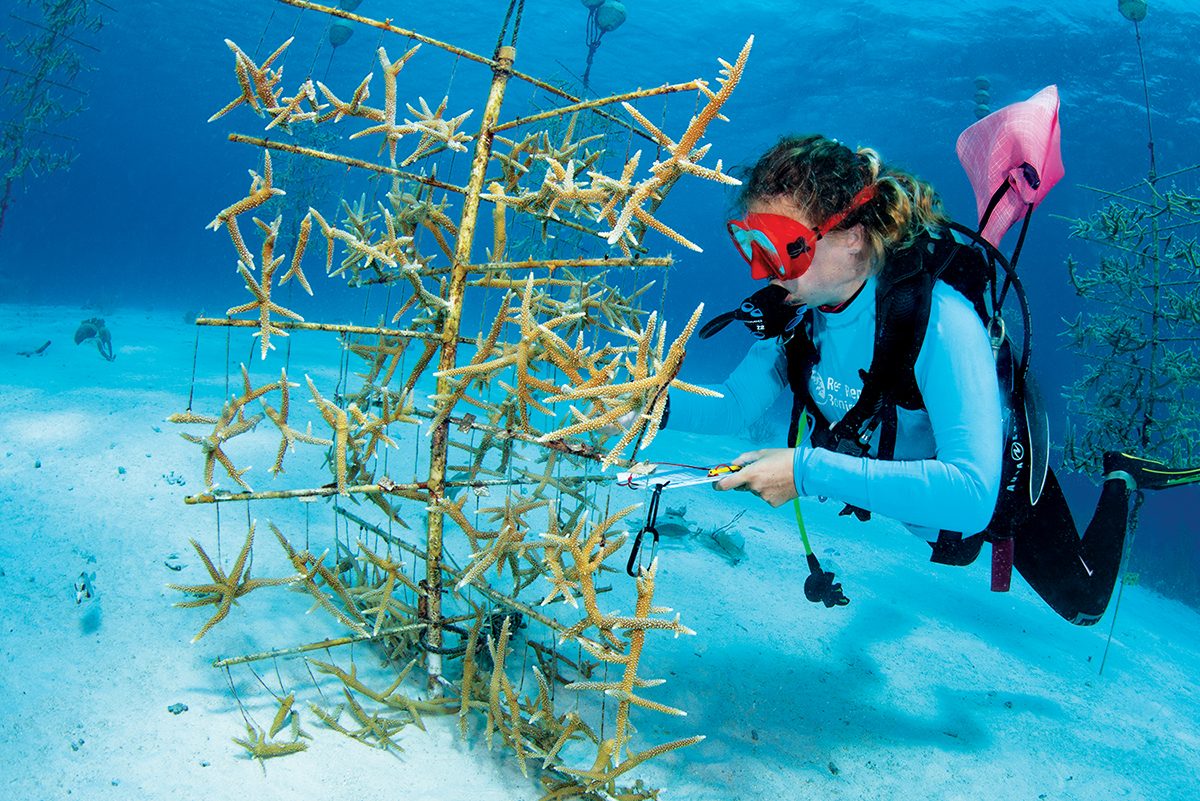
DESCENDING THE LIMESTONE STAIRS OF BONAIRE’S famous 1,000 Steps dive site in full scuba gear is challenging. It’s just 64 steps down, but it feels like many more. Once you make it down, you’re rewarded with a Caribbean reef teeming with life …
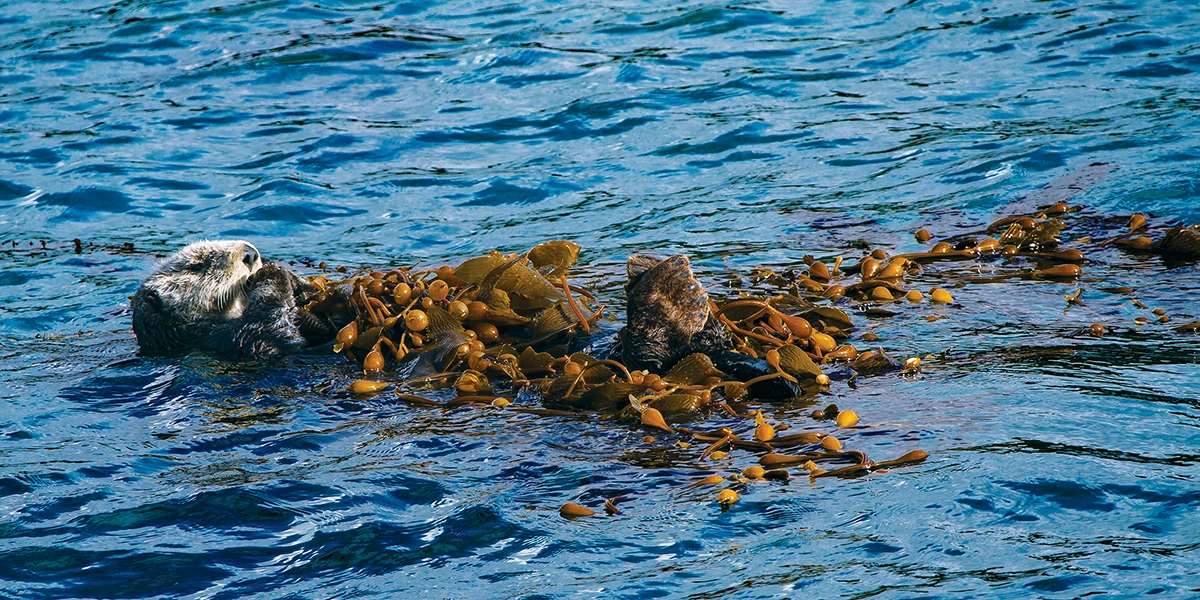
Coral and kelp are the ivory and ebony of ecosystems: mirrored opposites. Coral thrives in warm, clear, low-nutrient waters, while kelp lives in cold, nutrient-rich waters that tend to be murky because of those nutrients.
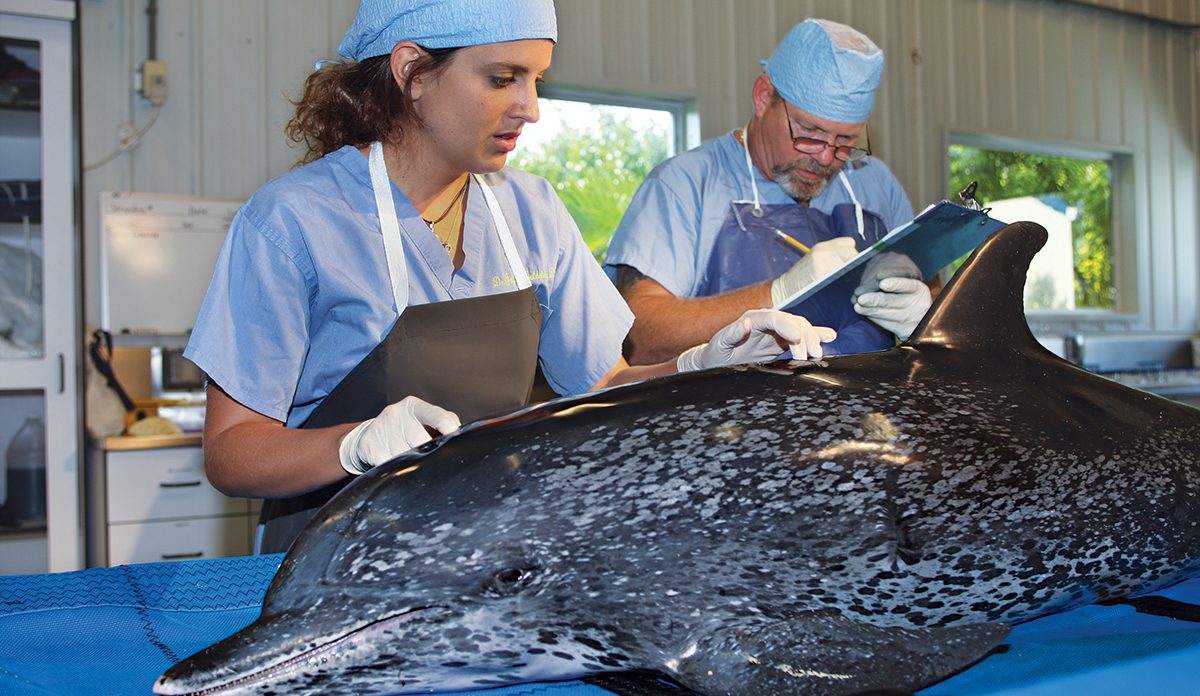
TALK TO ANY HUMAN UNDER THE AGE OF 13, and they have probably been asked, “What do you want to be when you grow up?” I was just 3 years old when I knew I wanted to be a veterinarian. Growing up on coasts — first Cape Cod, Massachusetts, and then Southeast Florida — I […]
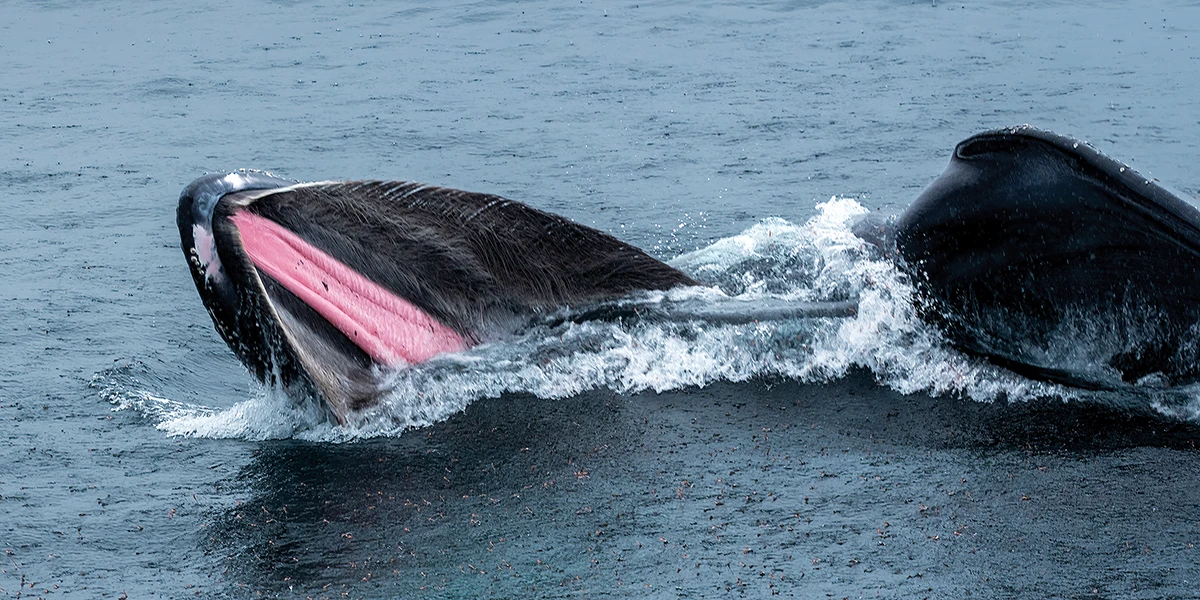
Imagine a pregnant humpback whale, all 40 tons of her, moving through cold blue water toward a cloud of pink. The cloud is dense enough to have edges and to […]
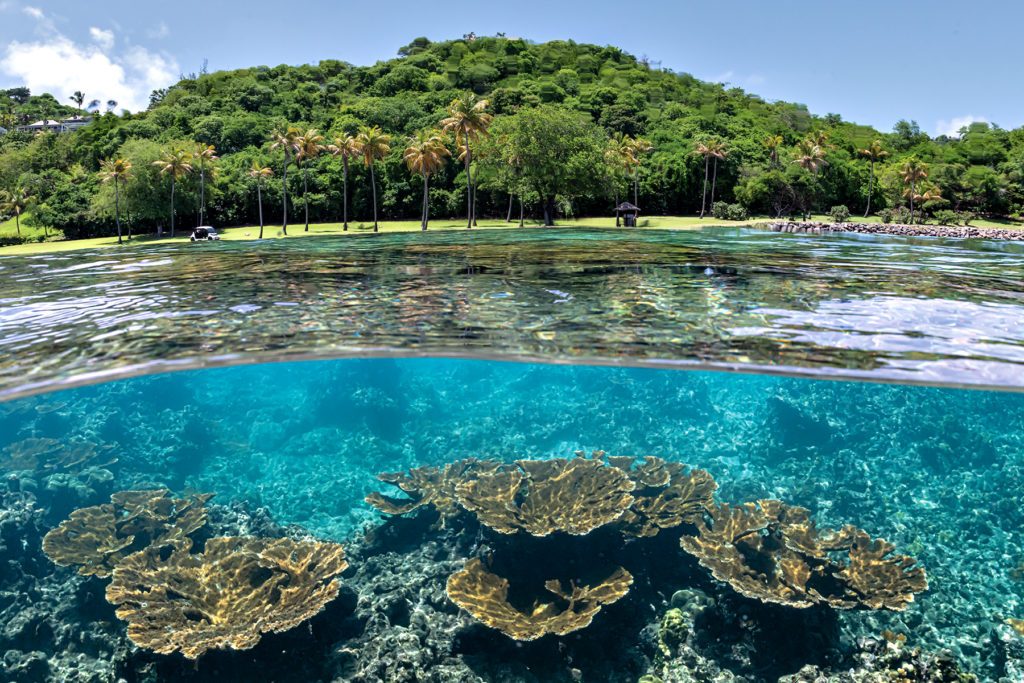
IT’S NO SECRET THAT CARIBBEAN REEFS ARE IN CRISIS. Many stony coral species face an uncertain destiny, and some scientific predictors point toward extinction in the near future for some species.
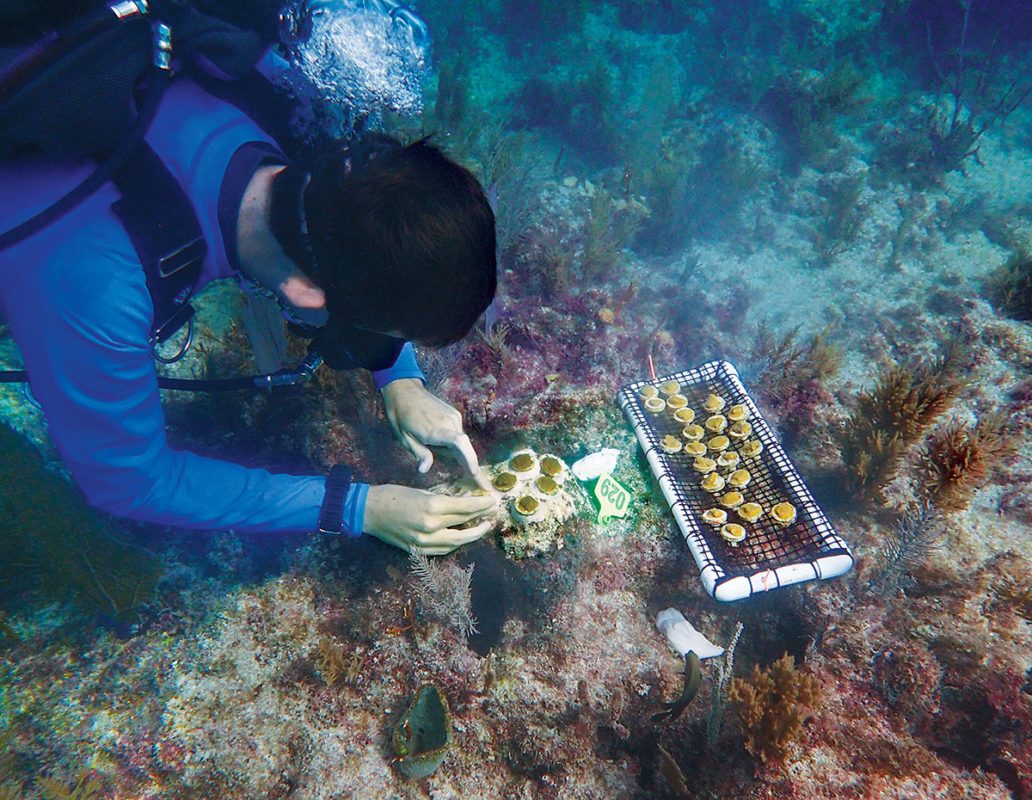
In late 2019 the National Oceanic and Atmospheric Administration (NOAA) and a cadre of state, federal, university, and restoration practitioner partners launched Mission: Iconic Reefs (MIR), a two-phased, 20-year, ecosystem-scale restoration initiative for the Florida Keys that focuses on restoring seven high-value, iconic reef systems.
CHARLES DARWIN’S FIVE WEEKS IN THE GALÁPAGOS Islands were crucial to the development of his theory of evolution, likely due to the Galápagos having the world’s second-highest proportion of endemic (unique to one location) species.
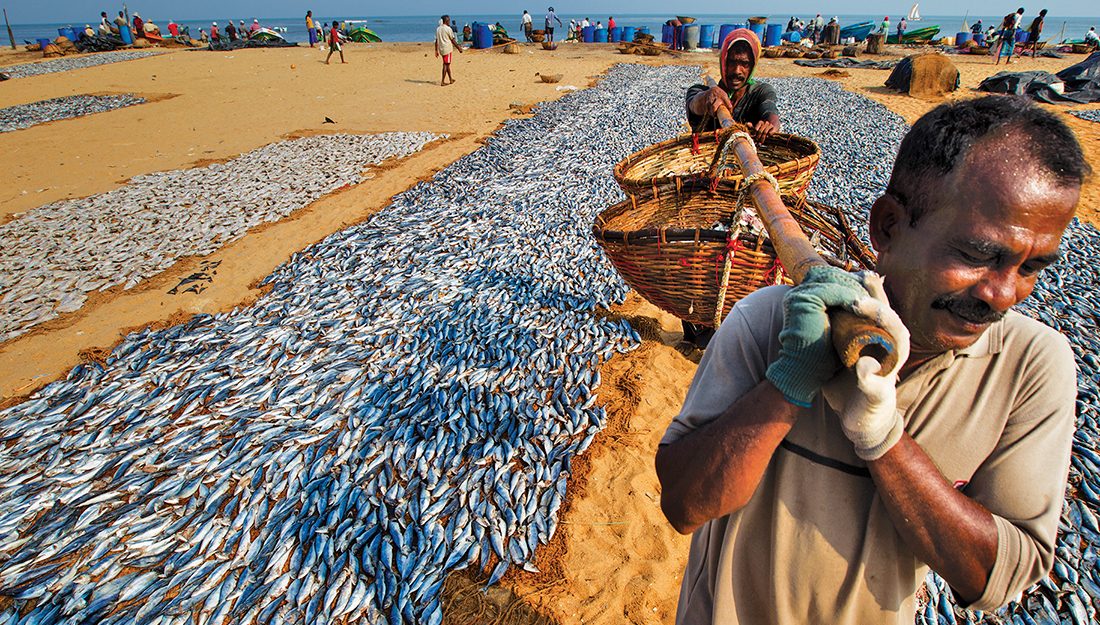
SEAFOOD HAS LONG BEEN AN INTEGRAL PART of the human diet, and some people consider it to be an inexhaustible food source.
MARITIME TRANSPORT HAS MORE TO DO WITH CORAL DISEASE than you might think. Just like most animals, corals can get diseases. Researchers first recognized coral disease in the early 1970s. It has increased over time and become a significant threat in many areas of the world.
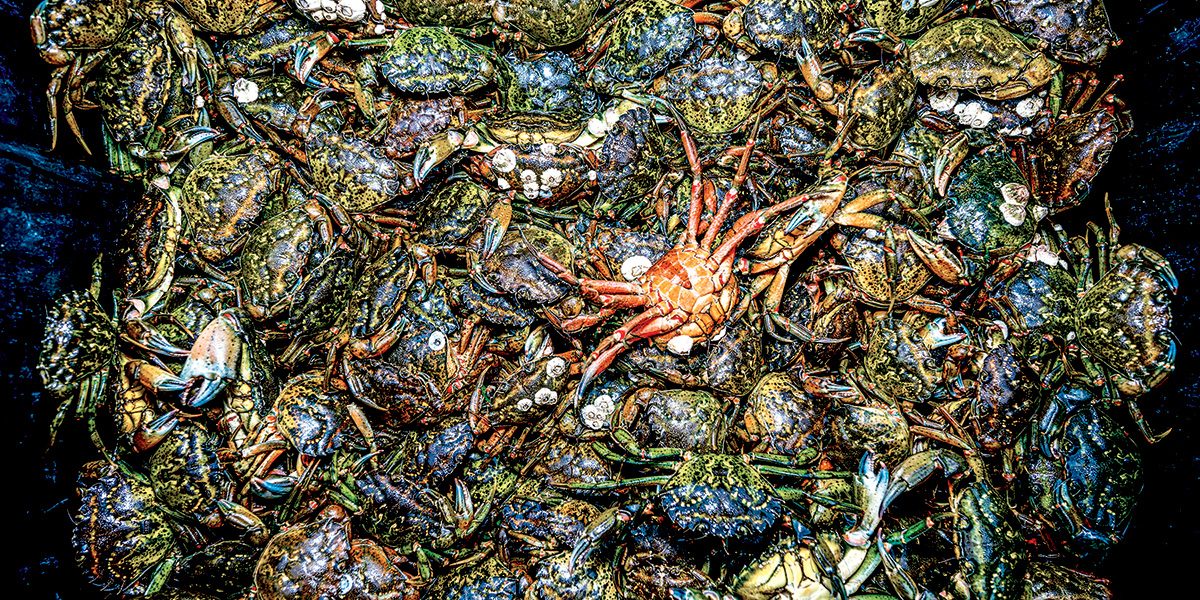
One of the world’s most destructive invasive species is gaining new ground — or water — in Canada and up to Alaska. Carcinus maenas, which translates to “raving mad crab,” outcompetes many local crab species in devouring clams, oysters, and mussels, and they sometimes even eat other crabs and juvenile fish. They destroy seagrass, an essential habitat for juvenile salmon, herring, rockfish, and many other marine animals.